
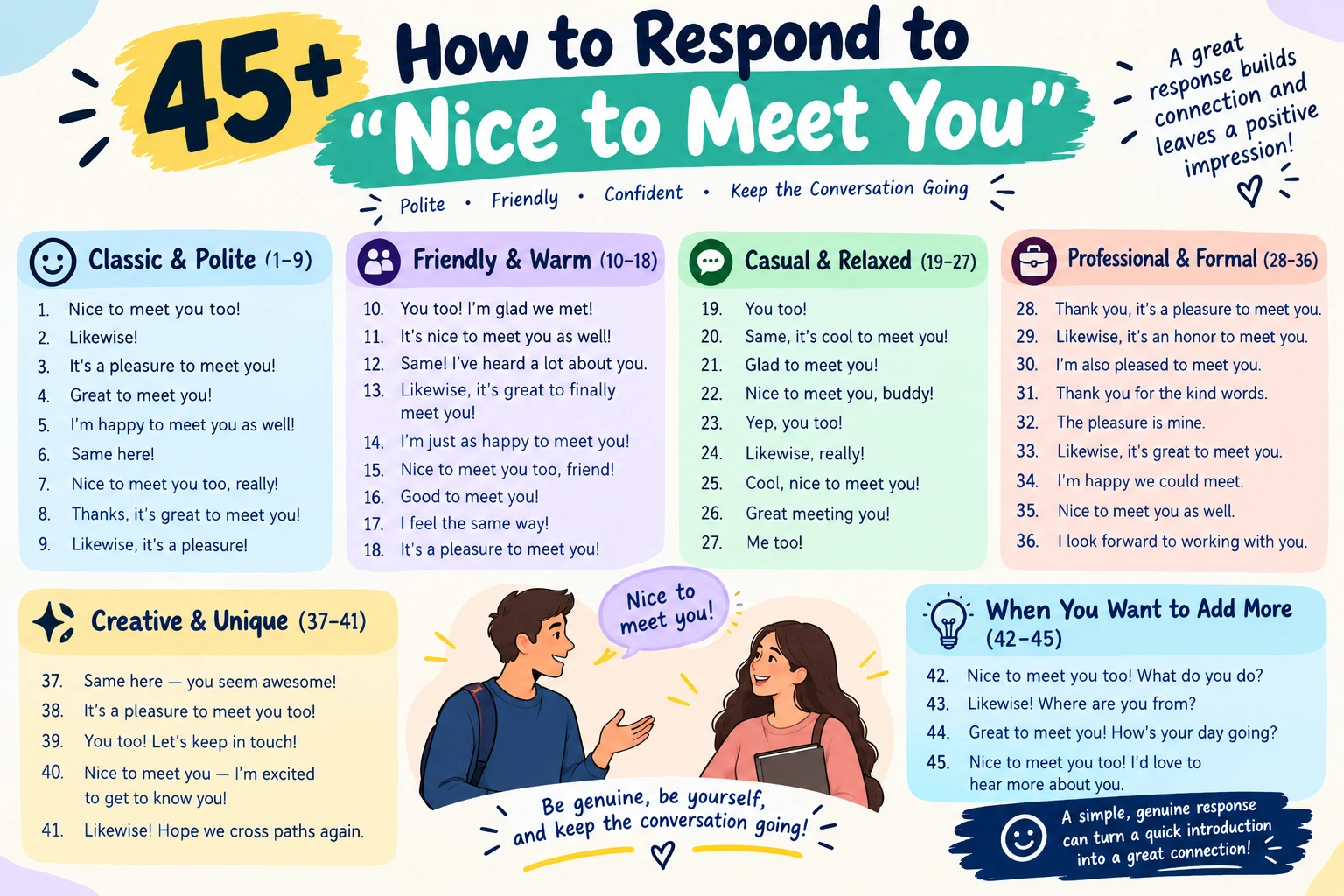
Meeting someone new can feel simple, but the right response can make the conversation feel much more natural. When someone says, “Nice to meet you,” a thoughtful reply shows confidence, friendliness, and good communication skills. While “Nice to meet you too” is always correct, it is not your only option.
Knowing how to respond to “Nice to meet you” can be especially useful during interviews, networking events, university introductions, business meetings, social gatherings, and online conversations. The best response depends on who you are speaking with and how formal the situation is.
In this guide, you’ll discover 45+ natural, polished, professional, friendly, and conversational alternatives. These responses can help you move beyond predictable small talk and make your first interaction feel more genuine, memorable, and comfortable.
What Does “How to Respond to Nice to Meet You” Mean?
The phrase “Nice to meet you” is a polite expression people use when they are introduced to someone for the first time.
It communicates that the person is pleased to make your acquaintance. The emotional tone is usually friendly, respectful, welcoming, and positive.
For example:
“Hi, I’m Sarah. I work with the marketing team.”
“Nice to meet you, Sarah.”
A traditional response would be:
“Nice to meet you too.”
However, you can make your response more personal by acknowledging the introduction, showing enthusiasm, or referring to something you already know about the person.
When to Use These Responses
There are many situations where you may need to respond to “Nice to meet you.”
Job Interviews
A professional and confident response is appropriate.
“It’s a pleasure to meet you as well. Thank you for having me.”
Networking Events
You can sound friendly while keeping the conversation professional.
“It’s great to meet you. I’ve heard good things about your work.”
University or School
A relaxed response works well when meeting classmates, teachers, or new people.
“Great to meet you too. I’m looking forward to getting to know everyone.”
Business Meetings
Choose language that is polite and composed.
“It’s a pleasure meeting you. I’m looking forward to our conversation.”
Emails and Online Introductions
A slightly more formal response works well.
“It’s a pleasure to connect with you as well.”
Casual Social Situations
You can keep things simple and conversational.
“Great to meet you too!”
The important thing is to choose a response that fits the setting rather than using the same phrase in every situation.
Is It Polite or Professional?
Yes. “Nice to meet you” is both polite and widely accepted in professional and casual situations.
The phrase itself is neutral enough to use with a colleague, interviewer, professor, client, classmate, neighbor, or new acquaintance.
Your response, however, can change depending on the setting.
For a professional environment, phrases such as “It’s a pleasure to meet you” or “It’s great to connect with you” sound polished.
For casual situations, “Great to meet you too” or “Really nice meeting you” feels more relaxed.
The safest approach is to mirror the level of formality used by the other person.
Polite and Professional Responses
1. “Nice to meet you too.”
Meaning: You are returning the person’s polite greeting.
Tone: Polite, neutral, versatile.
“Nice to meet you too. I’ve been looking forward to this meeting.”
This is the classic response and works in almost any situation.
2. “It’s a pleasure to meet you as well.”
Meaning: You are pleased to make their acquaintance.
Tone: Formal, professional, polished.
“It’s a pleasure to meet you as well. Thank you for taking the time to speak with me.”
Use this during interviews, business meetings, or formal introductions.
3. “It’s lovely to meet you too.”
Meaning: You are warmly acknowledging the introduction.
Tone: Warm, polite, friendly.
“It’s lovely to meet you too. I’ve heard wonderful things about the team.”
This sounds more personable than a standard “nice to meet you.”
4. “A pleasure to meet you.”
Meaning: You are expressing genuine pleasure at meeting the person.
Tone: Elegant, formal.
“A pleasure to meet you. I’m glad we finally had the opportunity to connect.”
This is concise and particularly suitable for professional settings.
5. “It’s great to meet you as well.”
Meaning: You are pleased to meet them.
Tone: Professional, friendly.
“It’s great to meet you as well. I’m looking forward to discussing the project.”
It balances professionalism with warmth.
6. “I’m pleased to meet you too.”
Meaning: You are happy to make the introduction.
Tone: Formal, courteous.
“I’m pleased to meet you too. Thank you for arranging this meeting.”
A good choice for formal introductions.
7. “It’s wonderful to meet you.”
Meaning: You are enthusiastic about meeting the person.
Tone: Warm, positive.
“It’s wonderful to meet you. I’ve been looking forward to this conversation.”
Use it when you want to express genuine enthusiasm.
8. “Likewise, it’s a pleasure.”
Meaning: You feel the same way about meeting them.
Tone: Polished, concise.
“Nice to meet you.” “Likewise, it’s a pleasure.”
This works particularly well in formal conversations.
9. “I’m glad to finally meet you.”
Meaning: You have heard about the person or communicated previously but are meeting in person for the first time.
Tone: Warm, professional.
“I’m glad to finally meet you after all those emails.”
It is especially useful when you’ve already interacted online.
10. “I’m delighted to meet you.”
Meaning: You are genuinely pleased about the introduction.
Tone: Formal, enthusiastic.
“I’m delighted to meet you. I’ve heard a great deal about your work.”
Use it when you want a more polished and expressive response.
Friendly and Natural Responses
11. “Great to meet you too!”
Meaning: You are happy to meet the person.
Tone: Friendly, natural.
“Great to meet you too! How are you enjoying the event?”
This is ideal for casual introductions and networking.
12. “Really nice to meet you!”
Meaning: You are genuinely pleased to meet them.
Tone: Warm, conversational.
“Really nice to meet you! I’m glad we finally got introduced.”
It sounds natural without being overly formal.
13. “So nice to meet you too.”
Meaning: You are warmly returning the sentiment.
Tone: Friendly, gentle.
“So nice to meet you too. I’ve heard a lot about you.”
A good choice for social situations.
14. “Great meeting you!”
Meaning: You are expressing that the introduction was enjoyable.
Tone: Casual, friendly.
“Great meeting you! Hopefully, we’ll get to chat again soon.”
This can also work naturally at the end of a conversation.
15. “Happy to meet you too.”
Meaning: You are pleased about the introduction.
Tone: Simple, friendly.
“Happy to meet you too. How do you know everyone here?”
It keeps the conversation relaxed.
16. “Glad we finally met.”
Meaning: You are happy that the opportunity to meet has finally happened.
Tone: Warm, familiar.
“Glad we finally met. We’ve been talking about this project for weeks.”
Use it when there has been some previous communication.
17. “It’s great putting a face to the name.”
Meaning: You are happy to finally meet someone you have heard about or communicated with.
Tone: Friendly, conversational.
“It’s great putting a face to the name after all those emails.”
This is especially natural in workplace and networking situations.
18. “I’m glad we connected.”
Meaning: You appreciate the opportunity to meet or communicate.
Tone: Warm, professional.
“I’m glad we connected. I’d love to hear more about your work.”
It works particularly well for networking.
19. “It’s great finally meeting you in person.”
Meaning: You have interacted previously but are meeting face-to-face for the first time.
Tone: Friendly, professional.
“It’s great finally meeting you in person after our video calls.”
A natural response after online communication.
20. “I’m happy we got the chance to meet.”
Meaning: You appreciate the opportunity to meet.
Tone: Friendly, sincere.
“I’m happy we got the chance to meet. I’ve really enjoyed our conversation.”
This adds a little more warmth to a standard introduction.
Confident and Conversation-Starting Responses
21. “Nice to meet you too. I’ve been looking forward to this.”
Meaning: You were genuinely interested in meeting the person.
Tone: Confident, enthusiastic.
“Nice to meet you too. I’ve been looking forward to discussing your ideas.”
It is excellent when you have a specific reason for meeting.
22. “It’s great to meet you. I’ve heard a lot about your work.”
Meaning: You recognize the person’s reputation or experience.
Tone: Professional, respectful.
“It’s great to meet you. I’ve heard a lot about your work in product design.”
Use it when you genuinely know something about their work.
23. “The pleasure is mine.”
Meaning: You are graciously returning the positive sentiment.
Tone: Polished, confident.
“Nice to meet you.” “The pleasure is mine.”
This is brief but sophisticated.
24. “I’ve been hoping we’d get the chance to meet.”
Meaning: You have been interested in meeting them.
Tone: Warm, confident.
“I’ve been hoping we’d get the chance to meet. I really enjoyed your presentation.”
This works well when you already admire something about their work.
25. “It’s great to finally put a name to the face.”
Meaning: You are pleased to connect a person’s name with their appearance after hearing about them previously.
Tone: Friendly, conversational.
“It’s great to finally put a name to the face after hearing your name around the office.”
Use it in familiar professional or social environments.
26. “I’m looking forward to getting to know you.”
Meaning: You are open to developing a positive acquaintance.
Tone: Friendly, welcoming.
“It’s nice to meet you. I’m looking forward to getting to know everyone on the team.”
This is particularly suitable for new groups or teams.
27. “It’s a pleasure connecting with you.”
Meaning: You appreciate the opportunity to establish communication.
Tone: Professional, polished.
“It’s a pleasure connecting with you. I’m excited to learn more about the opportunity.”
Excellent for professional introductions and online networking.
28. “I’m glad we had the opportunity to meet.”
Meaning: You appreciate the opportunity for the introduction.
Tone: Professional, thoughtful.
“I’m glad we had the opportunity to meet and discuss the proposal.”
It works especially well in formal situations.
29. “I’ve heard good things about you.”
Meaning: You have received positive impressions about the person from others.
Tone: Friendly, complimentary.
“Nice to meet you. I’ve heard good things about you from the design team.”
Only use this when it is actually true.
30. “I’m looking forward to working with you.”
Meaning: You are positive about collaborating with the person.
Tone: Professional, optimistic.
“Nice to meet you too. I’m looking forward to working with you on the project.”
This is particularly useful in a new workplace or team.
Warm and Thoughtful Responses
31. “It’s genuinely nice to meet you.”
Meaning: You are emphasizing that you sincerely enjoyed the introduction.
Tone: Warm, sincere.
“It’s genuinely nice to meet you. I’ve really enjoyed hearing about your experience.”
Use it when you want to sound particularly genuine.
32. “I’m glad we were introduced.”
Meaning: You appreciate the introduction and opportunity to connect.
Tone: Warm, thoughtful.
“I’m glad we were introduced. I think we have a lot to discuss.”
It naturally opens the door to further conversation.
33. “It’s wonderful finally getting to meet you.”
Meaning: You are happy that a long-awaited introduction has happened.
Tone: Warm, enthusiastic.
“It’s wonderful finally getting to meet you after hearing about your work.”
Ideal when you have known about someone before meeting them.
34. “I’m happy we crossed paths.”
Meaning: You appreciate the chance encounter or introduction.
Tone: Warm, thoughtful.
“I’m happy we crossed paths. Your advice was really helpful.”
This works especially well when meeting someone unexpectedly.
35. “It’s been a pleasure meeting you.”
Meaning: You are expressing appreciation after meeting the person.
Tone: Polite, professional.
“It’s been a pleasure meeting you. I hope we can continue the conversation.”
This is especially useful when concluding an interaction.
36. “I’m glad we finally had the chance to talk.”
Meaning: You are pleased that you finally got an opportunity to communicate.
Tone: Friendly, sincere.
“I’m glad we finally had the chance to talk. I’ve been curious about your experience.”
It naturally encourages a longer conversation.
37. “It’s lovely connecting with someone new.”
Meaning: You appreciate the opportunity to meet a new person.
Tone: Warm, positive.
“It’s lovely connecting with someone new, especially at an event like this.”
Use it when you want to make the interaction feel welcoming.
Casual and Conversational Responses
38. “You too!”
Meaning: You are briefly returning the sentiment.
Tone: Casual, simple.
“Nice to meet you!” “You too!”
This is quick and natural, especially in informal conversations.
39. “Same here!”
Meaning: You feel the same way about meeting them.
Tone: Casual, friendly.
“Nice to meet you.” “Same here! How do you know the host?”
It is particularly useful when you want to continue the conversation.
40. “Likewise!”
Meaning: You feel the same positive sentiment.
Tone: Polite, concise.
“Nice to meet you.” “Likewise!”
This is short but works in both casual and professional environments.
41. “Absolutely, great to meet you too.”
Meaning: You enthusiastically return the greeting.
Tone: Friendly, confident.
“Nice to meet you.” “Absolutely, great to meet you too.”
Use it when you want to sound energetic without being overly formal.
42. “Likewise. How’s your day going?”
Meaning: You return the greeting and immediately encourage conversation.
Tone: Friendly, conversational.
“Nice to meet you.” “Likewise. How’s your day going?”
This is useful when you do not want the conversation to stop at the introduction.
43. “Great to meet you too. How do you know everyone here?”
Meaning: You return the greeting while asking an easy follow-up question.
Tone: Casual, social.
“Great to meet you too. How do you know everyone here?”
A particularly useful response at parties, gatherings, or networking events.
44. “Nice meeting you too. What brings you here?”
Meaning: You acknowledge the introduction and invite the other person to share more.
Tone: Friendly, curious.
“Nice meeting you too. What brings you to the conference?”
It is a natural way to move beyond small talk.
45. “Great to meet you. I’d love to hear more about what you do.”
Meaning: You are interested in learning about the person’s work or interests.
Tone: Curious, professional.
“Great to meet you. I’d love to hear more about what you do.”
This is especially effective at professional networking events.
46. “Nice to meet you too. How have you been enjoying the event?”
Meaning: You return the greeting and create an easy conversation opener.
Tone: Friendly, natural.
“Nice to meet you too. How have you been enjoying the event so far?”
It works well when meeting someone at conferences, workshops, or social gatherings.
47. “It’s great to meet you. What have you been working on lately?”
Meaning: You show genuine curiosity about the person’s current interests or work.
Tone: Curious, confident, conversational.
“It’s great to meet you. What have you been working on lately?”
This is an excellent way to turn an introduction into a meaningful discussion.
48. “Wonderful to meet you. I hope we get to talk again.”
Meaning: You enjoyed the introduction and would welcome another conversation.
Tone: Warm, positive, polite.
“Wonderful to meet you. I hope we get to talk again before the event ends.”
Use this when you want to leave a positive impression.
49. “It’s been great meeting you. Let’s keep in touch.”
Meaning: You would like to maintain the connection.
Tone: Friendly, professional.
“It’s been great meeting you. Let’s keep in touch after the conference.”
This is especially useful for networking and professional relationships.
How to Choose the Right Response
Choosing the best response depends more on context than vocabulary.
If you are in a formal professional setting, try:
“It’s a pleasure to meet you as well.”
If you’re meeting a new classmate, try:
“Great to meet you too!”
If you want to continue a conversation, try:
“Nice to meet you too. What brings you here?”
If you’ve already communicated online, try:
“It’s great finally meeting you in person.”
If you’re ending the conversation, try:
“It’s been a pleasure meeting you.”
And if you want to keep things completely natural, there is nothing wrong with simply saying:
“Nice to meet you too.”
The strongest response is usually the one that fits the moment rather than the one that sounds the most sophisticated.
Common Mistakes to Avoid
1. Overcomplicating a Simple Introduction
You do not need an elaborate response. A short, sincere answer can be more effective.
2. Being Too Formal in a Casual Setting
Saying “I am delighted to make your acquaintance” to a new classmate may sound unnecessarily stiff.
3. Giving a One-Word Response Without Engagement
“Likewise” is polite, but adding a simple question can help the conversation continue.
4. Using Compliments You Don’t Mean
If you say you have heard wonderful things about someone, make sure it is actually true.
5. Forgetting the Context
A response appropriate for a job interview may not feel natural at a casual gathering. Always consider the setting.
Pro Tips for Making Your Response More Natural
Match their tone. If they are formal, stay professional. If they are relaxed, you can respond more casually.
Add a follow-up question. A simple question such as “How do you know the host?” can turn an introduction into an actual conversation.
Be genuine. You do not need impressive vocabulary to make a good first impression.
Use their name when appropriate. Saying “Nice to meet you, Alex” can make your response feel more personal and attentive.
Conclusion
Knowing how to respond to “Nice to meet you” gives you more flexibility in professional, academic, social, and everyday conversations. While the classic “Nice to meet you too” will always work, alternatives can help you sound warmer, more confident, curious, or polished depending on the situation. The key is not to memorize every phrase but to understand when each style fits naturally. Whether you are meeting a colleague, classmate, interviewer, or new acquaintance, a genuine response combined with good conversational energy can create a strong first impression.
Discover more
best replies when someone says youre amazing