
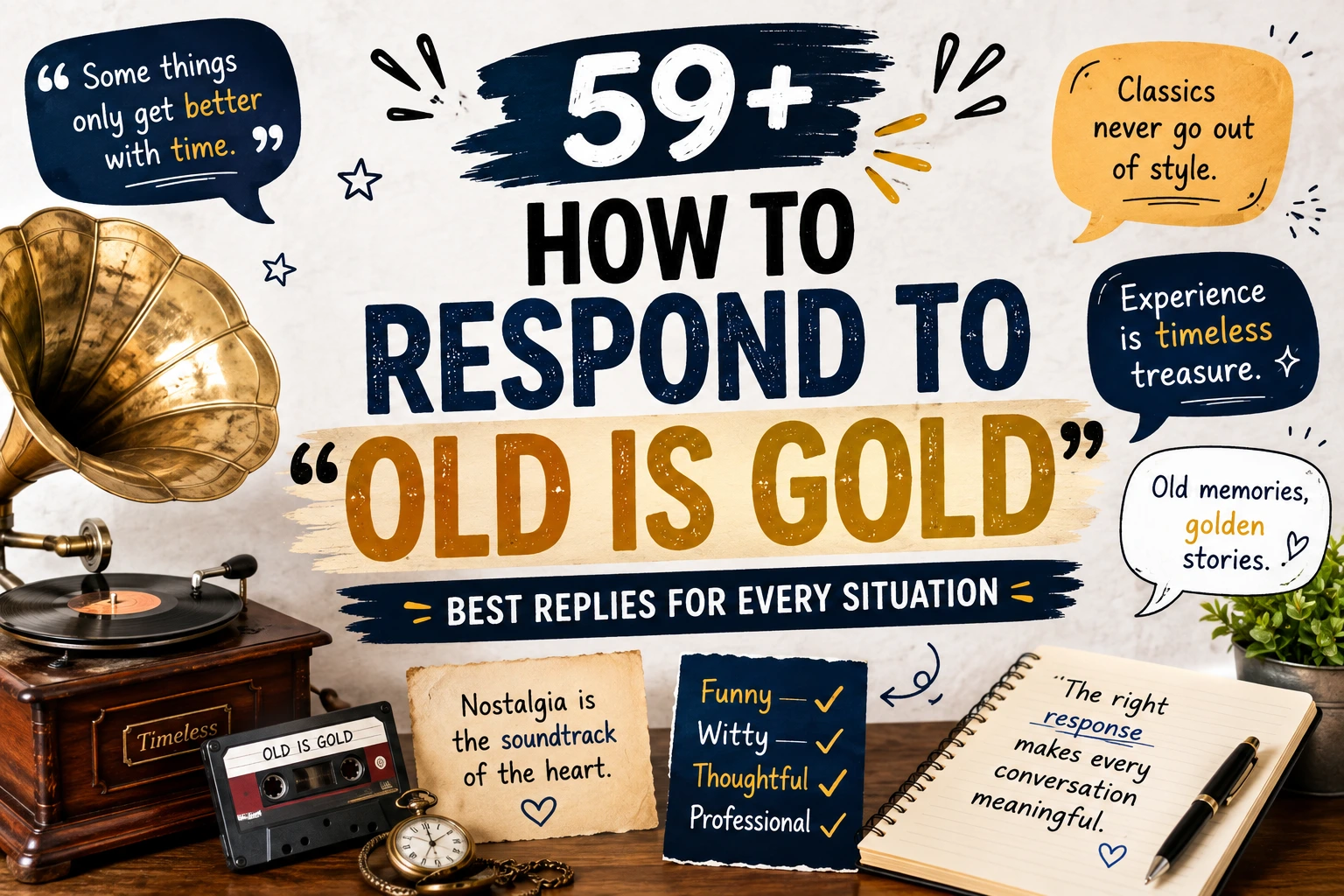
“Old is gold” is one of those phrases that can fit almost any conversation. Someone might say it while talking about an old friendship, a classic song, a vintage car, a childhood memory, or simply something they believe was better in the past. The phrase carries a sense of nostalgia and appreciation, but replying with just “Exactly” can make the conversation feel a little flat.
Knowing how to respond to “old is gold” gives you more ways to keep the conversation interesting. You can agree warmly, add your own perspective, make a clever joke, or gently challenge the idea. The best response depends on who said it, what they are talking about, and the tone of the conversation. Whether you need a casual reply for a friend, a thoughtful response for a meaningful conversation, or a polished line for a public setting, the alternatives below will help you respond naturally.
What Does “Old Is Gold” Mean?
“Old is gold” means that something old still has great value, quality, or emotional importance.
The phrase is often used to express appreciation for things from the past. It can refer to old music, movies, traditions, relationships, photographs, books, technology, fashion, or memories.
For example:
“I still listen to songs from the 90s. Old is gold.”
The speaker is saying that older songs have a special quality that newer ones may not provide.
The expression usually has a warm, nostalgic, and appreciative tone. It does not necessarily mean that everything old is better. Rather, it suggests that age can add character, memories, authenticity, or sentimental value.
When to Use “Old Is Gold”
“Old is gold” is flexible enough for many everyday situations, especially informal conversations.
With Friends
You can use it while discussing childhood memories, old photographs, classic movies, or longtime friendships.
“Remember those old school games? Old is gold.”
When Discussing Music
The phrase is commonly used when comparing classic songs with newer releases.
“That old album still hits differently. Old is gold.”
When Talking About Friendships
It can describe a friendship that has lasted for many years.
“We have been friends since school. Old is gold.”
In Social Media Captions
It works well as a short caption for nostalgic photographs.
“Back when everything felt simpler. Old is gold.”
In Speeches
The phrase can also work in a speech about traditions, history, culture, or memories, although a more polished alternative may be preferable in formal settings.
In Emails and Professional Communication
“Old is gold” is generally too casual for formal business emails. However, you can express the same idea professionally with phrases such as:
“Established practices still have considerable value.”
Is “Old Is Gold” Polite or Professional?
Yes, “old is gold” is polite, but it is generally casual rather than highly professional.
It works naturally in conversations with friends, family members, classmates, and people you know well. It can also work in social media posts, casual presentations, and informal discussions.
In professional writing, however, it is better to communicate the underlying idea directly.
Instead of:
“Old is gold when it comes to our business methods.”
You could write:
“Established methods can still offer valuable insights.”
The difference is mainly about context. The phrase itself is not rude or inappropriate; it simply has a conversational and nostalgic quality.
Agreeing and Appreciative Responses
1. “Absolutely. Some things only get better with time.”
Meaning: Old things can become more valuable as they age.
Tone: Warm, thoughtful
“Absolutely. Some things only get better with time, especially good friendships.”
Why to use it: Use this when you strongly agree and want to sound sincere rather than overly casual.
2. “Couldn’t agree more.”
Meaning: You completely agree with the person’s opinion.
Tone: Friendly, confident
“Couldn’t agree more. Classic music just has a different charm.”
Why to use it: Perfect for quick conversations when you want a natural agreement.
3. “True. The classics never really go out of style.”
Meaning: Things with lasting quality remain relevant.
Tone: Casual, appreciative
“True. The classics never really go out of style.”
Why to use it: Especially useful when discussing music, movies, fashion, or books.
4. “Some things are timeless for a reason.”
Meaning: Certain things remain valuable regardless of how much time passes.
Tone: Thoughtful, elegant
“Some things are timeless for a reason. That old film is still brilliant.”
Why to use it: A polished response that works in both casual and semi-formal conversations.
5. “Exactly. Time gives some things character.”
Meaning: Age can make something more meaningful or distinctive.
Tone: Thoughtful
“Exactly. Time gives some things character.”
Why to use it: Great for conversations about vintage items, old homes, art, or relationships.
6. “The older, the more memorable.”
Meaning: Old experiences can become more meaningful over time.
Tone: Nostalgic
“The older, the more memorable. Those school days were something else.”
Why to use it: Works especially well when discussing memories.
7. “There’s a reason we still remember the classics.”
Meaning: Classic things remain memorable because of their quality.
Tone: Reflective
“There’s a reason we still remember the classics.”
Why to use it: A strong choice when discussing cultural or artistic classics.
8. “Old, but still unmatched.”
Meaning: Something old remains better than newer alternatives.
Tone: Confident, casual
“That old phone may be outdated, but it was still unmatched.”
Why to use it: Short and effective for casual conversations.
9. “Some old things have a charm you can’t recreate.”
Meaning: Certain qualities of the past are difficult to reproduce.
Tone: Warm, nostalgic
“Some old things have a charm you can’t recreate.”
Why to use it: Ideal for sentimental conversations.
10. “Age only makes the memories sweeter.”
Meaning: Memories can become more precious over time.
Tone: Emotional, thoughtful
“Age only makes the memories sweeter.”
Why to use it: Best for conversations involving childhood, family, or old friendships.
Thoughtful and Mature Responses
11. “Old can be valuable, but it’s the meaning behind it that matters.”
Meaning: Age itself is not what creates value; experiences and significance do.
Tone: Mature, reflective
“Old can be valuable, but it’s the meaning behind it that matters.”
Why to use it: Use this when you want to add depth instead of simply agreeing.
12. “Maybe it’s not old versus new; it’s about what works.”
Meaning: Both traditional and modern things can have value.
Tone: Balanced, mature
“Maybe it’s not old versus new; it’s about what works.”
Why to use it: A good response when someone is making a strong comparison between old and new.
13. “The past has lessons that the present can’t ignore.”
Meaning: Previous experiences can teach valuable lessons.
Tone: Wise, motivational
“The past has lessons that the present can’t ignore.”
Why to use it: Particularly suitable for discussions about history, experience, or personal growth.
14. “Old experiences often give new choices more perspective.”
Meaning: Past experiences help people make better decisions.
Tone: Professional, thoughtful
“Old experiences often give new choices more perspective.”
Why to use it: Suitable for professional or reflective conversations.
15. “There’s wisdom in what has stood the test of time.”
Meaning: Things that remain valuable over many years often contain genuine wisdom.
Tone: Formal, sophisticated
“There’s wisdom in what has stood the test of time.”
Why to use it: Excellent for speeches, essays, and professional discussions.
16. “Sometimes history knows what trends forget.”
Meaning: Long-lasting ideas can have more substance than temporary trends.
Tone: Clever, thoughtful
“Sometimes history knows what trends forget.”
Why to use it: A creative response for conversations about culture or changing trends.
17. “Experience is one thing time can’t manufacture overnight.”
Meaning: Genuine experience takes time to develop.
Tone: Mature, confident
“Experience is one thing time can’t manufacture overnight.”
Why to use it: Useful in conversations about skills, careers, or expertise.
18. “Old memories often carry the deepest stories.”
Meaning: Memories from the past can hold powerful emotional meaning.
Tone: Sentimental
“Old memories often carry the deepest stories.”
Why to use it: Perfect for nostalgic conversations.
19. “Some traditions survive because they still mean something.”
Meaning: Traditions remain relevant when they continue to have value.
Tone: Thoughtful, respectful
“Some traditions survive because they still mean something.”
Why to use it: Great when discussing culture, family traditions, or customs.
20. “The past deserves appreciation, but the future deserves curiosity too.”
Meaning: We can value the past while remaining open to new ideas.
Tone: Balanced, mature
“The past deserves appreciation, but the future deserves curiosity too.”
Why to use it: Ideal when you want to agree without dismissing modern alternatives.
Casual and Friendly Responses
21. “Facts. The old stuff just hits differently.”
Meaning: Older things can have a unique emotional impact.
Tone: Casual, modern
“Facts. The old stuff just hits differently.”
Why to use it: Perfect for texting friends.
22. “For real. Nothing beats a classic.”
Meaning: Classic things are hard to replace.
Tone: Casual
“For real. Nothing beats a classic.”
Why to use it: Great for quick conversations about music, movies, food, or fashion.
23. “You’re not wrong.”
Meaning: You acknowledge that the person has a valid point.
Tone: Casual, understated
“You’re not wrong. Those old games were way more fun.”
Why to use it: Works well when you agree but want to keep the response relaxed.
24. “Now that’s a fact.”
Meaning: You strongly agree.
Tone: Casual, confident
“Now that’s a fact. Old songs have something special.”
Why to use it: Good for informal chats and social media conversations.
25. “Say it louder for the people in the back.”
Meaning: You strongly support what someone has said.
Tone: Humorous, playful
“Old is gold.”
“Say it louder for the people in the back.”
Why to use it: Best with friends and on social media.
26. “You already know.”
Meaning: You completely agree without needing much explanation.
Tone: Relaxed, confident
“Old is gold.”
“You already know.”
Why to use it: A short response for close friends.
27. “That’s what I’m saying!”
Meaning: You share exactly the same opinion.
Tone: Energetic, friendly
“That’s what I’m saying! The old version was way better.”
Why to use it: Great when someone finally expresses your exact opinion.
28. “No lies detected.”
Meaning: Everything the person said is true.
Tone: Playful, modern
“No lies detected. The classics are still unbeatable.”
Why to use it: Best for casual texting and social media.
29. “Old school for the win.”
Meaning: You prefer traditional or older options.
Tone: Casual, enthusiastic
“Old school for the win. I’ll take the classic version any day.”
Why to use it: Great for music, games, fashion, or technology discussions.
30. “Some things simply cannot be replaced.”
Meaning: Certain older things have unique value.
Tone: Warm, confident
“Some things simply cannot be replaced, especially old friendships.”
Why to use it: Works in both casual and thoughtful conversations.
Funny and Witty Responses
31. “Old is gold, but ancient is apparently priceless.”
Meaning: A humorous exaggeration of the phrase.
Tone: Witty
“Old is gold, but ancient is apparently priceless.”
Why to use it: Use this when you want to turn the conversation into a joke.
32. “So we’re officially calling nostalgia a personality trait now?”
Meaning: You are playfully teasing someone for loving the past.
Tone: Sarcastic, playful
“Old is gold.”
“So we’re officially calling nostalgia a personality trait now?”
Why to use it: Great for playful banter with friends.
33. “Old is gold, but have you seen the price of vintage?”
Meaning: A humorous reference to how expensive old items can become.
Tone: Clever, humorous
“Old is gold, but have you seen the price of vintage?”
Why to use it: Perfect when discussing collectibles or vintage products.
34. “Agreed, but my back strongly disagrees with the aging process.”
Meaning: You jokingly acknowledge the downsides of getting older.
Tone: Funny, self-deprecating
“Old is gold, but my back strongly disagrees with the aging process.”
Why to use it: Best for humorous conversations about age.
35. “Old is gold until you have to update the software.”
Meaning: Old things may be valuable but can have practical limitations.
Tone: Techy, witty
“Old is gold until you have to update the software.”
Why to use it: Particularly fun when discussing old technology.
36. “Gold? I thought we were calling it vintage now.”
Meaning: You playfully reframe the idea of something being old.
Tone: Lighthearted
“Gold? I thought we were calling it vintage now.”
Why to use it: Good for jokes about old clothes, objects, or trends.
37. “Old is gold. My browser history is definitely not.”
Meaning: A humorous contrast between valuable memories and embarrassing old records.
Tone: Funny, sarcastic
“Old is gold. My browser history is definitely not.”
Why to use it: Best for close friends and informal conversations.
38. “If old is gold, I must be a millionaire by now.”
Meaning: A playful joke about being old.
Tone: Humorous
“If old is gold, I must be a millionaire by now.”
Why to use it: A simple response when someone jokes about age.
39. “Old is gold, but nostalgia has excellent marketing.”
Meaning: People often romanticize the past because memories make it seem better.
Tone: Clever, slightly sarcastic
“Old is gold, but nostalgia has excellent marketing.”
Why to use it: Use this when you want to add a clever twist.
40. “Fair point, but let’s not pretend everything old was perfect.”
Meaning: You acknowledge the sentiment while remaining realistic.
Tone: Honest, witty
“Fair point, but let’s not pretend everything old was perfect.”
Why to use it: Great when you want to challenge the idea without sounding argumentative.
Confident and Professional Responses
41. “Established does not always mean outdated.”
Meaning: Older methods can remain useful even as new ones appear.
Tone: Professional, confident
“Established does not always mean outdated.”
Why to use it: Excellent for workplace conversations.
42. “Experience remains an asset, regardless of the era.”
Meaning: Experience continues to have value over time.
Tone: Formal, professional
“Experience remains an asset, regardless of the era.”
Why to use it: Suitable for business discussions, presentations, and professional writing.
43. “Proven methods deserve consideration.”
Meaning: Methods that have worked before should not automatically be dismissed.
Tone: Professional
“Proven methods deserve consideration before we replace them.”
Why to use it: Useful in workplace discussions about processes.
44. “There is value in what has already worked.”
Meaning: Successful past approaches can teach us something.
Tone: Professional, balanced
“There is value in what has already worked.”
Why to use it: Works well in meetings and strategic discussions.
45. “Innovation should build on experience, not erase it.”
Meaning: New ideas can benefit from established knowledge.
Tone: Motivational, professional
“Innovation should build on experience, not erase it.”
Why to use it: Excellent for speeches, presentations, and leadership discussions.
46. “Tradition and innovation can coexist.”
Meaning: Old and new approaches can complement one another.
Tone: Formal, balanced
“Tradition and innovation can coexist when both are used thoughtfully.”
Why to use it: Ideal for professional or academic contexts.
47. “Longevity is often evidence of lasting value.”
Meaning: Something that survives for a long time may have genuine value.
Tone: Sophisticated
“Longevity is often evidence of lasting value.”
Why to use it: Good for formal discussions and written content.
48. “The best ideas often combine experience with innovation.”
Meaning: Strong results can come from blending old knowledge with new thinking.
Tone: Professional, motivational
“The best ideas often combine experience with innovation.”
Why to use it: Useful for business, education, and leadership conversations.
49. “What has endured deserves to be understood.”
Meaning: Long-lasting things are worth examining before dismissing.
Tone: Formal, thoughtful
“What has endured deserves to be understood before we replace it.”
Why to use it: Excellent for essays, speeches, and intellectual discussions.
50. “The past provides context for the present.”
Meaning: Understanding history helps us understand current situations.
Tone: Academic, professional
“The past provides context for the present, especially when evaluating established practices.”
Why to use it: Suitable for academic and professional writing.
Short, Clever, and Powerful Responses
51. “Timeless, not outdated.”
Meaning: Something old can remain relevant.
Tone: Confident
“Timeless, not outdated.”
Why to use it: A strong caption or quick response.
52. “Classic for a reason.”
Meaning: Something became classic because it has lasting quality.
Tone: Casual, confident
“Classic for a reason.”
Why to use it: Perfect for short social media responses.
53. “Still got it.”
Meaning: Something old remains impressive.
Tone: Casual, playful
“That song is decades old and still got it.”
Why to use it: Great for music, movies, skills, and people.
54. “Timeless wins.”
Meaning: Things that remain valuable over time have an advantage.
Tone: Modern, concise
“Timeless wins.”
Why to use it: Useful for captions and quick messages.
55. “Some classics never miss.”
Meaning: Certain older things consistently remain excellent.
Tone: Casual
“Some classics never miss.”
Why to use it: Great for music, films, food, and fashion.
56. “Respect the classics.”
Meaning: Older and influential things deserve appreciation.
Tone: Confident
“Respect the classics. They paved the way.”
Why to use it: Works especially well when discussing influential works or traditions.
57. “Vintage has its own language.”
Meaning: Older things communicate a unique style and character.
Tone: Artistic, thoughtful
“Vintage has its own language, and you either understand it or you don’t.”
Why to use it: A stylish response for conversations about fashion, art, or design.
58. “Some things age beautifully.”
Meaning: Certain things become more valuable or attractive with time.
Tone: Elegant
“Some things age beautifully, especially good stories.”
Why to use it: A versatile response for sentimental or aesthetic conversations.
59. “The classics still have a seat at the table.”
Meaning: Older ideas or creations remain relevant.
Tone: Confident, sophisticated
“The classics still have a seat at the table, even in a modern world.”
Why to use it: A polished option for discussions about culture, creativity, and tradition.
60. “Old is gold, but wisdom is priceless.”
Meaning: Age may bring value, but the wisdom gained through experience is even more valuable.
Tone: Motivational, thoughtful
“Old is gold, but wisdom is priceless.”
Why to use it: A strong closing response for meaningful conversations, speeches, or captions.
How to Choose the Best Response
The right response depends less on the phrase itself and more on the situation.
If a friend says “old is gold,” a relaxed answer such as “Facts. The old stuff just hits differently” sounds natural.
If someone is talking about an old friendship, a warmer response such as “Some things only get better with time” feels more appropriate.
If the conversation is professional, avoid overly casual phrases and choose something like “There is value in what has already worked.”
If you are having playful banter, try a witty response such as “Old is gold, but have you seen the price of vintage?”
And if you want to gently disagree, say something balanced such as “The past deserves appreciation, but the future deserves curiosity too.”
The strongest response is always the one that matches the mood instead of sounding like a memorized quote.
Conclusion
Knowing how to respond to “old is gold” gives you more than a collection of clever phrases. It helps you express agreement, nostalgia, humor, respect, or even a different perspective without making the conversation feel repetitive. From casual lines like “Nothing beats a classic” to professional responses such as “Experience remains an asset,” there is an expression for almost every situation.
Do not be afraid to adapt these phrases to your own personality. The best response is one that sounds natural, fits the moment, and adds something meaningful to the conversation.
Discover more
other words for too much to handle