
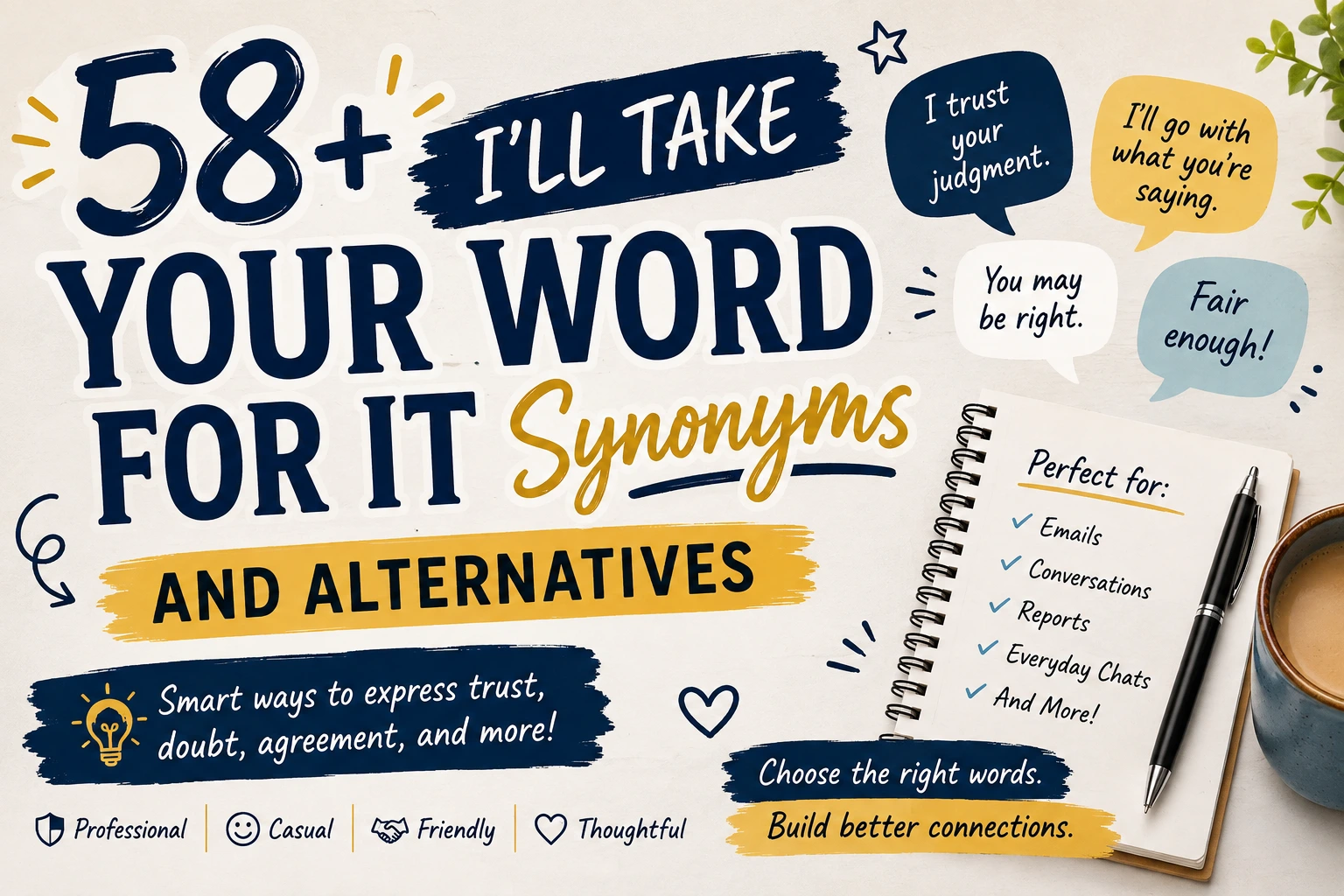
Sometimes, you believe someone completely. Other times, you are not entirely convinced, but you are willing to accept what they are saying. That is exactly where the phrase “I’ll take your word for it” fits.
The expression is useful because it can communicate trust, acceptance, skepticism, or even playful doubt depending on your tone. However, repeating the same phrase can make conversations feel predictable. Finding the right synonym or alternative allows you to express the same idea with more personality and precision.
Whether you are replying to a friend, writing a professional email, handling a disagreement, or simply responding to someone who has made a claim, there are plenty of ways to say it. Below, you will find natural alternatives ranging from polite and professional expressions to casual, humorous, and slightly skeptical responses.
What Does “I’ll Take Your Word for It” Mean?
“I’ll take your word for it” means that you are accepting what someone has said as true without personally verifying it.
For example, if a friend says, “That restaurant has the best burgers in town,” you might reply, “I’ll take your word for it.” You are essentially saying that you trust their judgment.
However, the phrase can have different meanings depending on delivery. It can sound genuinely trusting, politely doubtful, or slightly sarcastic.
For instance:
“I’ll take your word for it. You know the place better than I do.”
sounds trusting.
But:
“I’ll take your word for it, although I’m still not convinced.”
sounds skeptical.
That flexibility is why choosing the right alternative matters.
When to Use “I’ll Take Your Word for It”
You can use this expression in many everyday situations.
Casual conversations
A friend tells you about a movie you have not watched.
“I’ll take your word for it. I’ll add it to my list.”
Professional conversations
A colleague explains that a particular approach has worked before.
“I’ll take your word for it and give the approach a try.”
Text messages
Someone recommends a new restaurant.
“You say it’s good? I’ll take your word for it.”
Friendly disagreements
Someone insists that their favorite team will win.
“I’ll take your word for it, but I have my doubts.”
Lighthearted situations
A friend claims they can cook better than everyone else.
“I’ll take your word for it. The evidence is still pending.”
The phrase is flexible enough for most informal situations, but the exact alternative should match the relationship and context.
Is “I’ll Take Your Word for It” Polite or Professional?
Yes, “I’ll take your word for it” can be polite and professional, but context matters.
In a workplace conversation, it can show that you are willing to trust someone’s experience. However, if the situation involves important facts, decisions, finances, or evidence, it may sound as though you are accepting a claim without verification.
For professional communication, alternatives such as “I trust your assessment,” “I appreciate your perspective,” or “I’ll rely on your judgment” can sound more polished.
In casual conversations, you have much more freedom. Expressions such as “I’ll trust you on that,” “Fair enough,” or “I’ll take your word for it” work naturally.
Trusting and Polite Alternatives
1. I’ll Trust You on That
Meaning: You accept what the other person has said.
Tone: Friendly and trusting.
“You said the shortcut is faster, so I’ll trust you on that.”
Why to use it: This is a natural everyday alternative that sounds relaxed without being overly formal.
Purpose and Personalization: Add a personal detail when you want the response to sound warmer.
2. I’ll Take Your Advice
Meaning: You are willing to follow someone’s recommendation.
Tone: Appreciative and respectful.
“You’ve used this software before, so I’ll take your advice.”
Why to use it: Best when someone is offering guidance rather than simply stating a fact.
Purpose and Personalization: It works especially well when you genuinely value someone’s experience.
3. I Trust Your Judgment
Meaning: You believe someone is capable of making a good decision.
Tone: Professional and confident.
“You’ve handled similar projects before, so I trust your judgment.”
Why to use it: Excellent for workplace conversations and important decisions.
Purpose and Personalization: Mention the person’s experience to make the trust feel sincere.
4. I’ll Go With What You’re Saying
Meaning: You are accepting someone’s explanation or recommendation.
Tone: Casual and cooperative.
“You think this is the better option? I’ll go with what you’re saying.”
Why to use it: Useful when you want to keep a conversation moving without sounding overly formal.
Purpose and Personalization: Great for conversations where you do not need further discussion.
5. I’ll Trust Your Word
Meaning: You are accepting someone’s statement as truthful.
Tone: Respectful and sincere.
“You said everything has been checked, so I’ll trust your word.”
Why to use it: A direct alternative that retains the original meaning.
Purpose and Personalization: Works best when trust is the central point.
6. I Believe You
Meaning: You accept someone’s statement as true.
Tone: Direct and sincere.
“You said you already sent it, and I believe you.”
Why to use it: This is one of the clearest alternatives.
Purpose and Personalization: Use it when you want to remove ambiguity.
7. I’ll Take Your Advice on This
Meaning: You are willing to follow someone’s recommendation.
Tone: Respectful and thoughtful.
“You’ve been through this before, so I’ll take your advice on this.”
Why to use it: Particularly useful when someone has relevant personal experience.
Purpose and Personalization: Mention why you trust their advice for a more natural response.
8. I’m Willing to Trust You
Meaning: You are choosing to believe someone.
Tone: Honest and measured.
“I don’t know much about the subject, but I’m willing to trust you.”
Why to use it: This works when you want to acknowledge that you are making a deliberate choice to trust.
Purpose and Personalization: It can also communicate cautious confidence.
9. I’ll Rely on Your Judgment
Meaning: You are depending on someone’s knowledge or decision-making.
Tone: Professional and respectful.
“You know the market better than I do, so I’ll rely on your judgment.”
Why to use it: A strong option for workplace communication.
Purpose and Personalization: Especially effective when speaking to someone with expertise.
10. I’ll Give You the Benefit of the Doubt
Meaning: You are choosing to believe someone despite some uncertainty.
Tone: Neutral and slightly cautious.
“I’m not completely sure what happened, but I’ll give you the benefit of the doubt.”
Why to use it: Use this when you have some doubts but do not want to accuse someone of being dishonest.
Purpose and Personalization: It is useful during disagreements or misunderstandings.
Professional and Polished Alternatives
11. I Trust Your Assessment
Meaning: You believe someone’s evaluation is reliable.
Tone: Professional.
“You reviewed the figures carefully, so I trust your assessment.”
Why to use it: Ideal for workplace discussions and formal conversations.
Purpose and Personalization: Particularly suitable when someone has analyzed information.
12. I’ll Rely on Your Expertise
Meaning: You are trusting someone because of their knowledge or experience.
Tone: Formal and respectful.
“You specialize in this area, so I’ll rely on your expertise.”
Why to use it: Excellent for professional communication.
Purpose and Personalization: This sounds especially natural when addressing a specialist.
13. I’ll Defer to Your Judgment
Meaning: You are allowing someone with greater knowledge to make the call.
Tone: Formal and professional.
“You have more experience with these systems, so I’ll defer to your judgment.”
Why to use it: Best suited to professional or academic settings.
Purpose and Personalization: It demonstrates respect for another person’s expertise.
14. I Appreciate Your Perspective
Meaning: You recognize and respect someone’s point of view.
Tone: Polite and diplomatic.
“I appreciate your perspective, and I’ll consider your recommendation.”
Why to use it: Useful when you want to acknowledge someone’s opinion without necessarily agreeing completely.
Purpose and Personalization: A good choice during discussions where different viewpoints exist.
15. I’ll Keep That in Mind
Meaning: You acknowledge someone’s suggestion and will consider it.
Tone: Neutral and professional.
“Thanks for the recommendation. I’ll keep that in mind.”
Why to use it: Perfect when you want to respond politely without making a strong commitment.
Purpose and Personalization: Useful when you need time to think before deciding.
16. I’ll Take That Under Advisement
Meaning: You will consider someone’s advice carefully.
Tone: Formal and professional.
“I appreciate your recommendation, and I’ll take that under advisement.”
Why to use it: Suitable for formal discussions or situations where careful consideration is needed.
Purpose and Personalization: It can sound more measured than simply saying “I agree.”
17. I’ll Consider Your Recommendation
Meaning: You are willing to think about someone’s suggestion.
Tone: Professional and neutral.
“Thank you for the suggestion. I’ll consider your recommendation.”
Why to use it: Great for emails, meetings, and workplace conversations.
Purpose and Personalization: Use it when you are not ready to commit but want to remain respectful.
18. I’ll Take That Into Consideration
Meaning: You will think about the information or advice provided.
Tone: Formal and diplomatic.
“I understand your concerns, and I’ll take that into consideration.”
Why to use it: Useful when responding to feedback or recommendations.
Purpose and Personalization: It allows you to acknowledge someone without immediately agreeing.
19. I’m Comfortable Relying on Your Assessment
Meaning: You feel confident enough to trust someone’s evaluation.
Tone: Professional and confident.
“You’ve reviewed the proposal thoroughly, so I’m comfortable relying on your assessment.”
Why to use it: Appropriate for workplace or expert discussions.
Purpose and Personalization: This works particularly well when evidence or expertise supports the person’s opinion.
20. I’ll Proceed Based on Your Recommendation
Meaning: You are going to act according to someone’s advice.
Tone: Professional and decisive.
“Since you’ve reviewed the options, I’ll proceed based on your recommendation.”
Why to use it: Best when a decision or action needs to follow.
Purpose and Personalization: This expression sounds confident rather than passive.
Casual and Conversational Alternatives
21. Fair Enough
Meaning: You accept someone’s point.
Tone: Casual and relaxed.
“You think the second option is better? Fair enough.”
Why to use it: Great for everyday conversations.
Purpose and Personalization: Short and natural when you do not need a long response.
22. I’ll Go With You on That
Meaning: You agree to accept someone’s opinion.
Tone: Friendly and conversational.
“You think we should leave early? I’ll go with you on that.”
Why to use it: Useful among friends, classmates, or colleagues.
Purpose and Personalization: It sounds cooperative rather than overly trusting.
23. I’ll Trust You This Time
Meaning: You are choosing to believe someone, sometimes playfully.
Tone: Casual and teasing.
“You promise this restaurant is good? Fine, I’ll trust you this time.”
Why to use it: Perfect for playful conversations.
Purpose and Personalization: The phrase can carry a humorous hint of skepticism.
24. I’ll Believe You
Meaning: You are accepting what someone said.
Tone: Casual and direct.
“You really finished the whole assignment? I’ll believe you.”
Why to use it: Works naturally in texts and everyday conversations.
Purpose and Personalization: Add a playful tone when you are not completely convinced.
25. Sounds Convincing
Meaning: What someone said seems believable.
Tone: Casual and slightly playful.
“You have a pretty good explanation. Sounds convincing.”
Why to use it: Good when you want to acknowledge someone’s argument.
Purpose and Personalization: Depending on your tone, it can be sincere or mildly skeptical.
26. You’ve Got Me Convinced
Meaning: Someone has successfully persuaded you.
Tone: Friendly and confident.
“That restaurant really does sound worth trying. You’ve got me convinced.”
Why to use it: Use this when someone has genuinely changed your mind.
Purpose and Personalization: It is more enthusiastic than simply saying “I believe you.”
27. I’m Sold
Meaning: You are convinced or persuaded.
Tone: Casual and energetic.
“You had me at free dessert. I’m sold.”
Why to use it: Excellent for informal conversations.
Purpose and Personalization: Often works best when the situation is lighthearted.
28. You Make a Good Case
Meaning: Someone has presented a convincing argument.
Tone: Thoughtful and conversational.
“I hadn’t considered that option, but you make a good case.”
Why to use it: Useful when you respect someone’s reasoning.
Purpose and Personalization: It acknowledges their argument without automatically declaring them completely correct.
29. I’ll Give You That
Meaning: You admit someone has made a valid point.
Tone: Casual and confident.
“Okay, I’ll give you that. Your explanation actually makes sense.”
Why to use it: Perfect for friendly debates.
Purpose and Personalization: It can sound playful when used between friends.
30. You May Be Right
Meaning: You acknowledge that someone could be correct.
Tone: Neutral and thoughtful.
“You may be right about the timing.”
Why to use it: Good when you are not fully convinced but want to remain open-minded.
Purpose and Personalization: This is especially useful during disagreements.
Skeptical and Playful Alternatives
31. If You Say So
Meaning: You are accepting someone’s statement without necessarily believing it.
Tone: Skeptical or playful.
“You say you didn’t eat the last cookie? If you say so.”
Why to use it: Best for casual situations where some teasing is involved.
Purpose and Personalization: Tone matters greatly because it can sound sarcastic.
32. I’ll Have to Trust You on That
Meaning: You cannot verify something yourself, so you are trusting the other person.
Tone: Friendly and cautious.
“I’ve never been there, so I’ll have to trust you on that.”
Why to use it: A close alternative to the original expression.
Purpose and Personalization: It works especially well when you lack personal experience.
33. I’ll Take Your Claim at Face Value
Meaning: You are accepting a statement without investigating it further.
Tone: Formal and slightly skeptical.
“I’ll take your claim at face value for now.”
Why to use it: Useful when you want to acknowledge a statement while maintaining some distance.
Purpose and Personalization: Better suited to serious or analytical conversations.
34. I’ll Assume You’re Right
Meaning: You are choosing to accept someone’s statement as correct.
Tone: Neutral and measured.
“I haven’t checked the numbers myself, so I’ll assume you’re right.”
Why to use it: Good when you want to be honest about uncertainty.
Purpose and Personalization: It clearly communicates that your agreement is based on trust rather than verification.
35. I’ll Give You the Win on This One
Meaning: You are allowing someone to be considered correct in an argument.
Tone: Playful and friendly.
“Fine, I’ll give you the win on this one.”
Why to use it: Excellent for friendly debates.
Purpose and Personalization: It keeps disagreements light rather than confrontational.
36. I Suppose I’ll Believe You
Meaning: You are reluctantly accepting someone’s statement.
Tone: Playful and skeptical.
“You really remembered everything? I suppose I’ll believe you.”
Why to use it: Best with friends or people who understand your humor.
Purpose and Personalization: It adds personality without becoming openly confrontational.
37. I’ll Let That One Slide
Meaning: You are choosing not to challenge someone.
Tone: Playful and teasing.
“You say you didn’t forget my birthday? I’ll let that one slide.”
Why to use it: Useful when someone has made a questionable claim in a joking context.
Purpose and Personalization: Keep it light so it does not sound genuinely hostile.
38. I’ll Pretend I Believe You
Meaning: You are jokingly saying that you do not completely believe someone.
Tone: Humorous and sarcastic.
“You cleaned your entire room in ten minutes? I’ll pretend I believe you.”
Why to use it: Best for close friends.
Purpose and Personalization: This is intentionally humorous rather than genuinely trusting.
39. That’s Your Story, and I’m Sticking With It
Meaning: You are humorously accepting someone’s version of events.
Tone: Funny and sarcastic.
“You say the vase broke by itself? That’s your story, and I’m sticking with it.”
Why to use it: Great for playful situations.
Purpose and Personalization: Use only when everyone understands that you are joking.
40. I’ll File That Under “Probably True”
Meaning: You are humorously treating a statement as possibly true.
Tone: Witty and sarcastic.
“You claim you can finish that project tonight? I’ll file that under ‘probably true.’”
Why to use it: Works well in casual conversations.
Purpose and Personalization: It adds humor while leaving room for doubt.
Thoughtful and Diplomatic Alternatives
41. I Understand Where You’re Coming From
Meaning: You recognize someone’s perspective.
Tone: Empathetic and mature.
“I understand where you’re coming from, and I can see why you made that decision.”
Why to use it: Useful when you want to acknowledge someone without necessarily agreeing.
Purpose and Personalization: Excellent during sensitive conversations.
42. I See Your Point
Meaning: You understand the reasoning behind someone’s argument.
Tone: Thoughtful and diplomatic.
“I see your point, and I think there’s something worth considering there.”
Why to use it: Great for disagreements and discussions.
Purpose and Personalization: It shows openness without forcing agreement.
43. That Makes Sense to Me
Meaning: You find someone’s explanation logical.
Tone: Friendly and sincere.
“Now that you’ve explained it that way, that makes sense to me.”
Why to use it: Use this when someone’s explanation has genuinely clarified something.
Purpose and Personalization: It sounds more positive than simply saying you believe them.
44. I’m Open to That Possibility
Meaning: You are willing to consider that someone may be correct.
Tone: Mature and neutral.
“I haven’t seen the results yet, but I’m open to that possibility.”
Why to use it: Ideal when you want to remain objective.
Purpose and Personalization: Particularly useful in analytical or professional conversations.
45. I’m Willing to Accept That
Meaning: You are prepared to accept someone’s explanation.
Tone: Mature and measured.
“I don’t have all the information, but I’m willing to accept that explanation.”
Why to use it: Good for serious discussions.
Purpose and Personalization: It communicates acceptance without excessive enthusiasm.
46. I’ll Give Your Explanation Some Credit
Meaning: You acknowledge that someone’s explanation is reasonable.
Tone: Thoughtful and slightly playful.
“I’m still unsure, but I’ll give your explanation some credit.”
Why to use it: Useful when you are partially convinced.
Purpose and Personalization: This expression leaves room for further discussion.
47. I’m Prepared to Take Your Word for It
Meaning: You are deliberately choosing to trust someone’s statement.
Tone: Formal and measured.
“I haven’t verified the figures, but I’m prepared to take your word for it.”
Why to use it: A polished version of the original phrase.
Purpose and Personalization: Particularly useful in professional conversations.
48. I’ll Accept That for Now
Meaning: You are temporarily accepting someone’s explanation.
Tone: Neutral and cautious.
“I don’t have enough information to confirm it, but I’ll accept that for now.”
Why to use it: Excellent when you want to remain open to changing your opinion later.
Purpose and Personalization: It communicates flexibility rather than blind trust.
49. I’m Inclined to Believe You
Meaning: You currently have more reason to believe someone than doubt them.
Tone: Formal and thoughtful.
“Based on what you’ve explained, I’m inclined to believe you.”
Why to use it: A sophisticated option for serious conversations.
Purpose and Personalization: It communicates trust while recognizing that certainty may not be absolute.
50. I Have No Reason to Doubt You
Meaning: You do not currently have evidence suggesting someone is dishonest.
Tone: Calm and sincere.
“You’ve always been honest with me, so I have no reason to doubt you.”
Why to use it: Best when trust is important.
Purpose and Personalization: This expression can strengthen a personal or professional relationship.
More Creative Alternatives
51. Consider Me Convinced
Meaning: You are saying that someone has persuaded you.
Tone: Confident and slightly playful.
“After hearing all that, consider me convinced.”
Why to use it: Great when someone has given a convincing explanation.
Purpose and Personalization: It sounds more decisive than “I’ll take your word for it.”
52. You’ve Earned My Trust on This One
Meaning: You believe someone based on their reliability or explanation.
Tone: Warm and confident.
“You were right about the last project, so you’ve earned my trust on this one.”
Why to use it: Useful when trust is based on someone’s track record.
Purpose and Personalization: Mentioning past reliability makes the statement more meaningful.
53. I’m Taking You at Your Word
Meaning: You are accepting someone’s statement as truthful.
Tone: Formal and direct.
“You said the documents were submitted, so I’m taking you at your word.”
Why to use it: A direct synonym for the original phrase.
Purpose and Personalization: Suitable for both professional and personal contexts.
54. I’ll Accept Your Word on That
Meaning: You are accepting someone’s statement without independent proof.
Tone: Polite and measured.
“I haven’t checked the details myself, but I’ll accept your word on that.”
Why to use it: Useful when you want to communicate trust without overstating certainty.
Purpose and Personalization: Works well in situations where verification is not immediately possible.
55. I’ll Take That as Truth
Meaning: You are choosing to accept what someone has said as true.
Tone: Direct and serious.
“You’ve explained everything clearly, so I’ll take that as truth.”
Why to use it: Best for serious conversations rather than casual texting.
Purpose and Personalization: It can sound formal, so use it selectively.
56. You Have My Trust
Meaning: You are openly expressing confidence in someone.
Tone: Strong and sincere.
“You have my trust, so I’ll follow your recommendation.”
Why to use it: Ideal when you want to make your confidence unmistakable.
Purpose and Personalization: Stronger than simply saying you believe someone.
57. I’m Willing to Take You at Your Word
Meaning: You are choosing to trust someone’s statement.
Tone: Polite and cautious.
“I haven’t experienced it myself, but I’m willing to take you at your word.”
Why to use it: A balanced alternative that combines trust with a little caution.
Purpose and Personalization: Excellent for situations where you want to avoid sounding overly certain.
58. I’ll Accept Your Version of Events
Meaning: You are choosing to accept someone’s account of what happened.
Tone: Neutral and sometimes skeptical.
“I wasn’t there, so I’ll accept your version of events.”
Why to use it: Particularly useful when discussing conflicting accounts.
Purpose and Personalization: It acknowledges someone’s explanation without claiming absolute certainty.
Conclusion
“I’ll take your word for it” is a flexible phrase, but it is far from your only option. Depending on the situation, you can sound trusting, professional, thoughtful, skeptical, playful, or completely convinced with a simple change of wording.
Expressions such as “I trust your judgment” work well in professional settings, while “I’m sold” or “Fair enough” feels more natural with friends. When you are uncertain, “You may be right” or “I’ll give you the benefit of the doubt” lets you stay open without pretending to be completely convinced.
Discover more
how to respond to hanging in there