
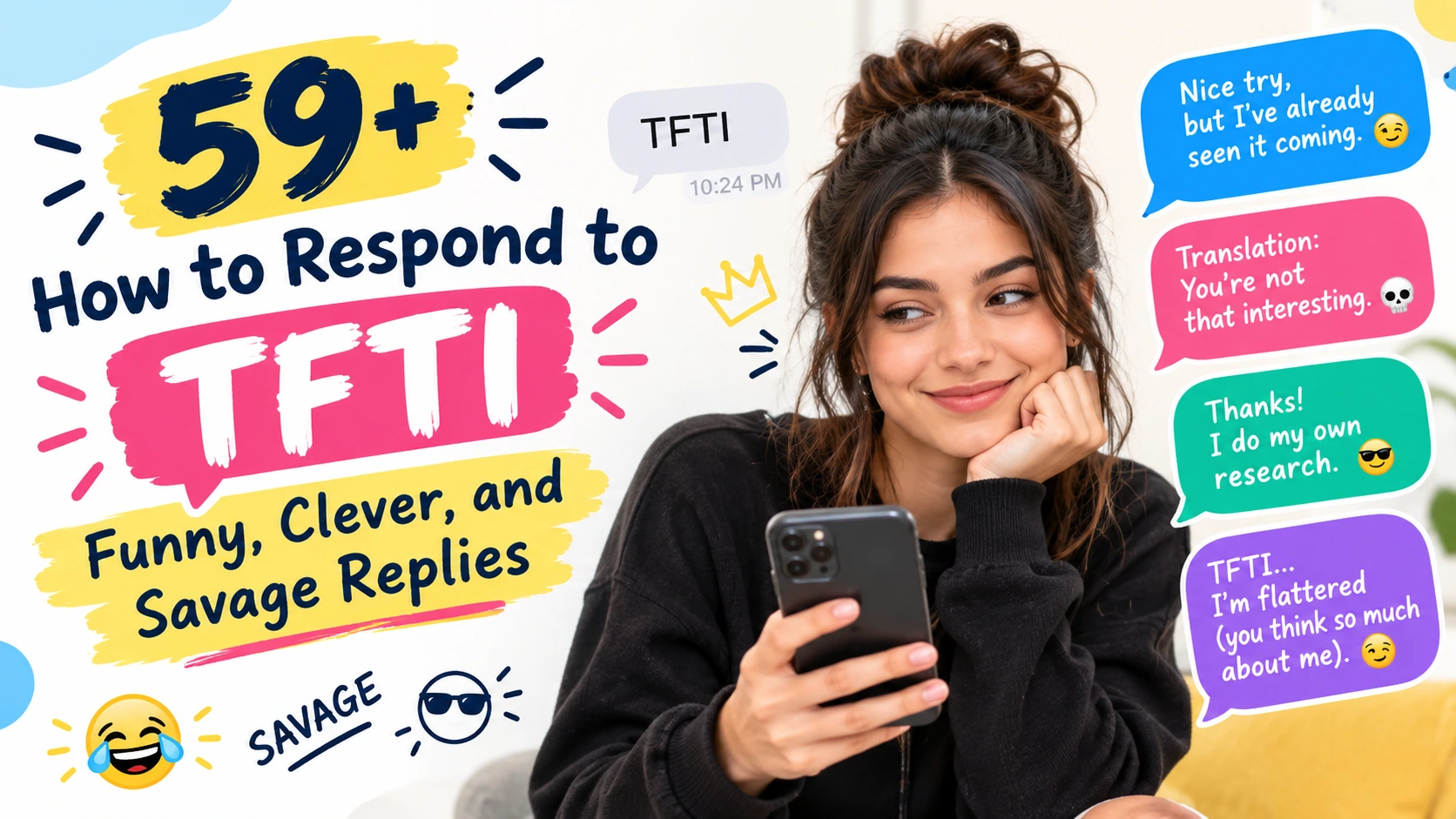
Have you ever posted pictures from a fun outing, only to receive a message saying “TFTI”? That little abbreviation can mean different things. Your friend might be joking, someone might feel left out, or your crush could be looking for an excuse to start a conversation. So, what should you say back?
TFTI stands for “Thanks for the Invite.” People often use it sarcastically when they were not invited to an event. Your response can make the conversation funny, clear up a misunderstanding, or set a boundary without starting an argument.
The best reply depends on the person and the situation. For example, a playful comeback may work with your best friend, while a sincere message might be better for someone who feels hurt. Below, you will find 64 responses to TFTI, with meanings, tones, and realistic examples to help you choose the right words.
What Does TFTI Mean?
TFTI is short for “Thanks for the Invite.” People commonly use it in text messages, social media comments, and group chats.
Although the words sound polite, the meaning is often sarcastic. Someone might send TFTI after seeing pictures of a party, dinner, trip, or gathering they did not attend.
For example, imagine you go out for dinner with three friends. Later, another friend sees your Instagram story and messages, “TFTI.”
They probably are not thanking you for an invitation. Instead, they are pointing out that you did not invite them.
However, not every TFTI message expresses genuine disappointment. Some people use it as harmless teasing. Others may feel excluded and want an explanation.
Before replying, consider your relationship with the sender. A funny comeback can work well with a close friend. On the other hand, an honest apology may be better if someone feels hurt.
When Should You Use a TFTI Reply?
Your response should match the situation. Here are a few common examples.
- With friends: Use a funny comeback to keep the conversation light.
- With your crush: Try a playful or flirty response to suggest future plans.
- With someone who feels excluded: Acknowledge their feelings and explain what happened.
- With an acquaintance: Keep your reply polite and avoid unnecessary sarcasm.
- At work: Use professional language if the event involved colleagues or a business meeting.
For instance, you could tell a close friend, “Your invitation is still loading.” However, if a colleague missed an important work meeting, a better response would be, “I’m sorry you weren’t included. I’ll make sure you’re informed about future meetings.”
Is TFTI Polite or Professional?
TFTI is an informal expression. Its tone depends on the relationship between the people involved.
Among close friends, it can be funny and harmless. However, it may sound passive-aggressive when someone uses it to express genuine disappointment.
In professional settings, TFTI is usually not the best choice. It can create confusion, especially when the event involves work responsibilities.
The same rule applies to your response. A savage comeback might entertain your friends, but it could damage a professional relationship. Therefore, choose your words carefully.
You can be funny without being cruel. Likewise, you can set boundaries without explaining every personal decision.
The following replies cover different situations, from playful teasing to sincere apologies. Each option includes its meaning, tone, and a realistic example.
Funny and Playful Responses
These replies work best when you and the other person enjoy joking around. They keep the conversation entertaining without making the situation too serious.
1. “Your invitation must have gotten lost in the mail.”
Meaning: You jokingly suggest that the invitation disappeared.
Tone: Playful and sarcastic.
Example: Your friend sees your dinner pictures and texts, “TFTI.” You reply, “Your invitation must have gotten lost in the mail.”
Why it works: The excuse is obviously silly, so it turns the complaint into a joke.
2. “You were there in spirit.”
Meaning: You pretend the person joined the event in an imaginary way.
Tone: Friendly and lighthearted.
Example: Your best friend complains about missing movie night. You answer, “You were there in spirit.”
Why it works: It is short, warm, and easy to use with someone who understands your humor.
3. “The invitation is still loading.”
Meaning: You joke that a digital invitation has not arrived yet.
Tone: Casual and witty.
Example: Your friend comments on your café story with “TFTI.” You respond, “The invitation is still loading.”
Why it works: The technology reference makes the reply feel modern and playful.
4. “We saved you a seat in our thoughts.”
Meaning: You jokingly claim that you remembered the person, even though they were absent.
Tone: Silly and friendly.
Example: A friend says they wish they had joined your outing. You reply, “We saved you a seat in our thoughts.”
Why it works: It keeps the conversation light without attacking anyone.
5. “The guest list was written in invisible ink.”
Meaning: You pretend that the invitation list existed but could not be seen.
Tone: Creative and sarcastic.
Example: Your friend asks why they missed your dinner. You answer, “The guest list was written in invisible ink.”
Why it works: The absurd explanation makes your sarcasm clear.
6. “We thought you were booked and busy.”
Meaning: You suggest that the person was too busy to attend.
Tone: Casual and teasing.
Example: Your friend sends “TFTI” after seeing your weekend photos. You reply, “We thought you were booked and busy.”
Why it works: It offers a playful excuse without making the conversation awkward.
7. “Next time, we’ll consult your royal calendar.”
Meaning: You tease the person as if their schedule needs special approval.
Tone: Dramatic and humorous.
Example: Your friend complains about missing your outing. You say, “Next time, we’ll consult your royal calendar.”
Why it works: The exaggerated formality makes the reply entertaining.
8. “We didn’t want the paparazzi following you.”
Meaning: You pretend the person is too famous to attend an ordinary event.
Tone: Playful and exaggerated.
Example: Your friend reacts to your group photo with “TFTI.” You answer, “We didn’t want the paparazzi following you.”
Why it works: It turns the situation into a joke about celebrity status.
Savage and Sarcastic Responses
These replies are sharper than the playful options above. Use them with friends who enjoy roasting each other, rather than someone who seems genuinely upset.
9. “You noticed. That’s a good start.”
Meaning: You sarcastically acknowledge that the person realized they were not invited.
Tone: Dry and confident.
Example: An acquaintance comments “TFTI” on your group photo. You reply, “You noticed. That’s a good start.”
Why it works: The short response delivers a pointed comeback without a long argument.
10. “Not every plan needs a full attendance sheet.”
Meaning: You suggest that not every gathering must include everyone.
Tone: Firm and sarcastic.
Example: Someone questions why they missed your small dinner. You answer, “Not every plan needs a full attendance sheet.”
Why it works: It communicates that smaller gatherings are perfectly reasonable.
11. “We were going for quality time, not a headcount.”
Meaning: You explain that the gathering focused on spending time with a particular group.
Tone: Confident and witty.
Example: A friend asks why only a few people attended your outing. You reply, “We were going for quality time, not a headcount.”
Why it works: It makes your point without directly insulting the sender.
12. “The invitation committee declined your appeal.”
Meaning: You pretend an imaginary committee decided who could attend.
Tone: Sarcastic and theatrical.
Example: Your friend demands an explanation for missing movie night. You say, “The invitation committee declined your appeal.”
Why it works: The mock-official tone makes an ordinary complaint sound ridiculous.
13. “I’ll add your complaint to the meeting minutes.”
Meaning: You pretend to record the person’s complaint formally.
Tone: Dry and humorous.
Example: A friend jokingly complains about missing your dinner. You respond, “I’ll add your complaint to the meeting minutes.”
Why it works: It uses workplace language to create an unexpected joke.
14. “We can’t all be on every guest list.”
Meaning: You point out that invitations depend on the event and the people involved.
Tone: Direct and confident.
Example: An acquaintance complains about not being invited. You reply, “We can’t all be on every guest list.”
Why it works: It establishes a boundary without making the issue personal.
15. “We’ll forward your feedback to absolutely nobody.”
Meaning: You jokingly dismiss the complaint.
Tone: Savage and exaggerated.
Example: Your best friend sends a dramatic “TFTI.” You answer, “We’ll forward your feedback to absolutely nobody.”
Why it works: It is intentionally over-the-top, making it suitable for friends who enjoy sarcastic humor.
16. “The guest list had a character limit.”
Meaning: You pretend that a limited number of characters determined the guest list.
Tone: Witty and sarcastic.
Example: Your friend complains about missing a small birthday dinner. You reply, “The guest list had a character limit.”
Why it works: It offers an original excuse instead of a predictable comeback.
Flirty Responses for Your Crush
If your crush sends TFTI, they might be teasing you or hinting that they want to spend time together. These replies add charm while keeping things natural.
17. “I’ll make it up to you with a date.”
Meaning: You turn the missed invitation into an opportunity to suggest a date.
Tone: Flirty and confident.
Example: Your crush replies to your dinner story with “TFTI.” You say, “I’ll make it up to you with a date.”
Why it works: It communicates interest without requiring a long explanation.
18. “The night would’ve been better with you.”
Meaning: You suggest that their presence would have made the event more enjoyable.
Tone: Sweet and flirtatious.
Example: Your crush asks why they were not invited to your café outing. You reply, “The night would’ve been better with you.”
Why it works: It makes the person feel special and opens the door to future plans.
19. “Next time, you’re my first invitation.”
Meaning: You suggest that you would prioritize inviting them in the future.
Tone: Warm and confident.
Example: Your crush texts “TFTI” after seeing your photos. You respond, “Next time, you’re my first invitation.”
Why it works: It is affectionate without being too intense.
20. “Maybe I was waiting for you to make the first move.”
Meaning: You suggest that both of you may have been waiting for the other to initiate plans.
Tone: Teasing and flirty.
Example: Your crush says, “TFTI. You never invite me anywhere.” You reply, “Maybe I was waiting for you to make the first move.”
Why it works: It encourages them to take initiative while keeping the conversation playful.
21. “Let’s fix that. Coffee this weekend?”
Meaning: You move directly from the missed invitation to making a new plan.
Tone: Direct and charming.
Example: Your crush sends “TFTI” after your café story. You answer, “Let’s fix that. Coffee this weekend?”
Why it works: It turns playful teasing into a real opportunity to meet.
22. “You would’ve stolen all my attention anyway.”
Meaning: You suggest that they would have been the center of your attention.
Tone: Flirtatious and teasing.
Example: Your crush jokes about missing your party. You respond, “You would’ve stolen all my attention anyway.”
Why it works: It offers a compliment without sounding overly serious.
23. “The one-on-one invitation is still available.”
Meaning: You offer a more personal alternative to the event they missed.
Tone: Confident and flirty.
Example: Your crush says they would have enjoyed joining your outing. You reply, “The one-on-one invitation is still available.”
Why it works: It suggests spending time together without putting too much pressure on the conversation.
24. “Next time, I’ll save you a seat beside me.”
Meaning: You show that you would like them to join you in the future.
Tone: Sweet and romantic.
Example: Your crush sends “TFTI” after seeing your dinner photos. You say, “Next time, I’ll save you a seat beside me.”
Why it works: It is subtle enough for early flirting while still showing interest.
Sweet and Sincere Responses
Sometimes, the person behind TFTI genuinely feels excluded. In that case, an honest reply will usually work better than sarcasm.
25. “I’m sorry you felt left out. That wasn’t my intention.”
Meaning: You acknowledge their feelings and clarify that you did not mean to hurt them.
Tone: Sincere and considerate.
Example: Your friend sounds upset after seeing your birthday photos. You reply, “I’m sorry you felt left out. That wasn’t my intention.”
Why it works: It recognizes their feelings without arguing about them.
26. “It was a last-minute plan. I’ll let you know next time.”
Meaning: You explain that the gathering happened spontaneously and offer to keep them informed.
Tone: Friendly and reassuring.
Example: A friend asks why they missed your dinner. You answer, “It was a last-minute plan. I’ll let you know next time.”
Why it works: It gives context and offers a simple way forward.
27. “We should plan something together soon.”
Meaning: You express interest in spending time with the person on another occasion.
Tone: Warm and inclusive.
Example: Your friend says they wish they had joined your outing. You reply, “We should plan something together soon.”
Why it works: It focuses on the future instead of dwelling on the missed event.
28. “I understand why it might have looked that way.”
Meaning: You acknowledge how the situation appeared from their perspective.
Tone: Mature and understanding.
Example: Your friend says the group photos made them feel excluded. You respond, “I understand why it might have looked that way.”
Why it works: It encourages an honest conversation without becoming defensive.
29. “I should’ve communicated better. I’m sorry.”
Meaning: You accept responsibility for a communication mistake.
Tone: Honest and accountable.
Example: You forgot to tell a friend about a gathering they reasonably expected to attend. You say, “I should’ve communicated better. I’m sorry.”
Why it works: A direct apology can help rebuild trust.
30. “It wasn’t meant to be personal.”
Meaning: You explain that the decision was not intended as a rejection.
Tone: Calm and reassuring.
Example: A colleague feels overlooked after a small team lunch. You reply, “It wasn’t meant to be personal. We arranged it around a specific project discussion.”
Why it works: It helps clear up misunderstandings when the explanation is genuine.
31. “Let’s catch up properly this week.”
Meaning: You offer a specific opportunity to reconnect.
Tone: Friendly and proactive.
Example: A friend sends a disappointed “TFTI” after your group outing. You answer, “Let’s catch up properly this week.”
Why it works: It shows interest through a practical suggestion rather than a vague promise.
32. “I didn’t realize you’d wanted to join us.”
Meaning: You explain that you did not know the person wanted to attend.
Tone: Honest and neutral.
Example: Your friend says they would have loved to come to movie night. You reply, “I didn’t realize you’d wanted to join us.”
Why it works: It can clarify a genuine misunderstanding without making excuses.
33. “Thanks for telling me how you feel.”
Meaning: You acknowledge the person’s feedback and show that you have listened.
Tone: Thoughtful and respectful.
Example: A friend explains that they felt excluded. You respond, “Thanks for telling me how you feel. I appreciate you being honest with me.”
Why it works: It keeps communication open and helps prevent resentment from building.
34. “I value our friendship, and I don’t want this to create distance between us.”
Meaning: You emphasize the relationship and express a desire to resolve the issue.
Tone: Caring and mature.
Example: A close friend feels hurt after seeing your photos. You say, “I value our friendship, and I don’t want this to create distance between us.”
Why it works: It shows that the relationship matters more than winning an argument.
Confident and Unbothered Responses
You do not have to invite everyone to every event. These replies help you maintain reasonable boundaries without becoming unnecessarily rude.
35. “Not every plan has to include everyone.”
Meaning: You explain that different gatherings can involve different people.
Tone: Confident and straightforward.
Example: An acquaintance complains about missing your small gathering. You reply, “Not every plan has to include everyone.”
Why it works: It communicates a reasonable boundary without attacking the sender.
36. “It was a small gathering, nothing personal.”
Meaning: You explain that the event was limited in size rather than intended to exclude someone.
Tone: Calm and reassuring.
Example: Someone asks why they were missing from your dinner photos. You answer, “It was a small gathering, nothing personal.”
Why it works: It gives a concise explanation without encouraging a long debate.
37. “I don’t think every outing needs an explanation.”
Meaning: You prefer not to justify every social decision.
Tone: Firm and independent.
Example: An acquaintance repeatedly questions why they were not invited. You respond, “I don’t think every outing needs an explanation.”
Why it works: It sets a boundary when someone demands more information than the situation requires.
38. “We made plans that worked for us.”
Meaning: You explain that the gathering suited the people who organized it.
Tone: Neutral and confident.
Example: A friend asks why only two people joined your outing. You reply, “We made plans that worked for us.”
Why it works: It maintains your independence without criticizing anyone.
39. “Smaller gatherings are sometimes intentional.”
Meaning: You clarify that keeping an event small can be a deliberate choice.
Tone: Mature and firm.
Example: A friend repeatedly asks why they were not invited to an intimate dinner. You say, “Smaller gatherings are sometimes intentional.”
Why it works: It explains your boundary in a calm, direct way.
40. “I’ll invite people when the plans make sense.”
Meaning: You explain that invitations depend on the occasion rather than an obligation to include everyone.
Tone: Direct and self-assured.
Example: An acquaintance expects an invitation to every weekend plan. You reply, “I’ll invite people when the plans make sense.”
Why it works: It communicates independence and sets realistic expectations.
41. “No hard feelings, just different plans.”
Meaning: You suggest that the gathering was a separate plan rather than a statement about the relationship.
Tone: Relaxed and diplomatic.
Example: A friend jokingly complains about missing your café trip. You answer, “No hard feelings, just different plans.”
Why it works: It helps keep a minor disagreement from becoming personal.
42. “I hope you had a good day too.”
Meaning: You politely redirect the conversation instead of arguing about the invitation.
Tone: Calm and slightly distant.
Example: An acquaintance sends a sarcastic “TFTI” after your weekend story. You respond, “I hope you had a good day too.”
Why it works: It is useful when you do not want to encourage more sarcasm.
43. “You’re free to make your own plans, too.”
Meaning: You remind the person that they can organize activities rather than waiting for invitations.
Tone: Assertive and direct.
Example: A friend often complains that others make plans without them. You reply, “You’re free to make your own plans, too.”
Why it works: It encourages initiative, although it may sound sharp if the person is genuinely upset.
44. “Let’s not turn a missed invitation into a bigger issue.”
Meaning: You suggest keeping the situation in proportion.
Tone: Mature and boundary-setting.
Example: A group chat becomes tense after someone complains about being left out. You say, “Let’s not turn a missed invitation into a bigger issue.”
Why it works: It redirects the discussion toward resolving the problem calmly.
Clever and Creative Comebacks
Want something more original than a standard sarcastic reply? These options use absurd explanations, wordplay, and playful exaggeration.
45. “The invitation got stuck in the plot.”
Meaning: You joke that the invitation disappeared because the event followed its own storyline.
Tone: Creative and playful.
Example: Your friend comments “TFTI” on your weekend photos. You answer, “The invitation got stuck in the plot.”
Why it works: The unusual wording makes the response memorable.
46. “Your invitation is available in the director’s cut.”
Meaning: You pretend the person will only appear in an alternate version of the event.
Tone: Dramatic and witty.
Example: A friend jokes about missing movie night. You reply, “Your invitation is available in the director’s cut.”
Why it works: It is especially effective with friends who enjoy movie references.
47. “We were operating on a very exclusive budget.”
Meaning: You jokingly blame the limited guest list on a budget restriction.
Tone: Sarcastic and inventive.
Example: Your friend sees your small dinner photos and sends “TFTI.” You respond, “We were operating on a very exclusive budget.”
Why it works: It gives an ordinary explanation an exaggerated business twist.
48. “The invitation passed away before delivery.”
Meaning: You dramatically suggest that the invitation never survived long enough to reach the person.
Tone: Absurd and theatrical.
Example: Your close friend complains about not receiving an invitation. You reply, “The invitation passed away before delivery.”
Why it works: The ridiculous explanation works well with friends who enjoy dramatic humor.
49. “We left your name in the deleted scenes.”
Meaning: You pretend the person did not make the final version of the event.
Tone: Witty and theatrical.
Example: A friend sends “TFTI” after seeing your group picture. You answer, “We left your name in the deleted scenes.”
Why it works: The movie reference creates a clever comeback without a lengthy explanation.
50. “Your attendance was postponed due to fictional circumstances.”
Meaning: You invent an intentionally ridiculous reason for the person’s absence.
Tone: Mock-formal and humorous.
Example: Your friend asks why they were not included in a spontaneous outing. You reply, “Your attendance was postponed due to fictional circumstances.”
Why it works: The formal wording contrasts with the obviously imaginary explanation.
51. “We consulted the stars, and they said you were busy.”
Meaning: You pretend astrology predicted that the person would not attend.
Tone: Playful and imaginative.
Example: Your friend sends “TFTI” after seeing your pictures. You respond, “We consulted the stars, and they said you were busy.”
Why it works: It gives the conversation a silly, unexpected twist.
52. “The guest list is under investigation.”
Meaning: You pretend the invitation decision is part of an official inquiry.
Tone: Dry and mock-serious.
Example: A friend asks why your gathering was so small. You reply, “The guest list is under investigation.”
Why it works: It creates humor by treating an ordinary event like a serious case.
53. “We’ll consider your application for the next gathering.”
Meaning: You jokingly treat an invitation as something that requires approval.
Tone: Sarcastic and playful.
Example: Your friend says, “TFTI. I demand an invitation next time.” You answer, “We’ll consider your application for the next gathering.”
Why it works: It turns the complaint into a fictional administrative process.
54. “Your complaint has been received and ignored with great care.”
Meaning: You pretend to acknowledge the message while deliberately dismissing it.
Tone: Savage and exaggerated.
Example: Your best friend repeatedly jokes about missing your outing. You reply, “Your complaint has been received and ignored with great care.”
Why it works: The exaggerated wording makes it funny among friends who enjoy roasting each other.
Short and Casual Replies for Texting
Sometimes, a short response works better than a clever paragraph. These options are easy to remember and fit naturally into text messages and group chats.
55. “Next time, maybe.”
Meaning: You leave open the possibility of including the person in a future plan.
Tone: Casual and noncommittal.
Example: A friend sends “TFTI” after your café outing. You respond, “Next time, maybe.”
Why it works: It keeps the exchange brief without making a firm promise.
56. “You know where to find us.”
Meaning: You suggest that the person can reach out or join future plans when appropriate.
Tone: Friendly and relaxed.
Example: A close friend jokes about missing your weekend outing. You answer, “You know where to find us.”
Why it works: It keeps the conversation casual, although it may sound dismissive in a tense exchange.
57. “We’ll plan something soon.”
Meaning: You suggest arranging another opportunity to spend time together.
Tone: Warm and friendly.
Example: Your friend says they wish they had joined your dinner. You reply, “We’ll plan something soon.”
Why it works: It focuses on the future rather than the missed event.
58. “I’ll put you on the list.”
Meaning: You jokingly suggest that the person will be considered for a future invitation.
Tone: Playful and slightly sarcastic.
Example: Your friend complains about being left out of your group outing. You say, “I’ll put you on the list.”
Why it works: It is short, memorable, and easy to use in a friendly conversation.
59. “You missed a good one.”
Meaning: You point out that the event was enjoyable.
Tone: Playful and casual.
Example: Your friend asks about your dinner photos and sends “TFTI.” You reply, “You missed a good one.”
Why it works: It keeps the focus on the event instead of turning the conversation into an argument.
60. “I’ll keep you posted next time.”
Meaning: You offer to inform the person about future plans.
Tone: Friendly and reassuring.
Example: A friend says they would have liked to join your outing. You respond, “I’ll keep you posted next time.”
Why it works: It is a practical option when you genuinely want to include them in the future.
61. “You should’ve said something earlier.”
Meaning: You explain that you did not know they wanted to join.
Tone: Direct and slightly defensive.
Example: A friend complains about missing a spontaneous trip. You reply, “You should’ve said something earlier.”
Why it works: It can clarify a misunderstanding, but use a softer tone if the person feels hurt.
62. “It was a spontaneous plan.”
Meaning: You explain that the outing happened without much planning.
Tone: Neutral and casual.
Example: Someone asks why they were not invited to your café visit. You say, “It was a spontaneous plan.”
Why it works: It gives context without creating an unnecessary debate.
63. “We’ll see what happens next time.”
Meaning: You leave future plans open without making a definite commitment.
Tone: Relaxed and noncommittal.
Example: An acquaintance jokes about missing your weekend plans. You answer, “We’ll see what happens next time.”
Why it works: It keeps the conversation brief when you do not want to promise another invitation.
64. “The next one might be your chance.”
Meaning: You suggest that the person may be able to join a future event.
Tone: Lighthearted and teasing.
Example: Your friend says, “TFTI. I’m coming next time.” You reply, “The next one might be your chance.”
Why it works: It ends the exchange on a playful note without making a definite commitment.
How to Choose the Best TFTI Reply
With so many options, choosing the right response can feel confusing. Fortunately, three simple questions can help.
First, consider your relationship. A savage comeback may work with your best friend, but it could upset someone you barely know. Meanwhile, a flirty response can make sense when you and your crush already joke around.
Next, consider their feelings. If the person seems genuinely hurt, acknowledge the situation instead of making another sarcastic comment. For example, “I’m sorry you felt left out” can do more good than a clever comeback.
Finally, think about your goal. Do you want to make them laugh, suggest another outing, clear up a misunderstanding, or establish a boundary? Choose a reply that supports that goal.
You do not have to explain every social decision. However, a brief and honest explanation can prevent unnecessary tension when someone has misunderstood your intentions.
Common Mistakes to Avoid When Responding to TFTI
Even a funny response can go wrong when the timing or tone feels off. Keep these common mistakes in mind.
1. Taking every message personally. Some people use TFTI as harmless teasing. Read the context before assuming they are angry.
2. Using sarcasm with someone who is genuinely hurt. A savage reply may make the situation worse. Instead, acknowledge their feelings and explain what happened.
3. Giving a long defensive explanation. You do not need to justify every gathering. Keep your response short unless the situation requires a more detailed conversation.
4. Making personal attacks. A witty comeback can be funny without targeting someone’s appearance, family, finances, or insecurities.
5. Making promises you do not mean. Do not say “I’ll invite you next time” unless you genuinely intend to do so. A polite, neutral reply is better than a promise you cannot keep.
6. Ignoring the professional context. If the message concerns a work event, choose clear and respectful language rather than a sarcastic one-liner.
Tips for Giving a Clever and Natural Reply
A good comeback does not have to be complicated. In fact, shorter replies often sound more natural in text conversations.
Match their energy. If your friend is joking, respond with a little humor. If they seem upset, take a more thoughtful approach.
Keep your confidence. You do not need to become defensive or explain every detail. A calm response can communicate your point without starting a debate.
Know when to move on. Sometimes, one reply is enough. If the other person keeps making sarcastic comments, you can redirect the conversation or stop responding.
Most importantly, choose words that sound like you. A reply that feels natural will usually work better than a clever line that does not match your personality.
Conclusion
Knowing how to respond to TFTI can help you handle playful teasing, awkward moments, and genuine misunderstandings with confidence. A funny comeback can make your friends laugh, while a flirty reply can create an opportunity to make plans with your crush. When someone feels excluded, a sincere message may be the better choice.
The key is to understand the tone before choosing your words. You do not have to invite everyone to every event, and you do not have to turn every sarcastic message into an argument.
Stay confident, keep your humor natural, and remember that the best response is the one that fits the moment.
Discover more