

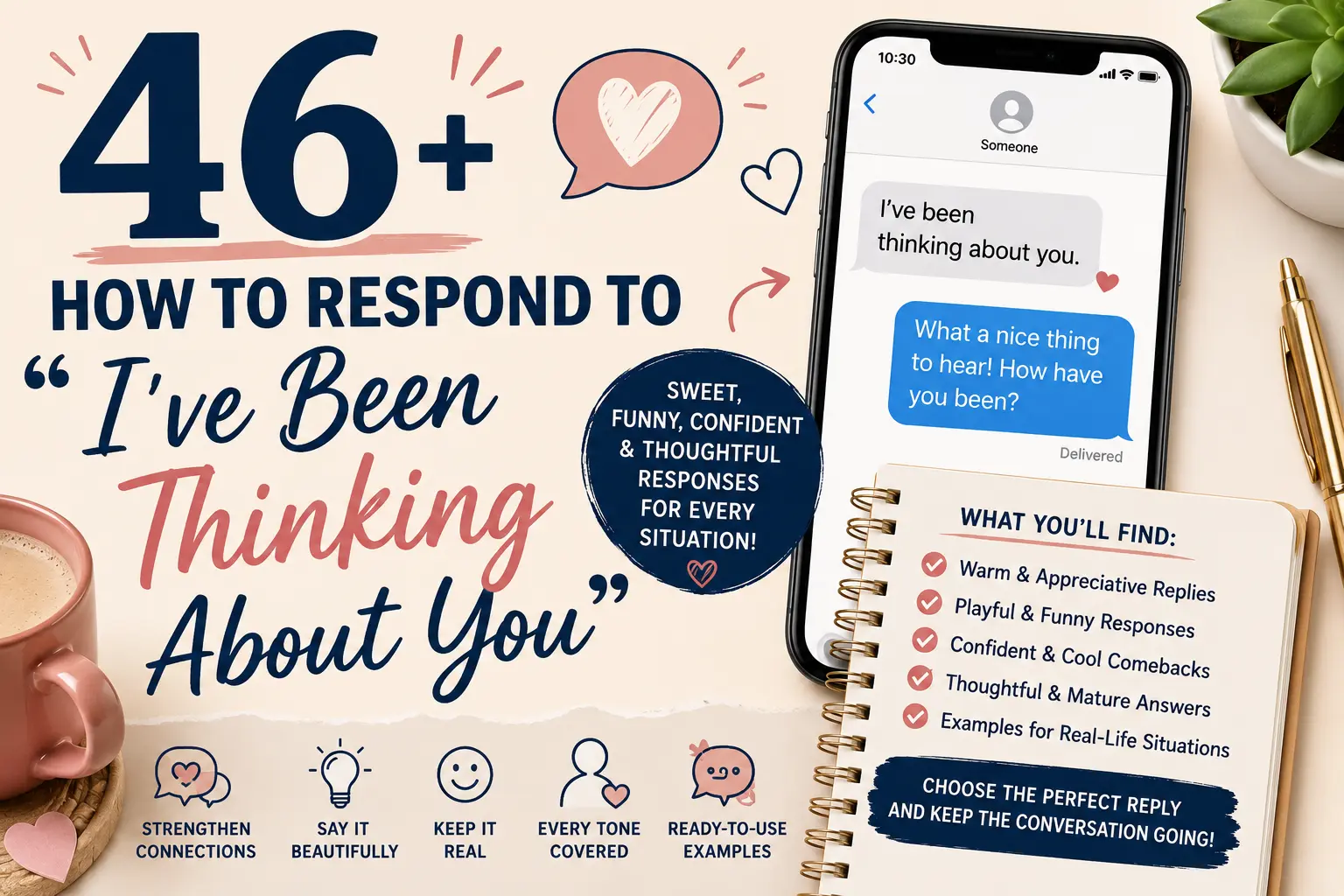
Few messages can make you pause quite like “I’ve been thinking about you.” It is short, simple, and open to interpretation. Depending on who sends it, the message could be a warm check-in from a friend, a thoughtful note from someone you know, or a sign that someone wants to reconnect.
That is why knowing how to respond to “I’ve been thinking about you” can sometimes feel surprisingly difficult. You may want to keep things friendly, show that you appreciate the message, ask what prompted it, or respond with confidence without making the conversation awkward.
The best response depends on your relationship with the person and what you genuinely want to communicate. From polite replies to playful comebacks and thoughtful responses, having a few options ready can help you keep the conversation natural and authentic.
Section 1: What Does “I’ve Been Thinking About You” Mean?
“I’ve been thinking about you” generally means that someone has recently remembered you or had you on their mind.
The meaning can change depending on the relationship and context.
A friend might say it because they have not spoken to you recently. Someone you know might send it because something reminded them of you. In a more personal conversation, it may suggest that the person wants to reconnect or continue talking.
The phrase itself is warm and personal, but it does not automatically have one specific meaning. The surrounding conversation matters.
For example:
“I saw that old café today and remembered you. I’ve been thinking about you.”
Here, the message clearly connects the person’s thoughts to a specific memory.
Another example is:
“I’ve been thinking about you lately. How have you been?”
This sounds more like a thoughtful attempt to reconnect.
When deciding how to respond, consider the sender, your relationship with them, and the kind of conversation you want to have.
Section 2: When to Use It
Responses to “I’ve been thinking about you” are most useful in personal conversations, texting, social media messages, and casual chats.
You can choose a response based on the situation.
With a Friend
If a friend says they have been thinking about you, a warm response works well.
Example: “That’s really sweet of you to say. I’ve been meaning to check in too.”
With Someone You Have Not Spoken To Recently
You can use the opportunity to restart the conversation.
Example: “It’s good to hear from you. How have things been?”
When You Want to Keep Things Light
A playful response can prevent the conversation from becoming unnecessarily serious.
Example: “Hopefully you were thinking nice things.”
When You Want More Context
If you are curious about why they reached out, simply ask.
Example: “Oh really? What made you think of me?”
In a Professional Setting
The phrase itself is usually personal rather than professional. If someone uses it in a workplace context, a neutral response is generally safer.
Example: “That’s kind of you. I hope everything is going well on your side.”
Section 3: Is It Polite or Professional?
“I’ve been thinking about you” is polite, but it is generally personal rather than professional.
It can work naturally between friends, classmates, relatives, or people who already have a personal connection. However, it may sound overly personal in a formal business email or professional conversation.
If someone says it to you in a casual setting, you can respond warmly or playfully depending on your relationship.
If the message comes from a colleague or professional contact, keep your response neutral unless you already have an informal relationship.
For example:
Casual: “That’s nice to hear. What’s been on your mind?”
Professional: “That’s kind of you. I hope you’ve been doing well too.”
The goal is not to match the exact emotional intensity of the original message. Instead, respond in a way that feels comfortable and appropriate for the relationship.
Warm and Appreciative Responses
1. “That’s really kind of you to say.”
Meaning: You appreciate the person’s message.
Tone: Warm and polite.
“That’s really kind of you to say. I hope you’ve been doing well too.”
Short Explanation: This is a safe response when you want to acknowledge the message without making the conversation overly personal.
Purpose and Personalization: Add a question afterward if you want to continue the conversation.
2. “That means a lot.”
Meaning: You genuinely appreciate what they said.
Tone: Sincere and thoughtful.
“That means a lot. It’s good hearing from you.”
Short Explanation: This response works when you want to show that their message mattered to you.
Purpose and Personalization: It is especially suitable when you already share a meaningful friendship.
3. “I appreciate that.”
Meaning: You are grateful that they remembered you.
Tone: Calm and mature.
“I appreciate that. I hope everything has been going well for you.”
Short Explanation: A simple response that does not create unnecessary assumptions about the sender’s intentions.
Purpose and Personalization: Good for conversations where you want to remain composed.
4. “That’s nice to hear.”
Meaning: You are pleased that they thought about you.
Tone: Friendly and neutral.
“That’s nice to hear. How have you been?”
Short Explanation: This is one of the easiest responses when you want to keep the conversation comfortable.
Purpose and Personalization: Follow it with a question to encourage them to continue.
5. “I’m glad you reached out.”
Meaning: You appreciate that they contacted you.
Tone: Warm and welcoming.
“I’m glad you reached out. It’s been a while.”
Short Explanation: This response shifts attention from the original statement toward reconnecting.
Purpose and Personalization: Perfect when you genuinely want to restart communication.
6. “It’s good to hear from you.”
Meaning: You are happy they contacted you.
Tone: Friendly and mature.
“It’s good to hear from you. What have you been up to?”
Short Explanation: A natural choice when you have not spoken recently.
Purpose and Personalization: Works particularly well for old friends and acquaintances.
7. “I’ve thought about you too.”
Meaning: You are returning the sentiment.
Tone: Warm and personal.
“I’ve thought about you too. It’s been a while since we caught up.”
Short Explanation: Use this when it is genuinely true and you want to acknowledge the connection.
Purpose and Personalization: Keep the following conversation focused on catching up.
8. “Funny, I was just thinking about you too.”
Meaning: You happened to think about them around the same time.
Tone: Friendly and surprised.
“Funny, I was just thinking about you too. How have you been?”
Short Explanation: This can make the conversation feel natural and spontaneous.
Purpose and Personalization: Best when the timing genuinely feels coincidental.
9. “That’s thoughtful of you.”
Meaning: You recognize their consideration.
Tone: Polite and appreciative.
“That’s thoughtful of you. I hope things are going well.”
Short Explanation: A good choice when you want to be kind without making assumptions.
Purpose and Personalization: Useful in both friendly and slightly formal conversations.
10. “I’m happy you remembered me.”
Meaning: You appreciate being remembered.
Tone: Warm and sincere.
“I’m happy you remembered me. It’s nice hearing from you.”
Short Explanation: This response acknowledges the emotional meaning of their message.
Purpose and Personalization: Use it when you genuinely appreciate the connection.
Playful and Lighthearted Responses
11. “Hopefully, I made the guest appearance worth it.”
Meaning: You jokingly suggest that being on their mind was a good thing.
Tone: Playful and humorous.
“Hopefully, I made the guest appearance worth it.”
Short Explanation: This keeps the conversation light without taking the statement too seriously.
Purpose and Personalization: Best for someone who enjoys casual humor.
12. “And what exactly were you thinking?”
Meaning: You are playfully asking for details.
Tone: Curious and teasing.
“And what exactly were you thinking?”
Short Explanation: This invites the person to explain why they contacted you.
Purpose and Personalization: Use it when you are genuinely curious and comfortable with the conversation.
13. “Well, that sounds suspicious.”
Meaning: You jokingly pretend that their statement needs investigation.
Tone: Funny and playful.
“You’ve been thinking about me? Well, that sounds suspicious.”
Short Explanation: A humorous response that keeps things relaxed.
Purpose and Personalization: Great for friends who enjoy joking around.
14. “I hope I passed the mental background check.”
Meaning: You humorously suggest that they were evaluating or remembering you.
Tone: Witty and casual.
“I hope I passed the mental background check.”
Short Explanation: This turns a sentimental statement into a playful joke.
Purpose and Personalization: Use it when humor fits your existing dynamic.
15. “Should I be concerned?”
Meaning: You jokingly ask why you have been on their mind.
Tone: Playful and curious.
“You’ve been thinking about me? Should I be concerned?”
Short Explanation: It gives the other person an easy opportunity to explain themselves.
Purpose and Personalization: Keep the tone clearly humorous.
16. “Well, I hope the thoughts were at least entertaining.”
Meaning: You jokingly comment on being remembered.
Tone: Light and humorous.
“I hope the thoughts were at least entertaining.”
Short Explanation: This works when you want to respond without becoming too serious.
Purpose and Personalization: A fun option for casual texting.
17. “Look at me living rent-free in your head.”
Meaning: You jokingly say that they have been thinking about you without effort.
Tone: Humorous and confident.
“I’ve been thinking about you.” “Look at me living rent-free in your head.”
Short Explanation: A popular casual expression that adds humor to the exchange.
Purpose and Personalization: Best among close friends or people who already joke this way.
18. “That explains the random thought I had.”
Meaning: You jokingly pretend that your own random thought was connected to them.
Tone: Playful.
“I guess that explains the random thought I had earlier.”
Short Explanation: It creates a fun sense of coincidence.
Purpose and Personalization: Works best when the conversation is already relaxed.
19. “Well, now I’m curious.”
Meaning: You want to know what caused them to think of you.
Tone: Curious and light.
“You’ve been thinking about me? Well, now I’m curious.”
Short Explanation: This is an easy way to encourage them to elaborate.
Purpose and Personalization: A good choice when you want more context.
Confident and Self-Respecting Responses
20. “I’ll take that as a compliment.”
Meaning: You interpret their message positively without overreacting.
Tone: Confident and composed.
“I’ve been thinking about you.” “I’ll take that as a compliment.”
Short Explanation: This keeps your response confident and measured.
Purpose and Personalization: Useful when you want to acknowledge the message without making assumptions.
21. “Good to know I made an impression.”
Meaning: You recognize that they remembered you.
Tone: Confident and playful.
“Good to know I made an impression.”
Short Explanation: A confident response that does not require you to reveal too much.
Purpose and Personalization: Works well when you want to maintain a relaxed attitude.
22. “I respect the honesty.”
Meaning: You appreciate their directness.
Tone: Mature and confident.
“I’ve been thinking about you.” “I respect the honesty.”
Short Explanation: This response focuses on their openness rather than guessing their intentions.
Purpose and Personalization: Particularly useful when you want a calm, straightforward conversation.
23. “Interesting. What brought that on?”
Meaning: You want to know what caused them to think about you.
Tone: Confident and curious.
“Interesting. What brought that on?”
Short Explanation: It places the conversation back with the other person and invites an explanation.
Purpose and Personalization: Great when you want clarity.
24. “I appreciate the thought.”
Meaning: You acknowledge their message respectfully.
Tone: Mature and composed.
“I appreciate the thought. I hope everything is going well with you.”
Short Explanation: This is useful when you want to remain polite without matching the same emotional tone.
Purpose and Personalization: Good for uncertain or complicated conversations.
25. “That’s unexpected, but nice to hear.”
Meaning: You were surprised but appreciate the message.
Tone: Honest and confident.
“That’s unexpected, but nice to hear.”
Short Explanation: It communicates surprise without sounding cold.
Purpose and Personalization: Useful when the message arrives unexpectedly.
26. “I didn’t see that coming.”
Meaning: Their message genuinely surprised you.
Tone: Casual and straightforward.
“I’ve been thinking about you.” “I didn’t see that coming.”
Short Explanation: A natural response when you want to be honest about your reaction.
Purpose and Personalization: It can easily lead into a longer conversation.
27. “Well, that certainly got my attention.”
Meaning: Their message caught you by surprise.
Tone: Confident and light.
“Well, that certainly got my attention.”
Short Explanation: This response acknowledges the message without revealing too much.
Purpose and Personalization: Good when you want to keep some mystery in the conversation.
28. “Noted. Now I’m curious why.”
Meaning: You acknowledge the message and ask for context.
Tone: Direct and thoughtful.
“Noted. Now I’m curious why you’ve been thinking about me.”
Short Explanation: It moves the conversation toward a clear explanation.
Purpose and Personalization: Best when you want direct communication.
Funny and Witty Responses
29. “I hope I was behaving in your imagination.”
Meaning: A humorous way to ask whether they were thinking positively about you.
Tone: Funny and playful.
“I’ve been thinking about you.” “I hope I was behaving in your imagination.”
Short Explanation: It adds humor without making the conversation too serious.
Purpose and Personalization: Use it with someone who understands your sense of humor.
30. “Should I send an invoice for occupying your thoughts?”
Meaning: You jokingly pretend that they owe you for thinking about you.
Tone: Witty and humorous.
“I’ve been thinking about you.” “Should I send an invoice for occupying your thoughts?”
Short Explanation: This exaggerates the situation for comedic effect.
Purpose and Personalization: Best for playful conversations.
31. “My work here is clearly not finished.”
Meaning: You jokingly imply that you are still memorable.
Tone: Confident and funny.
“Apparently, my work here is clearly not finished.”
Short Explanation: A playful response that turns the situation into a joke.
Purpose and Personalization: Works well when you already have a humorous dynamic.
32. “I knew my reputation would catch up with me.”
Meaning: You jokingly imply that you are memorable.
Tone: Sarcastic and playful.
“I knew my reputation would catch up with me eventually.”
Short Explanation: This response uses exaggerated confidence for humor.
Purpose and Personalization: Keep it casual and clearly joking.
33. “That sounds like a you problem.”
Meaning: You jokingly blame them for thinking about you.
Tone: Teasing and sarcastic.
“I’ve been thinking about you.” “That sounds like a you problem.”
Short Explanation: A deliberately cheeky response for close friends.
Purpose and Personalization: Avoid it if the person is being serious or vulnerable.
34. “Well, congratulations on your excellent taste.”
Meaning: You jokingly compliment yourself.
Tone: Confident and humorous.
“You’ve been thinking about me? Congratulations on your excellent taste.”
Short Explanation: This is a self-confident joke that works best with someone who knows your personality.
Purpose and Personalization: Keep it playful rather than genuinely boastful.
35. “I assume the thoughts were mostly positive.”
Meaning: You jokingly ask whether they were thinking good things.
Tone: Light and curious.
“I assume the thoughts were mostly positive.”
Short Explanation: It gives the other person an easy opening to explain what they were thinking.
Purpose and Personalization: Useful when you want to keep the conversation going.
36. “That’s a plot twist.”
Meaning: You were surprised by their message.
Tone: Casual and humorous.
“I’ve been thinking about you.” “Well, that’s a plot twist.”
Short Explanation: A short response for an unexpected message.
Purpose and Personalization: Great for casual texting.
Thoughtful and Mature Responses
37. “What made you think of me?”
Meaning: You genuinely want to know what triggered the memory.
Tone: Curious and thoughtful.
“What made you think of me?”
Short Explanation: This is one of the best responses when you want an honest explanation.
Purpose and Personalization: It encourages a meaningful conversation without making assumptions.
38. “Was there something that reminded you of me?”
Meaning: You ask whether a specific memory or event caused them to think of you.
Tone: Thoughtful and conversational.
“Was there something that reminded you of me?”
Short Explanation: This response invites the person to share the story behind their message.
Purpose and Personalization: Particularly good for reconnecting with someone.
39. “What’s been on your mind?”
Meaning: You invite them to explain what they have been thinking about.
Tone: Caring and mature.
“You’ve been thinking about me? What’s been on your mind?”
Short Explanation: This response moves beyond the surface-level statement.
Purpose and Personalization: Use it when you genuinely want to understand their reason for reaching out.
40. “I hope everything is okay.”
Meaning: You check whether there is a reason for their message.
Tone: Concerned and thoughtful.
“I’ve been thinking about you.” “I hope everything is okay.”
Short Explanation: This works especially well if the message feels unusual or serious.
Purpose and Personalization: It shows care without making assumptions.
41. “It’s been a while. I hope you’re doing well.”
Meaning: You acknowledge the distance while checking in.
Tone: Warm and mature.
“It’s been a while. I hope you’re doing well too.”
Short Explanation: A natural response when someone from your past reaches out.
Purpose and Personalization: It keeps the conversation respectful and open.
42. “I appreciate you reaching out.”
Meaning: You recognize their effort to contact you.
Tone: Respectful and sincere.
“I appreciate you reaching out. It’s good to hear from you.”
Short Explanation: This is useful when you want to acknowledge the message without immediately discussing deeper feelings.
Purpose and Personalization: Suitable for old friends and acquaintances.
43. “That’s thoughtful. What prompted the message?”
Meaning: You appreciate their message while asking why they contacted you.
Tone: Mature and direct.
“That’s thoughtful. What prompted the message?”
Short Explanation: It combines appreciation with healthy curiosity.
Purpose and Personalization: A strong option when you want clarity.
44. “It’s interesting that you say that. I’d love to know why.”
Meaning: You are intrigued by their statement and want more context.
Tone: Thoughtful and composed.
“It’s interesting that you say that. I’d love to know why.”
Short Explanation: This response encourages an open conversation.
Purpose and Personalization: Best when you genuinely want to understand their perspective.
45. “I wasn’t expecting to hear that, but I appreciate it.”
Meaning: You were surprised but received the message positively.
Tone: Honest and mature.
“I wasn’t expecting to hear that, but I appreciate it.”
Short Explanation: It communicates both surprise and appreciation.
Purpose and Personalization: Useful when the sender’s message comes unexpectedly.
46. “It’s nice knowing I crossed your mind.”
Meaning: You appreciate being remembered.
Tone: Warm and thoughtful.
“It’s nice knowing I crossed your mind. How have you been?”
Short Explanation: This response acknowledges their thoughtfulness while naturally moving the conversation forward.
Purpose and Personalization: A good choice when you want to reconnect without overcomplicating the exchange.
47. “I’m curious what reminded you of me.”
Meaning: You want to know what caused the memory.
Tone: Curious and conversational.
“I’m curious what reminded you of me.”
Short Explanation: This gives the other person a clear opportunity to explain their message.
Purpose and Personalization: Great for restarting an old conversation.
48. “That’s a nice thing to hear. How have you been?”
Meaning: You appreciate the statement and redirect toward catching up.
Tone: Friendly and mature.
“That’s a nice thing to hear. How have you been?”
Short Explanation: This keeps the conversation balanced and avoids overanalyzing the original message.
Purpose and Personalization: Particularly useful when you want a friendly conversation.
Real-Life Situations: The Best Response
When a Friend Says It
If a friend tells you they have been thinking about you after a long time, respond warmly.
Best reply:
“Honestly, it’s good to hear from you. I’ve been meaning to check in too.”
This acknowledges their message and naturally opens the door to catching up.
When Someone Says It Unexpectedly
If the message comes out of nowhere and you are unsure what they mean, do not feel pressured to guess.
Best reply:
“Interesting. What made you think of me?”
It is simple, direct, and gives them a chance to explain.
When You Want to Keep Things Light
If the conversation is casual and you prefer humor:
Best reply:
“Should I be concerned?”
It keeps the exchange playful while inviting more context.
When You Do Not Want to Encourage a Personal Conversation
If you want to remain polite without sending a stronger message:
Best reply:
“That’s kind of you. I hope you’ve been doing well.”
It acknowledges what they said without adding unnecessary emotional intensity.
When You Want to Reconnect
If you are happy they reached out:
Best reply:
“It’s good to hear from you. How have things been?”
This turns a simple message into an opportunity to catch up.
What to Avoid When Responding
1. Do Not Overanalyze the Message
“I’ve been thinking about you” can have many meanings. Avoid immediately assuming what the sender intends.
2. Do Not Match a Tone You Are Uncomfortable With
You do not have to respond with the same level of emotion simply because the other person did.
3. Avoid Being Too Cold
If you appreciate the message, a very short response such as “Okay” may unintentionally sound dismissive.
4. Avoid Forced Humor
A joke only works when it fits the existing relationship. If the person is being sincere, an overly sarcastic response can come across as insensitive.
5. Do Not Give False Signals
If you do not want a deeper conversation, choose a friendly but neutral response instead of saying something you do not genuinely mean.
Pro Tips for Choosing the Right Response
1. Consider Who Sent It
A response to a close friend can be completely different from a response to an acquaintance or professional contact.
2. Match Your Actual Feelings
The strongest response is usually the most honest one. If you are happy they reached out, say so. If you are curious, ask why. If you want to keep things casual, keep your response simple.
3. Let the Conversation Develop Naturally
You do not have to figure out the entire meaning of the message immediately. A simple question such as “What made you think of me?” can give you the context you need.
Conclusion
Knowing how to respond to “I’ve been thinking about you” is less about finding one perfect line and more about understanding the situation. A thoughtful response can show appreciation, reopen a conversation, add humor, or simply acknowledge the person’s message without creating unnecessary assumptions.
If you want to stay warm and polite, try “That’s really kind of you to say.” For curiosity, ask “What made you think of me?” If humor fits the conversation, a playful response can keep things relaxed.
Discover more
funny responses to does size matter