
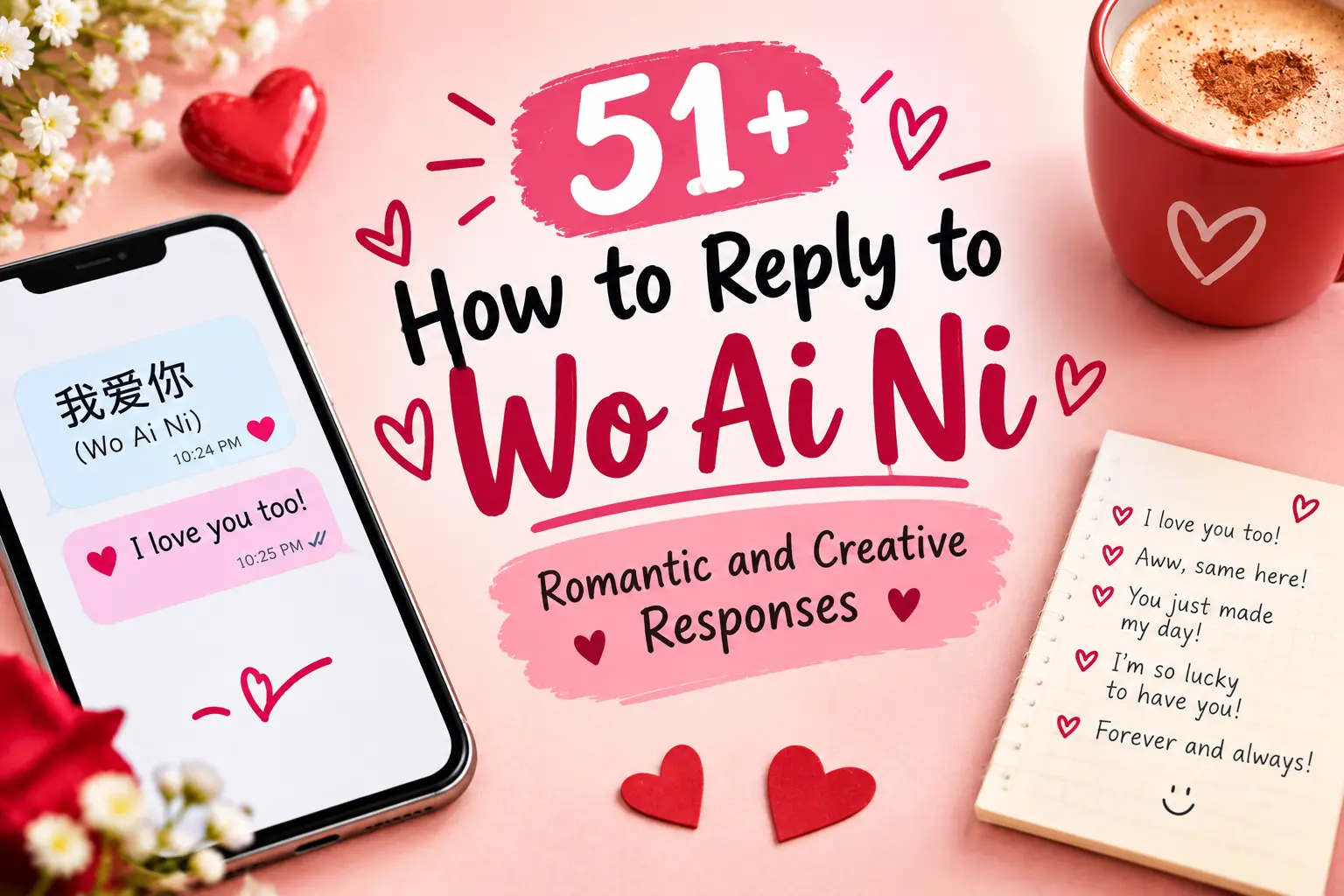
Sometimes, three simple words can carry an entire world of emotion. If someone tells you “Wo Ai Ni” (我爱你), which means “I love you” in Chinese, your response can say just as much about your feelings. You might want to say it back, respond sweetly without sounding too serious, or acknowledge the feeling while keeping things playful. The right reply depends on your relationship, comfort level, and the emotion you want to express. Instead of relying on the same “I love you too,” you can choose a response that feels more personal and natural. From romantic replies to cute, flirty, thoughtful, and heartfelt answers, having different ways to respond helps you communicate with more personality. Here are 51+ ways to reply to “Wo Ai Ni” for different relationships and situations.
What Does “How to Reply to Wo Ai Ni” Mean?
“Wo Ai Ni” (我爱你) literally translates to “I love you” in Mandarin Chinese. It is a direct and emotionally meaningful way to express romantic love or deep affection toward another person.
When someone says “Wo Ai Ni” to you, they are usually expressing strong feelings. Your response can match their emotional level, whether you genuinely feel the same way, want to respond affectionately, or need more time before saying something equally serious.
For example:
“Wo Ai Ni too. You have no idea how much you mean to me.”
The phrase is generally romantic, intimate, and sincere. However, the best reply depends on who said it and how you feel about them.
When to Use It
Replies to “Wo Ai Ni” are most commonly used in romantic relationships, conversations between couples, or moments when two people are expressing genuine affection.
You might respond differently depending on the situation:
With a partner:
“Wo Ai Ni too. I’m so lucky to have you.”
With someone you are dating:
“I’m falling for you too.”
During a heartfelt conversation:
“That means more to me than you know.”
When you want to be playful:
“Finally, you admitted it.”
When you are not ready to say it back:
“That’s really sweet. I care about you deeply too.”
Unlike phrases used in professional emails, speeches, or workplace communication, “Wo Ai Ni” is highly personal. It belongs mainly in intimate or emotionally meaningful conversations.
Is It Polite or Professional?
“Wo Ai Ni” is polite in a personal context, but it is not professional language. Since it directly means “I love you,” using it in a workplace email, business meeting, academic presentation, or formal professional conversation would usually be inappropriate unless there is a very specific personal context.
Your reply should also reflect the level of intimacy between you and the other person.
If your partner says:
“Wo Ai Ni.”
A natural response could be:
“Wo Ai Ni too.”
If a person you are not romantically involved with says it, you may prefer something gentler:
“That’s incredibly sweet of you to say.”
The key is to avoid giving someone a stronger emotional response than you genuinely mean.
1. Wo Ai Ni Too
Meaning: I love you too.
Tone: Romantic, sincere, direct.
Example Sentence: “Wo Ai Ni too. I’ve been wanting to tell you the same thing.”
Why to use it: This is the simplest and most natural response when you genuinely share their feelings.
Purpose and Personalization: Add their name or a personal detail to make the response feel more intimate.
2. I Love You Too
Meaning: You return the same romantic feeling.
Tone: Warm, heartfelt, classic.
Example Sentence: “I love you too, more than I can put into words.”
Why to use it: Choose this when you want a clear and emotionally direct response.
Purpose and Personalization: A short phrase can become more meaningful when followed by something personal.
3. I Love You More
Meaning: You playfully suggest that your love is even stronger.
Tone: Romantic, playful, affectionate.
Example Sentence: “I love you more, and I’m not even going to argue about it.”
Why to use it: Perfect for couples who enjoy playful romantic conversations.
Purpose and Personalization: Use it during a cute text exchange or after a sweet message.
4. You Have My Heart Too
Meaning: You are emotionally devoted to the person.
Tone: Romantic, poetic, sincere.
Example Sentence: “You have my heart too, and I hope you always know that.”
Why to use it: This feels deeper and more expressive than simply saying “I love you too.”
Purpose and Personalization: Great for heartfelt conversations or meaningful messages.
5. You Mean the World to Me
Meaning: The person is extremely important to you.
Tone: Loving, emotional, heartfelt.
Example Sentence: “You mean the world to me, and I’m grateful for every moment we share.”
Why to use it: Use this when you want to emphasize their importance in your life.
Purpose and Personalization: Mention a memory you share to make the message more personal.
6. I Feel the Same Way
Meaning: You share the same feelings.
Tone: Sincere, calm, reassuring.
Example Sentence: “I feel the same way, and hearing you say it makes me incredibly happy.”
Why to use it: A good choice when you want to reciprocate without sounding overly dramatic.
Purpose and Personalization: Especially useful when you prefer simple, genuine language.
7. My Heart Belongs to You Too
Meaning: You feel deeply attached and devoted to them.
Tone: Romantic, poetic, intimate.
Example Sentence: “My heart belongs to you too, now and always.”
Why to use it: Ideal for a deeply romantic conversation.
Purpose and Personalization: Best reserved for someone with whom you already share a strong emotional connection.
8. I’m So Lucky to Be Loved by You
Meaning: You appreciate their love and feel fortunate to have them.
Tone: Grateful, romantic, warm.
Example Sentence: “I’m so lucky to be loved by you, and I never want to take that for granted.”
Why to use it: This response focuses on gratitude rather than simply returning the words.
Purpose and Personalization: Add something specific you appreciate about them.
9. And I’m Completely Yours
Meaning: You are expressing strong romantic commitment.
Tone: Passionate, intimate, romantic.
Example Sentence: “Wo Ai Ni, and I’m completely yours.”
Why to use it: This works well when the relationship is already serious and emotionally secure.
Purpose and Personalization: Avoid using it too early if the relationship is still developing.
10. You Just Made My Heart Smile
Meaning: Their words made you genuinely happy.
Tone: Cute, affectionate, playful.
Example Sentence: “You just made my heart smile. Wo Ai Ni too.”
Why to use it: A softer option when you want your response to feel sweet rather than intense.
Purpose and Personalization: Great for texting or casual romantic conversations.
11. I’ve Been Waiting to Hear That
Meaning: You have wanted them to express their feelings.
Tone: Romantic, excited, intimate.
Example Sentence: “I’ve been waiting to hear that from you for so long.”
Why to use it: Perfect when you already suspected they had strong feelings.
Purpose and Personalization: Mention how long you have felt the same way for a more emotional response.
12. You’re the One I Choose
Meaning: You are intentionally choosing the person and the relationship.
Tone: Mature, romantic, committed.
Example Sentence: “You’re the one I choose, not just today but every day.”
Why to use it: This expresses commitment rather than temporary excitement.
Purpose and Personalization: Particularly meaningful in a long-term relationship.
13. You Make Loving You Easy
Meaning: Their personality makes it natural and effortless to love them.
Tone: Romantic, warm, sincere.
Example Sentence: “You make loving you easy because of the person you are.”
Why to use it: A beautiful alternative when you want to compliment their character.
Purpose and Personalization: Mention one quality that makes them special.
14. I’m Falling for You Too
Meaning: You are developing strong romantic feelings.
Tone: Romantic, vulnerable, honest.
Example Sentence: “I’m falling for you too, and honestly, it feels wonderful.”
Why to use it: Especially suitable for a relationship that is still becoming serious.
Purpose and Personalization: It communicates affection without necessarily implying a long-term commitment.
15. You’re My Favorite Person
Meaning: The person holds a special place in your life.
Tone: Cute, affectionate, casual.
Example Sentence: “You’re my favorite person, and I hope you know that.”
Why to use it: A warm response when you want something less intense than “I love you too.”
Purpose and Personalization: Add an inside joke or shared memory.
16. That Means More Than You Know
Meaning: Their confession has deeply affected you.
Tone: Emotional, sincere, thoughtful.
Example Sentence: “That means more than you know. I’ve been carrying the same feelings for a while.”
Why to use it: Great when their words come at an especially meaningful moment.
Purpose and Personalization: Explain briefly why their words matter.
17. You Have No Idea How Happy That Makes Me
Meaning: Their confession brings you genuine happiness.
Tone: Excited, romantic, warm.
Example Sentence: “You have no idea how happy that makes me. I love you too.”
Why to use it: Use this when you want your excitement to come through naturally.
Purpose and Personalization: Works particularly well over text.
18. I’m Yours, Heart and Soul
Meaning: You are deeply emotionally committed to them.
Tone: Passionate, poetic, intimate.
Example Sentence: “I’m yours, heart and soul, and I hope you never doubt that.”
Why to use it: This is best for a serious and deeply romantic relationship.
Purpose and Personalization: Use sparingly because of its strong emotional intensity.
19. You’re the Best Thing in My Life
Meaning: The person has brought exceptional happiness into your life.
Tone: Deeply romantic, grateful.
Example Sentence: “You’re one of the best things that has ever happened to me.”
Why to use it: Ideal when you want to communicate strong appreciation.
Purpose and Personalization: Mention a specific way they have positively influenced your life.
20. I’m Glad Our Hearts Found Each Other
Meaning: You feel fortunate that your relationship developed.
Tone: Poetic, romantic, sentimental.
Example Sentence: “I’m glad our hearts found each other when they did.”
Why to use it: Beautiful for anniversaries, late-night conversations, or emotional moments.
Purpose and Personalization: Connect it to how you first met.
21. You’re Stuck With Me Now
Meaning: A playful way of expressing lasting affection.
Tone: Funny, cute, affectionate.
Example Sentence: “Wo Ai Ni too. Sorry, you’re stuck with me now.”
Why to use it: Perfect for couples who enjoy teasing each other.
Purpose and Personalization: Add your own inside joke for a more natural feel.
22. Finally, You Said It
Meaning: You playfully suggest that you were waiting for their confession.
Tone: Teasing, playful, flirty.
Example Sentence: “Finally, you said it. I was beginning to wonder when you would.”
Why to use it: Works well when the romantic tension has been obvious for a while.
Purpose and Personalization: Keep it light so it does not sound dismissive.
23. I Was Hoping You’d Say That
Meaning: You secretly wanted them to confess their feelings.
Tone: Flirty, romantic, excited.
Example Sentence: “I was hoping you’d say that because I feel exactly the same.”
Why to use it: A strong choice when you want to reveal mutual interest.
Purpose and Personalization: Works especially well during a new relationship.
24. Look Who Finally Confessed
Meaning: A teasing response to their romantic confession.
Tone: Funny, playful, flirty.
Example Sentence: “Look who finally confessed. I knew you couldn’t hide it forever.”
Why to use it: Best for someone you already have playful chemistry with.
Purpose and Personalization: Use only when you know they will understand the joke.
25. You’re Making Me Blush
Meaning: Their words have made you shy or embarrassed in a sweet way.
Tone: Cute, flirty, affectionate.
Example Sentence: “Wo Ai Ni? You’re making me blush over here.”
Why to use it: Great when you want to accept the affection without immediately becoming deeply serious.
Purpose and Personalization: Add a playful follow-up to keep the conversation going.
26. Well, That Makes Two of Us
Meaning: You secretly feel the same way.
Tone: Clever, playful, romantic.
Example Sentence: “Wo Ai Ni.” “Well, that makes two of us.”
Why to use it: A concise and charming response.
Purpose and Personalization: Perfect for casual texting when you want something effortless.
27. I Knew There Was a Reason I Liked You
Meaning: Their confession confirms why you are attracted to them.
Tone: Playful, flirty, confident.
Example Sentence: “I knew there was a reason I liked you this much.”
Why to use it: Great for lighthearted romantic conversations.
Purpose and Personalization: Follow it with a specific quality you love about them.
28. You’ve Officially Stolen My Heart
Meaning: You have become deeply emotionally attached to them.
Tone: Romantic, playful, affectionate.
Example Sentence: “You’ve officially stolen my heart, so I suppose you’re responsible for it now.”
Why to use it: A charming option for someone special.
Purpose and Personalization: Make it personal by mentioning when you first realized your feelings.
29. Right Back at You
Meaning: You return the same feeling.
Tone: Casual, playful, affectionate.
Example Sentence: “Wo Ai Ni.” “Right back at you.”
Why to use it: Short, natural, and easygoing.
Purpose and Personalization: Best for couples who already understand each other’s feelings.
30. I Love Having You in My Life
Meaning: You deeply appreciate their presence.
Tone: Warm, mature, sincere.
Example Sentence: “I love having you in my life, and I’m grateful for everything we share.”
Why to use it: This response emphasizes appreciation and companionship.
Purpose and Personalization: Mention a meaningful memory or quality.
31. You Make My Life Better
Meaning: Their presence has positively changed your life.
Tone: Sincere, mature, heartfelt.
Example Sentence: “You make my life better just by being part of it.”
Why to use it: A meaningful alternative for someone you genuinely value.
Purpose and Personalization: Explain one specific way they make your life better.
32. I Cherish You Too
Meaning: You deeply value and care for the person.
Tone: Gentle, mature, affectionate.
Example Sentence: “I cherish you too, and I’m thankful for every moment we have together.”
Why to use it: A thoughtful alternative to a straightforward “I love you too.”
Purpose and Personalization: Particularly suitable for mature relationships.
33. You’re Deeply Loved
Meaning: You reassure the person that they are genuinely cared for.
Tone: Gentle, comforting, intimate.
Example Sentence: “Never forget that you’re deeply loved, especially by me.”
Why to use it: This is emotionally reassuring and comforting.
Purpose and Personalization: Use it when someone needs reassurance.
34. I’m Grateful for Your Love
Meaning: You appreciate both the person and their affection.
Tone: Mature, grateful, sincere.
Example Sentence: “I’m grateful for your love and for everything you bring into my life.”
Why to use it: Ideal when you want to respond with appreciation rather than exaggeration.
Purpose and Personalization: Mention something specific they do that you appreciate.
35. Your Love Means Everything to Me
Meaning: Their affection has enormous emotional importance.
Tone: Deep, romantic, sincere.
Example Sentence: “Your love means everything to me, and I never want to take it for granted.”
Why to use it: Suitable for a serious relationship.
Purpose and Personalization: Best when you genuinely feel strongly about them.
36. I Feel Safe Loving You
Meaning: You feel emotionally secure and comfortable in the relationship.
Tone: Vulnerable, mature, heartfelt.
Example Sentence: “I feel safe loving you, and that is something I value more than I can explain.”
Why to use it: This communicates emotional trust rather than simple attraction.
Purpose and Personalization: Particularly powerful in a long-term relationship.
37. You’re Home to Me
Meaning: Being with the person feels comforting and safe.
Tone: Deeply romantic, poetic, intimate.
Example Sentence: “You’re home to me, wherever we happen to be.”
Why to use it: A beautiful choice for someone who gives you a strong sense of belonging.
Purpose and Personalization: Pair it with a meaningful memory.
38. I’d Choose You Again
Meaning: You would choose the relationship repeatedly.
Tone: Romantic, mature, committed.
Example Sentence: “If I had to choose again, I’d still choose you.”
Why to use it: Powerful for established relationships and meaningful occasions.
Purpose and Personalization: Especially effective around anniversaries.
39. You’re Worth Every Emotion
Meaning: You believe the relationship is worth the vulnerability and effort.
Tone: Thoughtful, romantic, mature.
Example Sentence: “Loving you can be vulnerable, but you’re worth every emotion.”
Why to use it: This response feels deeper than a simple declaration of love.
Purpose and Personalization: Use when discussing the realities of a serious relationship.
40. I’m Falling Deeper Every Day
Meaning: Your love continues to grow.
Tone: Romantic, passionate, sincere.
Example Sentence: “I’m falling deeper every day, and somehow you keep surprising me.”
Why to use it: Perfect when your feelings are becoming stronger over time.
Purpose and Personalization: Mention something new you have discovered about them.
41. You Make My Heart Feel Full
Meaning: Their presence brings deep emotional happiness.
Tone: Tender, emotional, poetic.
Example Sentence: “You make my heart feel full in ways I never expected.”
Why to use it: A gentle response when you want to sound heartfelt without being dramatic.
Purpose and Personalization: Great for intimate conversations.
42. I’m So Glad It’s You
Meaning: You feel fortunate that this particular person is in your life.
Tone: Romantic, grateful, intimate.
Example Sentence: “Out of everyone in the world, I’m so glad it’s you.”
Why to use it: This response feels personal and deeply appreciative.
Purpose and Personalization: Works beautifully after a meaningful confession.
43. You’re My Person
Meaning: You see them as someone uniquely important and close to you.
Tone: Warm, modern, affectionate.
Example Sentence: “You’re my person, and I’m incredibly grateful for you.”
Why to use it: A natural phrase for a close romantic relationship.
Purpose and Personalization: Add a shared habit or inside joke.
44. I’ll Keep Choosing You
Meaning: You are promising continued commitment.
Tone: Mature, romantic, reassuring.
Example Sentence: “Whatever life brings us, I’ll keep choosing you.”
Why to use it: Best for established relationships where commitment has meaning.
Purpose and Personalization: Use it during an important relationship milestone.
45. You’re Loved More Than You Realize
Meaning: Your feelings for them are stronger than they may understand.
Tone: Tender, reassuring, emotional.
Example Sentence: “You’re loved more than you realize, and I hope I show you that every day.”
Why to use it: A comforting response when you want to reassure someone.
Purpose and Personalization: Follow it with a specific example of how much they mean to you.
46. I’m Happy It’s Us
Meaning: You appreciate the relationship you have together.
Tone: Simple, romantic, mature.
Example Sentence: “There are so many things I could say, but I’m just happy it’s us.”
Why to use it: This feels genuine without sounding overly poetic.
Purpose and Personalization: Perfect for a quiet, sincere moment.
47. You’re One of the Best Parts of My Life
Meaning: The person contributes significantly to your happiness.
Tone: Warm, appreciative, sincere.
Example Sentence: “You’re one of the best parts of my life, and I never want you to forget that.”
Why to use it: Great when you want to emphasize appreciation.
Purpose and Personalization: Mention a specific experience you cherish together.
48. I Love the Life We’re Building
Meaning: You appreciate not only the person but also your shared future.
Tone: Mature, committed, romantic.
Example Sentence: “I love the life we’re building together, one day at a time.”
Why to use it: Ideal for serious long-term relationships.
Purpose and Personalization: Mention a shared goal, dream, or future plan.
49. I’m Not Going Anywhere
Meaning: You are reassuring the person about your commitment.
Tone: Reassuring, romantic, loyal.
Example Sentence: “Wo Ai Ni too. I’m not going anywhere.”
Why to use it: This works especially well when someone needs emotional reassurance.
Purpose and Personalization: Use it sincerely rather than as an empty promise.
50. You’ll Always Have a Special Place in My Heart
Meaning: The person holds lasting emotional importance.
Tone: Sentimental, warm, heartfelt.
Example Sentence: “No matter where life takes us, you’ll always have a special place in my heart.”
Why to use it: This can work in both romantic and deeply emotional situations.
Purpose and Personalization: Be careful with the wording if the relationship is current, as it can sometimes sound like a goodbye.
51. I Don’t Even Know How to Put My Feelings Into Words
Meaning: Your emotions are so strong that ordinary language feels insufficient.
Tone: Vulnerable, emotional, sincere.
Example Sentence: “I don’t even know how to put my feelings into words, but please know that I love you deeply.”
Why to use it: Perfect for moments when you genuinely feel overwhelmed by emotion.
Purpose and Personalization: Follow it with one honest reason you love them.
52. I Feel Incredibly Lucky to Love You
Meaning: You consider loving them a privilege or blessing.
Tone: Grateful, romantic, heartfelt.
Example Sentence: “I feel incredibly lucky to love you and to be loved by you.”
Why to use it: This response combines affection with gratitude.
Purpose and Personalization: Mention a quality or moment that makes you feel lucky.
53. Then Let Me Spend Forever Showing You
Meaning: You want to demonstrate your love through your actions.
Tone: Romantic, poetic, passionate.
Example Sentence: “Wo Ai Ni too. Then let me spend forever showing you how much you mean to me.”
Why to use it: A powerful response for someone with whom you share a serious commitment.
Purpose and Personalization: Use this when your actions genuinely support the promise behind the words.
54. I Love You, and I Hope I Always Make You Feel Loved
Meaning: You care about expressing love through consistent actions.
Tone: Mature, caring, sincere.
Example Sentence: “I love you, and I hope I always make you feel as loved as you make me feel.”
Why to use it: This shifts the focus from saying love to showing it.
Purpose and Personalization: Add a specific way you want to support or care for them.
55. I’m Not Ready to Say It Yet, But I Care About You Deeply
Meaning: You are honest about not being ready to reciprocate the declaration while still acknowledging their feelings.
Tone: Honest, respectful, gentle.
Example Sentence: “I’m not ready to say it yet, but I care about you deeply and I value what we have.”
Why to use it: This is one of the healthiest responses when your feelings need more time to develop.
Purpose and Personalization: Be honest rather than saying “I love you” simply because you feel pressured.
56. That’s So Sweet of You to Say
Meaning: You appreciate the confession without directly returning it.
Tone: Polite, warm, gentle.
Example Sentence: “That’s so sweet of you to say. You really made my day.”
Why to use it: Useful when you want to acknowledge affection without making a romantic promise.
Purpose and Personalization: This works well when the relationship is still uncertain.
57. I Care About You More Than I Can Explain
Meaning: You have strong feelings but may not want to use the word “love.”
Tone: Deep, thoughtful, sincere.
Example Sentence: “I care about you more than I can explain, and I hope you know that.”
Why to use it: A strong middle ground when you feel deeply connected but are not ready for “I love you.”
Purpose and Personalization: Explain what you value most about the relationship.
58. Give Me a Little Time, but Know That You Matter to Me
Meaning: You need time to process your feelings while reassuring the other person.
Tone: Honest, mature, respectful.
Example Sentence: “Give me a little time, but know that you matter to me and I don’t take your feelings lightly.”
Why to use it: This is appropriate when someone’s confession catches you off guard.
Purpose and Personalization: It avoids giving false hope while still showing empathy.
59. You’re Very Special to Me
Meaning: The person has a meaningful place in your life.
Tone: Gentle, affectionate, sincere.
Example Sentence: “You’re very special to me, and I’m grateful for the connection we share.”
Why to use it: A softer response when you want to acknowledge their affection.
Purpose and Personalization: Useful when your relationship has not yet reached a clearly romantic stage.
60. I’m Glad You Told Me How You Feel
Meaning: You appreciate their honesty and vulnerability.
Tone: Respectful, mature, thoughtful.
Example Sentence: “I’m glad you told me how you feel. I really appreciate your honesty.”
Why to use it: A good response when you need time before deciding how you feel.
Purpose and Personalization: Follow it with an honest explanation of your own feelings if appropriate.
61. You Deserve an Honest Answer, and I Want to Give You One
Meaning: You intend to respond honestly rather than saying what the person wants to hear.
Tone: Mature, respectful, serious.
Example Sentence: “You deserve an honest answer, and I want to give you one instead of saying something I don’t fully mean.”
Why to use it: Particularly useful when the confession requires a thoughtful response.
Purpose and Personalization: Honesty is more respectful than forced reciprocation.
62. I’m Still Figuring Out What I Feel
Meaning: Your emotions are not completely clear yet.
Tone: Honest, vulnerable, mature.
Example Sentence: “I’m still figuring out what I feel, but I genuinely value having you in my life.”
Why to use it: Use this when you do not want to rush an emotional decision.
Purpose and Personalization: Be clear enough that the other person understands you are asking for time.
63. I Appreciate Your Feelings, Even If I Need Time
Meaning: You respect their confession but need emotional space.
Tone: Thoughtful, considerate, respectful.
Example Sentence: “I appreciate your feelings, even if I need some time to understand my own.”
Why to use it: A mature answer when the situation is emotionally complicated.
Purpose and Personalization: Keep your response clear and avoid making promises you cannot keep.
64. I Wish I Could Give You the Answer You’re Hoping For
Meaning: You recognize their feelings but cannot honestly reciprocate them.
Tone: Gentle, empathetic, serious.
Example Sentence: “I wish I could give you the answer you’re hoping for, but I want to be honest with you.”
Why to use it: Appropriate when you do not share the same romantic feelings.
Purpose and Personalization: Use kindness, but do not create false expectations.
65. You Mean a Lot to Me, Even If I Don’t Feel the Same Way
Meaning: You value the person while respectfully declining romantic reciprocation.
Tone: Kind, honest, mature.
Example Sentence: “You mean a lot to me, even if I don’t feel the same way romantically.”
Why to use it: This provides clarity without unnecessarily hurting the other person.
Purpose and Personalization: Be direct enough to prevent confusion.
66. I Respect You Too Much to Pretend
Meaning: You would rather be honest than falsely return their feelings.
Tone: Honest, firm, respectful.
Example Sentence: “I respect you too much to pretend I feel something I’m not ready to feel.”
Why to use it: This works when you need to establish an emotional boundary.
Purpose and Personalization: Honesty protects both people from misunderstandings later.
Conclusion
Knowing how to reply to “Wo Ai Ni” is less about finding the most impressive sentence and more about choosing words that genuinely reflect your feelings. If you love the person, a simple “Wo Ai Ni too” may be perfect. If you want something playful, poetic, or deeply romantic, there are plenty of alternatives that can make the moment more memorable. And if you are not ready to return the feeling, honesty is still the kindest approach. The best response is one that feels natural to you. Let your relationship, emotions, and personal communication style guide the words you choose.
Discover more
how to say someone makes you happy