

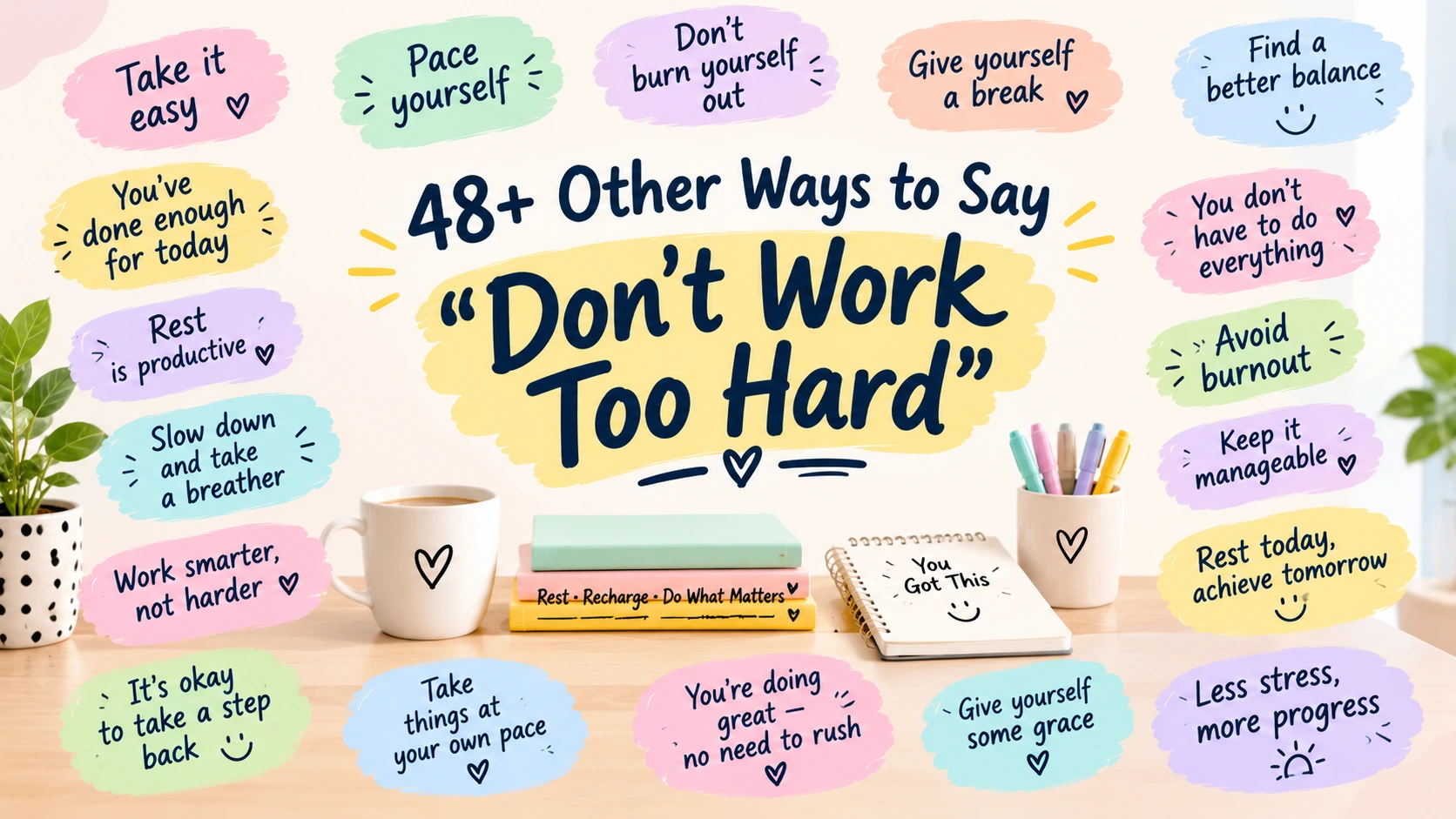
Sometimes a simple “Don’t work too hard” can say a lot. It can show that you care about someone’s well-being, remind a coworker to take a break, or gently tell a friend not to push themselves too far. The phrase sounds casual and caring, but using the same words repeatedly can become predictable.
That is where a few creative alternatives can help. You might want to sound more professional in an email, warmer with a friend, supportive with a colleague, or playful with someone close to you. The right expression can make the message feel much more personal.
Whether you are ending a work conversation, checking on someone during a busy day, or encouraging a loved one to slow down, these alternatives give you plenty of natural ways to express the same thoughtful idea.
What Does “Don’t Work Too Hard” Mean?
“Don’t work too hard” is a friendly way of telling someone not to overwork themselves.
It usually carries a caring or supportive tone. You are not necessarily telling the person to stop working. Instead, you are reminding them to take care of themselves, rest when needed, and avoid unnecessary stress.
For example, you might tell a coworker, “Good luck with the rest of your work today. Don’t work too hard.”
You could also say it to a friend who has been studying all evening: “You’ve been studying for hours. Don’t work too hard.”
The meaning can change slightly depending on the relationship. With a friend, it may sound affectionate. At work, it can be a polite way to show concern without becoming overly personal.
When to Use “Don’t Work Too Hard”
“Don’t work too hard” is most common in casual conversations, text messages, and friendly workplace interactions. It is particularly useful when someone is facing a busy day, working late, preparing for a deadline, or handling a demanding task.
For example:
“Have a good shift, and don’t work too hard.”
“Good luck with the project. Remember to take breaks.”
“I know you have a lot on your plate today. Take care of yourself.”
In professional emails, the original phrase can work, especially with coworkers you know well. However, a softer alternative such as “Take care and remember to take a break” may sound more polished.
In speeches or formal writing, phrases such as “Remember to maintain a healthy balance” or “Make time for rest and recovery” are usually more appropriate.
Is “Don’t Work Too Hard” Polite or Professional?
Yes, “Don’t work too hard” is generally polite, but it is more casual than formal.
It works naturally between friends, classmates, coworkers, and people who already have a comfortable relationship. It can also be used by managers who want to show concern for their team’s well-being.
However, it may not be the best choice in a very formal email, business proposal, or communication with someone you barely know. In those situations, something like “Please remember to take some time to rest” sounds more professional.
The key is context. You want your words to sound caring rather than patronizing. A good alternative should communicate concern without suggesting that someone is incapable of managing their workload.
1. Take it easy
Meaning: Don’t put too much pressure on yourself.
Tone: Friendly, casual.
Example Sentence: “You’ve had a long day, so take it easy tonight.”
Short Explanation: This is one of the most natural alternatives for friends, coworkers, and family members.
Purpose and Personalization: It feels relaxed and caring without sounding overly serious.
2. Don’t overdo it
Meaning: Avoid pushing yourself beyond your limits.
Tone: Caring, direct.
Example Sentence: “You still have a lot to finish, but don’t overdo it.”
Short Explanation: Use this when someone is working or doing something physically demanding.
3. Remember to take breaks
Meaning: Make time to rest while working.
Tone: Supportive, practical.
Example Sentence: “Good luck with the report, and remember to take breaks.”
Short Explanation: This is especially appropriate for long work sessions or study periods.
4. Take some time to recharge
Meaning: Give yourself time to recover your energy.
Tone: Warm, modern.
Example Sentence: “You’ve been working nonstop all week. Take some time to recharge.”
Short Explanation: A thoughtful alternative when someone seems mentally exhausted.
5. Don’t forget to rest
Meaning: Make sure you get enough downtime.
Tone: Caring, gentle.
Example Sentence: “Finish what you need to, but don’t forget to rest.”
Short Explanation: Simple and sincere, especially with someone you care about.
6. Look after yourself
Meaning: Take care of your physical and emotional well-being.
Tone: Warm, caring.
Example Sentence: “Good luck with the deadline, and look after yourself.”
Short Explanation: This sounds especially natural when ending a conversation.
7. Take care of yourself
Meaning: Prioritize your well-being.
Tone: Caring, sincere.
Example Sentence: “I know things are hectic right now, so take care of yourself.”
Short Explanation: Use this when you want your concern to sound more personal.
8. Give yourself a break
Meaning: Stop working for a while and relax.
Tone: Supportive, friendly.
Example Sentence: “You’ve been staring at that screen for hours. Give yourself a break.”
Short Explanation: Perfect when someone clearly needs a pause.
9. Make sure you get some downtime
Meaning: Set aside time for relaxation.
Tone: Casual, thoughtful.
Example Sentence: “Once you finish the presentation, make sure you get some downtime.”
Short Explanation: This works well in friendly professional conversations.
10. Don’t push yourself too hard
Meaning: Avoid exceeding your physical or mental limits.
Tone: Caring, serious.
Example Sentence: “You want to finish tonight, but don’t push yourself too hard.”
Short Explanation: A stronger alternative when someone is clearly overworking.
11. Pace yourself
Meaning: Work at a sustainable speed instead of rushing.
Tone: Practical, supportive.
Example Sentence: “There’s plenty of time, so pace yourself.”
Short Explanation: Useful when someone has a long task or project ahead.
12. Remember to slow down
Meaning: Take things at a more manageable pace.
Tone: Gentle, caring.
Example Sentence: “You’ve been rushing through everything today. Remember to slow down.”
Short Explanation: This is useful when someone is becoming overwhelmed.
13. Don’t burn yourself out
Meaning: Avoid working so much that you become completely exhausted.
Tone: Concerned, modern.
Example Sentence: “The project is important, but don’t burn yourself out over it.”
Short Explanation: Great for conversations about demanding jobs or studies.
14. Give yourself some breathing room
Meaning: Allow yourself time and space to relax.
Tone: Thoughtful, supportive.
Example Sentence: “You don’t have to finish everything tonight. Give yourself some breathing room.”
Short Explanation: This sounds considerate when someone has too many responsibilities.
15. Make time for yourself
Meaning: Set aside time for personal needs and relaxation.
Tone: Warm, encouraging.
Example Sentence: “Work is important, but make time for yourself too.”
Short Explanation: A balanced alternative that emphasizes personal well-being.
16. Don’t let work consume you
Meaning: Don’t allow work to take over your entire life.
Tone: Caring, serious.
Example Sentence: “You love your job, but don’t let work consume you.”
Short Explanation: Best for someone who regularly puts work before everything else.
17. Keep some balance
Meaning: Maintain a healthy balance between work and personal life.
Tone: Professional, thoughtful.
Example Sentence: “You have a busy month ahead, so try to keep some balance.”
Short Explanation: This works particularly well in workplace conversations.
18. Remember to switch off
Meaning: Stop thinking about work and give your mind a rest.
Tone: Friendly, modern.
Example Sentence: “Once you leave the office, remember to switch off.”
Short Explanation: A natural phrase for someone who struggles to disconnect from work.
19. Step away for a while
Meaning: Leave your work temporarily to rest.
Tone: Gentle, practical.
Example Sentence: “You’ve been working for hours. Step away for a while.”
Short Explanation: Ideal when someone needs an immediate break.
20. Give yourself permission to rest
Meaning: Accept that taking a break is necessary and worthwhile.
Tone: Encouraging, compassionate.
Example Sentence: “You’ve done enough today. Give yourself permission to rest.”
Short Explanation: This feels especially supportive when someone feels guilty about resting.
21. Don’t forget to breathe
Meaning: Calm down and avoid becoming overwhelmed.
Tone: Playful, caring.
Example Sentence: “That deadline is stressful, but don’t forget to breathe.”
Short Explanation: A gentle reminder for someone dealing with pressure.
22. Take a breather
Meaning: Stop for a short rest.
Tone: Casual, friendly.
Example Sentence: “You’ve been at it for three hours. Take a breather.”
Short Explanation: Short and natural for everyday conversations.
23. Ease up a little
Meaning: Reduce your effort or intensity.
Tone: Casual, direct.
Example Sentence: “You’ve been going nonstop all morning. Ease up a little.”
Short Explanation: Use this with someone you know well.
24. Don’t run yourself into the ground
Meaning: Don’t exhaust yourself through excessive work.
Tone: Concerned, informal.
Example Sentence: “You can finish the report tomorrow. Don’t run yourself into the ground tonight.”
Short Explanation: Stronger than “take it easy,” so it works when someone is seriously overworking.
25. Know when to take a step back
Meaning: Recognize when you need distance or rest.
Tone: Mature, thoughtful.
Example Sentence: “You’re doing great, but know when to take a step back.”
Short Explanation: Useful when encouraging sustainable effort.
26. Save some energy for tomorrow
Meaning: Don’t use all your energy today.
Tone: Friendly, practical.
Example Sentence: “You’ve accomplished plenty today. Save some energy for tomorrow.”
Short Explanation: A nice way to encourage moderation without sounding critical.
27. Don’t run on empty
Meaning: Don’t continue working when you have no energy left.
Tone: Casual, caring.
Example Sentence: “You’ve barely slept this week. Don’t keep running on empty.”
Short Explanation: A vivid expression for someone who needs rest.
28. Know when to call it a day
Meaning: Recognize when it is time to stop working.
Tone: Friendly, practical.
Example Sentence: “The report can wait until morning. Know when to call it a day.”
Short Explanation: Great for coworkers or friends who struggle to stop working.
29. Leave some work for tomorrow
Meaning: You don’t have to finish everything today.
Tone: Practical, reassuring.
Example Sentence: “You’ve already done most of it. Leave some work for tomorrow.”
Short Explanation: This helps someone feel comfortable postponing non-urgent tasks.
30. Don’t feel like you have to do everything at once
Meaning: Take tasks one at a time.
Tone: Supportive, reassuring.
Example Sentence: “There’s a lot on your list, but don’t feel like you have to do everything at once.”
Short Explanation: Especially helpful when someone feels overwhelmed.
31. Take things one step at a time
Meaning: Handle responsibilities gradually instead of rushing.
Tone: Calm, encouraging.
Example Sentence: “There’s plenty to do, so take things one step at a time.”
Short Explanation: A reassuring expression for stressful situations.
32. Give yourself time to recharge
Meaning: Allow yourself time to recover mentally and physically.
Tone: Warm, motivational.
Example Sentence: “After this busy week, give yourself time to recharge.”
Short Explanation: Works well when someone has completed an intense period of work.
33. Make rest part of the routine
Meaning: Treat rest as an important part of productivity.
Tone: Motivational, thoughtful.
Example Sentence: “You’re working hard, but make rest part of the routine too.”
Short Explanation: A more sophisticated alternative for wellness-focused conversations.
34. Protect your energy
Meaning: Avoid wasting your physical or emotional energy.
Tone: Modern, supportive.
Example Sentence: “You have a lot going on, so protect your energy where you can.”
Short Explanation: Useful when someone is dealing with several demanding responsibilities.
35. Work smart, not nonstop
Meaning: Focus on efficiency instead of simply working longer.
Tone: Motivational, practical.
Example Sentence: “You don’t need another five hours at your desk. Work smart, not nonstop.”
Short Explanation: Great for encouraging productivity without glorifying overwork.
36. Don’t let the workload get the better of you
Meaning: Don’t allow responsibilities to overwhelm you.
Tone: Supportive, mature.
Example Sentence: “The workload is heavy, but don’t let it get the better of you.”
Short Explanation: This sounds thoughtful and reassuring.
37. Remember that rest is productive too
Meaning: Rest can improve your ability to work effectively.
Tone: Motivational, thoughtful.
Example Sentence: “Close the laptop for tonight. Remember that rest is productive too.”
Short Explanation: A useful reminder for people who feel guilty about taking breaks.
38. Don’t forget to make time for yourself
Meaning: Your personal life deserves attention too.
Tone: Warm, caring.
Example Sentence: “You’ve been busy with work all week. Don’t forget to make time for yourself.”
Short Explanation: A gentle way to encourage better work-life balance.
39. Be kind to yourself
Meaning: Don’t place unnecessary pressure on yourself.
Tone: Compassionate, warm.
Example Sentence: “You did your best today, so be kind to yourself.”
Short Explanation: Best when someone is being overly critical or demanding of themselves.
40. Give yourself permission to slow down
Meaning: It is okay to reduce your pace and rest.
Tone: Compassionate, encouraging.
Example Sentence: “You don’t have to solve everything tonight. Give yourself permission to slow down.”
Short Explanation: This feels personal and reassuring.
41. Don’t make yourself miserable over work
Meaning: Work should not come at the expense of your well-being.
Tone: Direct, caring.
Example Sentence: “The assignment matters, but don’t make yourself miserable over it.”
Short Explanation: Best used with someone close to you.
42. Keep your workload manageable
Meaning: Avoid taking on more work than you can reasonably handle.
Tone: Professional, practical.
Example Sentence: “Try to keep your workload manageable during the busy season.”
Short Explanation: A polished option for workplace conversations.
43. Remember that you’re not a machine
Meaning: Human beings need rest and cannot work continuously.
Tone: Playful, caring.
Example Sentence: “You’ve been working since early morning. Remember that you’re not a machine.”
Short Explanation: This adds personality while making a serious point.
44. Don’t forget to come up for air
Meaning: Take a break from an intense situation.
Tone: Figurative, friendly.
Example Sentence: “The exam preparation is intense, so don’t forget to come up for air.”
Short Explanation: A colorful alternative that works well in casual conversations.
45. Give yourself a chance to unwind
Meaning: Allow yourself time to relax after working.
Tone: Warm, polished.
Example Sentence: “Once you finish the presentation, give yourself a chance to unwind.”
Short Explanation: A great choice when someone needs to relax after a demanding day.
46. Leave room for rest
Meaning: Make sure your schedule includes time to recover.
Tone: Mature, thoughtful.
Example Sentence: “Your schedule is packed, so leave room for rest.”
Short Explanation: This works particularly well when discussing busy routines.
47. Don’t sacrifice your well-being for productivity
Meaning: Work should not come at the expense of your health and quality of life.
Tone: Formal, thoughtful.
Example Sentence: “Aim for excellence, but don’t sacrifice your well-being for productivity.”
Short Explanation: This is suitable for professional, motivational, or leadership contexts.
48. Make sure you’re taking care of yourself
Meaning: Pay attention to your own needs while handling responsibilities.
Tone: Caring, sincere.
Example Sentence: “I know the project is demanding, but make sure you’re taking care of yourself.”
Short Explanation: A warm alternative that works in both personal and professional conversations.
49. Don’t let work take over your life
Meaning: Maintain boundaries between work and personal life.
Tone: Direct, caring.
Example Sentence: “You enjoy your career, but don’t let work take over your life.”
Short Explanation: Use this when someone consistently gives work more attention than everything else.
50. Take a well-deserved break
Meaning: Rest because you have earned it through your effort.
Tone: Encouraging, appreciative.
Example Sentence: “You’ve finished the project ahead of schedule. Take a well-deserved break.”
Short Explanation: This is a positive way to encourage rest without making it sound like a criticism.
51. Don’t forget to recharge your batteries
Meaning: Take time to restore your energy.
Tone: Friendly, conversational.
Example Sentence: “You’ve had a hectic week, so don’t forget to recharge your batteries this weekend.”
Short Explanation: A familiar metaphor that works especially well in casual conversations.
52. Work hard, but know when to rest
Meaning: Give your best effort while respecting your limits.
Tone: Motivational, balanced.
Example Sentence: “Keep chasing your goals, but work hard and know when to rest.”
Short Explanation: This is a strong option when you want to encourage ambition without promoting burnout.
Conclusion
There are many ways to say “don’t work too hard,” and each one can create a slightly different feeling. “Take it easy” sounds casual, “pace yourself” feels practical, while “don’t sacrifice your well-being for productivity” is more formal and reflective.
The best expression depends on your relationship with the person and the situation you are in. A friend may appreciate a playful reminder, while a coworker may respond better to a professional and supportive message.
Instead of relying on the same phrase every time, experiment with different expressions. The right words can turn a simple reminder into something genuinely thoughtful.
Sometimes the most meaningful way to encourage hard work is to remind someone that they deserve a break, too.