
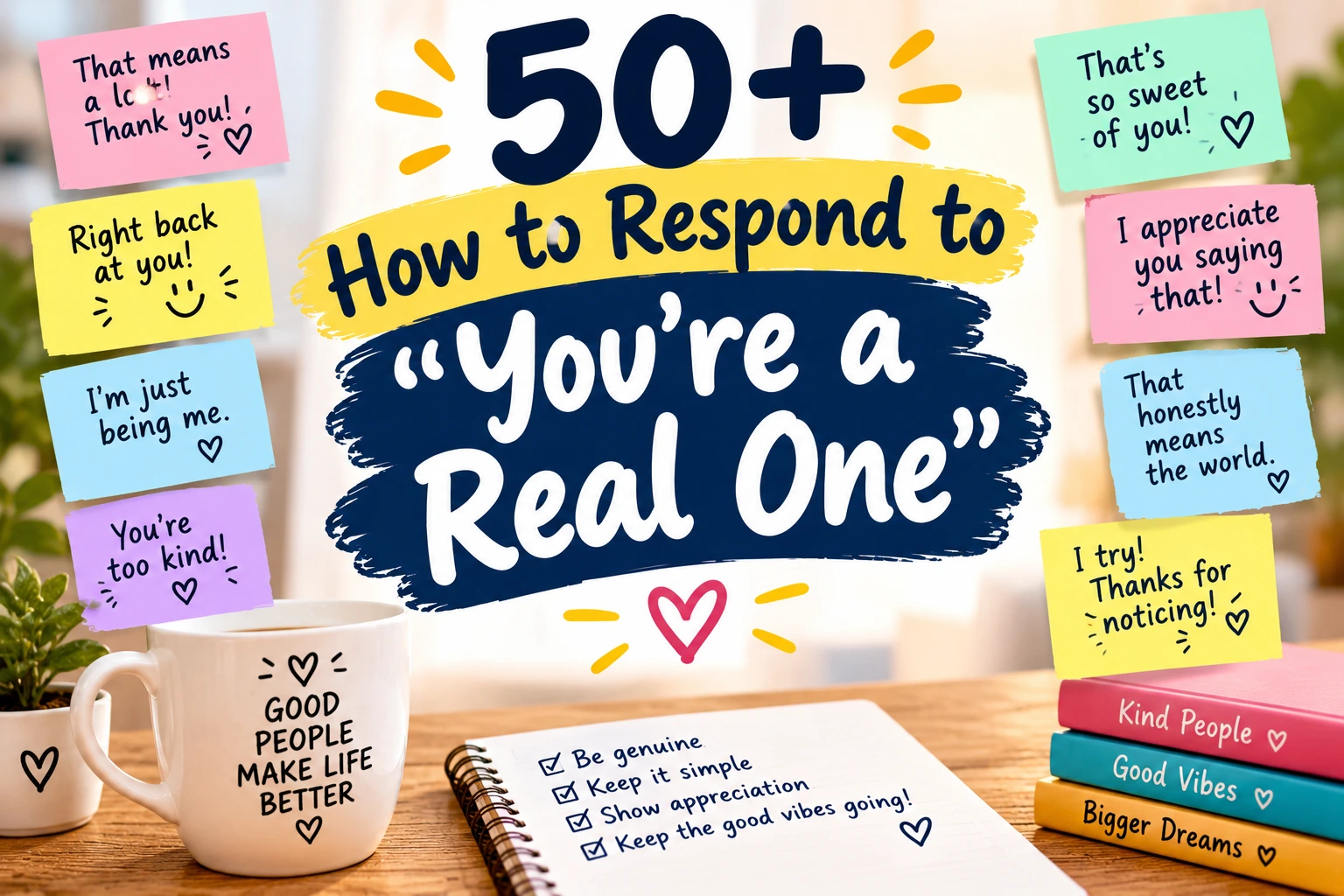
“You’re a real one” is one of those compliments that can be casual, heartfelt, or even a little flirty. Someone might say it after you help them, stand by them, keep their secret, or simply show that they can count on you. But when they say it, what should you say back?
A simple “thanks” works, but it does not always capture the moment. Sometimes you want to sound funny. Other times, you may want to return the appreciation, keep things playful, or show that their words genuinely mean something to you.
Knowing how to respond to “you’re a real one” helps you choose words that fit the situation instead of forcing the same reply every time. Whether you are texting a close friend, talking to a crush, responding to a coworker, or having a serious conversation, the right response can make the interaction feel more natural and personal.
What Does “You’re a Real One” Mean?
“You’re a real one” is an informal compliment. It usually means that someone thinks you are genuine, loyal, trustworthy, kind, or dependable.
People often use it when someone goes out of their way to help them or supports them when they need it.
For example:
“Thanks for picking me up when my car broke down. You’re a real one.”
In this case, the person is not simply thanking you. They are recognizing your willingness to help.
The phrase can also mean:
- “I can trust you.”
- “You always have my back.”
- “You are genuinely a good person.”
- “I appreciate what you did for me.”
- “You are different from most people.”
Its emotional tone depends on the relationship. Between friends, it may sound relaxed and humorous. Between two people who like each other, it can have a slightly flirty edge.
When to Use These Responses
Most responses to “you’re a real one” belong in casual conversations. They work well in texts, DMs, social media comments, conversations with friends, and informal chats with classmates or coworkers.
For example:
“You helped me finish that assignment? You’re a real one.”
You could reply:
“You know I’ve got you.”
In a more emotional situation, you might say:
“I’m glad I could be there when you needed me.”
For professional situations, it is better to use a polished version. If a colleague says it after you help them, you could respond with:
“Happy to help. I’m glad we got it sorted.”
However, avoid using slang-heavy responses in formal emails, presentations, interviews, or conversations with senior professionals unless the environment is clearly informal.
Is “You’re a Real One” Polite or Professional?
“You’re a real one” is polite and positive, but informal.
There is nothing rude about the phrase. In fact, it is usually a strong compliment. The issue is simply the level of formality.
With a friend:
“You’re a real one.”
Sounds completely natural.
With a coworker:
“Thanks for helping me with that. You’re a real one.”
Can work if you already have a friendly relationship.
With a professor, manager, client, or interviewer, a better response would be:
“I really appreciate that. I’m glad I could help.”
The golden rule is simple: match the other person’s energy while respecting the setting.
Warm and Appreciative Replies
1. “I Really Appreciate You.”
Meaning: You genuinely value the person and their appreciation.
Tone: Warm and sincere.
“You’ve helped me through a lot too. I really appreciate you.”
Why use it: This is one of the most natural replies when you want to sound heartfelt without being overly emotional.
Personalization: Add what you appreciate about them to make the response more meaningful.
2. “That Means a Lot to Me.”
Meaning: Their words or gratitude genuinely matter to you.
Tone: Heartfelt and sincere.
“Honestly, hearing that from you means a lot to me.”
Why use it: Choose this when their compliment feels especially meaningful.
3. “I’m Glad I Could Be There.”
Meaning: You are happy that you were able to support them.
Tone: Kind and supportive.
“You needed someone that night, and I’m glad I could be there.”
Why use it: This works beautifully after helping someone through a difficult situation.
4. “I’m Grateful for You Too.”
Meaning: You are returning their appreciation.
Tone: Warm and genuine.
“You’ve always supported me, so I’m grateful for you too.”
Why use it: A great choice when the relationship is based on mutual care.
5. “I’m Lucky to Have You.”
Meaning: You feel fortunate to have this person in your life.
Tone: Affectionate and personal.
“You’ve always believed in me. I’m lucky to have you.”
Why use it: Best for close friends, family members, or someone special.
6. “You Can Always Count on Me.”
Meaning: You are promising that you will continue to support them.
Tone: Reliable and caring.
“Whatever happens, you can always count on me.”
Why use it: This emphasizes trust and dependability.
7. “I’ve Got Your Back Too.”
Meaning: You will support them whenever they need you.
Tone: Casual and loyal.
“You’ve helped me plenty of times. I’ve got your back too.”
Why use it: Perfect for close friends and casual conversations.
8. “You Know I’ve Got You.”
Meaning: You are reassuring them that your support is genuine.
Tone: Friendly and relaxed.
“Don’t even worry about it. You know I’ve got you.”
Why use it: Short, natural, and easy to use in texting.
9. “That’s What Friends Are For.”
Meaning: Helping each other is part of friendship.
Tone: Friendly and reassuring.
“You don’t have to thank me. That’s what friends are for.”
Why use it: Use this when you want to make your favor seem effortless.
10. “You’re One of the Good Ones Too.”
Meaning: You are returning the compliment.
Tone: Warm and playful.
“You’re a real one.” “You’re one of the good ones too.”
Why use it: This creates a nice balance between appreciation and casual humor.
Casual and Friendly Replies
11. “Anytime.”
Meaning: You are happy to help again.
Tone: Simple and friendly.
“Thanks for helping me out.” “Anytime.”
Why use it: Sometimes the shortest answer sounds the most natural.
12. “You Already Know.”
Meaning: Your loyalty does not need to be explained.
Tone: Confident and casual.
“You’re a real one.” “You already know.”
Why use it: Great for close friends who already understand your relationship.
13. “Always.”
Meaning: You will continue to support them.
Tone: Warm and confident.
“Thanks for always being there.” “Always.”
Why use it: Ideal for short texts where you want your response to carry emotional weight.
14. “Of Course.”
Meaning: Helping them was an obvious choice.
Tone: Casual and reassuring.
“You’re a real one.” “Of course. I’d do it again.”
Why use it: It makes your support sound genuine rather than forced.
15. “No Need to Thank Me.”
Meaning: You helped because you wanted to.
Tone: Friendly and generous.
“Seriously, no need to thank me. I was happy to help.”
Why use it: Useful when someone keeps thanking you for a small favor.
16. “We Look Out for Each Other.”
Meaning: Your friendship involves mutual support.
Tone: Mature and friendly.
“You helped me last time. We look out for each other.”
Why use it: A strong choice when both people regularly support one another.
17. “You’d Do the Same for Me.”
Meaning: You believe their support would be mutual.
Tone: Casual and trusting.
“Don’t worry about it. You’d do the same for me.”
Why use it: This removes the feeling that they owe you something.
18. “That’s Just How I Am.”
Meaning: Helping others is simply part of your character.
Tone: Humble and confident.
“You didn’t have to thank me. That’s just how I am.”
Why use it: Good when you want to accept the compliment without making a big deal out of yourself.
19. “I’ll Always Show Up.”
Meaning: You will be present when they genuinely need you.
Tone: Strong and supportive.
“If you need me, I’ll always show up.”
Why use it: Best for deeper friendships and meaningful relationships.
20. “We’re Good.”
Meaning: There is no debt or obligation between you.
Tone: Relaxed and casual.
“You don’t owe me anything. We’re good.”
Why use it: Perfect when someone is worried about returning a favor.
Confident and Respectful Responses
21. “Loyalty Goes Both Ways.”
Meaning: You believe genuine loyalty should be mutual.
Tone: Mature and confident.
“You’ve been there for me too. Loyalty goes both ways.”
Why use it: This response highlights mutual respect.
22. “I Respect You Too.”
Meaning: You appreciate their character and return their respect.
Tone: Direct and sincere.
“You’ve always been honest with me. I respect you too.”
Why use it: Great when the compliment is about your character.
23. “I Do What I Can for My People.”
Meaning: You naturally support people you care about.
Tone: Confident and loyal.
“Helping you was nothing. I do what I can for my people.”
Why use it: This sounds confident without becoming arrogant.
24. “You Know Where I Stand.”
Meaning: Your loyalty is already clear.
Tone: Strong and understated.
“You don’t need to ask. You know where I stand.”
Why use it: Use this when you want a short but powerful response.
25. “I’d Do It Again in a Heartbeat.”
Meaning: You would happily help them again.
Tone: Warm and confident.
“If you needed me again, I’d do it again in a heartbeat.”
Why use it: Ideal when your action had real emotional importance.
26. “I’ll Always Keep It Real With You.”
Meaning: You promise to be honest and genuine.
Tone: Confident and personal.
“Even when the truth is uncomfortable, I’ll always keep it real with you.”
Why use it: This works well when someone appreciates your honesty.
27. “You Have My Respect.”
Meaning: You admire the person’s character or actions.
Tone: Respectful and mature.
“You stood by your friend when it mattered. You have my respect.”
Why use it: A strong response when the conversation is about character rather than a simple favor.
28. “I Value the Trust Between Us.”
Meaning: You appreciate the confidence you share.
Tone: Mature and thoughtful.
“We’ve always been honest with each other. I value the trust between us.”
Why use it: Best for a serious or meaningful conversation.
29. “You Never Have to Question Where I Stand.”
Meaning: Your loyalty is dependable.
Tone: Strong and reassuring.
“Whatever happens, you never have to question where I stand.”
Why use it: This carries emotional weight and works best with close relationships.
30. “I’m Glad You Know You Can Count on Me.”
Meaning: You are happy they trust you.
Tone: Supportive and mature.
“I’m glad you know you can count on me when things get difficult.”
Why use it: A thoughtful alternative to a basic “you’re welcome.”
Funny and Playful Responses
31. “Finally, Someone Noticed.”
Meaning: You jokingly suggest that your greatness has been overlooked.
Tone: Funny and confident.
“You’re a real one.” “Finally, someone noticed.”
Why use it: Perfect for playful conversations with friends.
32. “I Accept This Compliment.”
Meaning: You humorously act as though you are formally receiving an award.
Tone: Playful and dramatic.
“You’re a real one.” “Thank you. I accept this compliment.”
Why use it: Great when you want to keep the exchange light.
33. “Put That on My Résumé.”
Meaning: You jokingly treat their compliment as a career achievement.
Tone: Witty and sarcastic.
“You’re a real one.” “Perfect. I’m putting that on my résumé.”
Why use it: Works especially well in text conversations with friends.
34. “Don’t Make Me Emotional.”
Meaning: You are jokingly pretending the compliment touched your heart.
Tone: Funny and affectionate.
“You’re a real one.” “Stop, you’re going to make me emotional.”
Why use it: Use it when the conversation is warm but still playful.
35. “I’ve Been Waiting for This Recognition.”
Meaning: You jokingly claim that your efforts finally received the recognition they deserve.
Tone: Sarcastic and confident.
“You’re a real one.” “I’ve been waiting for this recognition.”
Why use it: Great for friends who enjoy dramatic humor.
36. “I Try My Best.”
Meaning: You are playfully accepting the compliment while pretending to be humble.
Tone: Light and funny.
“You’re a real one.” “I try my best.”
Why use it: A simple response that does not take the compliment too seriously.
37. “Careful, I Have a Reputation to Maintain.”
Meaning: You jokingly pretend that being praised might damage your image.
Tone: Teasing and humorous.
“You’re a real one.” “Careful, I have a reputation to maintain.”
Why use it: Best for playful friendships.
38. “I’ll Be Accepting Compliments All Week.”
Meaning: You are jokingly enjoying the praise.
Tone: Funny and confident.
“You’re a real one.” “I’ll be accepting compliments all week.”
Why use it: A fun option when you want to sound confident rather than shy.
39. “Say It Again. I Like the Sound of That.”
Meaning: You are teasing them about the compliment.
Tone: Playful and bold.
“You’re a real one.” “Say it again. I like the sound of that.”
Why use it: Best for close friends or playful conversations.
40. “I Knew My Good Deeds Would Pay Off.”
Meaning: You jokingly treat your kindness as an investment.
Tone: Sarcastic and witty.
“You’re a real one.” “I knew my good deeds would pay off eventually.”
Why use it: A funny reply when the mood is already relaxed.
Flirty Responses
41. “Only for You.”
Meaning: You are suggesting that this person receives special treatment.
Tone: Flirty and affectionate.
“You’re a real one.” “Only for you.”
Why use it: This is a subtle way to add flirtation without saying too much.
42. “Maybe You’re Just Special.”
Meaning: You are playfully saying that they deserve your extra effort.
Tone: Flirty and teasing.
“You’re a real one.” “Maybe you’re just special.”
Why use it: Works well when there is already some chemistry.
43. “You Bring Out My Soft Side.”
Meaning: This person makes you more caring or affectionate.
Tone: Flirty and playful.
“I don’t normally do this, but you bring out my soft side.”
Why use it: A charming response when you want to hint at attraction.
44. “Anything for You.”
Meaning: You are willing to make an extra effort for them.
Tone: Affectionate and romantic.
“Thanks for coming all this way.” “Anything for you.”
Why use it: This can sound romantic, so use it when that level of closeness is appropriate.
45. “You’re Making It Hard to Act Cool.”
Meaning: Their compliment is affecting you more than you want to admit.
Tone: Flirty and playful.
“You’re a real one.” “Careful, you’re making it hard to act cool.”
Why use it: A fun way to acknowledge their compliment while keeping the mood light.
46. “Keep Talking Like That.”
Meaning: You are playfully encouraging them to continue complimenting you.
Tone: Flirty and confident.
“You’re a real one.” “Keep talking like that.”
Why use it: Best when you already have comfortable chemistry.
47. “You’re Going to Make Me Like You Even More.”
Meaning: Their kindness is making you feel closer to them.
Tone: Flirty and affectionate.
“You keep saying things like that, and you’re going to make me like you even more.”
Why use it: More direct than a subtle flirt, so use it when the interest feels mutual.
48. “I’d Say You’re Pretty Special Too.”
Meaning: You are returning the compliment.
Tone: Warm and flirty.
“You’re a real one.” “I’d say you’re pretty special too.”
Why use it: A balanced response that shows interest without being too intense.
49. “Guess We’re Both Real Ones.”
Meaning: You are playfully saying that you both deserve the compliment.
Tone: Casual and flirty.
“You’re a real one.” “Guess we’re both real ones.”
Why use it: This creates a sense of connection without making the conversation overly serious.
50. “You Make Being Nice Too Easy.”
Meaning: You are teasingly saying that they naturally bring out your kindness.
Tone: Charming and playful.
“Honestly, you make being nice way too easy.”
Why use it: A subtle flirt that works naturally in a relaxed conversation.
Thoughtful and Mature Responses
51. “I’m Glad I Could Make Things a Little Easier.”
Meaning: You are happy your support helped them.
Tone: Kind and mature.
“I’m glad I could make things a little easier for you.”
Why use it: This works in both personal and professional conversations.
52. “Your Trust Means a Lot to Me.”
Meaning: You deeply value the confidence they have placed in you.
Tone: Sincere and heartfelt.
“Thank you for trusting me with that. Your trust means a lot to me.”
Why use it: Especially appropriate when someone has shared something personal.
53. “I’m Glad My Actions Spoke for Me.”
Meaning: You believe your behavior demonstrated your loyalty better than words could.
Tone: Confident and reflective.
“I didn’t need to explain myself. I’m glad my actions spoke for me.”
Why use it: A powerful response when someone recognizes your character because of what you did.
54. “Genuine People Deserve Genuine Energy.”
Meaning: You believe sincerity should be met with sincerity.
Tone: Thoughtful and mature.
“You’ve always been genuine with me. Genuine people deserve genuine energy.”
Why use it: This works well in deeper conversations.
55. “That Kind of Trust Is Valuable.”
Meaning: You recognize the importance of mutual trust.
Tone: Mature and thoughtful.
“We’ve built something based on honesty. That kind of trust is valuable.”
Why use it: A sophisticated choice for meaningful relationships.
56. “Kindness Shouldn’t Come With a Price.”
Meaning: You helped because you wanted to, not because you expected something in return.
Tone: Generous and sincere.
“You don’t need to repay me. Kindness shouldn’t come with a price.”
Why use it: This is ideal when someone feels they owe you for your help.
57. “I’m Happy I Could Be There When It Mattered.”
Meaning: You are glad you supported them during an important moment.
Tone: Heartfelt and mature.
“I know that was a difficult day. I’m happy I could be there when it mattered.”
Why use it: Strong for emotional or serious situations.
58. “I Value the Connection We Have.”
Meaning: You appreciate the relationship itself.
Tone: Thoughtful and sincere.
“We’ve built something genuine, and I value the connection we have.”
Why use it: Better suited to meaningful relationships than casual friendships.
59. “I’m Glad You Feel You Can Rely on Me.”
Meaning: You appreciate being viewed as dependable.
Tone: Supportive and mature.
“I’m glad you feel you can rely on me. That means something.”
Why use it: A polished response that works particularly well in serious conversations.
60. “I’ll Keep Showing Up for the People I Care About.”
Meaning: You believe genuine care is demonstrated through actions.
Tone: Strong and sincere.
“Words are easy. I’ll keep showing up for the people I care about.”
Why use it: This response focuses on actions rather than simply accepting praise.
61. “It’s Mutual.”
Meaning: You feel the same appreciation and respect for them.
Tone: Short, confident, and versatile.
“You’re a real one.” “It’s mutual.”
Why use it: Perfect when you want something brief but meaningful.
62. “I Appreciate You Saying That.”
Meaning: You are politely acknowledging their compliment.
Tone: Polite and versatile.
“I appreciate you saying that. It genuinely means a lot.”
Why use it: One of the best options when you are unsure how casual or formal your response should be.
How to Choose the Best Response
Not every situation needs a clever comeback. The best response depends on who said it, why they said it, and the relationship you have with them.
If a close friend says, “You’re a real one,” you can keep things casual:
“You know I’ve got you.”
If your crush says it, you can add some playful energy:
“Only for you.”
If a coworker says it after you helped them, stay friendly but professional:
“Happy to help. Anytime.”
If someone is genuinely emotional, avoid turning the moment into a joke. Try:
“I’m glad I could be there when you needed me.”
And if you do not know the person very well, keep your response simple:
“I really appreciate that.”
The goal is not to find the most impressive sentence. It is to find the sentence that feels natural coming from you.
Common Mistakes to Avoid
The biggest mistake is overthinking the response. “You’re a real one” is usually a relaxed compliment, so you do not need a complicated answer.
Another mistake is using humor when the other person is being genuinely vulnerable. A funny response can be perfect between friends but inappropriate during a serious conversation.
You should also avoid assuming that the phrase is romantic. Someone saying “you’re a real one” does not automatically mean they are flirting. Look at the overall conversation before choosing a flirty reply.
Finally, avoid sounding too formal in a casual conversation. Saying “I sincerely acknowledge and appreciate your generous commendation” may be grammatically correct, but it certainly does not sound natural in a text to your best friend.
Pro Tips for a Natural Response
Match their energy. If they are being funny, you can be funny. If they are being sincere, respond sincerely.
Keep it specific. Mentioning what they appreciated makes your answer feel personal.
Return the compliment. If they have also supported you, let them know.
Do not force flirtation. A flirty response works only when the situation already feels comfortable.
Use fewer words when possible. Sometimes “Always” says more than a long paragraph.
Sound like yourself. The most effective response is one you would actually say in real life.
Quick One-Liners for Texting
Need something short? Try one of these:
- “You already know.”
- “Always.”
- “Anytime.”
- “I’ve got you.”
- “Right back at you.”
- “It’s mutual.”
- “Only for you.”
- “You know I’m here.”
- “Always got your back.”
- “Happy I could help.”
- “That means a lot.”
- “You’re one of the good ones too.”
- “Wouldn’t have it any other way.”
- “We look out for each other.”
- “You know where I stand.”
Conclusion
Knowing how to respond to “you’re a real one” gives you more than a collection of clever replies. It helps you communicate appreciation, loyalty, humor, confidence, and affection in a way that fits the moment. A close friend may appreciate a funny comeback, while a meaningful situation calls for something more sincere. The key is to match your words to the relationship and the emotion behind the compliment. You do not always need the perfect phrase. A short, genuine response often makes the strongest impression. Choose the words that feel natural, personalize them when you can, and let the conversation flow.
Discover more