

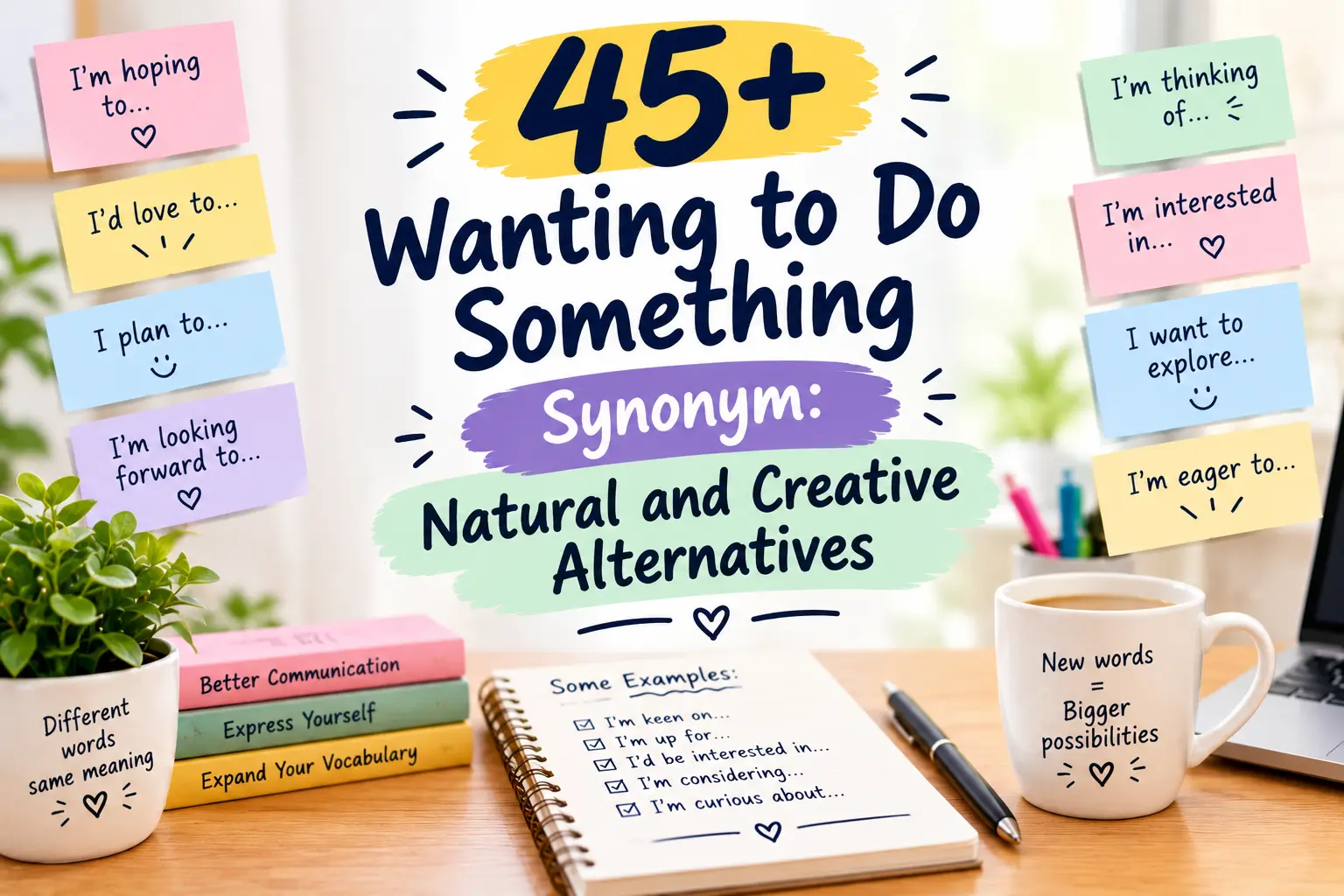
Sometimes, the simplest phrase can feel too repetitive. “Wanting to do something” is perfectly natural English, but depending on the situation, you may want a more expressive, professional, or thoughtful alternative. Whether you are writing an email, talking about your goals, describing an ambition, or simply explaining what you feel like doing, the right expression can make your message sound much more natural.
Using different ways to express desire also helps you communicate emotion more precisely. You might be eager to take action, interested in trying something, determined to achieve a goal, or simply considering an idea. This guide explores more than 45 alternatives to “wanting to do something,” along with meanings, tones, and realistic examples. These expressions can help make everyday conversations, professional writing, speeches, and personal messages more engaging and effective.
Section 1: What Does “Wanting to Do Something” Mean?
“Wanting to do something” means having a desire, intention, interest, or willingness to perform a particular action.
For example:
“I am wanting to learn a new skill.”
In natural everyday English, however, “I want to learn a new skill” is usually more common.
The expression can describe anything from a simple preference to a strong personal ambition. The emotional tone depends on the context. Someone may want to travel, learn, improve, help, explore, change, create, or achieve something.
Because “wanting” can express different levels of desire, choosing a more specific synonym can make your meaning clearer. For instance, “I am eager to learn” sounds more enthusiastic than “I am interested in learning,” while “I am determined to learn” communicates commitment.
Section 2: When to Use It
The phrase “wanting to do something” works in many situations, but different alternatives are better suited to different contexts.
In casual conversations, you can say:
“I feel like going out today.”
In a professional email, you might write:
“I am interested in exploring this opportunity further.”
When discussing personal goals, you could say:
“I am determined to improve my communication skills.”
In a speech or presentation, a more motivational expression may work better:
“I am committed to making a meaningful difference.”
For academic or formal writing, expressions such as “seeking to,” “aspiring to,” and “intending to” can sound more polished.
The key is to choose an expression that matches both your relationship with the reader and the strength of your desire.
Section 3: Is It Polite or Professional?
“Yes,” “wanting to do something” is generally neutral and polite. However, it is not always the most polished choice for formal communication.
For example, saying:
“I want to discuss the proposal.”
is perfectly understandable, but:
“I would like to discuss the proposal.”
can sound more courteous in a professional setting.
Similarly, “I want to learn more about the position” could become “I am interested in learning more about the position” in a formal email.
The best alternative depends on what you actually mean. “Eager to” shows enthusiasm, “interested in” shows curiosity, “determined to” shows commitment, and “aspiring to” suggests a longer-term goal.
1. Desiring to Do Something
Meaning: Having a wish or strong preference to take a particular action.
Tone: Formal, thoughtful.
“She is desiring to make a meaningful contribution to the project.”
Short Explanation: “Desiring to” is more formal than simply saying “wanting to.” It works well in reflective or polished writing.
Purpose and Personalization: Use it when you want to emphasize genuine personal desire without sounding overly casual.
2. Eager to Do Something
Meaning: Very interested and excited to do something.
Tone: Enthusiastic, positive.
“I am eager to begin working with the new team.”
Short Explanation: “Eager” communicates stronger enthusiasm than “wanting.”
Purpose and Personalization: Ideal for interviews, professional emails, applications, and situations where you want to show positive energy.
3. Keen to Do Something
Meaning: Very interested in doing something.
Tone: Friendly, professional.
“We are keen to explore new opportunities together.”
Short Explanation: “Keen to” is especially common in British English and sounds natural without being overly formal.
Purpose and Personalization: A useful choice for workplace conversations and friendly professional communication.
4. Interested in Doing Something
Meaning: Having curiosity or a desire to learn about or participate in something.
Tone: Neutral, professional.
“I am interested in learning more about the position.”
Short Explanation: This expression is less intense than “eager” and works in many professional situations.
Purpose and Personalization: Use it when you want to express interest without making your desire sound too strong.
5. Hoping to Do Something
Meaning: Wanting something to happen or intending to do something if circumstances allow.
Tone: Warm, polite, optimistic.
“I am hoping to visit the university next month.”
Short Explanation: “Hoping to” suggests desire combined with some uncertainty.
Purpose and Personalization: Great for plans, expectations, applications, and polite conversations.
6. Looking to Do Something
Meaning: Intending or planning to do something.
Tone: Casual, professional.
“We are looking to expand our services next year.”
Short Explanation: This phrase is extremely common in workplace communication.
Purpose and Personalization: Use it when discussing future plans, goals, hiring, projects, or opportunities.
7. Planning to Do Something
Meaning: Having an intention or arrangement to do something.
Tone: Neutral, practical.
“I am planning to enroll in a programming course.”
Short Explanation: “Planning to” suggests that the desire has developed into a specific intention.
Purpose and Personalization: Best when you have already started thinking seriously about taking action.
8. Intending to Do Something
Meaning: Having a definite intention to take an action.
Tone: Formal, confident.
“The organization is intending to introduce several new initiatives.”
Short Explanation: This is a more formal alternative to “planning to” or “wanting to.”
Purpose and Personalization: Suitable for reports, formal correspondence, and professional statements.
9. Aspiring to Do Something
Meaning: Hoping or working toward achieving something in the future.
Tone: Motivational, ambitious.
“She is aspiring to become a successful software engineer.”
Short Explanation: “Aspiring to” usually refers to a meaningful long-term goal.
Purpose and Personalization: Use it when discussing careers, achievements, education, or personal ambitions.
10. Aiming to Do Something
Meaning: Having a specific goal to accomplish something.
Tone: Focused, professional.
“We are aiming to complete the project by Friday.”
Short Explanation: “Aiming to” emphasizes a target rather than merely a desire.
Purpose and Personalization: Particularly useful for workplace goals and measurable objectives.
11. Seeking to Do Something
Meaning: Trying or intending to achieve a particular result.
Tone: Formal, professional.
“The company is seeking to improve customer satisfaction.”
Short Explanation: This phrase is common in formal documents, reports, and professional communication.
Purpose and Personalization: Choose it when describing an organization, initiative, or serious objective.
12. Striving to Do Something
Meaning: Making a strong effort to achieve something.
Tone: Motivational, determined.
“We are striving to provide better service to our customers.”
Short Explanation: “Striving” focuses on effort and persistence, not just desire.
Purpose and Personalization: Excellent for personal development, business goals, and inspirational writing.
13. Determined to Do Something
Meaning: Firmly decided to accomplish something.
Tone: Strong, confident.
“She is determined to improve her skills this year.”
Short Explanation: This is stronger than “wanting” because it suggests commitment.
Purpose and Personalization: Use it when you want to communicate persistence and serious intention.
14. Committed to Doing Something
Meaning: Dedicated to completing or supporting something.
Tone: Professional, serious.
“Our team is committed to delivering high-quality results.”
Short Explanation: “Committed to” emphasizes responsibility and dedication.
Purpose and Personalization: Particularly effective in professional statements, organizational communication, and personal goals.
15. Motivated to Do Something
Meaning: Having a reason or drive to take action.
Tone: Positive, professional.
“I am motivated to develop my technical skills.”
Short Explanation: This expression focuses on the internal drive behind an action.
Purpose and Personalization: Useful for interviews, resumes, applications, and self-development discussions.
16. Inspired to Do Something
Meaning: Feeling encouraged or emotionally moved to take action.
Tone: Emotional, positive.
“Her experience inspired her to help other students.”
Short Explanation: “Inspired to” suggests that something has created a meaningful desire to act.
Purpose and Personalization: Use it when an experience, person, idea, or event motivates you.
17. Driven to Do Something
Meaning: Strongly motivated to achieve something.
Tone: Powerful, ambitious.
“He is driven to build a career in technology.”
Short Explanation: “Driven” communicates a strong internal motivation.
Purpose and Personalization: Best when describing ambition, determination, or a strong personal goal.
18. Inclined to Do Something
Meaning: Having a tendency or preference to do something.
Tone: Formal, thoughtful.
“I am inclined to accept the offer.”
Short Explanation: This does not always mean a strong desire; it can simply indicate that you are leaning toward an action.
Purpose and Personalization: Useful when you want to express a preference carefully rather than make a firm commitment.
19. Willing to Do Something
Meaning: Being prepared or ready to do something.
Tone: Cooperative, professional.
“I am willing to assist with the transition.”
Short Explanation: “Willing” focuses more on readiness than desire.
Purpose and Personalization: Great for workplace situations, offers of help, and collaborative conversations.
20. Ready to Do Something
Meaning: Prepared and willing to take action.
Tone: Confident, direct.
“We are ready to move forward with the next phase.”
Short Explanation: This suggests that desire has progressed into preparation.
Purpose and Personalization: Use it when action is about to happen.
21. Excited to Do Something
Meaning: Feeling enthusiastic about doing something.
Tone: Friendly, energetic.
“I am excited to start this new chapter.”
Short Explanation: This expression adds emotional enthusiasm.
Purpose and Personalization: Perfect for announcements, personal messages, new opportunities, and informal professional communication.
22. Looking Forward to Doing Something
Meaning: Feeling positive anticipation about something in the future.
Tone: Polite, warm, professional.
“I am looking forward to meeting the team.”
Short Explanation: It communicates both desire and anticipation.
Purpose and Personalization: Especially useful in emails, meetings, interviews, and professional correspondence.
23. Feeling Like Doing Something
Meaning: Having a temporary desire or mood to do something.
Tone: Casual, conversational.
“I feel like watching a movie tonight.”
Short Explanation: This is more about how you feel in the moment than a serious intention.
Purpose and Personalization: Best for friends, family, texting, and relaxed conversations.
24. In the Mood to Do Something
Meaning: Feeling emotionally inclined to do something.
Tone: Casual, expressive.
“I am in the mood to try something new today.”
Short Explanation: It describes a current feeling or preference.
Purpose and Personalization: Great for informal conversations about activities, food, entertainment, or plans.
25. Craving to Do Something
Meaning: Having a very strong desire to do something.
Tone: Casual, expressive.
“I am craving to get out and explore somewhere new.”
Short Explanation: “Craving” is informal and emotionally strong. For many contexts, “craving to” is less natural than “craving something,” but it can work creatively.
Purpose and Personalization: Best used in casual, expressive writing rather than formal communication.
26. Longing to Do Something
Meaning: Having a deep or emotional desire to do something.
Tone: Emotional, reflective.
“She was longing to return to her hometown.”
Short Explanation: “Longing” suggests that the desire is deep and often emotionally significant.
Purpose and Personalization: Use it for personal writing, storytelling, or emotional situations.
27. Yearning to Do Something
Meaning: Having an intense and persistent desire.
Tone: Emotional, literary.
“He was yearning to experience life beyond his familiar surroundings.”
Short Explanation: “Yearning” is stronger and more poetic than ordinary “wanting.”
Purpose and Personalization: Particularly effective in creative and reflective writing.
28. Wishing to Do Something
Meaning: Wanting or hoping to do something.
Tone: Polite, formal.
“I am wishing to discuss this matter further.”
Short Explanation: “Wishing to” can sound courteous, although “I would like to” is often more natural in modern professional English.
Purpose and Personalization: Useful when expressing a polite request or formal intention.
29. Would Like to Do Something
Meaning: A polite way of expressing a desire or preference.
Tone: Polite, professional.
“I would like to learn more about the opportunity.”
Short Explanation: This is one of the most useful replacements for “I want to.”
Purpose and Personalization: Excellent for emails, requests, customer service, interviews, and formal conversations.
30. Would Love to Do Something
Meaning: Being very happy or enthusiastic about doing something.
Tone: Warm, friendly.
“I would love to hear more about your experience.”
Short Explanation: It sounds warmer and more enthusiastic than “I would like to.”
Purpose and Personalization: Use it when you want to express genuine enthusiasm while remaining polite.
31. Have a Desire to Do Something
Meaning: Have a wish or personal motivation to do something.
Tone: Formal, thoughtful.
“She has a strong desire to contribute to her community.”
Short Explanation: This expression explicitly emphasizes the existence of a personal desire.
Purpose and Personalization: Suitable for essays, formal profiles, applications, and reflective writing.
32. Have an Urge to Do Something
Meaning: Feel a strong impulse to do something.
Tone: Casual, expressive.
“I had an urge to start writing again.”
Short Explanation: “Urge” suggests a sudden or powerful impulse.
Purpose and Personalization: Best when the desire appears spontaneously rather than being part of a long-term plan.
33. Have an Interest in Doing Something
Meaning: Be curious about or attracted to a particular activity.
Tone: Neutral, professional.
“She has an interest in exploring artificial intelligence.”
Short Explanation: This is less intense than “desire” and works well when describing developing interests.
Purpose and Personalization: Useful in resumes, academic writing, introductions, and professional profiles.
34. Be Curious to Do Something
Meaning: Want to experience or discover something because you are curious about it.
Tone: Friendly, thoughtful.
“I am curious to see how the new system works.”
Short Explanation: This expression connects desire with curiosity.
Purpose and Personalization: Ideal when you want to emphasize exploration or learning.
35. Be Tempted to Do Something
Meaning: Feel attracted to the idea of doing something, even if you have not decided.
Tone: Casual, conversational.
“I am tempted to take a short break and go for a walk.”
Short Explanation: “Tempted to” suggests that you are considering an action but have not necessarily committed to it.
Purpose and Personalization: Useful when discussing possibilities or spontaneous decisions.
36. Be Considering Doing Something
Meaning: Be thinking seriously about doing something.
Tone: Neutral, thoughtful.
“I am considering taking an advanced programming course.”
Short Explanation: This indicates that an idea is under serious consideration.
Purpose and Personalization: Excellent when you have not made a final decision.
37. Be Thinking of Doing Something
Meaning: Have an idea or possibility in mind.
Tone: Casual, natural.
“I am thinking of applying for an internship.”
Short Explanation: This is one of the most natural everyday alternatives to “wanting to.”
Purpose and Personalization: Works especially well in conversations about future plans.
38. Be Set on Doing Something
Meaning: Be firmly determined to do something.
Tone: Confident, informal.
“She is set on learning how to code this year.”
Short Explanation: “Set on” indicates a strong decision or determination.
Purpose and Personalization: Use it when someone’s mind is largely made up.
39. Be Intent on Doing Something
Meaning: Be strongly determined to do something.
Tone: Formal, serious.
“The organization is intent on improving access to education.”
Short Explanation: This phrase communicates strong commitment and purpose.
Purpose and Personalization: Suitable for formal writing, speeches, reports, and serious discussions.
40. Be Bent on Doing Something
Meaning: Be strongly determined to do something.
Tone: Informal, emphatic.
“He was bent on finding a better solution.”
Short Explanation: This expression is stronger and more emphatic than ordinary “wanting.”
Purpose and Personalization: Best for conversational or narrative writing rather than formal business emails.
41. Be Determined to Pursue Something
Meaning: Be firmly committed to working toward a goal.
Tone: Ambitious, formal.
“She is determined to pursue a career in research.”
Short Explanation: “Pursue” gives the expression a sense of deliberate long-term action.
Purpose and Personalization: Particularly useful for career goals, education, and personal ambitions.
42. Be Working Toward Something
Meaning: Be actively trying to achieve a particular result.
Tone: Practical, motivational.
“I am working toward becoming more confident in public speaking.”
Short Explanation: This focuses on progress rather than simply desire.
Purpose and Personalization: Use it when you are already taking steps toward a goal.
43. Be Pursuing an Opportunity
Meaning: Actively trying to obtain or develop an opportunity.
Tone: Professional, ambitious.
“I am currently pursuing opportunities in software development.”
Short Explanation: This is a polished way to communicate professional ambition.
Purpose and Personalization: Particularly useful for resumes, cover letters, LinkedIn profiles, and networking.
44. Have Your Sights Set on Something
Meaning: Have a specific goal that you strongly want to achieve.
Tone: Confident, motivational.
“She has her sights set on studying abroad.”
Short Explanation: This idiomatic expression conveys ambition and focus.
Purpose and Personalization: Great for personal goals and motivational writing.
45. Be Hungry to Achieve Something
Meaning: Have a powerful ambition to accomplish something.
Tone: Motivational, energetic.
“The young team is hungry to achieve meaningful results.”
Short Explanation: “Hungry” is metaphorical here and communicates strong ambition.
Purpose and Personalization: Best for motivational speeches, sports, career discussions, and ambitious personal statements.
46. Be Driven to Achieve Something
Meaning: Have a powerful internal motivation to accomplish a goal.
Tone: Strong, ambitious.
“She is driven to create innovative solutions.”
Short Explanation: This goes beyond wanting by emphasizing motivation and determination.
Purpose and Personalization: Use it when describing someone who consistently works toward a meaningful objective.
47. Be Motivated to Pursue Something
Meaning: Have a clear reason or desire to work toward something.
Tone: Professional, positive.
“I am motivated to pursue further training in data analysis.”
Short Explanation: This expression connects desire with a reason for taking action.
Purpose and Personalization: Useful for interviews, applications, professional development, and academic writing.
48. Be Open to Doing Something
Meaning: Be willing to consider or try something.
Tone: Flexible, professional.
“I am open to exploring different approaches.”
Short Explanation: “Open to” is softer than “wanting to” because it communicates willingness rather than strong desire.
Purpose and Personalization: Excellent when discussing ideas, negotiations, collaboration, and possibilities.
49. Be Willing to Explore Something
Meaning: Be prepared to investigate or consider something further.
Tone: Professional, thoughtful.
“We are willing to explore alternative solutions.”
Short Explanation: This expression communicates flexibility and constructive interest.
Purpose and Personalization: Particularly useful in meetings, negotiations, business discussions, and collaborative work.
50. Be Ready to Take the Next Step
Meaning: Be prepared to move forward with an action or goal.
Tone: Motivational, confident.
“After months of preparation, I am ready to take the next step in my career.”
Short Explanation: Instead of directly saying you want something, this phrase emphasizes readiness for action.
Purpose and Personalization: A strong choice for speeches, career discussions, personal statements, and important life transitions.
Conclusion
Having different ways to express “wanting to do something” gives your communication more precision, personality, and emotional depth. You can use “eager to” when you feel enthusiastic, “considering” when you are still deciding, “determined to” when you are committed, or “looking forward to” when you are anticipating something positively. The best expression depends on your intention, audience, and level of formality. Instead of relying on the same phrase repeatedly, experiment with these alternatives and choose the one that most accurately reflects what you mean. Natural variety can make both professional and everyday communication sound clearer and more engaging.
Discover more
funny ways to say you messed up