
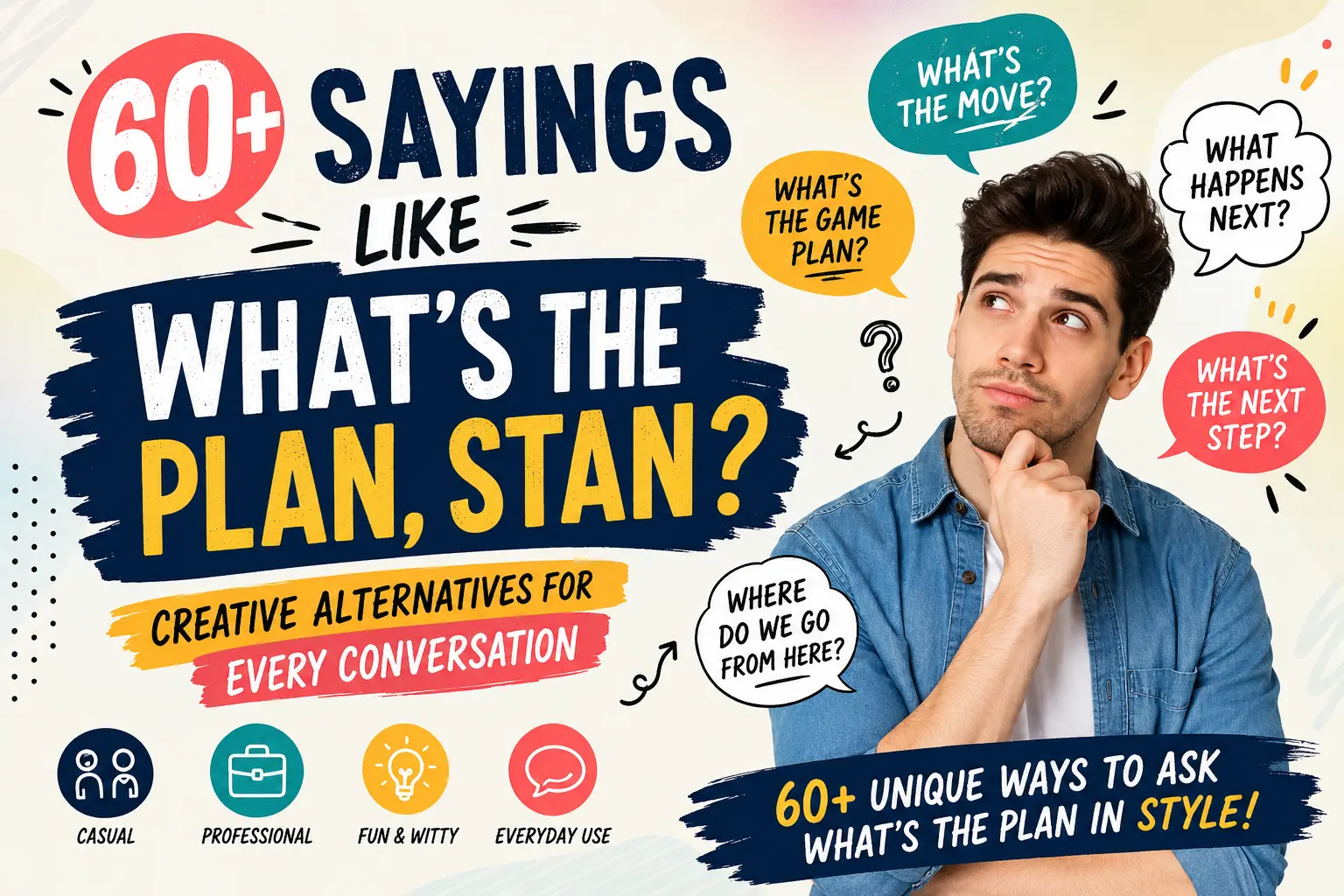
We’ve all been there—you want to know what’s happening next, but simply asking “What’s the plan?” feels a little dull. That’s where playful expressions like “What’s the plan, Stan?” come in. This catchy rhyme adds personality to a simple question, making conversations feel more relaxed, memorable, and fun.
Whether you’re texting friends, planning a weekend, chatting with coworkers, or breaking the ice in a group conversation, using creative alternatives can make your words sound more engaging. A well-chosen phrase can show enthusiasm, humor, or curiosity without sounding repetitive.
In this guide, you’ll discover 60+ sayings like “What’s the Plan, Stan?” complete with meanings, tones, examples, and practical tips. From witty rhymes to professional alternatives, there’s an expression here for every situation.
What Does “What’s the Plan, Stan?” Mean?
“What’s the Plan, Stan?” is an informal, rhyming way to ask someone what the plan is or what should happen next.
The phrase doesn’t necessarily refer to someone named Stan. The name simply rhymes with plan, making the question more playful and memorable.
People often use it to:
- Ask what’s happening next.
- Start a conversation in a lighthearted way.
- Add humor to casual interactions.
- Show excitement about upcoming plans.
For example:
“We’re all here now. What’s the plan, Stan?”
In this case, the speaker is simply asking what everyone is going to do next while keeping the mood friendly.
The phrase has a cheerful, conversational tone and is most common among friends, family members, classmates, and coworkers who know each other well.
When to Use It
“What’s the Plan, Stan?” works best in relaxed conversations where a little humor feels natural.
Casual Conversations
Meeting friends for dinner?
“Everyone’s here. What’s the plan, Stan?”
It keeps the conversation energetic and informal.
Group Chats
When no one has decided what to do next:
“Okay, team… what’s the plan, Stan?”
It’s a fun way to encourage someone to take the lead.
Family Gatherings
Planning a weekend outing?
“So, what’s the plan, Stan? Beach or barbecue?”
The phrase makes planning feel less formal.
Road Trips
When everyone is waiting for directions:
“Driver, what’s the plan, Stan?”
It adds humor to the moment.
Workplace (Informal Teams)
Among close coworkers, you might say:
“We’ve finished the meeting. What’s the plan, Stan?”
However, avoid using it in formal meetings with clients or executives.
Is “What’s the Plan, Stan?” Polite or Professional?
The phrase is polite in casual settings, but not considered professional.
Because it uses rhyme and humor, it works best with people you’re comfortable around.
Great for:
- Friends
- Family
- College classmates
- Team chats
- Casual office conversations
- Weekend plans
- Social gatherings
Avoid using it in:
- Job interviews
- Business proposals
- Formal presentations
- Client meetings
- Academic papers
- Official emails
Instead, in professional settings, choose alternatives like:
- “What’s our next step?”
- “What’s the proposed plan?”
- “How should we proceed?”
- “What’s the agenda?”
- “What are our priorities?”
These phrases sound polished while communicating the same idea.
1. What’s the Game Plan?
Meaning: Asking about the overall strategy or next steps.
Tone: Friendly, confident
Example Sentence: Before we leave, what’s the game plan for the evening?
Short Explanation:
This is one of the most common alternatives. It works well for both casual conversations and team discussions.
Purpose and Personalization:
Perfect when you want everyone to think ahead before taking action.
2. What’s Next?
Meaning: Asking what should happen after the current task.
Tone: Neutral
Example Sentence: We’ve finished lunch. What’s next?
Short Explanation:
Simple, direct, and suitable for almost any situation.
Purpose and Personalization:
Ideal when you want clarity without sounding overly formal.
3. What’s on the Agenda?
Meaning: Asking about the planned schedule or list of activities.
Tone: Professional
Example Sentence: Before we begin, what’s on the agenda today?
Short Explanation:
Frequently used in meetings, workshops, and organised events.
Purpose and Personalization:
Great when speaking with colleagues or clients.
4. How Should We Proceed?
Meaning: Asking for the next course of action.
Tone: Professional, respectful
Example Sentence: We’ve reviewed the report. How should we proceed?
Short Explanation:
A polished alternative suitable for business conversations.
Purpose and Personalization:
Shows initiative while respecting the other person’s leadership.
5. What’s the Move?
Meaning: Asking what everyone plans to do next.
Tone: Casual, modern
Example Sentence: It’s Friday night. What’s the move?
Short Explanation:
Popular among younger speakers and commonly used in text messages.
Purpose and Personalization:
Perfect for making social plans sound more relaxed.
6. Where Do We Go from Here?
Meaning: Asking about the next direction or decision.
Tone: Thoughtful
Example Sentence: We’ve solved one problem. Where do we go from here?
Short Explanation:
Works well during discussions, projects, or problem-solving.
Purpose and Personalization:
Encourages collaborative thinking.
7. What’s the Next Step?
Meaning: Asking about the immediate action to take.
Tone: Professional
Example Sentence: The proposal has been approved. What’s the next step?
Short Explanation:
Clear, practical, and appropriate in almost every workplace.
Purpose and Personalization:
Keeps conversations focused on progress.
8. What’s the Strategy?
Meaning: Asking about the overall approach.
Tone: Professional, analytical
Example Sentence: We’re entering a competitive market. What’s the strategy?
Short Explanation:
Best suited for planning sessions and business discussions.
Purpose and Personalization:
Shows you’re interested in long-term thinking.
9. What’s the Schedule?
Meaning: Asking about timing and planned activities.
Tone: Neutral
Example Sentence: We’re visiting three places today. What’s the schedule?
Short Explanation:
Useful for travel, meetings, and organised events.
Purpose and Personalization:
Helps everyone stay on the same page.
10. What’s Happening Next?
Meaning: Asking what comes after the current activity.
Tone: Friendly
Example Sentence: The movie’s over. What’s happening next?
Short Explanation:
Natural, conversational, and easy to use in daily life.
Purpose and Personalization:
Works well with both friends and family.
11. What’s the Big Idea?
Meaning: Asking about the overall plan or concept.
Tone: Curious
Example Sentence: You’ve been smiling all morning. What’s the big idea?
Short Explanation:
Can be playful or genuinely curious depending on your tone.
Purpose and Personalization:
Great for encouraging someone to share their thoughts.
12. What’s the Blueprint?
Meaning: Asking for a detailed plan.
Tone: Professional
Example Sentence: Before we start building, what’s the blueprint?
Short Explanation:
Suggests careful planning and preparation.
Purpose and Personalization:
Excellent for projects requiring organisation.
13. What’s Cooking?
Meaning: Asking what’s going on or what’s being planned.
Tone: Playful
Example Sentence: You’ve been busy all afternoon. What’s cooking?
Short Explanation:
An informal expression that works well among friends.
Purpose and Personalization:
Adds warmth and curiosity to conversations.
14. Fill Me In
Meaning: Asking someone to explain the plan or situation.
Tone: Casual
Example Sentence: I just arrived. Fill me in.
Short Explanation:
Useful when you’ve missed part of the conversation.
Purpose and Personalization:
Shows you’re eager to catch up quickly.
15. Bring Me Up to Speed
Meaning: Asking for the latest updates.
Tone: Professional, casual
Example Sentence: I’ve been away all week. Bring me up to speed.
Short Explanation:
Common in workplaces but equally useful in everyday life.
Purpose and Personalization:
Perfect when joining a conversation after being absent.
16. What’s the Mission?
Meaning: Asking about the goal or task ahead.
Tone: Playful, adventurous
Example Sentence: We’ve got the whole day free. What’s the mission?
Short Explanation:
This phrase makes even ordinary plans sound exciting and purposeful.
Purpose and Personalization:
Great for road trips, outings, or group activities where everyone is ready for an adventure.
17. What’s the Play?
Meaning: Asking about the next move or decision.
Tone: Casual, modern
Example Sentence: The concert’s over. What’s the play now?
Short Explanation:
A trendy expression often used among friends and in text messages.
Purpose and Personalization:
Perfect for younger audiences and informal conversations.
18. What’s the Deal?
Meaning: Asking what’s happening or what’s been decided.
Tone: Casual
Example Sentence: Everyone seems excited. What’s the deal?
Short Explanation:
Useful when you want a quick explanation without sounding too serious.
Purpose and Personalization:
Works well in everyday conversations with friends or family.
19. What’s the Scoop?
Meaning: Asking for the latest news or updates.
Tone: Friendly
Example Sentence: You spoke to the organiser. What’s the scoop?
Short Explanation:
This phrase adds a touch of curiosity and enthusiasm.
Purpose and Personalization:
Ideal when you’re catching up with someone who has new information.
20. What’s the Story?
Meaning: Asking someone to explain what’s going on.
Tone: Curious
Example Sentence: Everyone’s gathered outside. What’s the story?
Short Explanation:
A natural way to ask for details without sounding demanding.
Purpose and Personalization:
Works well when something unexpected happens.
21. Any Ideas?
Meaning: Asking for suggestions or possible plans.
Tone: Friendly
Example Sentence: We’ve got the afternoon free. Any ideas?
Short Explanation:
Encourages everyone to contribute to the discussion.
Purpose and Personalization:
Excellent for collaborative planning.
22. What Are We Thinking?
Meaning: Asking the group to share their preferred plan.
Tone: Casual, inclusive
Example Sentence: Dinner’s sorted. What are we thinking after that?
Short Explanation:
This phrase makes everyone feel included in the decision.
Purpose and Personalization:
A great choice for family gatherings and friend groups.
23. What’s the Outlook?
Meaning: Asking about future expectations or plans.
Tone: Professional
Example Sentence: Now that we’ve finished Phase One, what’s the outlook?
Short Explanation:
Often used in business, planning meetings, and project discussions.
Purpose and Personalization:
Suitable when discussing long-term goals.
24. What’s in the Works?
Meaning: Asking what is currently being planned or prepared.
Tone: Casual
Example Sentence: You’ve been busy all week. What’s in the works?
Short Explanation:
A relaxed way to ask what someone has been working on.
Purpose and Personalization:
Shows genuine interest without sounding intrusive.
25. What’s the Roadmap?
Meaning: Asking for the complete plan from start to finish.
Tone: Professional
Example Sentence: Before we launch the project, what’s the roadmap?
Short Explanation:
Popular in business, technology, and project management.
Purpose and Personalization:
Useful when discussing structured plans and milestones.
26. What’s the Next Move?
Meaning: Asking about the immediate action.
Tone: Friendly
Example Sentence: We’ve finished the presentation. What’s the next move?
Short Explanation:
Simple, clear, and suitable for both work and casual settings.
Purpose and Personalization:
Keeps conversations focused on progress.
27. How Do We Want to Handle This?
Meaning: Asking for the group’s preferred approach.
Tone: Professional, collaborative
Example Sentence: We’ve identified the issue. How do we want to handle this?
Short Explanation:
Encourages teamwork and thoughtful decision-making.
Purpose and Personalization:
Ideal for meetings where everyone’s opinion matters.
28. What’s the End Goal?
Meaning: Asking about the final objective.
Tone: Thoughtful
Example Sentence: Before we begin, what’s the end goal?
Short Explanation:
Helps clarify the purpose before taking action.
Purpose and Personalization:
Useful for planning projects, events, or personal goals.
29. What Have You Got in Mind?
Meaning: Asking someone to share their idea or plan.
Tone: Warm, conversational
Example Sentence: You mentioned a surprise. What have you got in mind?
Short Explanation:
Shows curiosity while inviting the other person to explain.
Purpose and Personalization:
Perfect for one-on-one conversations.
30. Lead the Way
Meaning: Inviting someone else to take charge of the plan.
Tone: Friendly, encouraging
Example Sentence: You’ve organised everything so far. Lead the way.
Short Explanation:
Instead of asking for the plan directly, this expression shows confidence in another person’s leadership.
Purpose and Personalization:
Works especially well when someone already has a clear idea of what comes next.
31. Where To Next?
Meaning: Asking what the next destination or activity will be.
Tone: Friendly, adventurous
Example Sentence: We’ve finished sightseeing. Where to next?
Short Explanation:
A simple and natural expression that works well for travel, day trips, and casual outings.
Purpose and Personalization:
Perfect when everyone is ready to move on to the next adventure.
32. What’s Our Next Adventure?
Meaning: Asking what exciting activity comes next.
Tone: Playful, enthusiastic
Example Sentence: We’ve conquered the hiking trail. What’s our next adventure?
Short Explanation:
This phrase adds excitement and optimism to future plans.
Purpose and Personalization:
Ideal for friends, couples, and families who enjoy exploring together.
33. Where Are We Headed?
Meaning: Asking about the next destination or direction.
Tone: Casual
Example Sentence: Everyone’s in the car. Where are we headed?
Short Explanation:
A natural question that fits road trips, travel, and everyday conversations.
Purpose and Personalization:
Creates a relaxed and conversational atmosphere.
34. What’s the Destination?
Meaning: Asking where the group is ultimately going.
Tone: Curious
Example Sentence: You’ve planned the whole day. What’s the destination?
Short Explanation:
Focuses on the final location rather than the entire plan.
Purpose and Personalization:
Useful for vacations, surprise trips, or group outings.
35. What’s the Master Plan?
Meaning: Asking about the complete strategy.
Tone: Humorous, confident
Example Sentence: You’ve been organising everything. What’s the master plan?
Short Explanation:
Adds a playful sense of importance to ordinary planning.
Purpose and Personalization:
Great for teasing the friend who’s always in charge.
36. What’s the Vision?
Meaning: Asking about the bigger picture or long-term objective.
Tone: Professional, inspirational
Example Sentence: Before we begin the project, what’s the vision?
Short Explanation:
A thoughtful alternative that encourages strategic thinking.
Purpose and Personalization:
Works especially well in leadership and creative discussions.
37. What’s the Winning Strategy?
Meaning: Asking for the best approach to succeed.
Tone: Motivational
Example Sentence: The competition starts tomorrow. What’s the winning strategy?
Short Explanation:
Focuses on achieving the best possible outcome.
Purpose and Personalization:
Excellent for sports, business, and teamwork.
38. What’s the Approach?
Meaning: Asking how something should be handled.
Tone: Professional
Example Sentence: We understand the problem. What’s the approach?
Short Explanation:
Suitable when discussing methods rather than final goals.
Purpose and Personalization:
Keeps conversations organised and solution-focused.
39. What’s the Proposal?
Meaning: Asking someone to present their idea or recommendation.
Tone: Professional
Example Sentence: You’ve done the research. What’s the proposal?
Short Explanation:
Frequently used during meetings and presentations.
Purpose and Personalization:
Shows respect for someone’s preparation and expertise.
40. What’s the Lineup?
Meaning: Asking about the planned order of activities or people.
Tone: Casual
Example Sentence: Who’s performing first? What’s the lineup?
Short Explanation:
Commonly used for events, entertainment, and schedules.
Purpose and Personalization:
Helpful whenever multiple activities are planned.
41. Walk Me Through It
Meaning: Asking someone to explain the plan step by step.
Tone: Friendly, professional
Example Sentence: The idea sounds interesting. Walk me through it.
Short Explanation:
Useful when you want a detailed explanation instead of a quick summary.
Purpose and Personalization:
Shows genuine interest and encourages clear communication.
42. Give Me the Rundown
Meaning: Asking for a complete summary.
Tone: Casual
Example Sentence: I missed the meeting. Give me the rundown.
Short Explanation:
A popular expression for catching up on important details.
Purpose and Personalization:
Perfect when you’ve just joined the conversation.
43. What’s the Thought Process?
Meaning: Asking how someone reached a decision.
Tone: Thoughtful
Example Sentence: That’s an interesting idea. What’s the thought process behind it?
Short Explanation:
Encourages deeper discussion and understanding.
Purpose and Personalization:
Ideal for brainstorming sessions and creative work.
44. What’s the Action Plan?
Meaning: Asking for the practical steps to achieve a goal.
Tone: Professional
Example Sentence: Now that we’ve agreed, what’s the action plan?
Short Explanation:
Focuses on turning ideas into concrete actions.
Purpose and Personalization:
A favourite phrase in project management and leadership.
45. What’s the Call?
Meaning: Asking for the final decision.
Tone: Confident, conversational
Example Sentence: The weather looks uncertain. What’s the call?
Short Explanation:
Often used when someone needs to make the final choice.
Purpose and Personalization:
Works well in sports, travel, business, and everyday decision-making.
46. What’s the Verdict?
Meaning: Asking for the final decision or conclusion.
Tone: Curious, conversational
Example Sentence: We’ve heard everyone’s opinion. What’s the verdict?
Short Explanation:
A great choice when a decision has to be made after discussion.
Purpose and Personalization:
Works well for group decisions, movie nights, or choosing a restaurant.
47. What’s the Next Chapter?
Meaning: Asking what comes next in a journey or experience.
Tone: Inspirational
Example Sentence: You’ve graduated. What’s the next chapter?
Short Explanation:
This phrase focuses on new beginnings and future opportunities.
Purpose and Personalization:
Ideal for milestone moments like graduation, a new job, or moving to a new city.
48. What’s the Route?
Meaning: Asking about the planned direction or course.
Tone: Casual
Example Sentence: We’ve packed everything. What’s the route?
Short Explanation:
Useful for travel plans and road trips.
Purpose and Personalization:
Keeps everyone informed before setting off.
49. What’s the Schedule Looking Like?
Meaning: Asking about planned activities and timing.
Tone: Friendly, professional
Example Sentence: Before we confirm the booking, what’s the schedule looking like?
Short Explanation:
A natural way to ask for an overview of the day’s plans.
Purpose and Personalization:
Suitable for work, travel, and family events.
50. What Are the Plans?
Meaning: Asking about upcoming activities.
Tone: Neutral
Example Sentence: It’s a long weekend. What are the plans?
Short Explanation:
A timeless alternative that works almost anywhere.
Purpose and Personalization:
Simple, clear, and universally understood.
51. What’s the Itinerary?
Meaning: Asking for a detailed travel or event schedule.
Tone: Professional
Example Sentence: Before we leave tomorrow, what’s the itinerary?
Short Explanation:
Perfect for organised trips and business events.
Purpose and Personalization:
Helps everyone stay prepared.
52. How’s This Going to Work?
Meaning: Asking how the plan will be carried out.
Tone: Curious
Example Sentence: Everyone has a role. How’s this going to work?
Short Explanation:
Focuses on execution rather than planning alone.
Purpose and Personalization:
Useful for teamwork and collaborative projects.
53. What’s the Arrangement?
Meaning: Asking how something has been organised.
Tone: Professional
Example Sentence: Who’s driving tomorrow? What’s the arrangement?
Short Explanation:
A polite expression suitable for personal and business situations.
Purpose and Personalization:
Helps clarify responsibilities.
54. What Have We Decided?
Meaning: Asking about the final outcome after discussion.
Tone: Neutral
Example Sentence: I stepped away for a moment. What have we decided?
Short Explanation:
Ideal when rejoining a conversation.
Purpose and Personalization:
Ensures everyone stays informed.
55. Where Do We Start?
Meaning: Asking for the first step.
Tone: Motivational
Example Sentence: Everything’s ready. Where do we start?
Short Explanation:
Encourages action instead of endless planning.
Purpose and Personalization:
Perfect for projects, events, or personal goals.
56. Ready to Roll?
Meaning: Asking whether everyone is prepared to begin.
Tone: Friendly
Example Sentence: Everyone’s packed. Ready to roll?
Short Explanation:
A lively phrase that builds excitement.
Purpose and Personalization:
Great before road trips, events, or team activities.
57. What’s the Next Adventure?
Meaning: Asking about the next exciting experience.
Tone: Enthusiastic
Example Sentence: That was amazing. What’s the next adventure?
Short Explanation:
Adds energy and optimism to conversations.
Purpose and Personalization:
Perfect for travellers, couples, and close friends.
58. What’s on the Cards?
Meaning: Asking what is likely to happen next.
Tone: Conversational
Example Sentence: We’ve finished work early. What’s on the cards for tonight?
Short Explanation:
A popular British English expression for discussing future plans.
Purpose and Personalization:
Works naturally in everyday conversations.
59. Where Are We Off To?
Meaning: Asking about the next destination.
Tone: Cheerful
Example Sentence: Everyone’s in the car. Where are we off to?
Short Explanation:
Creates an upbeat and adventurous mood.
Purpose and Personalization:
Ideal for holidays and weekend trips.
60. What Happens Now?
Meaning: Asking about the immediate next step.
Tone: Neutral
Example Sentence: The presentation is finished. What happens now?
Short Explanation:
A versatile alternative suitable for both casual and professional settings.
Purpose and Personalization:
Helps move conversations forward.
61. What’s the Final Call?
Meaning: Asking for the ultimate decision before moving ahead.
Tone: Confident
Example Sentence: Everyone has shared their opinion. What’s the final call?
Short Explanation:
Useful when a leader or organiser needs to make the last decision.
Purpose and Personalization:
Encourages decisive action while respecting the decision-maker.
Conclusion
Expressions like “What’s the Plan, Stan?” make everyday conversations more engaging, memorable, and enjoyable. Whether you’re chatting with friends, planning a trip, organising a project, or leading a meeting, having a variety of alternatives allows you to match your words to the situation and your audience. From professional phrases like “What’s the next step?” to playful expressions like “What’s the move?”, each option adds a unique touch to your communication. Try mixing these sayings naturally, and you’ll keep your conversations fresh, expressive, and far more interesting.
Discover more