
Sometimes, “I give up” is not really the end of the conversation. It can be something someone says after struggling with a difficult task, losing patience, feeling frustrated, or simply deciding they need a break. Knowing how to respond can make a surprisingly big difference.
A good reply should match the situation. If a friend is frustrated with homework, they may need encouragement. If a coworker is overwhelmed by a project, a practical response may be more helpful. In a casual conversation, a funny answer can lighten the mood.
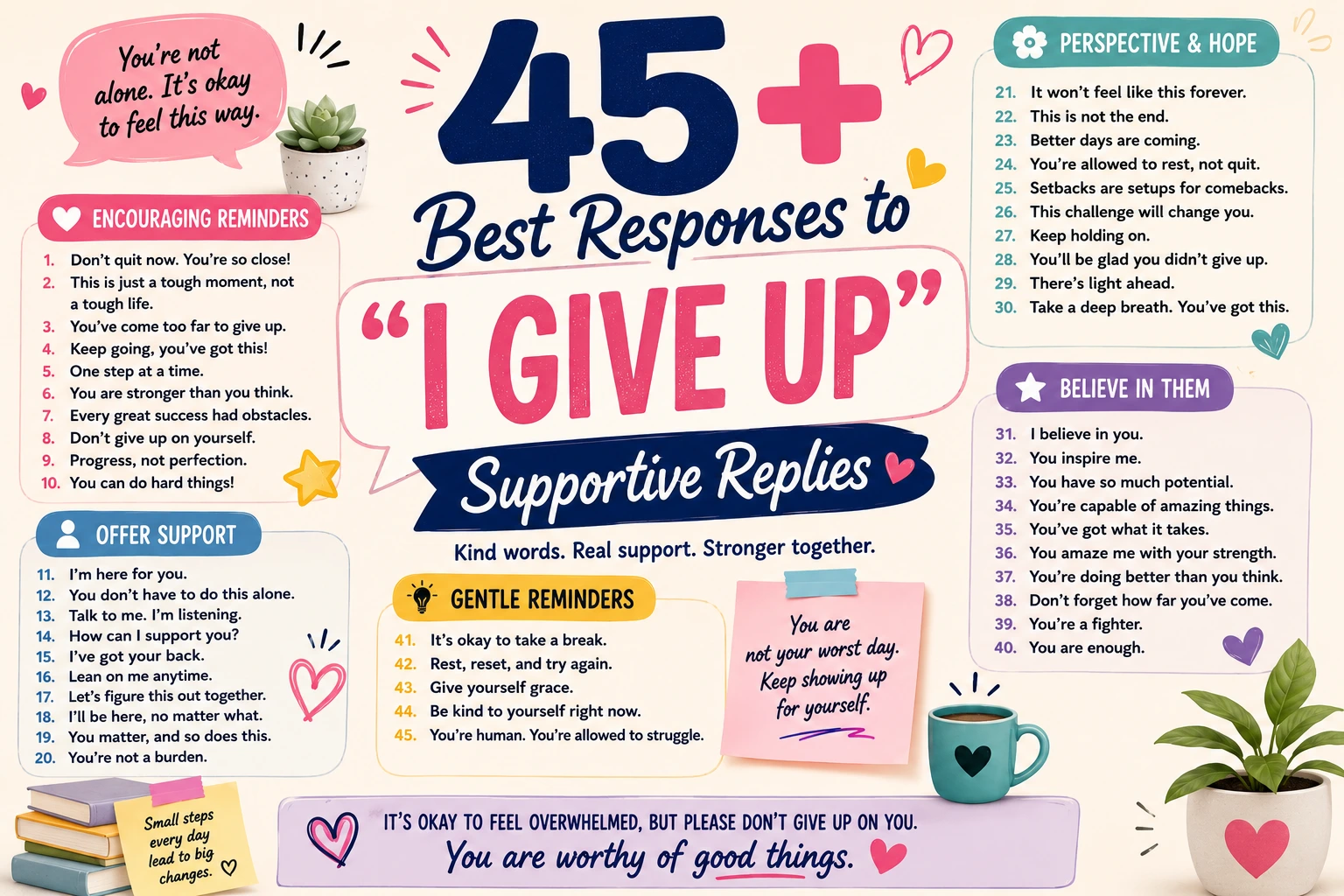
Instead of replying with the same “Don’t give up,” you can choose words that feel more personal and natural. Below, you’ll find 45+ responses to “I give up,” ranging from supportive and thoughtful to playful and humorous.
1. What Does “I Give Up” Mean?
“I give up” usually means someone has decided to stop trying to solve, complete, or continue with something.
The phrase can express frustration, exhaustion, impatience, disappointment, or a simple decision to take a break. Its meaning depends heavily on the context.
For example, someone struggling with a complicated puzzle might say, “I give up,” because they cannot find the answer. A student might say it after spending hours on a difficult assignment. A friend might use it jokingly when they cannot decide what to watch.
The phrase does not always mean someone has permanently abandoned something. Sometimes, it simply means, “I need a break from this.”
2. When to Use It
Responses to “I give up” can be used in many everyday situations.
With Friends
You can be encouraging or humorous.
Example: “I give up!”
“Give it five minutes. You’re closer than you think.”
During Difficult Tasks
A supportive response can help someone regain confidence.
Example: “I give up on this problem.”
“Let’s take it one step at a time.”
At School or College
A practical response is often more useful than a joke.
Example: “I give up. This assignment makes no sense.”
“Take a short break, then let’s look at it again.”
At Work
Keep your response constructive and professional.
Example: “I give up trying to fix this issue.”
“Let’s review the problem together and see what we’re missing.”
In Casual Texting
A playful response can keep the conversation light.
Example: “I give up.”
“Already? That was impressively quick.”
3. Is It Polite or Professional?
“I give up” is generally casual rather than formal or professional. It is common in conversations with friends, family members, classmates, and coworkers you know well.
In a workplace setting, however, the phrase can sometimes sound overly negative if it is used seriously. Instead of saying “I give up,” a more professional alternative might be “I’m having trouble with this,” “I think I need another approach,” or “Could we look at this together?”
When responding to someone who says “I give up,” avoid immediately dismissing their frustration. A thoughtful response can acknowledge what they are experiencing while helping them decide what to do next.
Polite and Appreciative Responses
1. Take a breath and try again.
Meaning: Encourages the person to pause before continuing.
Tone: Supportive.
“I give up.” “Take a breath and try again. You might see it differently.”
Why use it: Helpful when someone is frustrated rather than genuinely finished.
2. You’ve come this far; don’t stop now.
Meaning: Reminds them of their progress.
Tone: Encouraging.
“I give up on this project.” “You’ve come this far; don’t stop now.”
Why use it: Good when someone has already invested significant effort.
3. Let’s figure it out together.
Meaning: Offers practical support.
Tone: Friendly and reassuring.
“I give up. I can’t solve this.” “Let’s figure it out together.”
Why use it: A strong response when you can genuinely help.
4. Maybe you just need a short break.
Meaning: Suggests stepping away temporarily.
Tone: Caring and practical.
“I give up on this assignment.” “Maybe you just need a short break.”
Why use it: Useful when frustration is making it harder to think clearly.
5. You don’t have to solve everything at once.
Meaning: Encourages a slower approach.
Tone: Thoughtful.
“I give up. There’s too much to do.” “You don’t have to solve everything at once.”
Why use it: Works well when someone feels overwhelmed.
6. You’re doing better than you think.
Meaning: Reminds someone that their progress matters.
Tone: Positive.
“I give up. I’m terrible at this.” “You’re doing better than you think.”
Why use it: A kind response when self-doubt is involved.
7. Let’s approach it from a different angle.
Meaning: Suggests changing the strategy.
Tone: Practical and mature.
“I give up; this method isn’t working.” “Let’s approach it from a different angle.”
Why use it: Particularly useful for school, work, or problem-solving.
8. It’s okay to pause, but you don’t have to quit.
Meaning: Separates taking a break from permanently stopping.
Tone: Supportive.
“I give up for today.” “It’s okay to pause, but you don’t have to quit.”
Why use it: A balanced response that respects their need for a break.
9. I know it’s frustrating. Let’s take it slowly.
Meaning: Acknowledges their frustration while offering help.
Tone: Empathetic.
“I give up. Nothing is working.” “I know it’s frustrating. Let’s take it slowly.”
Why use it: Best when someone genuinely needs patience and understanding.
10. You can always come back to it later.
Meaning: Reminds them that stepping away is an option.
Tone: Calm and reassuring.
“I give up on this for now.” “You can always come back to it later.”
Why use it: Good when continuing immediately is not productive.
Flirty and Playful Responses
11. That was a very dramatic surrender.
Meaning: Lightly jokes about how quickly they stopped.
Tone: Playful.
“I give up!” “That was a very dramatic surrender.”
Why use it: Best for someone who enjoys playful banter.
12. Already? I expected more of a battle.
Meaning: Teases them for giving up quickly.
Tone: Playful and teasing.
“I give up.” “Already? I expected more of a battle.”
Why use it: Works when the conversation is already lighthearted.
13. Nice try, but I’m not accepting that answer.
Meaning: Playfully refuses to let them quit.
Tone: Confident and teasing.
“I give up.” “Nice try, but I’m not accepting that answer.”
Why use it: A fun option for close friends.
14. I refuse to believe you’ve reached your final form.
Meaning: Jokes that they still have more effort to give.
Tone: Humorous.
“I give up.” “I refuse to believe you’ve reached your final form.”
Why use it: Adds exaggerated humor to a frustrating moment.
15. The surrender speech was impressive.
Meaning: Teases them for making a dramatic declaration.
Tone: Witty.
“I give up!” “The surrender speech was impressive.”
Why use it: Good for playful conversations.
16. Give up temporarily. I’ll allow it.
Meaning: Jokingly grants permission for a short break.
Tone: Playful.
“I give up.” “Give up temporarily. I’ll allow it.”
Why use it: A fun response that still leaves room for trying again.
17. You’re giving up? That feels suspiciously convenient.
Meaning: Teases them about quitting.
Tone: Light and humorous.
“I give up.” “You’re giving up? That feels suspiciously convenient.”
Why use it: Best for friendly banter.
18. Fine, but I’m calling that a tactical retreat.
Meaning: Reframes quitting as a temporary strategy.
Tone: Clever and playful.
“I give up.” “Fine, but I’m calling that a tactical retreat.”
Why use it: Keeps the mood positive without dismissing their frustration.
Confident and Self-Respecting Responses
19. Knowing when to pause is part of knowing when to push forward.
Meaning: Recognizes that rest and persistence can both be valuable.
Tone: Mature.
“I give up for now.” “Knowing when to pause is part of knowing when to push forward.”
Why use it: Useful when someone needs perspective rather than pressure.
20. You’re allowed to change your approach.
Meaning: Encourages flexibility rather than forcing the same strategy.
Tone: Confident and practical.
“I give up because this method isn’t working.” “You’re allowed to change your approach.”
Why use it: Great for problem-solving situations.
21. If it matters to you, give yourself another chance.
Meaning: Encourages reconsideration without forcing it.
Tone: Motivational.
“I give up.” “If it matters to you, give yourself another chance.”
Why use it: Works well when the person cares about the outcome.
22. One difficult moment doesn’t define your ability.
Meaning: Separates temporary difficulty from overall capability.
Tone: Encouraging and mature.
“I give up. I clearly can’t do this.” “One difficult moment doesn’t define your ability.”
Why use it: Helpful when frustration turns into negative self-judgment.
23. You can step back without losing your progress.
Meaning: Reminds them that taking a break does not erase their work.
Tone: Reassuring.
“I need to give up for tonight.” “You can step back without losing your progress.”
Why use it: Ideal when someone needs permission to rest.
24. Sometimes the smartest move is reassessing the plan.
Meaning: Suggests thinking strategically.
Tone: Professional and thoughtful.
“I give up because nothing is working.” “Sometimes the smartest move is reassessing the plan.”
Why use it: Excellent for work, study, and long-term projects.
25. Don’t confuse difficulty with impossibility.
Meaning: Points out that something being hard does not mean it cannot be done.
Tone: Strong and motivational.
“I give up. This is impossible.” “Don’t confuse difficulty with impossibility.”
Why use it: A concise response when someone is making a quick judgment.
26. You have more options than you think.
Meaning: Encourages them to look for alternatives.
Tone: Empowering.
“I give up; there’s nothing else I can do.” “You have more options than you think.”
Why use it: Good when someone feels stuck.
27. A different strategy might change everything.
Meaning: Suggests that the problem may be the method, not the person.
Tone: Confident and constructive.
“I give up because this approach failed.” “A different strategy might change everything.”
Why use it: Particularly useful for difficult tasks.
Funny and Savage Responses
28. Well, that escalated into surrender quickly.
Meaning: Jokes about how quickly they quit.
Tone: Dry humor.
“I give up.” “Well, that escalated into surrender quickly.”
Why use it: Best for friends who enjoy sarcasm.
29. And the award for fastest surrender goes to you.
Meaning: Humorously celebrates their decision to quit.
Tone: Sarcastic and playful.
“I give up.” “And the award for fastest surrender goes to you.”
Why use it: Great for lighthearted situations.
30. Your resignation has been received.
Meaning: Pretends their statement is an official resignation.
Tone: Dry and witty.
“I give up.” “Your resignation has been received and filed.”
Why use it: Works well in casual conversations.
31. The dramatic exit was unnecessary, but entertaining.
Meaning: Teases them for making a big declaration.
Tone: Sarcastic.
“I give up!” “The dramatic exit was unnecessary, but entertaining.”
Why use it: Best among close friends.
32. Congratulations, you have officially entered defeat mode.
Meaning: Jokes about their temporary frustration.
Tone: Humorous.
“I give up.” “Congratulations, you have officially entered defeat mode.”
Why use it: Keeps a frustrating moment light.
33. I’ll notify the committee of your decision.
Meaning: Pretends there is an official committee handling their surrender.
Tone: Absurd and funny.
“I give up.” “I’ll notify the committee of your decision.”
Why use it: A playful response for close friends.
34. That sounds like a problem for future you.
Meaning: Jokes about postponing the problem.
Tone: Funny and relatable.
“I give up for today.” “Fair enough. That sounds like a problem for future you.”
Why use it: Perfect when someone genuinely needs a break.
35. I respect the honesty. Not the surrender, but the honesty.
Meaning: Jokingly separates honesty from giving up.
Tone: Sarcastic and playful.
“I give up.” “I respect the honesty. Not the surrender, but the honesty.”
Why use it: Works best with friends.
36. The mission has been temporarily abandoned.
Meaning: Dramatically describes stopping a task.
Tone: Dry and humorous.
“I give up on this puzzle.” “The mission has been temporarily abandoned.”
Why use it: Good for making ordinary frustration sound dramatically important.
37. I was rooting for you, but apparently the plot changed.
Meaning: Jokes that their decision surprised you.
Tone: Witty and playful.
“I give up.” “I was rooting for you, but apparently the plot changed.”
Why use it: A fun response for someone who enjoys dramatic humor.
Curious, Thoughtful, and Mature Responses
38. What’s making you want to stop?
Meaning: Invites the person to explain their frustration.
Tone: Caring and curious.
“I give up.” “What’s making you want to stop?”
Why use it: Best when you want to understand rather than immediately give advice.
39. Do you want advice or just a break?
Meaning: Gives the person control over what kind of support they need.
Tone: Considerate.
“I give up.” “Do you want advice or just a break?”
Why use it: A mature response that avoids assuming what they need.
40. What have you tried so far?
Meaning: Encourages them to explain the problem.
Tone: Practical and curious.
“I give up. Nothing is working.” “What have you tried so far?”
Why use it: Excellent for solving a practical problem together.
41. Would starting over make things easier?
Meaning: Suggests resetting the situation.
Tone: Thoughtful.
“I give up because this is too complicated.” “Would starting over make things easier?”
Why use it: Useful when the current approach has become confusing.
42. Maybe we should look at what’s actually causing the problem.
Meaning: Encourages identifying the root issue.
Tone: Analytical and mature.
“I give up; this keeps going wrong.” “Maybe we should look at what’s actually causing the problem.”
Why use it: Especially helpful for school or workplace challenges.
43. What would make this feel more manageable?
Meaning: Asks what practical change could help.
Tone: Supportive and thoughtful.
“I give up. There’s too much happening.” “What would make this feel more manageable?”
Why use it: A useful response when someone feels overwhelmed by a task.
44. You don’t have to decide right this second.
Meaning: Gives them space before making a final decision.
Tone: Calm and reassuring.
“I give up. I’m done with it.” “You don’t have to decide right this second.”
Why use it: Good when emotions are running high.
45. Would it help if we took a different approach together?
Meaning: Offers collaboration without pressure.
Tone: Caring and constructive.
“I give up; I can’t figure this out.” “Would it help if we took a different approach together?”
Why use it: One of the strongest responses when you genuinely want to help.
46. Maybe the goal needs adjusting, not abandoning.
Meaning: Suggests modifying expectations rather than quitting completely.
Tone: Mature and practical.
“I give up because this isn’t going as planned.” “Maybe the goal needs adjusting, not abandoning.”
Why use it: Useful when the original plan may simply be unrealistic.
47. Whatever you decide, give yourself some credit for trying.
Meaning: Recognizes the effort already made.
Tone: Compassionate and thoughtful.
“I give up.” “Whatever you decide, give yourself some credit for trying.”
Why use it: A gentle response when the person has genuinely put in effort.
Real-Life Situations: Choosing the Best Response
When a Friend Says It After Struggling With Something
Do not immediately lecture them. Start by acknowledging the frustration.
Best reply: “Maybe you just need a short break. We can come back to it later.”
When Someone Is Clearly Joking
A playful answer keeps the conversation entertaining.
Best reply: “Fine, but I’m calling that a tactical retreat.”
When a Classmate Is Struggling With an Assignment
Offer practical help rather than simply saying “don’t give up.”
Best reply: “Let’s figure it out together. What part is giving you the most trouble?”
When a Coworker Is Frustrated With a Project
Keep the response calm and constructive.
Best reply: “Let’s approach it from a different angle and see what we’re missing.”
When Someone Genuinely Needs a Break
Respect their decision to step away.
Best reply: “You don’t have to solve everything right now. Take some time and come back to it when you’re ready.”
What to Avoid When Responding to “I Give Up”
1. Do Not Immediately Dismiss Their Feelings
Saying “That’s ridiculous” or “Stop complaining” can make the person feel unheard.
2. Avoid Unwanted Lectures
Not every situation needs a motivational speech. Sometimes the person simply needs a short break.
3. Do Not Force Humor
A funny response is useful when the situation is lighthearted. It may be inappropriate when someone is genuinely struggling.
4. Avoid Making It About Yourself
Keep the focus on the person and the situation rather than turning the conversation into your own story.
5. Do Not Assume What They Need
Ask whether they want advice, help, or simply some time away from the problem.
6. Avoid Making Failure Sound Permanent
One unsuccessful attempt does not necessarily mean the person cannot improve or try a different approach.
Pro Tips for Responding to “I Give Up”
Match the Situation
A joke works well with a friend who is being dramatic. A thoughtful response is better when someone is genuinely frustrated.
Offer Specific Help
Instead of simply saying “Don’t give up,” try something useful such as, “Want me to look at it with you?”
Respect Their Need for a Break
Encouragement does not always mean pushing someone to continue immediately. Sometimes the most helpful response is giving them room to reset.
Conclusion
The best response to “I give up” depends on what the person actually means. Sometimes they want encouragement, sometimes they need practical help, and sometimes they are simply being playful. A thoughtful reply recognizes the situation instead of using the same response every time. Whether you choose “Let’s figure it out together,” “Maybe you need a break,” or a humorous “I’ll notify the committee of your decision,” the goal is to keep your response natural and appropriate. Good communication is not about having the cleverest line; it is about knowing what the other person needs in that moment.
Discover more
how to reply to happy christmas eve