
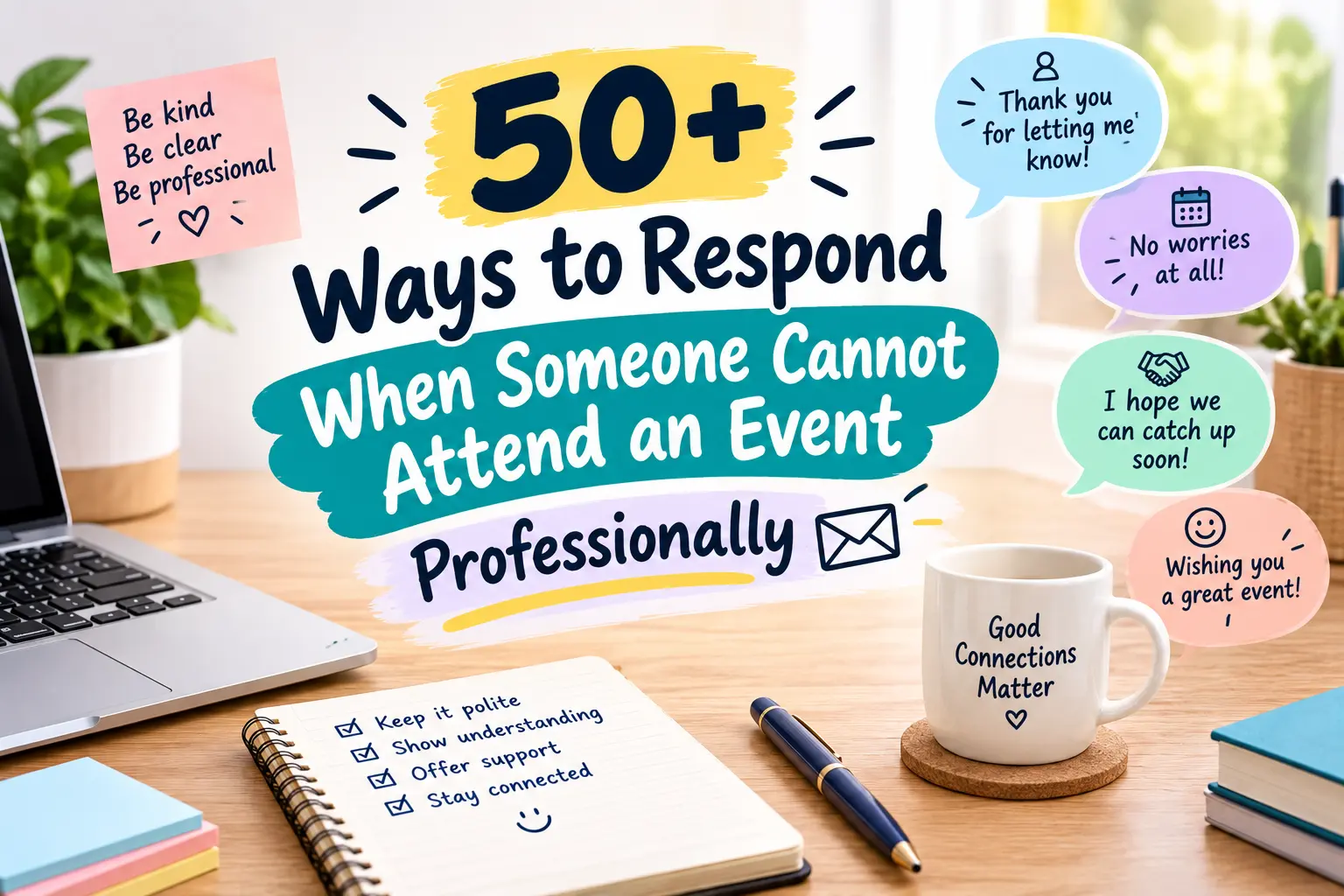
When someone tells you they cannot attend an event, your response can say a lot about your professionalism. A rushed “No problem” may be acceptable in a casual conversation, but workplace communication often deserves a little more thought. Whether you are responding to a client, colleague, manager, guest, speaker, or business partner, acknowledging their situation with warmth and respect helps maintain a positive relationship.
Knowing how to respond when someone cannot attend an event professionally is especially useful when the event is important or the person had originally planned to participate. The goal is not simply to accept their absence. A thoughtful response can show understanding, leave the door open for future opportunities, and keep communication comfortable.
The right words make professional communication feel less rigid and much more human.
Section 1: What Does “Respond Someone Who Cannot Attend an Event Professionally” Mean?
The phrase refers to responding politely and professionally when someone informs you that they will not be able to attend an event, meeting, conference, ceremony, dinner, or other planned occasion.
A good response usually does three things: acknowledges their message, respects their circumstances, and maintains a positive relationship.
For example, instead of simply saying, “Okay, thanks,” you could write:
“Thank you for letting me know. We completely understand and appreciate you taking the time to inform us.”
The emotional tone can vary depending on the situation. A formal business event may require a more polished response, while a team gathering can allow for something warmer and more conversational.
The key is to avoid making the person feel guilty for declining or being unable to attend.
Section 2: When to Use It
These professional responses can be useful in emails, workplace messages, invitations, event planning, networking conversations, conferences, meetings, seminars, weddings, academic events, and corporate functions.
For example, if a client cannot attend a business seminar, you might write:
“Thank you for letting us know. We understand and hope to have the opportunity to welcome you at a future event.”
If a colleague cannot attend a team gathering, a simpler response works:
“Thanks for letting me know. We’ll miss having you there and hope to see you next time.”
The important thing is to match your wording to the relationship. A client may appreciate formality, while a colleague may prefer something warmer and more relaxed.
Section 3: Is It Polite or Professional?
Yes. Responding thoughtfully to someone’s inability to attend is both polite and professional.
A strong response should not pressure the person to explain themselves unnecessarily. People may have scheduling conflicts, personal responsibilities, work commitments, travel issues, or other reasons they cannot attend.
Professional communication focuses on understanding rather than demanding details.
Phrases such as “We completely understand,” “Thank you for letting us know,” and “We hope to see you at a future event” are useful because they acknowledge the situation without creating discomfort.
The best response is respectful, concise, and appropriate for the relationship.
1. Thank you for letting us know.
Meaning: You appreciate the person informing you about their absence.
Tone: Formal, polite, professional.
Example: “Thank you for letting us know that you will not be able to attend the conference.”
Why to use it: This is one of the safest professional responses because it is simple and respectful.
2. We completely understand.
Meaning: You accept their inability to attend without judgment.
Tone: Warm, professional.
Example: “We completely understand that you have another commitment that day.”
Why to use it: It reassures the person that their absence is not a problem.
3. Thank you for informing us in advance.
Meaning: You appreciate receiving notice before the event.
Tone: Formal and appreciative.
Example: “Thank you for informing us in advance. We appreciate the notice.”
Why to use it: Particularly useful for business events and meetings where attendance numbers matter.
4. We appreciate you keeping us informed.
Meaning: You value their communication.
Tone: Professional and polished.
Example: “We appreciate you keeping us informed regarding your availability.”
Why to use it: This sounds more refined than simply saying “Okay.”
5. Thank you for the update.
Meaning: You acknowledge the information they provided.
Tone: Neutral, professional.
Example: “Thank you for the update. We understand that you will be unable to attend.”
Why to use it: Ideal for workplace emails and routine event communication.
6. We understand that circumstances can change.
Meaning: You recognize that plans are not always predictable.
Tone: Understanding and professional.
Example: “We understand that circumstances can change, so there is no problem with your absence.”
Why to use it: This adds empathy without becoming overly personal.
7. We’re sorry to miss you at the event.
Meaning: You express that their presence would have been appreciated.
Tone: Warm and professional.
Example: “We’re sorry to miss you at the event, but we completely understand.”
Why to use it: Great when the person is a valued guest or colleague.
8. We’ll certainly miss having you there.
Meaning: Their presence would have been meaningful.
Tone: Friendly and warm.
Example: “We’ll certainly miss having you there, but we hope everything goes well.”
Why to use it: Works particularly well for team events and professional gatherings.
9. Thank you for your response.
Meaning: You acknowledge their reply to the invitation.
Tone: Formal and courteous.
Example: “Thank you for your response and for confirming that you will be unable to attend.”
Why to use it: A clean choice for formal invitations and business correspondence.
10. We respect your decision and completely understand.
Meaning: You accept their decision without pressure.
Tone: Respectful and professional.
Example: “We respect your decision and completely understand your scheduling constraints.”
Why to use it: Useful when someone has declined rather than simply cancelled.
11. Thank you for keeping us updated.
Meaning: You appreciate their communication.
Tone: Professional and friendly.
Example: “Thank you for keeping us updated regarding your availability.”
Why to use it: Suitable for ongoing event planning.
12. We understand that you’re unable to join us this time.
Meaning: You acknowledge their absence without making it uncomfortable.
Tone: Warm and professional.
Example: “We understand that you’re unable to join us this time and hope to welcome you in the future.”
Why to use it: A thoughtful choice when you want to maintain a positive relationship.
13. Thank you for your kind regrets.
Meaning: You acknowledge a formal expression of inability to attend.
Tone: Formal and traditional.
Example: “Thank you for your kind regrets. We appreciate you taking the time to respond.”
Why to use it: Particularly appropriate for formal invitations and institutional events.
14. We appreciate your response and understanding.
Meaning: You value both their communication and consideration.
Tone: Formal and polished.
Example: “We appreciate your response and understanding regarding the event arrangements.”
Why to use it: Good for official emails and organizational communication.
15. We hope to have the pleasure of seeing you at a future event.
Meaning: You leave the relationship open for another opportunity.
Tone: Formal and welcoming.
Example: “Although you cannot attend this time, we hope to have the pleasure of seeing you at a future event.”
Why to use it: Excellent for conferences, professional networking events, and formal functions.
16. We hope there will be another opportunity to connect.
Meaning: You would like to stay connected.
Tone: Professional and warm.
Example: “We understand that you cannot attend and hope there will be another opportunity to connect.”
Why to use it: Especially useful for networking and business relationships.
17. We look forward to connecting with you another time.
Meaning: You remain interested in future communication.
Tone: Friendly and professional.
Example: “We’re sorry you cannot join us, but we look forward to connecting with you another time.”
Why to use it: A natural alternative to repeating “future event.”
18. We understand and appreciate your circumstances.
Meaning: You recognize that their absence may be unavoidable.
Tone: Empathetic and professional.
Example: “We understand and appreciate your circumstances. Thank you for keeping us informed.”
Why to use it: Helpful when the person has briefly explained why they cannot attend.
19. Thank you for your consideration.
Meaning: You appreciate the person’s attention to the invitation.
Tone: Formal and courteous.
Example: “Thank you for your consideration, and we hope to connect with you in the future.”
Why to use it: Suitable for formal invitations and corporate correspondence.
20. We appreciate you taking the time to respond.
Meaning: You recognize their effort in replying.
Tone: Warm and professional.
Example: “We appreciate you taking the time to respond to our invitation.”
Why to use it: Makes your reply sound considerate rather than automatic.
21. Thank you for your prompt response.
Meaning: You appreciate receiving their answer quickly.
Tone: Formal and professional.
Example: “Thank you for your prompt response. We understand that you will be unable to attend.”
Why to use it: Particularly useful when planning depends on guest confirmations.
22. No worries at all. We completely understand.
Meaning: You reassure them that their absence is acceptable.
Tone: Friendly and professional.
Example: “No worries at all. We completely understand that you have another commitment.”
Why to use it: Best for colleagues, clients with whom you have a friendly relationship, or less formal events.
23. Thank you for confirming your availability.
Meaning: You acknowledge their confirmation that they cannot attend.
Tone: Formal and organized.
Example: “Thank you for confirming your availability. We’ll make the necessary adjustments.”
Why to use it: Useful when attendance affects planning or logistics.
24. We appreciate the advance notice.
Meaning: You are grateful they told you early.
Tone: Professional and practical.
Example: “We appreciate the advance notice and will update our event arrangements accordingly.”
Why to use it: Excellent when organizers need time to adjust plans.
25. Your absence is completely understandable.
Meaning: You reassure them that there is no issue.
Tone: Warm and professional.
Example: “Your absence is completely understandable, and we hope to see you at another event.”
Why to use it: Works well when the person’s reason is clearly unavoidable.
26. We’re grateful that you took the time to respond.
Meaning: You show appreciation for their communication.
Tone: Warm and polished.
Example: “We’re grateful that you took the time to respond to our invitation.”
Why to use it: A slightly more personal alternative for valued guests.
27. We hope everything goes well on your end.
Meaning: You acknowledge their situation with goodwill.
Tone: Warm and considerate.
Example: “We understand that you cannot attend. We hope everything goes well on your end.”
Why to use it: Appropriate when the person has mentioned another commitment or difficulty.
28. We understand that you have other commitments.
Meaning: You acknowledge competing responsibilities.
Tone: Professional and neutral.
Example: “We understand that you have other commitments and appreciate you letting us know.”
Why to use it: Particularly useful in workplace communication.
29. Thank you for your thoughtful response.
Meaning: You appreciate their considerate reply.
Tone: Warm and refined.
Example: “Thank you for your thoughtful response. We completely understand.”
Why to use it: A polished option when the person has provided a detailed explanation.
30. We’re sorry you won’t be able to join us.
Meaning: You express genuine disappointment while remaining understanding.
Tone: Warm and professional.
Example: “We’re sorry you won’t be able to join us, but we completely understand.”
Why to use it: Ideal for events where the person’s presence was genuinely anticipated.
31. We’ll be thinking of you while we’re there.
Meaning: You warmly acknowledge their absence.
Tone: Personal and friendly.
Example: “We’ll be thinking of you while we’re there. Hopefully, we can catch up soon.”
Why to use it: Best for colleagues, friends, and familiar professional contacts.
32. We hope to welcome you another time.
Meaning: You invite future participation.
Tone: Professional and positive.
Example: “We hope to welcome you another time and appreciate your response.”
Why to use it: A concise way to keep the relationship open.
33. We’ll make sure to keep you informed about future events.
Meaning: You indicate that future invitations may follow.
Tone: Professional and relationship-focused.
Example: “We’ll make sure to keep you informed about future events that may be of interest.”
Why to use it: Excellent for clients, partners, and professional contacts.
34. We hope you’ll be able to join us next time.
Meaning: You express hope for their future attendance.
Tone: Friendly and professional.
Example: “We understand you cannot make it this time and hope you’ll be able to join us next time.”
Why to use it: Natural and approachable without being overly formal.
35. Thank you for your honesty and communication.
Meaning: You appreciate their straightforwardness.
Tone: Respectful and mature.
Example: “Thank you for your honesty and communication. We completely understand your decision.”
Why to use it: Useful when someone has directly explained that they cannot participate.
36. We appreciate your thoughtful consideration of the invitation.
Meaning: You recognize that they considered attending.
Tone: Formal and sophisticated.
Example: “We appreciate your thoughtful consideration of the invitation.”
Why to use it: Particularly suitable for formal events and senior professional contacts.
37. We understand that your schedule does not allow you to attend.
Meaning: You acknowledge a scheduling conflict.
Tone: Formal and neutral.
Example: “We understand that your schedule does not allow you to attend this year’s conference.”
Why to use it: Useful when the reason is specifically related to scheduling.
38. We appreciate your timely communication.
Meaning: You value receiving the information at an appropriate time.
Tone: Formal and businesslike.
Example: “We appreciate your timely communication and will adjust the guest list accordingly.”
Why to use it: Great for event organizers and administrative communication.
39. We completely respect your circumstances.
Meaning: You show understanding without asking unnecessary questions.
Tone: Empathetic and professional.
Example: “We completely respect your circumstances and appreciate you letting us know.”
Why to use it: Useful when the person does not wish to provide detailed reasons.
40. Thank you for taking the time to respond to our invitation.
Meaning: You acknowledge the effort involved in replying.
Tone: Formal and courteous.
Example: “Thank you for taking the time to respond to our invitation. We understand that you cannot attend.”
Why to use it: A strong choice for formal event correspondence.
41. We’re grateful for your thoughtful consideration.
Meaning: You appreciate their consideration of the invitation.
Tone: Warm and formal.
Example: “We’re grateful for your thoughtful consideration and hope to connect with you soon.”
Why to use it: Works especially well for important professional guests.
42. We understand and wish you all the best.
Meaning: You accept their absence and offer a kind closing.
Tone: Warm and respectful.
Example: “We understand and wish you all the best with your other commitments.”
Why to use it: Good when you want to end the conversation on a positive note.
43. We appreciate you letting us know ahead of time.
Meaning: You value advance notice.
Tone: Friendly and professional.
Example: “We appreciate you letting us know ahead of time. It helps us finalize the arrangements.”
Why to use it: Especially practical for organizers.
44. We’ll certainly keep you in mind for future occasions.
Meaning: You intend to maintain the relationship.
Tone: Professional and welcoming.
Example: “We’ll certainly keep you in mind for future occasions and hope our schedules align next time.”
Why to use it: Useful for professional networking and event invitations.
45. We understand, and we hope to see you soon.
Meaning: You accept their absence while maintaining warmth.
Tone: Friendly and professional.
Example: “We understand, and we hope to see you soon at another gathering.”
Why to use it: A simple choice for colleagues and familiar contacts.
46. Thank you for your kind response.
Meaning: You appreciate their courteous communication.
Tone: Polite and formal.
Example: “Thank you for your kind response. We completely understand your inability to attend.”
Why to use it: Suitable for formal invitations and professional emails.
47. We appreciate your communication and understanding.
Meaning: You acknowledge both their response and consideration.
Tone: Formal and polished.
Example: “We appreciate your communication and understanding as we finalize the event arrangements.”
Why to use it: Strong for corporate and organizational settings.
48. We hope another opportunity will bring us together.
Meaning: You express optimism about future interaction.
Tone: Warm, elegant, professional.
Example: “We’re sorry you cannot attend, but we hope another opportunity will bring us together.”
Why to use it: A sophisticated option for networking and formal events.
49. Your response is greatly appreciated.
Meaning: You formally acknowledge their reply.
Tone: Formal and concise.
Example: “Your response is greatly appreciated as we finalize the event arrangements.”
Why to use it: Works particularly well in formal written correspondence.
50. We completely understand and appreciate your circumstances.
Meaning: You combine acceptance with empathy.
Tone: Professional and compassionate.
Example: “We completely understand and appreciate your circumstances. Thank you for informing us.”
Why to use it: A strong all-purpose response when you want to sound thoughtful.
51. We look forward to another opportunity to host you.
Meaning: You warmly invite the person to participate in the future.
Tone: Formal and welcoming.
Example: “Although you cannot attend this year, we look forward to another opportunity to host you.”
Why to use it: Particularly effective for conferences, corporate events, and formal functions.
52. Thank you for letting us know, and we hope to connect again soon.
Meaning: You acknowledge their absence while ending positively.
Tone: Warm, professional, and natural.
Example: “Thank you for letting us know, and we hope to connect again soon at another event.”
Why to use it: This is an excellent closing when you want your response to feel professional without sounding overly formal.
Conclusion
Knowing how to respond when someone cannot attend an event professionally helps you communicate with confidence, empathy, and respect. A thoughtful response does more than acknowledge an absence. It protects relationships, keeps conversations positive, and creates opportunities for future interaction.
The best wording depends on the person, event, and level of formality. Sometimes a simple “Thank you for letting us know” is enough. Other situations call for a warmer message that leaves the door open for future connections.
Professional communication does not have to sound cold or scripted. Choose words that feel genuine, respectful, and appropriate to the moment.
Discover more
clever responses to whats the password