

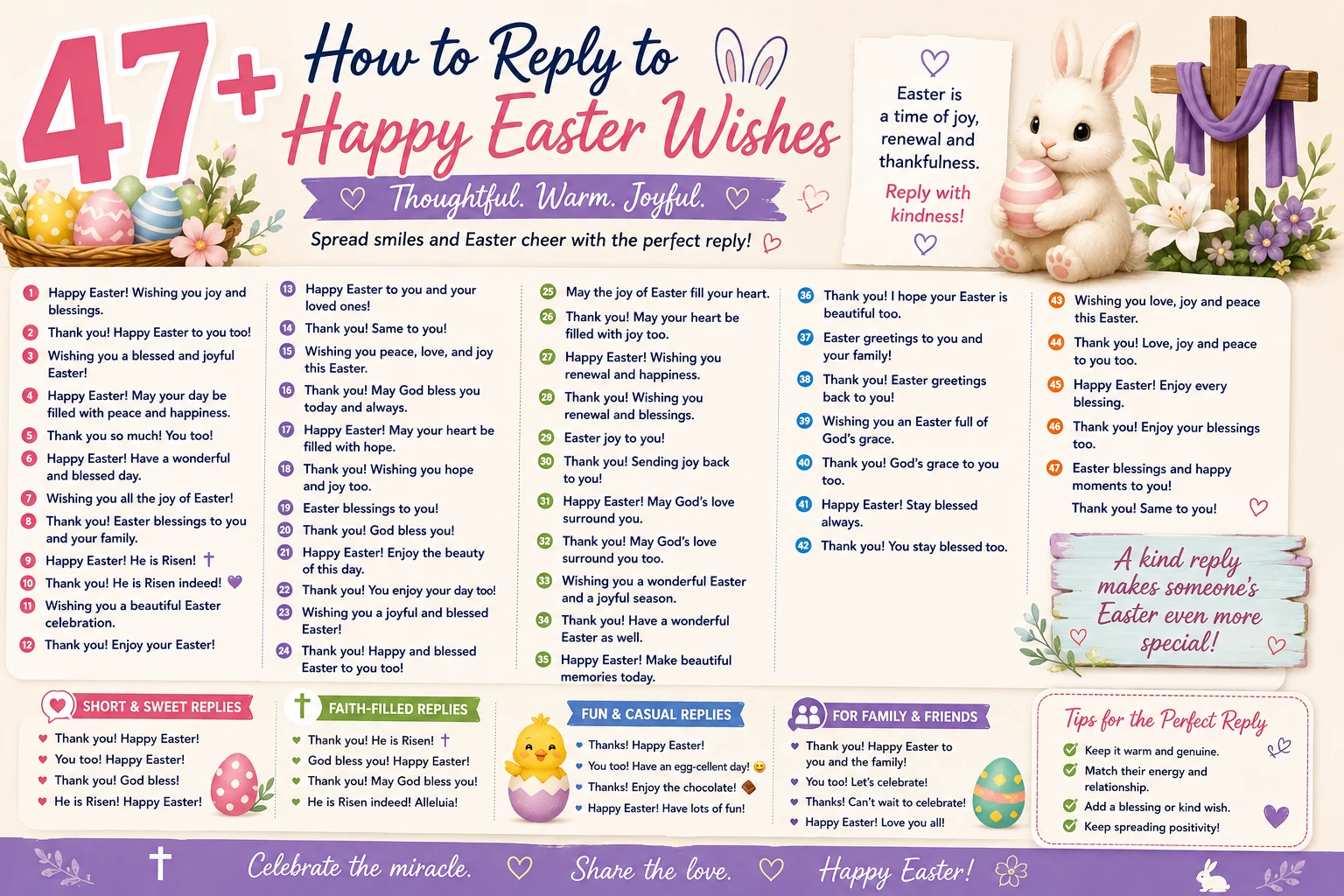
Easter greetings are usually simple and warm, but sometimes a basic “thank you” does not quite capture what you want to say. When someone takes a moment to wish you a Happy Easter, responding thoughtfully can make the conversation feel more personal and genuine. Whether the message comes from a close friend, family member, colleague, teacher, or someone you have not spoken to in a while, the ideal reply depends on your relationship and the tone of their message. You can keep it short and casual, make it heartfelt, or choose something polished for a professional setting. Having a few different responses ready also helps you avoid sending the exact same “Happy Easter to you too” every time. Here are 50 natural and thoughtful ways to reply to Happy Easter wishes, with examples and explanations to help you choose the right one.
What Does “How to Reply to Happy Easter Wishes” Mean?
“How to reply to Happy Easter wishes” simply means finding an appropriate response when someone sends you an Easter greeting.
The most common response is:
“Thank you! Happy Easter to you too.”
However, you can make your response more personal depending on the situation. A friend might appreciate something casual, while a colleague may expect something more polished. A family member might prefer a warm and heartfelt message.
Easter greetings generally have a positive, warm, and celebratory tone. For Christians, Easter has important religious significance because it commemorates the resurrection of Jesus Christ. For others, Easter may be observed as a cultural, family, or spring holiday.
The best approach is to acknowledge the person’s wishes while matching the tone of their original message.
When Should You Reply to Easter Wishes?
You can reply to Easter wishes in almost any setting where someone has greeted you for the holiday.
If a friend texts, “Happy Easter! Hope you have an amazing day,” you could say:
“Thank you! Happy Easter to you too. Hope you have a great one.”
For a family member, something warmer works well:
“Thank you! Wishing you and the whole family a beautiful Easter.”
If someone comments “Happy Easter” on your social media post, you can keep it short:
“Thank you! Wishing you a lovely Easter too.”
For a colleague or professional contact, try:
“Thank you for your kind wishes. Wishing you a wonderful Easter as well.”
And if someone writes a heartfelt Easter message, you can respond with:
“Thank you for thinking of me. May your Easter be filled with peace, joy, and meaningful moments with those you love.”
Is It Polite or Professional to Reply to Easter Wishes?
Replying to Easter wishes is generally polite and friendly. However, the wording should match your relationship with the person.
With friends and family, you can be relaxed, cheerful, affectionate, or humorous.
With colleagues and professional contacts, it is better to keep the response courteous and appropriate. For example:
“Thank you for your kind wishes. Wishing you a happy and peaceful Easter.”
If you are unsure about someone’s religious beliefs, a respectful and inclusive holiday greeting can be a good choice.
The easiest rule to remember is simple: match the warmth of the original message while keeping your response natural.
1. “Thank you! Happy Easter to you too.”
Meaning: You appreciate their greeting and return the same wishes.
Tone: Friendly and universal.
Example: “Thank you! Happy Easter to you too. Hope you have a wonderful day.”
Why use it: This is the classic response and works in almost any casual situation.
2. “Thank you! Wishing you a very Happy Easter too.”
Meaning: You are warmly returning their Easter wishes.
Tone: Polite and warm.
Example: “Thank you for your kind message. Wishing you a very Happy Easter too.”
Why use it: A polished alternative to the standard response.
3. “Happy Easter to you and your family too!”
Meaning: You extend your wishes to the person’s family.
Tone: Warm and thoughtful.
Example: “Thank you! Happy Easter to you and your family too!”
Why use it: Great when you know the person is celebrating with family.
4. “Thank you so much. I hope you have a beautiful Easter.”
Meaning: You sincerely appreciate their greeting.
Tone: Warm and heartfelt.
Example: “Thank you so much for thinking of me. I hope you have a beautiful Easter.”
Why use it: Ideal for someone who has sent a particularly thoughtful message.
5. “Wishing you a joyful Easter as well.”
Meaning: You return their wishes for a happy celebration.
Tone: Elegant and friendly.
Example: “Thank you for the lovely wishes. Wishing you a joyful Easter as well.”
Why use it: A refined alternative to simply saying “you too.”
6. “Thank you! I hope your Easter is filled with happiness.”
Meaning: You wish them a joyful holiday.
Tone: Warm and sincere.
Example: “Thank you! I hope your Easter is filled with happiness and wonderful memories.”
Why use it: Good when you want your response to feel more meaningful.
7. “Same to you! Have a wonderful Easter.”
Meaning: You return their greeting in a relaxed way.
Tone: Casual and friendly.
Example: “Happy Easter! Same to you. Have a wonderful Easter.”
Why use it: Perfect for quick texts and everyday conversations.
8. “Thank you! Hope you have a lovely Easter weekend.”
Meaning: You wish them a pleasant holiday weekend.
Tone: Friendly and relaxed.
Example: “Thanks for the wishes! Hope you have a lovely Easter weekend with your family.”
Why use it: Useful when Easter is part of a longer holiday weekend.
9. “Wishing you a peaceful and happy Easter.”
Meaning: You wish them both happiness and peace.
Tone: Thoughtful and sincere.
Example: “Thank you for your kind wishes. Wishing you a peaceful and happy Easter.”
Why use it: A beautiful choice for someone who appreciates heartfelt messages.
10. “Thank you for the lovely Easter wishes.”
Meaning: You acknowledge their thoughtful greeting.
Tone: Polite and appreciative.
Example: “Thank you for the lovely Easter wishes. I hope you have a wonderful celebration too.”
Why use it: Ideal when someone sends a longer or more thoughtful Easter message.
11. “Happy Easter! Hope you have an amazing day.”
Meaning: You return the greeting and wish them a great day.
Tone: Cheerful and casual.
Example: “Thank you! Happy Easter! Hope you have an amazing day with everyone.”
Why use it: Great for friends, classmates, and casual acquaintances.
12. “Thank you! Sending warm Easter wishes your way.”
Meaning: You are returning their warm holiday greetings.
Tone: Warm and polished.
Example: “Thank you for your message. Sending warm Easter wishes your way too.”
Why use it: A slightly more sophisticated alternative to “Happy Easter to you too.”
13. “Wishing you and your loved ones a wonderful Easter.”
Meaning: You extend your wishes to the people close to them.
Tone: Warm and respectful.
Example: “Thank you so much. Wishing you and your loved ones a wonderful Easter.”
Why use it: A thoughtful choice for family friends or professional acquaintances.
14. “Thank you! May your Easter be filled with joy.”
Meaning: You wish them happiness during the holiday.
Tone: Heartfelt and traditional.
Example: “Thank you for the lovely wishes. May your Easter be filled with joy and peace.”
Why use it: Suitable when you want a more traditional or meaningful response.
15. “I really appreciate your Easter wishes. Happy Easter to you too.”
Meaning: You genuinely appreciate their thoughtfulness.
Tone: Sincere and mature.
Example: “I really appreciate your Easter wishes. Happy Easter to you and your family too.”
Why use it: Great for someone who has made an effort to reach out.
16. “Thank you! Hope your Easter is just as wonderful.”
Meaning: You return their positive wishes.
Tone: Friendly and warm.
Example: “Thank you for the sweet message. Hope your Easter is just as wonderful.”
Why use it: A natural response when someone wishes you an especially good Easter.
17. “Happy Easter! Enjoy every moment.”
Meaning: You wish them a joyful celebration.
Tone: Cheerful and positive.
Example: “Thank you! Happy Easter to you too. Enjoy every moment with your family.”
Why use it: A simple way to make a basic reply sound more thoughtful.
18. “Thank you! Hope you have a relaxing Easter.”
Meaning: You wish them a peaceful break.
Tone: Casual and considerate.
Example: “Thanks for the wishes! Hope you have a relaxing Easter weekend.”
Why use it: Especially appropriate for colleagues or busy friends.
19. “Wishing you a beautiful Easter celebration.”
Meaning: You hope they enjoy their celebration.
Tone: Polished and warm.
Example: “Thank you for reaching out. Wishing you a beautiful Easter celebration.”
Why use it: A graceful alternative for cards and formal messages.
20. “Thank you! May you have a truly wonderful Easter.”
Meaning: You sincerely wish them a happy holiday.
Tone: Formal and heartfelt.
Example: “Thank you for your kind wishes. May you have a truly wonderful Easter.”
Why use it: Suitable for older relatives, mentors, or professional contacts.
21. “Thank you! Sending you lots of Easter cheer.”
Meaning: You are returning their cheerful holiday energy.
Tone: Cheerful and casual.
Example: “Thank you! Sending you lots of Easter cheer right back.”
Why use it: Perfect for friends and lighthearted social messages.
22. “Same to you! Hope it’s a great one.”
Meaning: You return the Easter greeting casually.
Tone: Relaxed and friendly.
Example: “Happy Easter! Same to you. Hope it’s a great one.”
Why use it: Excellent for quick replies.
23. “Thank you! Hope you’re having a wonderful Easter too.”
Meaning: You acknowledge their greeting and return the sentiment.
Tone: Friendly and natural.
Example: “Thank you! Hope you’re having a wonderful Easter too.”
Why use it: Particularly natural in ongoing text conversations.
24. “Wishing you a happy and memorable Easter.”
Meaning: You hope they have a celebration worth remembering.
Tone: Thoughtful and polished.
Example: “Thank you for your kind wishes. Wishing you a happy and memorable Easter.”
Why use it: Good for people you want to greet warmly without sounding overly casual.
25. “Thank you for remembering me. Happy Easter to you too.”
Meaning: You appreciate that they took the time to contact you.
Tone: Personal and sincere.
Example: “Thank you for remembering me. Happy Easter to you and everyone at home.”
Why use it: Especially meaningful when the sender is someone you do not speak to often.
26. “Thank you! Wishing you nothing but happiness this Easter.”
Meaning: You wish them genuine happiness.
Tone: Warm and heartfelt.
Example: “Thank you for your sweet message. Wishing you nothing but happiness this Easter.”
Why use it: Great for close friends and family.
27. “Hope your Easter is full of good company and great memories.”
Meaning: You wish them enjoyable time with others.
Tone: Warm and conversational.
Example: “Thank you! Hope your Easter is full of good company and great memories.”
Why use it: A more personalized alternative to a standard greeting.
28. “Thank you! Have a peaceful and meaningful Easter.”
Meaning: You wish them a reflective and positive holiday.
Tone: Mature and thoughtful.
Example: “Thank you for the kind wishes. Have a peaceful and meaningful Easter as well.”
Why use it: Appropriate for someone who observes Easter in a more reflective way.
29. “Happy Easter to you too! Enjoy the holiday.”
Meaning: You return their greeting and wish them an enjoyable holiday.
Tone: Friendly and straightforward.
Example: “Thank you! Happy Easter to you too. Enjoy the holiday!”
Why use it: A reliable response for casual conversations.
30. “Thank you! I hope you and your family have a blessed Easter.”
Meaning: You offer warm wishes for the person and their family.
Tone: Traditional and heartfelt.
Example: “Thank you so much. I hope you and your family have a blessed Easter.”
Why use it: Best when you know the recipient is comfortable with religious language.
31. “Wishing you a lovely holiday filled with happiness.”
Meaning: You return their positive wishes without repeating “Happy Easter.”
Tone: Elegant and warm.
Example: “Thank you for the message. Wishing you a lovely holiday filled with happiness.”
Why use it: A useful alternative when you want fresh wording.
32. “Thank you! Hope you get to enjoy some quality time with your loved ones.”
Meaning: You wish them meaningful time with people they care about.
Tone: Thoughtful and friendly.
Example: “Thank you! Hope you get to enjoy some quality time with your loved ones this Easter.”
Why use it: A more personal response when you know Easter is a family occasion for them.
33. “Happy Easter! Wishing you plenty of joy and good memories.”
Meaning: You return their greeting with additional warm wishes.
Tone: Cheerful and heartfelt.
Example: “Thank you! Happy Easter to you too. Wishing you plenty of joy and good memories.”
Why use it: Adds personality to an otherwise standard reply.
34. “Thank you for the thoughtful Easter greeting.”
Meaning: You acknowledge their effort and kindness.
Tone: Polite and professional.
Example: “Thank you for the thoughtful Easter greeting. Wishing you a wonderful holiday as well.”
Why use it: Excellent for workplace emails or professional contacts.
35. “Wishing you the same warmth and happiness you’ve shared with me.”
Meaning: You are returning their kindness in a personal way.
Tone: Heartfelt and elegant.
Example: “Thank you for your beautiful message. Wishing you the same warmth and happiness this Easter.”
Why use it: Best for someone who sent a particularly heartfelt message.
36. “Thank you! Hope your day is filled with wonderful moments.”
Meaning: You wish them a positive Easter celebration.
Tone: Warm and modern.
Example: “Thank you for the wishes! Hope your day is filled with wonderful moments.”
Why use it: A flexible response for friends, relatives, and acquaintances.
37. “Happy Easter! Enjoy the celebrations.”
Meaning: You return their greeting and encourage them to enjoy the holiday.
Tone: Cheerful and casual.
Example: “Thank you! Happy Easter to you too. Enjoy the celebrations.”
Why use it: Great for short messages and social media replies.
38. “Thank you! Wishing you a truly special Easter.”
Meaning: You hope they have a memorable holiday.
Tone: Warm and polished.
Example: “Thank you for thinking of me. Wishing you a truly special Easter too.”
Why use it: A graceful option for people you care about.
39. “Hope your Easter brings you plenty of reasons to smile.”
Meaning: You wish them happiness and positive experiences.
Tone: Cheerful and thoughtful.
Example: “Thank you! Hope your Easter brings you plenty of reasons to smile.”
Why use it: A creative alternative to repeating “Happy Easter.”
40. “Thank you! Sending my warmest Easter wishes to you.”
Meaning: You return their greeting warmly.
Tone: Elegant and sincere.
Example: “Thank you for your kind message. Sending my warmest Easter wishes to you and your family.”
Why use it: Particularly suitable for greeting cards and professional correspondence.
41. “Wishing you a wonderful Easter and a relaxing holiday weekend.”
Meaning: You wish them both a happy Easter and a pleasant break.
Tone: Friendly and polished.
Example: “Thank you for your wishes. Wishing you a wonderful Easter and a relaxing holiday weekend.”
Why use it: Excellent for colleagues and professional acquaintances.
42. “Thank you! I hope this Easter brings you peace and happiness.”
Meaning: You offer sincere wishes for their well-being.
Tone: Thoughtful and heartfelt.
Example: “Thank you for your kind words. I hope this Easter brings you peace and happiness too.”
Why use it: A meaningful response for someone who appreciates thoughtful messages.
43. “Happy Easter! Sending good wishes your way.”
Meaning: You return their positive energy.
Tone: Casual and warm.
Example: “Thank you! Happy Easter! Sending good wishes your way too.”
Why use it: A simple but less repetitive alternative to “you too.”
44. “Thank you! Hope you have a joyful celebration.”
Meaning: You wish them a happy Easter celebration.
Tone: Polite and warm.
Example: “Thank you for the lovely wishes. Hope you have a joyful celebration too.”
Why use it: Suitable when you want to sound warm but not overly familiar.
45. “Wishing you and everyone close to you a very Happy Easter.”
Meaning: You extend your wishes beyond the individual.
Tone: Respectful and thoughtful.
Example: “Thank you for reaching out. Wishing you and everyone close to you a very Happy Easter.”
Why use it: Useful when responding to someone you do not know extremely well.
46. “Thank you! May your Easter be as wonderful as your wishes.”
Meaning: You playfully return the kindness they showed you.
Tone: Warm and creative.
Example: “Thank you for such a lovely message. May your Easter be as wonderful as your wishes.”
Why use it: A distinctive response when you want to avoid generic wording.
47. “Thank you for the warm wishes. Have a beautiful Easter.”
Meaning: You appreciate their greeting and return the sentiment.
Tone: Polite and sincere.
Example: “Thank you for the warm wishes. Have a beautiful Easter with your family.”
Why use it: A polished option that works in both personal and professional settings.
48. “Wishing you an Easter filled with peace, joy, and wonderful memories.”
Meaning: You offer a heartfelt and comprehensive holiday wish.
Tone: Elegant and meaningful.
Example: “Thank you for thinking of me. Wishing you an Easter filled with peace, joy, and wonderful memories.”
Why use it: Ideal for someone who deserves a more thoughtful response.
49. “Thank you! Right back at you. Have a fantastic Easter.”
Meaning: You casually return their greeting.
Tone: Friendly and conversational.
Example: “Thanks for the Easter wishes! Right back at you. Have a fantastic Easter.”
Why use it: Great for friends and casual conversations.
50. “Happy Easter to you too! Hope it’s a memorable one.”
Meaning: You return their greeting and wish them a special celebration.
Tone: Friendly and positive.
Example: “Thank you! Happy Easter to you too. Hope it’s a memorable one.”
Why use it: A simple way to add more personality to a traditional response.
Quick Answers for Different Situations
If a friend wishes you Happy Easter, you can say:
“Thanks! Happy Easter to you too. Hope you have an amazing day.”
If a family member sends the message:
“Thank you! Wishing you and the whole family a beautiful Easter.”
If a colleague sends an Easter greeting:
“Thank you for your kind wishes. Wishing you a wonderful Easter as well.”
If someone sends a heartfelt Easter message:
“Thank you for thinking of me. I hope this Easter brings you peace and happiness too.”
If you need a short reply:
“Thank you! Same to you.”
If you want something warm but simple:
“Thank you! Hope you have a lovely Easter too.”
If you want something more traditional:
“Wishing you and your family a blessed and peaceful Easter.”
What Should You Avoid When Replying to Easter Wishes?
You do not need to overthink every Easter greeting, but a few simple mistakes are worth avoiding.
1. Giving an unnecessarily long response
If someone simply says “Happy Easter,” you do not need to send a full paragraph unless the relationship calls for it.
2. Sounding overly formal with close friends
A response such as “I sincerely acknowledge your Easter greetings” can sound unnatural in a casual conversation.
3. Being too casual in professional situations
Replies filled with slang or inside jokes may not be appropriate for a manager, client, teacher, or professional contact.
4. Assuming everyone’s religious beliefs
If you are unsure about someone’s beliefs, keep your response respectful and neutral rather than making assumptions.
5. Copying the exact same response everywhere
A little personalization can make even a short response feel much more genuine.
Pro Tips for Better Easter Replies
Match their energy. If someone sends a thoughtful paragraph, a simple “thanks” may feel too brief. If they send a quick greeting, a short response is perfectly fine.
Personalize one small detail. Mention their family, weekend, plans, or something they previously told you. Even a few extra words can make the reply feel less generic.
Do not force it. You do not need to sound poetic or overly emotional. The best response is one that sounds natural coming from you.
Conclusion
Replying to Easter wishes does not have to be complicated. A simple “thank you” is perfectly polite, but adding a few thoughtful words can make your response feel more genuine and memorable. Whether you prefer something traditional, warm, professional, cheerful, or deeply personal, there is a response for every situation.
The most important thing is to consider who you are speaking to and match the tone of their message. Do not force an elaborate response when a simple one feels natural. A sincere few words are often more meaningful than a perfectly crafted sentence.
Discover more