
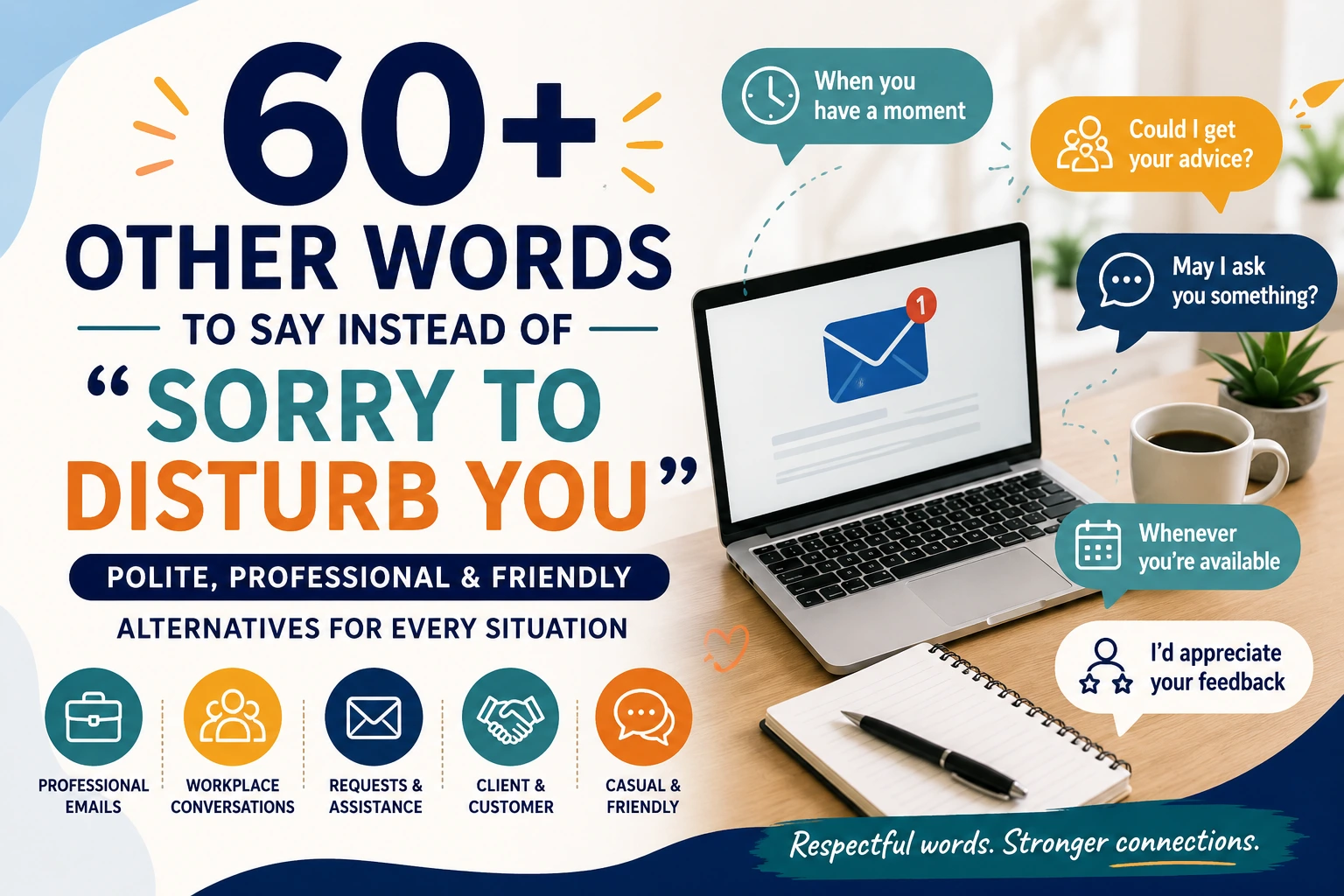
We’ve all found ourselves hesitating before sending an email, making a phone call, or asking someone for help. In those moments, it’s common to begin with “Sorry to disturb you,” hoping to sound polite and considerate. While the phrase is well intentioned, using it too often can unintentionally make your request sound overly apologetic or less confident.
Fortunately, there are many better ways to express courtesy without downplaying your message. Learning other words to say instead of “sorry to disturb you” allows you to communicate with confidence while still showing respect for the other person’s time. Whether you’re writing a professional email, messaging a colleague, speaking with a client, or chatting with a friend, choosing the right alternative can make your communication feel warmer, more natural, and more effective. This guide explores 60+ thoughtful alternatives complete with meanings, examples, tones, and practical usage tips.
What Does “Other Words to Say Instead of Sorry to Disturb You” Mean?
The phrase “sorry to disturb you” is commonly used to politely acknowledge that you may be interrupting someone’s time, work, or attention before asking a question or making a request.
Although it’s a respectful expression, repeatedly apologizing for reaching out can sometimes make you sound less confident than necessary. In many situations, replacing it with a more positive or neutral phrase creates a friendlier and more professional impression.
Alternative expressions allow you to remain courteous while communicating with greater confidence and clarity.
When to Use It
These alternatives work well in many personal and professional situations.
In Professional Emails
Example: “When you have a moment, could you review this document?”
During Workplace Conversations
Example: “May I have a quick minute to discuss something?”
With Friends
Example: “Do you have a minute? I wanted to ask you something.”
In Customer Service
Example: “Whenever you’re available, I’d appreciate your assistance.”
During Meetings
Example: “If this is a good time, I’d like to ask a quick question.”
Is It Polite or Professional?
Yes. Alternatives to “sorry to disturb you” can be both polite and professional when chosen carefully.
In business settings, expressions like “When you have a moment,” “May I ask you something?” or “If you have a minute” sound respectful while maintaining confidence.
In casual conversations, phrases such as “Got a second?” or “Can I ask you something?” feel friendly and approachable.
Replacing unnecessary apologies with positive, considerate language often improves communication and leaves a stronger impression.
Professional and Polite Alternatives
1. When You Have a Moment
Meaning: Politely asking someone when they’re available.
Tone: Professional and respectful.
Example Sentence: “When you have a moment, could you review my report?”
Explanation: Shows respect for the other person’s schedule.
Purpose: Perfect for emails and workplace conversations.
2. May I Have a Minute
Meaning: Requesting a brief conversation.
Tone: Formal.
Example Sentence: “May I have a minute to discuss tomorrow’s meeting?”
Explanation: Sounds confident without being demanding.
Purpose: Great for offices and meetings.
3. If You Have a Moment
Meaning: Asking when the person is free.
Tone: Friendly and professional.
Example Sentence: “If you have a moment, I’d appreciate your feedback.”
Explanation: Polite without sounding apologetic.
Purpose: Suitable for emails and chats.
4. Whenever You’re Available
Meaning: Letting someone respond at their convenience.
Tone: Respectful.
Example Sentence: “Whenever you’re available, I’d like to discuss the proposal.”
Explanation: Removes any sense of urgency.
Purpose: Excellent for busy professionals.
5. I’d Appreciate a Few Minutes of Your Time
Meaning: Respectfully requesting attention.
Tone: Professional.
Example Sentence: “I’d appreciate a few minutes of your time to discuss this project.”
Explanation: Sounds courteous and polished.
Purpose: Ideal for formal requests.
6. May I Ask You Something
Meaning: Politely introducing a question.
Tone: Neutral.
Example Sentence: “May I ask you something about today’s presentation?”
Explanation: Simple and universally appropriate.
Purpose: Works in almost every situation.
7. If This Is a Good Time
Meaning: Checking whether the timing is convenient.
Tone: Thoughtful.
Example Sentence: “If this is a good time, I’d like to ask a quick question.”
Explanation: Shows consideration for the other person’s schedule.
Purpose: Excellent during meetings.
8. Could I Get Your Advice
Meaning: Asking for guidance respectfully.
Tone: Professional.
Example Sentence: “Could I get your advice on this client proposal?”
Explanation: Makes the request collaborative.
Purpose: Great for managers and mentors.
9. I’d Like to Ask for Your Help
Meaning: Politely requesting assistance.
Tone: Warm.
Example Sentence: “I’d like to ask for your help with this assignment.”
Explanation: Sounds sincere and respectful.
Purpose: Suitable for both work and personal conversations.
10. May I Speak With You Briefly
Meaning: Requesting a short conversation.
Tone: Formal.
Example Sentence: “May I speak with you briefly after the meeting?”
Explanation: Clear, respectful, and professional.
Purpose: Perfect for workplace discussions.
Friendly and Everyday Alternatives
11. Do You Have a Minute
Meaning: Asking whether someone has time.
Tone: Casual.
Example Sentence: “Do you have a minute? I wanted to ask something.”
Explanation: Friendly and natural.
Purpose: Great for coworkers and friends.
12. Can I Ask You Something
Meaning: Introducing a question politely.
Tone: Friendly.
Example Sentence: “Can I ask you something about the project?”
Explanation: Common and conversational.
Purpose: Ideal for everyday communication.
13. Got a Second
Meaning: Asking for a very brief moment.
Tone: Casual.
Example Sentence: “Got a second? I need your opinion.”
Explanation: Informal and approachable.
Purpose: Best for friends and close colleagues.
14. When You’re Free
Meaning: Waiting until someone has time.
Tone: Relaxed.
Example Sentence: “When you’re free, I’d love to hear your thoughts.”
Explanation: Gives the other person flexibility.
Purpose: Perfect for texting or messaging.
15. I’d Love Your Input
Meaning: Asking for someone’s opinion.
Tone: Positive.
Example Sentence: “I’d love your input on this design.”
Explanation: Makes people feel valued.
Purpose: Great for teamwork and collaboration.
16. Can I Borrow a Moment of Your Time
Meaning: Politely requesting a brief conversation.
Tone: Respectful.
Example Sentence: “Can I borrow a moment of your time to discuss something?”
Explanation: A polished alternative that sounds professional.
Purpose: Excellent for formal settings.
17. Would You Mind Taking a Quick Look
Meaning: Asking someone to review something.
Tone: Friendly.
Example Sentence: “Would you mind taking a quick look at this document?”
Explanation: Softens the request while remaining confident.
Purpose: Great for emails and shared projects.
18. I Was Hoping to Get Your Opinion
Meaning: Asking for feedback.
Tone: Warm.
Example Sentence: “I was hoping to get your opinion on this idea.”
Explanation: Shows that you value their perspective.
Purpose: Perfect for collaborative conversations.
19. If It’s Convenient for You
Meaning: Letting someone choose the right time.
Tone: Considerate.
Example Sentence: “If it’s convenient for you, I’d like to discuss something.”
Explanation: Shows respect without apologizing.
Purpose: Suitable for personal and professional communication.
20. Whenever You Get the Chance
Meaning: Allowing someone to respond at their convenience.
Tone: Relaxed and polite.
Example Sentence: “Whenever you get the chance, could you send me the file?”
Explanation: Keeps your request courteous and pressure free.
Purpose: Ideal for emails, messages, and workplace chats.
Respectful and Professional Alternatives
21. When It’s Convenient for You
Meaning: Respectfully asking someone to respond when they’re free.
Tone: Professional.
Example Sentence: “When it’s convenient for you, I’d like to discuss next week’s schedule.”
Explanation: Shows patience and consideration.
Purpose: Perfect for business emails and client communication.
22. Could I Have a Quick Word
Meaning: Asking for a brief conversation.
Tone: Polite.
Example Sentence: “Could I have a quick word before you leave?”
Explanation: Short, respectful, and commonly used.
Purpose: Great for workplace discussions.
23. I’d Appreciate Your Assistance
Meaning: Politely requesting help.
Tone: Formal.
Example Sentence: “I’d appreciate your assistance with this report.”
Explanation: Sounds courteous and professional.
Purpose: Ideal for business communication.
24. If You Have Time
Meaning: Asking only if the person is available.
Tone: Friendly.
Example Sentence: “If you have time, could you explain this process?”
Explanation: Removes pressure from the request.
Purpose: Suitable for work and casual settings.
25. Whenever It Suits You
Meaning: Letting someone choose the best time.
Tone: Respectful.
Example Sentence: “Whenever it suits you, I’d love to discuss the proposal.”
Explanation: Gives flexibility to the other person.
Purpose: Excellent for professional emails.
26. Could I Get a Moment of Your Time
Meaning: Politely requesting attention.
Tone: Professional.
Example Sentence: “Could I get a moment of your time regarding the project?”
Explanation: Sounds confident without being intrusive.
Purpose: Great for meetings.
27. I’d Like to Run Something by You
Meaning: Asking someone to review an idea.
Tone: Friendly.
Example Sentence: “I’d like to run something by you before the presentation.”
Explanation: Makes the conversation collaborative.
Purpose: Perfect for coworkers and managers.
28. May I Have Your Attention for a Moment
Meaning: Politely requesting focus.
Tone: Formal.
Example Sentence: “May I have your attention for a moment regarding an update?”
Explanation: Useful in meetings and presentations.
Purpose: Best for workplace communication.
29. I’d Be Grateful for Your Time
Meaning: Showing appreciation before asking.
Tone: Respectful.
Example Sentence: “I’d be grateful for your time to review this proposal.”
Explanation: Expresses gratitude without over apologizing.
Purpose: Ideal for formal requests.
30. May I Get Your Thoughts
Meaning: Asking for someone’s opinion.
Tone: Professional.
Example Sentence: “May I get your thoughts on this draft?”
Explanation: Encourages collaboration.
Purpose: Excellent for teamwork.
Friendly and Positive Alternatives
31. I’d Love to Hear What You Think
Meaning: Inviting feedback.
Tone: Warm.
Example Sentence: “I’d love to hear what you think about this design.”
Explanation: Makes people feel valued.
Purpose: Great for creative discussions.
32. Could We Chat for a Minute
Meaning: Suggesting a brief conversation.
Tone: Casual.
Example Sentence: “Could we chat for a minute after lunch?”
Explanation: Sounds relaxed and approachable.
Purpose: Perfect for colleagues and friends.
33. Would You Have a Moment
Meaning: Asking if someone is available.
Tone: Polite.
Example Sentence: “Would you have a moment to review this email?”
Explanation: A refined way to begin a request.
Purpose: Suitable for professional settings.
34. I’d Value Your Opinion
Meaning: Showing respect for someone’s expertise.
Tone: Respectful.
Example Sentence: “I’d value your opinion on this marketing strategy.”
Explanation: Builds positive communication.
Purpose: Ideal for managers and mentors.
35. Could I Check Something With You
Meaning: Asking for clarification.
Tone: Friendly.
Example Sentence: “Could I check something with you before I submit this?”
Explanation: Sounds natural and collaborative.
Purpose: Great for workplace conversations.
36. Can We Talk When You Have Time
Meaning: Waiting until the person is available.
Tone: Considerate.
Example Sentence: “Can we talk when you have time about tomorrow’s event?”
Explanation: Shows patience and respect.
Purpose: Suitable for work and personal life.
37. I’d Appreciate Your Feedback
Meaning: Asking for constructive input.
Tone: Professional.
Example Sentence: “I’d appreciate your feedback on this proposal.”
Explanation: Invites collaboration.
Purpose: Excellent for offices and schools.
38. Could I Get Your Advice on Something
Meaning: Asking someone for guidance.
Tone: Respectful.
Example Sentence: “Could I get your advice on something I’ve been working on?”
Explanation: Makes people feel appreciated.
Purpose: Perfect for mentors and experienced colleagues.
39. I Have a Quick Question
Meaning: Introducing a short request.
Tone: Casual.
Example Sentence: “I have a quick question about tomorrow’s meeting.”
Explanation: Straightforward and friendly.
Purpose: Works in almost every conversation.
40. Would You Be Available for a Moment
Meaning: Asking if someone has a little free time.
Tone: Professional and polite.
Example Sentence: “Would you be available for a moment to discuss the schedule?”
Explanation: A confident alternative that respects the other person’s time.
Purpose: Ideal for meetings, phone calls, and workplace discussions.
Warm and Considerate Alternatives
41. I’d Like Your Perspective
Meaning: Asking for someone’s opinion respectfully.
Tone: Professional.
Example Sentence: “I’d like your perspective on this proposal if you have a moment.”
Explanation: Shows that you value their experience.
Purpose: Excellent for workplace discussions and mentoring.
42. May I Get Your Input
Meaning: Requesting feedback or suggestions.
Tone: Professional.
Example Sentence: “May I get your input before I finalize the presentation?”
Explanation: Encourages collaboration without sounding demanding.
Purpose: Ideal for team projects.
43. I Wondered If You Could Help
Meaning: Politely asking for assistance.
Tone: Friendly.
Example Sentence: “I wondered if you could help me with this report.”
Explanation: Sounds natural and approachable.
Purpose: Suitable for colleagues, classmates, and friends.
44. Would You Mind Helping Me
Meaning: Requesting assistance politely.
Tone: Warm.
Example Sentence: “Would you mind helping me understand this process?”
Explanation: Courteous without excessive apologizing.
Purpose: Great for work and everyday conversations.
45. Could We Discuss Something Briefly
Meaning: Requesting a short conversation.
Tone: Professional.
Example Sentence: “Could we discuss something briefly after the meeting?”
Explanation: Clear, respectful, and efficient.
Purpose: Perfect for business environments.
46. May I Have Your Opinion
Meaning: Inviting someone to share their thoughts.
Tone: Respectful.
Example Sentence: “May I have your opinion on this design concept?”
Explanation: Makes the other person feel valued.
Purpose: Excellent for creative and professional settings.
47. Can We Catch Up for a Minute
Meaning: Asking for a quick conversation.
Tone: Casual.
Example Sentence: “Can we catch up for a minute after class?”
Explanation: Friendly and conversational.
Purpose: Best for coworkers, classmates, and friends.
48. I Was Wondering If You Had Time
Meaning: Asking if someone is available.
Tone: Polite.
Example Sentence: “I was wondering if you had time to review this proposal.”
Explanation: Sounds thoughtful and patient.
Purpose: Great for emails and workplace chats.
49. If You’re Available
Meaning: Asking only if the timing is convenient.
Tone: Considerate.
Example Sentence: “If you’re available, I’d like to discuss something important.”
Explanation: Keeps the request flexible.
Purpose: Suitable for all communication.
50. Whenever You Have a Few Minutes
Meaning: Letting someone reply whenever convenient.
Tone: Friendly.
Example Sentence: “Whenever you have a few minutes, I’d appreciate your feedback.”
Explanation: Shows patience and respect.
Purpose: Perfect for busy coworkers.
51. I’d Appreciate a Moment
Meaning: Politely requesting someone’s time.
Tone: Professional.
Example Sentence: “I’d appreciate a moment to explain my idea.”
Explanation: Sounds confident and courteous.
Purpose: Great for meetings.
52. May I Interrupt for Just a Moment
Meaning: Acknowledging a brief interruption.
Tone: Formal.
Example Sentence: “May I interrupt for just a moment to clarify something?”
Explanation: More positive than apologizing.
Purpose: Ideal during presentations or meetings.
53. I’d Love to Get Your Thoughts
Meaning: Asking for someone’s opinion.
Tone: Friendly.
Example Sentence: “I’d love to get your thoughts on this marketing campaign.”
Explanation: Creates a collaborative atmosphere.
Purpose: Excellent for teamwork.
54. Would You Mind if I Asked
Meaning: Politely introducing a question.
Tone: Respectful.
Example Sentence: “Would you mind if I asked about your experience?”
Explanation: Softens personal questions.
Purpose: Great for networking.
55. If You Have a Spare Minute
Meaning: Asking only if they’re free.
Tone: Casual.
Example Sentence: “If you have a spare minute, could you look over this document?”
Explanation: Relaxed yet polite.
Purpose: Suitable for work and personal conversations.
56. Can I Take a Moment of Your Time
Meaning: Respectfully requesting attention.
Tone: Professional.
Example Sentence: “Can I take a moment of your time to discuss the project?”
Explanation: Sounds confident and courteous.
Purpose: Excellent for formal situations.
57. Would You Be Able to Help Me
Meaning: Politely requesting assistance.
Tone: Warm.
Example Sentence: “Would you be able to help me with this assignment?”
Explanation: Friendly and respectful.
Purpose: Perfect for colleagues, teachers, and friends.
58. Could You Spare a Moment
Meaning: Asking for a brief amount of time.
Tone: Professional.
Example Sentence: “Could you spare a moment to answer a quick question?”
Explanation: A timeless phrase that works in almost every situation.
Purpose: Great for meetings and emails.
59. I’d Appreciate Your Time
Meaning: Showing gratitude before making a request.
Tone: Respectful.
Example Sentence: “I’d appreciate your time to discuss this proposal.”
Explanation: Keeps the conversation positive and professional.
Purpose: Ideal for workplace communication.
60. Whenever It’s Convenient for You
Meaning: Allowing the other person to choose the right time.
Tone: Professional and considerate.
Example Sentence: “Whenever it’s convenient for you, I’d love to discuss the next steps.”
Explanation: One of the most respectful alternatives because it values the other person’s schedule while keeping your request confident.
Purpose: Perfect for professional emails, client communication, and everyday conversations.
Conclusion
Choosing other words to say instead of “sorry to disturb you” helps you sound more confident while remaining polite and respectful. Whether you’re contacting a colleague, emailing a client, asking a teacher for guidance, or messaging a friend, these alternatives make your communication feel more natural and professional. Rather than leading with an apology, use phrases that acknowledge the other person’s time without diminishing your own request. With these 60 thoughtful alternatives, you’ll be able to communicate with greater confidence, build stronger relationships, and leave a more positive impression in every conversation.
Discover more
easter greetings to family and friends