
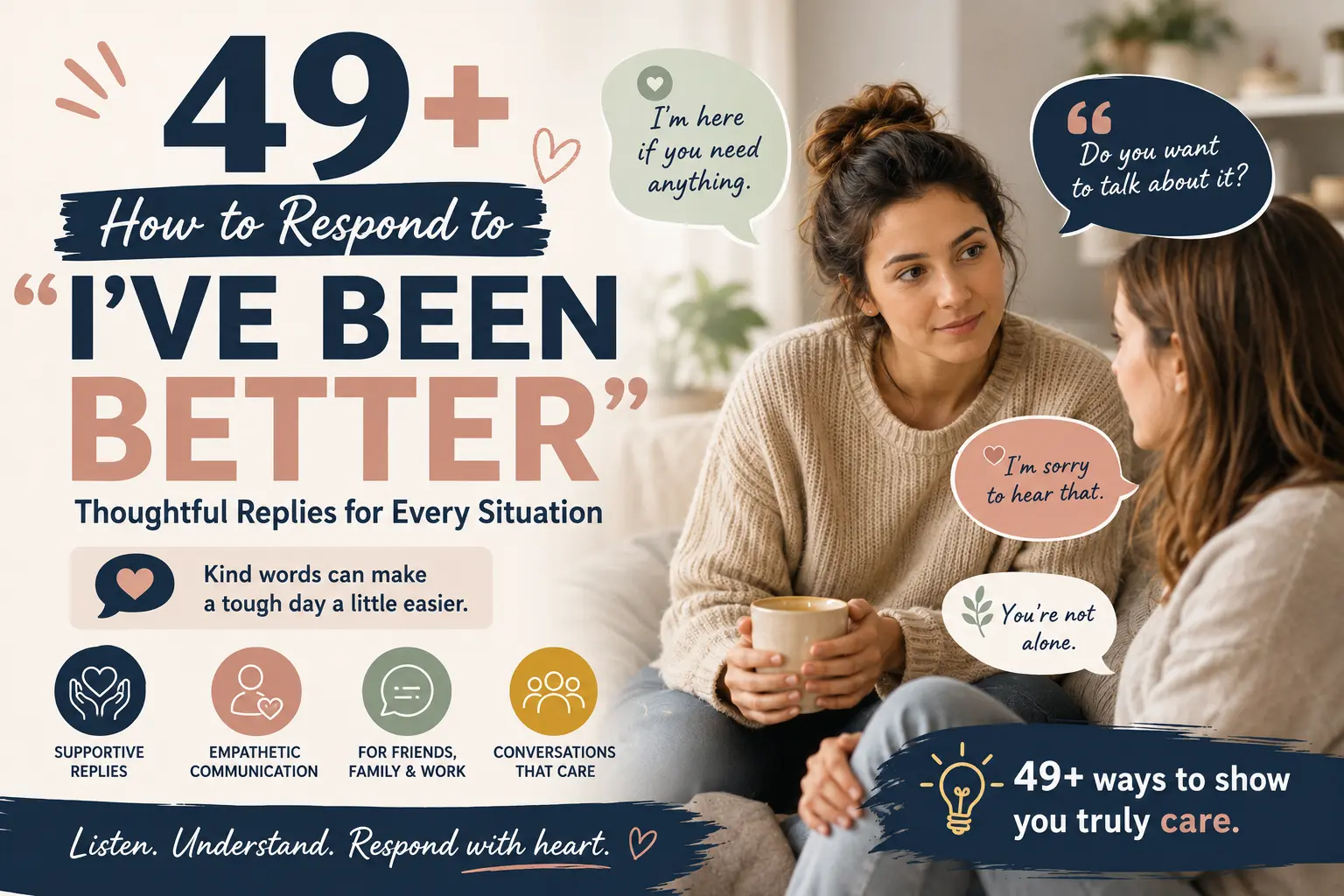
Most conversations begin with a simple, “How are you?” Usually, the response is something upbeat like “I’m doing well.” But every so often, someone quietly says, “I’ve been better.” Those three words can reveal that they’re going through a difficult time, even if they don’t explain why. Knowing how to respond with kindness can make a real difference.
Many people search for how to respond to “I’ve been better” because they want to show empathy without sounding awkward or intrusive. The right response helps the other person feel seen, respected, and supported. Whether you’re talking to a close friend, a family member, a coworker, or someone you’ve just met, thoughtful words can strengthen your connection. In this guide, you’ll discover 49 meaningful responses that fit different situations, personalities, and communication styles, helping you reply with confidence and genuine compassion.
What Does “How to Respond to I’ve Been Better” Mean?
When someone says “I’ve been better,” they’re usually telling you that life isn’t going as well as they’d like. It’s a gentle, understated way of saying they’re having a hard time without sharing every detail.
The phrase can refer to many situations, including:
- Feeling sick or recovering from an illness
- Experiencing stress at work or school
- Going through emotional challenges
- Dealing with family or relationship problems
- Feeling overwhelmed or simply having a bad day
Rather than ignoring the comment or changing the subject, a thoughtful response lets the person know you care. Sometimes they may want to talk, while other times they simply appreciate knowing someone is listening.
When to Use These Responses
Different situations call for different kinds of replies. Your response should reflect both the setting and your relationship with the person.
Here are a few examples:
With Friends
A close friend may appreciate a warm and supportive reply that encourages conversation.
Example:
Friend: “I’ve been better.”
You: “I’m sorry to hear that. Want to tell me what’s been going on?”
With Family Members
Family members often appreciate reassurance and practical support.
Example:
Sibling: “I’ve been better lately.”
You: “I’m here for you if you need anything.”
At Work
Professional settings call for respectful and considerate responses.
Example:
Coworker: “I’ve been better.”
You: “I’m sorry to hear that. I hope things improve soon.”
In Text Messages
A short but thoughtful message often feels genuine.
Example:
“I’m really sorry you’re having a tough time. Let me know if you’d like to talk.”
With Someone You Don’t Know Well
Keep your response polite without being overly personal.
Example:
“I’m sorry to hear that. I hope things get better for you soon.”
Is It Polite or Professional?
Yes. Responding kindly to “I’ve been better” is both polite and professional when your words match the situation.
In the workplace, it’s best to keep your reply supportive without asking overly personal questions. Phrases like “I’m sorry to hear that,” “I hope things improve soon,” or “Take care of yourself” show empathy while respecting professional boundaries.
With friends, family, or people you’re close to, you can be more personal by offering to listen or asking if there’s anything you can do to help.
The most important thing is to respond sincerely. A thoughtful reply often means much more than trying to solve the person’s problem immediately.
Caring and Supportive Responses
1. I’m Sorry to Hear That
Meaning:
Shows sympathy and acknowledges that they’re going through a difficult time.
Tone: Compassionate, polite.
Example Sentence:
“I’m sorry to hear that. I hope things start looking up soon.”
Why Use It:
This is one of the safest and most natural responses for nearly any situation.
Purpose and Personalization:
Perfect for coworkers, acquaintances, friends, and family alike.
2. Do You Want to Talk About It?
Meaning:
Invites them to share if they’re comfortable.
Tone: Caring.
Example Sentence:
“Do you want to talk about it? I’m here to listen whenever you’re ready.”
Why Use It:
Shows genuine concern without forcing them to open up.
Purpose and Personalization:
Best suited for close friends, family members, or trusted colleagues.
3. I Hope Things Get Better Soon
Meaning:
Expresses hope that their situation improves.
Tone: Warm, encouraging.
Example Sentence:
“I hope things get better soon. You deserve some good news.”
Why Use It:
Keeps the conversation positive while showing kindness.
Purpose and Personalization:
Works well both in person and through text messages.
4. I’m Here If You Need Anything
Meaning:
Offers emotional or practical support.
Tone: Supportive.
Example Sentence:
“I’m here if you need anything, even if you just want someone to listen.”
Why Use It:
Reassures the person that they don’t have to deal with everything alone.
Purpose and Personalization:
Ideal for close relationships.
5. That Sounds Really Tough
Meaning:
Acknowledges that they’re facing something difficult.
Tone: Empathetic.
Example Sentence:
“That sounds really tough. I’m sorry you’re going through this.”
Why Use It:
Validates their feelings instead of minimizing them.
Purpose and Personalization:
Excellent after they’ve shared a little more about what’s happening.
6. Take Things One Day at a Time
Meaning:
Offers gentle encouragement during a difficult period.
Tone: Reassuring.
Example Sentence:
“Take things one day at a time. You’ll get through this.”
Why Use It:
Provides hope without sounding unrealistic.
Purpose and Personalization:
Works especially well with friends or family experiencing ongoing stress.
7. Is There Anything I Can Do to Help?
Meaning:
Offers practical assistance.
Tone: Helpful.
Example Sentence:
“Is there anything I can do to help make things a little easier?”
Why Use It:
Shows you’re willing to support them beyond words.
Purpose and Personalization:
Ideal for people you’re close to.
8. Thank You for Being Honest With Me
Meaning:
Acknowledges that they trusted you enough to share how they’re feeling.
Tone: Appreciative.
Example Sentence:
“Thank you for being honest with me. I really appreciate it.”
Why Use It:
Encourages openness and strengthens trust.
Purpose and Personalization:
Perfect for meaningful friendships and relationships.
9. I Can Only Imagine How You Feel
Meaning:
Shows empathy without assuming you know exactly what they’re experiencing.
Tone: Gentle.
Example Sentence:
“I can only imagine how you feel, but I’m here for you.”
Why Use It:
Respects their unique experience while offering support.
Purpose and Personalization:
Appropriate for emotionally difficult situations.
10. I’m Glad You Told Me
Meaning:
Lets them know you appreciate their honesty.
Tone: Warm.
Example Sentence:
“I’m glad you told me instead of keeping it all inside.”
Why Use It:
Makes the other person feel heard and valued.
Purpose and Personalization:
Ideal when someone rarely talks about their feelings.
11. That Must Be Really Difficult
Meaning:
Recognizes the challenge they’re facing.
Tone: Compassionate.
Example Sentence:
“That must be really difficult. I’m sorry you’re dealing with all of this.”
Why Use It:
Shows understanding without making assumptions.
Purpose and Personalization:
Suitable for almost every personal conversation.
12. I’m Thinking of You
Meaning:
Expresses care and emotional support.
Tone: Warm, comforting.
Example Sentence:
“I’m thinking of you. I hope tomorrow is a little easier.”
Why Use It:
Simple yet meaningful, especially when you can’t offer immediate help.
Purpose and Personalization:
Perfect for texts, emails, or messages.
13. You Don’t Have to Go Through This Alone
Meaning:
Reassures them that they have support.
Tone: Comforting.
Example Sentence:
“You don’t have to go through this alone. I’m here whenever you need me.”
Why Use It:
Provides reassurance during challenging times.
Purpose and Personalization:
Especially meaningful for close friends and family.
Thoughtful & Encouraging Responses
14. Would It Help to Talk?
Meaning:
Gently offers them an opportunity to open up.
Tone: Caring, supportive.
Example Sentence:
“Would it help to talk? I’m happy to listen if you need someone.”
Why Use It:
Shows you’re available without pressuring them to share.
Purpose and Personalization:
Perfect for close friends, family members, or a trusted coworker.
15. You’re Not Alone
Meaning:
Reminds them they have someone who cares.
Tone: Comforting.
Example Sentence:
“You’re not alone. We’ll get through this together.”
Why Use It:
Provides reassurance during a difficult time.
Purpose and Personalization:
Best for loved ones who may be feeling isolated.
16. I Hope Tomorrow Is a Better Day
Meaning:
Expresses optimism for the future.
Tone: Encouraging.
Example Sentence:
“I hope tomorrow is a better day. Take things one step at a time.”
Why Use It:
Offers hope without dismissing their current feelings.
Purpose and Personalization:
Works well in texts or casual conversations.
17. Please Take Care of Yourself
Meaning:
Encourages them to prioritize their well-being.
Tone: Warm.
Example Sentence:
“Please take care of yourself, and don’t hesitate to reach out if you need anything.”
Why Use It:
Shows concern in a simple and respectful way.
Purpose and Personalization:
Suitable for friends, coworkers, and relatives.
18. I’m Wishing You Better Days Ahead
Meaning:
Expresses sincere hope for improvement.
Tone: Optimistic.
Example Sentence:
“I’m wishing you better days ahead. Things won’t stay difficult forever.”
Why Use It:
Leaves the conversation on an uplifting note.
Purpose and Personalization:
Great for supportive messages and greeting cards.
19. That Can’t Be Easy
Meaning:
Acknowledges their struggle without making assumptions.
Tone: Empathetic.
Example Sentence:
“That can’t be easy. I’m really sorry you’re dealing with this.”
Why Use It:
Makes the other person feel understood.
Purpose and Personalization:
Useful when someone briefly explains their situation.
20. I Appreciate You Sharing That
Meaning:
Thanks them for trusting you.
Tone: Respectful.
Example Sentence:
“I appreciate you sharing that with me. I know it isn’t always easy.”
Why Use It:
Builds trust and encourages honest conversations.
Purpose and Personalization:
Perfect when someone opens up emotionally.
21. I Hope Things Turn Around Soon
Meaning:
Expresses hope that their situation improves.
Tone: Friendly.
Example Sentence:
“I hope things turn around soon. You deserve some good news.”
Why Use It:
Keeps the conversation positive and caring.
Purpose and Personalization:
Suitable for almost any relationship.
22. You Have My Support
Meaning:
Reassures them they can count on you.
Tone: Loyal.
Example Sentence:
“Whatever you’re facing, you have my support.”
Why Use It:
Shows commitment rather than offering empty words.
Purpose and Personalization:
Especially meaningful for close friends and family.
23. I’m Here to Listen Whenever You’re Ready
Meaning:
Lets them decide if and when they want to talk.
Tone: Patient.
Example Sentence:
“I’m here to listen whenever you’re ready. No pressure.”
Why Use It:
Respects their emotional boundaries.
Purpose and Personalization:
Ideal for someone who’s struggling but isn’t ready to share.
24. I Hope You Find Some Peace Soon
Meaning:
Wishes them emotional comfort.
Tone: Gentle.
Example Sentence:
“I hope you find some peace soon. You deserve it.”
Why Use It:
A thoughtful response for emotional situations.
Purpose and Personalization:
Perfect when comforting someone after bad news.
25. That Sounds Like a Lot to Handle
Meaning:
Acknowledges that their situation feels overwhelming.
Tone: Understanding.
Example Sentence:
“That sounds like a lot to handle. I’m sorry you’re carrying so much right now.”
Why Use It:
Validates their emotions without judging them.
Purpose and Personalization:
Excellent when someone briefly explains what’s been happening.
26. I’m Rooting for You
Meaning:
Shows confidence that they’ll get through the challenge.
Tone: Encouraging.
Example Sentence:
“I’m rooting for you. I know things can get better.”
Why Use It:
Offers positivity without ignoring their current struggles.
Purpose and Personalization:
Great for friends, classmates, teammates, and family members.
Professional & Reassuring Responses
27. I Truly Hope Things Improve for You
Meaning:
Expresses sincere concern and optimism.
Tone: Warm, professional.
Example Sentence:
“I truly hope things improve for you. Take care of yourself.”
Why Use It:
A respectful response that fits both personal and workplace conversations.
Purpose and Personalization:
Ideal for coworkers, acquaintances, or friends.
28. Thank You for Letting Me Know
Meaning:
Acknowledges that they shared something personal.
Tone: Appreciative.
Example Sentence:
“Thank you for letting me know. I hope things become easier soon.”
Why Use It:
Shows respect without asking intrusive questions.
Purpose and Personalization:
Perfect in professional settings.
29. I Hope You Have People Supporting You
Meaning:
Expresses care for their well-being.
Tone: Thoughtful.
Example Sentence:
“I hope you have people supporting you through this.”
Why Use It:
Shows compassion while recognizing the importance of support.
Purpose and Personalization:
Suitable for both close friends and acquaintances.
30. Take All the Time You Need
Meaning:
Encourages them not to rush their healing or recovery.
Tone: Gentle.
Example Sentence:
“Take all the time you need. There’s no pressure.”
Why Use It:
Helps reduce feelings of guilt or urgency.
Purpose and Personalization:
Especially meaningful when someone is grieving or recovering.
31. I Believe Things Will Get Better
Meaning:
Offers hopeful encouragement.
Tone: Positive.
Example Sentence:
“I believe things will get better, even if it doesn’t feel that way right now.”
Why Use It:
Provides optimism without dismissing their emotions.
Purpose and Personalization:
Great for encouraging friends and loved ones.
32. Please Don’t Hesitate to Reach Out
Meaning:
Invites them to contact you if they need support.
Tone: Caring.
Example Sentence:
“Please don’t hesitate to reach out if you need someone to talk to.”
Why Use It:
Keeps the door open for future conversations.
Purpose and Personalization:
Ideal for meaningful friendships and family.
33. I’m Sorry You’re Going Through This
Meaning:
Expresses sympathy.
Tone: Compassionate.
Example Sentence:
“I’m sorry you’re going through this. I wish I could make it easier.”
Why Use It:
Simple, sincere, and universally appropriate.
Purpose and Personalization:
Works well in nearly every situation.
34. That Must Feel Exhausting
Meaning:
Acknowledges emotional or physical fatigue.
Tone: Empathetic.
Example Sentence:
“That must feel exhausting. I hope you get some relief soon.”
Why Use It:
Shows you recognize how draining difficult situations can be.
Purpose and Personalization:
Useful when someone mentions ongoing struggles.
35. I Appreciate Your Honesty
Meaning:
Thanks them for being open about their feelings.
Tone: Respectful.
Example Sentence:
“I appreciate your honesty. Thank you for trusting me.”
Why Use It:
Builds trust and encourages honest communication.
Purpose and Personalization:
Excellent for close relationships.
36. I Hope You Find Some Comfort Soon
Meaning:
Wishes them peace during a difficult time.
Tone: Gentle.
Example Sentence:
“I hope you find some comfort soon. You deserve brighter days.”
Why Use It:
A thoughtful alternative to simply saying “feel better.”
Purpose and Personalization:
Perfect after emotional or stressful conversations.
37. You’ve Been Through a Lot
Meaning:
Recognizes the challenges they’ve faced.
Tone: Understanding.
Example Sentence:
“You’ve been through a lot recently. Be kind to yourself.”
Why Use It:
Validates their experience without minimizing it.
Purpose and Personalization:
Best for someone whose situation you already know.
38. I’m Here, Even If You Just Need Company
Meaning:
Offers companionship without pressure.
Tone: Warm.
Example Sentence:
“I’m here, even if you just need someone to sit with or chat.”
Why Use It:
Shows support beyond advice or problem-solving.
Purpose and Personalization:
Wonderful for close friends and family.
39. Sending You My Best Wishes
Meaning:
Offers kindness and encouragement.
Tone: Polite, supportive.
Example Sentence:
“Sending you my best wishes. I sincerely hope things improve soon.”
Why Use It:
A graceful response that works in both personal and professional settings.
Purpose and Personalization:
Ideal for emails, text messages, and workplace conversations.
More Thoughtful Responses
40. I Hope You’re Taking Care of Yourself
Meaning: Encourages the person to prioritize their well-being.
Tone: Caring, gentle.
Example Sentence:
“I hope you’re taking care of yourself. You deserve some time to rest.”
Why Use It:
Shows concern while reminding them that self-care matters.
Purpose and Personalization:
Perfect for friends, coworkers, and family members.
41. I’m Thinking About You
Meaning: Lets them know they’re on your mind.
Tone: Warm, compassionate.
Example Sentence:
“I’m thinking about you and hoping things get easier soon.”
Why Use It:
Offers emotional comfort without requiring a response.
Purpose and Personalization:
Great for text messages or supportive notes.
42. I Hope Better Days Are Ahead
Meaning: Expresses optimism about the future.
Tone: Hopeful.
Example Sentence:
“I hope better days are ahead. Hang in there.”
Why Use It:
Provides encouragement without minimizing current struggles.
Purpose and Personalization:
Suitable for nearly every relationship.
43. That Sounds Really Overwhelming
Meaning: Acknowledges how difficult the situation may feel.
Tone: Understanding.
Example Sentence:
“That sounds really overwhelming. I’m sorry you’re dealing with so much.”
Why Use It:
Helps the person feel understood.
Purpose and Personalization:
Especially appropriate when someone shares multiple challenges.
44. You Don’t Have to Face This by Yourself
Meaning: Offers reassurance and companionship.
Tone: Supportive.
Example Sentence:
“You don’t have to face this by yourself. I’m here whenever you need me.”
Why Use It:
Reminds them they have support.
Purpose and Personalization:
Ideal for close friends and loved ones.
45. I’m Glad You Shared That With Me
Meaning: Appreciates their openness.
Tone: Respectful.
Example Sentence:
“I’m glad you shared that with me. Thank you for trusting me.”
Why Use It:
Strengthens trust and encourages future conversations.
Purpose and Personalization:
Best for meaningful relationships.
46. I Hope Today Gets a Little Easier
Meaning: Wishes them relief in the near future.
Tone: Kind.
Example Sentence:
“I hope today gets a little easier for you.”
Why Use It:
A simple response that feels genuine and caring.
Purpose and Personalization:
Perfect for text messages or casual conversations.
47. I’ll Be Here Whenever You Need Me
Meaning: Promises ongoing support.
Tone: Loyal, comforting.
Example Sentence:
“I’ll be here whenever you need me, no matter what.”
Why Use It:
Shows long-term support instead of temporary sympathy.
Purpose and Personalization:
Excellent for close friends and family.
48. I Really Hope Things Turn Around Soon
Meaning: Expresses sincere hope for improvement.
Tone: Compassionate.
Example Sentence:
“I really hope things turn around soon. You deserve better days.”
Why Use It:
Keeps the conversation encouraging and positive.
Purpose and Personalization:
Appropriate for both personal and professional situations.
49. Thank You for Trusting Me With That
Meaning: Shows appreciation for their honesty and vulnerability.
Tone: Warm, appreciative.
Example Sentence:
“Thank you for trusting me with that. I’m always here if you need someone.”
Why Use It:
Makes the other person feel heard and respected.
Purpose and Personalization:
A meaningful response for close friends, family, or trusted colleagues.
Conclusion
When someone says “I’ve been better,” they’re often sharing more than just a rough day—they’re opening the door to empathy and understanding. Your response doesn’t have to be perfect or profound. Sometimes, a few sincere words are enough to remind someone that they aren’t alone. Whether you choose a supportive question, a comforting statement, or a simple expression of kindness, responding thoughtfully can strengthen your relationships and make conversations more meaningful. Use these responses naturally, adapt them to the situation, and remember that genuine compassion always leaves a lasting impression.
Discover more
funny phrases for package delivered