
We’ve all been there. Someone asks a question that’s a little too personal, offers an opinion you didn’t ask for, or pokes their nose into something that doesn’t concern them. While you could respond bluntly, a clever or funny reply often gets the message across without creating unnecessary tension.
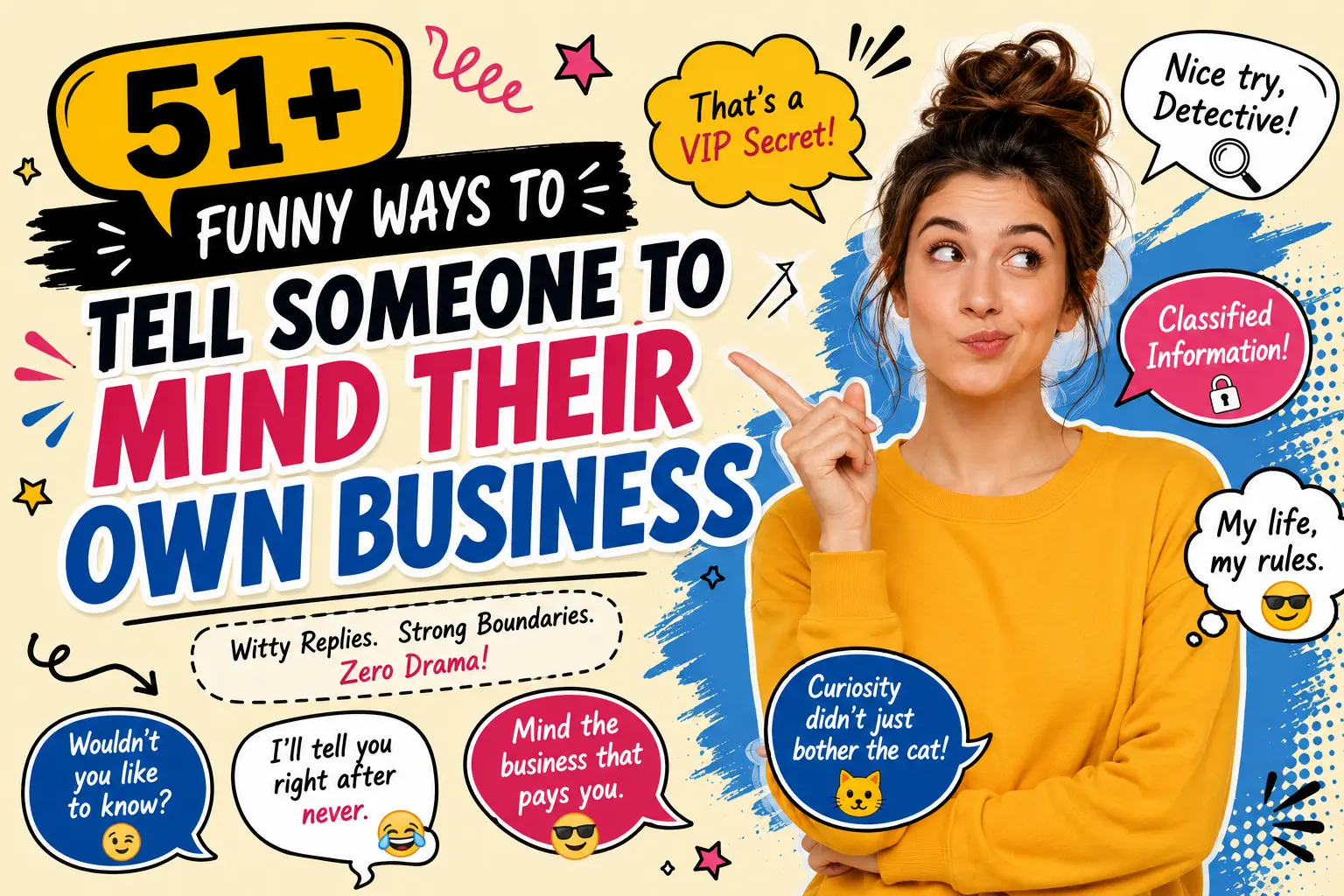
That’s why so many people search for funny ways to tell someone to mind their own business. A humorous comeback lets you set healthy boundaries while keeping the conversation light. Whether you’re texting a friend, chatting with coworkers, or dealing with a nosy relative, the right phrase can protect your privacy without sounding unnecessarily rude. In this guide, you’ll discover over 51 witty, playful, and creative alternatives that help you respond confidently. From lighthearted jokes to smart one-liners, these responses make it easier to handle intrusive questions with style and humor.
What Does “Funny Ways to Tell Someone to Mind Their Own Business” Mean?
Telling someone to mind their own business means politely—or humorously—letting them know they’re becoming too involved in something that doesn’t concern them.
Instead of sounding harsh, funny alternatives soften the message while still setting clear boundaries. A witty response can make everyone laugh, end an awkward conversation, and help avoid unnecessary conflict.
People commonly use these replies when someone:
- Asks overly personal questions.
- Gives unwanted advice.
- Interferes in private matters.
- Comments on decisions that don’t affect them.
- Keeps asking questions after you’ve already answered.
The goal isn’t to embarrass the other person. Instead, it’s to remind them respectfully that some topics are personal.
When to Use These Funny Responses
Humor works best when the situation is casual and the relationship allows for playful banter. Here are a few situations where these replies fit naturally.
With Friends
Close friends often tease each other, making funny responses feel natural.
Example:
Friend: “How much did that cost?”
You: “Enough to keep accountants interested.”
With Family
Family members sometimes ask very personal questions. A lighthearted reply can redirect the conversation.
Example:
Relative: “When are you getting married?”
You: “Right after I finish avoiding questions like that.”
In Group Chats
A witty response can change the subject without creating awkwardness.
Example:
“That’s classified information.”
On Social Media
Funny one-liners work well when responding to playful comments.
Example:
“My privacy settings apply in real life too.”
At Work
In professional settings, avoid sarcastic or rude remarks. Choose something polite instead.
Example:
“I’d rather keep that private, but thanks for asking.”
Is It Polite or Professional?
Funny ways to tell someone to mind their own business are generally best reserved for casual conversations. Friends, siblings, classmates, and people who understand your sense of humor will usually appreciate a witty comeback.
However, professional environments require more caution. While a playful remark may be acceptable among close coworkers, it’s usually better to choose respectful phrases like “I’d prefer to keep that private,” or “I’d rather not discuss that.”
The key is reading the room. If the other person is joking, a humorous reply often works well. If the conversation is serious, a calm and polite response is the better choice. Setting boundaries is healthy, but delivering them with kindness makes your message much more effective.
Playful and Witty Responses
1. That’s Above Your Pay Grade
Meaning:
The information isn’t something they need to know.
Tone: Funny, sarcastic.
Example Sentence:
“That’s above your pay grade.”
Why Use It:
Creates a playful boundary without sounding too harsh.
Purpose and Personalization:
Great among friends who enjoy teasing each other.
2. Classified Information
Meaning:
Pretends your answer is secret.
Tone: Humorous.
Example Sentence:
“Sorry, that’s classified information.”
Why Use It:
Turns curiosity into a joke.
Purpose and Personalization:
Perfect for casual conversations and texting.
3. Nice Try, Detective
Meaning:
Playfully points out that they’re asking too many questions.
Tone: Witty.
Example Sentence:
“Nice try, detective, but the case is closed.”
Why Use It:
Makes the conversation lighthearted.
Purpose and Personalization:
Ideal for inquisitive friends.
4. I’ll Tell You Right After Never
Meaning:
Humorously refuses to answer.
Tone: Playful.
Example Sentence:
“I’ll tell you right after never.”
Why Use It:
A classic funny comeback.
Purpose and Personalization:
Best used with people who understand your humor.
5. Curiosity Didn’t Just Bother the Cat
Meaning:
A humorous reminder that asking too many questions isn’t always a good idea.
Tone: Clever.
Example Sentence:
“Careful—curiosity didn’t just bother the cat.”
Why Use It:
Hints that they’re getting too curious.
Purpose and Personalization:
Works well among close friends.
6. I’ll Add That to the List of Things I’m Not Sharing
Meaning:
Jokingly says the topic is off-limits.
Tone: Lighthearted.
Example Sentence:
“I’ll add that to the list of things I’m not sharing today.”
Why Use It:
Keeps the mood friendly.
Purpose and Personalization:
Great for casual conversations.
7. Wouldn’t You Like to Know?
Meaning:
Teases the other person instead of answering.
Tone: Playful.
Example Sentence:
“Wouldn’t you like to know?”
Why Use It:
One of the most recognizable humorous responses.
Purpose and Personalization:
Perfect for playful banter.
8. That’s a VIP Secret
Meaning:
Pretends your personal information is exclusive.
Tone: Funny.
Example Sentence:
“Sorry, that’s a VIP secret.”
Why Use It:
Adds humor without sounding rude.
Purpose and Personalization:
Great for social media and texting.
9. Some Mysteries Should Stay Mysteries
Meaning:
Suggests the answer isn’t meant to be revealed.
Tone: Clever.
Example Sentence:
“Some mysteries should stay mysteries.”
Why Use It:
Keeps the conversation intriguing.
Purpose and Personalization:
Ideal for playful personalities.
10. If I Told You, I’d Have to Charge You
Meaning:
Jokes that the information is valuable.
Tone: Humorous.
Example Sentence:
“If I told you, I’d have to charge you.”
Why Use It:
Turns a personal question into a laugh.
Purpose and Personalization:
Perfect among friends and coworkers.
11. That’s Between Me and My Wi-Fi
Meaning:
A modern joke about keeping things private.
Tone: Funny.
Example Sentence:
“That’s between me and my Wi-Fi.”
Why Use It:
Adds a tech-inspired twist.
Purpose and Personalization:
Especially fun for younger audiences.
12. My Lawyer Says I Can’t Answer That
Meaning:
Pretends legal advice prevents you from responding.
Tone: Sarcastic, humorous.
Example Sentence:
“My lawyer says I can’t answer that.”
Why Use It:
An exaggerated response that’s clearly meant as a joke.
Purpose and Personalization:
Works best in relaxed conversations.
13. I’ll Reveal That in My Memoir
Meaning:
Jokes that they’ll have to wait until you write your life story.
Tone: Clever, witty.
Example Sentence:
“You’ll have to wait until my memoir comes out.”
Why Use It:
Ends the conversation with humor instead of conflict.
Purpose and Personalization:
Great for friends, classmates, and family members.
Clever and Sarcastic Responses
14. Mind the Business That Pays You
Meaning:
Playfully reminds someone to focus on their own responsibilities.
Tone: Sarcastic, funny.
Example Sentence:
“Mind the business that pays you, and I’ll handle mine.”
Why Use It:
It’s witty while making your point clear.
Purpose and Personalization:
Best for joking with friends who appreciate sarcasm.
15. This Episode Isn’t Available to the Public
Meaning:
Your personal life isn’t open for discussion.
Tone: Humorous.
Example Sentence:
“Sorry, this episode isn’t available to the public.”
Why Use It:
Uses a TV-show reference to keep things light.
Purpose and Personalization:
Great for social media or casual chats.
16. You’re Reading the Wrong Book
Meaning:
Their attention is on the wrong story.
Tone: Clever.
Example Sentence:
“You’re reading the wrong book. Try focusing on your own chapter.”
Why Use It:
A creative way to redirect the conversation.
Purpose and Personalization:
Perfect for people who enjoy literary humor.
17. Breaking News: Still None of Your Business
Meaning:
Humorously announces that nothing has changed.
Tone: Playful.
Example Sentence:
“Breaking news: it’s still none of your business.”
Why Use It:
Makes people laugh while setting a boundary.
Purpose and Personalization:
Ideal among close friends.
18. My Life Is Currently Behind a Paywall
Meaning:
Jokes that private information requires special access.
Tone: Modern, funny.
Example Sentence:
“Sorry, my life is behind a paywall today.”
Why Use It:
A clever reference to online subscriptions.
Purpose and Personalization:
Excellent for texting and online conversations.
19. Application Denied
Meaning:
Humorously rejects their request for information.
Tone: Dry humor.
Example Sentence:
“Application denied. Better luck next time.”
Why Use It:
Short, funny, and memorable.
Purpose and Personalization:
Works well with playful friends.
20. I’d Tell You, but I Like Having Secrets
Meaning:
Admits you’re choosing to keep things private.
Tone: Lighthearted.
Example Sentence:
“I’d tell you, but I like having a few secrets.”
Why Use It:
Keeps the conversation friendly.
Purpose and Personalization:
Great for casual situations.
21. That’s Need-to-Know Information
Meaning:
Only certain people need that answer.
Tone: Witty.
Example Sentence:
“That’s need-to-know information, and you’re safe without it.”
Why Use It:
Creates humor while protecting your privacy.
Purpose and Personalization:
Perfect for friendly teasing.
22. You Should Start a Podcast With All These Questions
Meaning:
Jokes that they ask questions like an interviewer.
Tone: Funny.
Example Sentence:
“You should start a podcast with all these questions.”
Why Use It:
Makes the situation feel playful instead of tense.
Purpose and Personalization:
Excellent for curious friends.
23. Google Couldn’t Find That Answer Either
Meaning:
Suggests the information simply isn’t available.
Tone: Modern, humorous.
Example Sentence:
“Google couldn’t find that answer either.”
Why Use It:
A funny technology reference everyone understands.
Purpose and Personalization:
Great for younger audiences.
24. The Subscription for That Information Has Expired
Meaning:
Pretends access to your personal life has ended.
Tone: Clever.
Example Sentence:
“Sorry, your subscription expired last week.”
Why Use It:
Turns privacy into a funny joke.
Purpose and Personalization:
Perfect for texting and memes.
25. That’s a Members-Only Conversation
Meaning:
Only certain people are included.
Tone: Playful.
Example Sentence:
“That’s a members-only conversation.”
Why Use It:
Creates a humorous boundary.
Purpose and Personalization:
Works well among close friends.
26. My Personal Life Doesn’t Offer Guided Tours
Meaning:
Your private life isn’t open for public viewing.
Tone: Clever, lighthearted.
Example Sentence:
“Sorry, my personal life doesn’t offer guided tours.”
Why Use It:
It’s creative, memorable, and gets the point across politely.
Purpose and Personalization:
Ideal for shutting down nosy questions without sounding mean.
Bold and Funny Responses
27. Looks Like My Privacy Is Trending Again
Meaning:
Jokes that everyone seems interested in your personal life.
Tone: Funny, modern.
Example Sentence:
“Looks like my privacy is trending again.”
Why Use It:
A humorous response that lightens the mood.
Purpose and Personalization:
Great for friends who ask too many questions.
28. That’s Premium Content
Meaning:
Pretends your personal information is exclusive.
Tone: Witty.
Example Sentence:
“Sorry, that’s premium content.”
Why Use It:
A playful way to avoid answering.
Purpose and Personalization:
Perfect for texting and social media.
29. Spoilers Aren’t Available Yet
Meaning:
Suggests they’ll have to wait to find out.
Tone: Playful.
Example Sentence:
“No spoilers—you’re just going to have to wait.”
Why Use It:
Adds humor while keeping your privacy intact.
Purpose and Personalization:
Ideal for conversations about future plans.
30. I’m Accepting Guesses, Not Questions
Meaning:
Invites playful guessing instead of answering directly.
Tone: Clever.
Example Sentence:
“I’m accepting guesses, not questions.”
Why Use It:
Turns an awkward moment into a fun one.
Purpose and Personalization:
Great for close friends who enjoy joking around.
31. You’ll Find Out When Everyone Else Does
Meaning:
The information will be shared when you’re ready.
Tone: Calm, humorous.
Example Sentence:
“You’ll find out when everyone else does.”
Why Use It:
Keeps expectations realistic without sounding rude.
Purpose and Personalization:
Useful for announcements and personal milestones.
32. My Secrets Are on Vacation
Meaning:
Jokes that your personal information isn’t available.
Tone: Silly.
Example Sentence:
“Sorry, my secrets are on vacation.”
Why Use It:
Creates a lighthearted moment.
Purpose and Personalization:
Perfect for playful conversations.
33. I’ll Let Netflix Turn It Into a Series First
Meaning:
Your life story isn’t ready to be shared yet.
Tone: Humorous.
Example Sentence:
“I’ll let Netflix turn it into a series first.”
Why Use It:
A funny pop-culture reference.
Purpose and Personalization:
Great for younger audiences.
34. That Question Needs Better Timing
Meaning:
Suggests it’s not the right moment to ask.
Tone: Polite, witty.
Example Sentence:
“That question needs better timing.”
Why Use It:
Sets a boundary without sounding harsh.
Purpose and Personalization:
Suitable for both friends and acquaintances.
35. You’re Fishing in the Wrong Pond
Meaning:
They’re looking for answers in the wrong place.
Tone: Clever.
Example Sentence:
“You’re fishing in the wrong pond today.”
Why Use It:
Adds creativity to your response.
Purpose and Personalization:
Works well during casual conversations.
36. I Left That Answer at Home
Meaning:
Pretends you simply don’t have the answer with you.
Tone: Funny.
Example Sentence:
“I’d answer, but I left that information at home.”
Why Use It:
A harmless joke that avoids conflict.
Purpose and Personalization:
Ideal for lighthearted banter.
37. Some Files Are Password Protected
Meaning:
Your personal life has restricted access.
Tone: Modern, witty.
Example Sentence:
“Some files are password protected.”
Why Use It:
A tech-inspired way to protect your privacy.
Purpose and Personalization:
Perfect for office conversations and texting.
38. You’re One Question Away From Winning Nothing
Meaning:
Playfully teases someone for asking too many questions.
Tone: Sarcastic, funny.
Example Sentence:
“Congratulations, you’re one question away from winning absolutely nothing.”
Why Use It:
Makes everyone laugh while ending the questioning.
Purpose and Personalization:
Best among close friends with a shared sense of humor.
39. I’m Keeping That Plot Twist for Later
Meaning:
Suggests they’ll learn the answer eventually.
Tone: Playful.
Example Sentence:
“I’m keeping that plot twist for later.”
Why Use It:
Builds curiosity while maintaining your privacy.
Purpose and Personalization:
Perfect for conversations about future plans, relationships, or surprises.
More Funny Ways to Tell Someone to Mind Their Own Business
40. That Information Is Under Construction
Meaning:
Jokingly says your answer isn’t ready to be shared.
Tone: Humorous.
Example Sentence:
“Sorry, that information is still under construction.”
Why Use It:
A playful way to avoid answering personal questions.
Purpose and Personalization:
Great for casual conversations with friends.
41. My Privacy Has Excellent Security
Meaning:
Your personal life is well protected.
Tone: Witty.
Example Sentence:
“My privacy has excellent security—you won’t be getting in today.”
Why Use It:
Uses a fun security analogy to set boundaries.
Purpose and Personalization:
Ideal for coworkers or friends who ask too many questions.
42. That Chapter Isn’t Available Yet
Meaning:
Your story isn’t ready to be shared.
Tone: Clever.
Example Sentence:
“That chapter isn’t available yet. Stay tuned.”
Why Use It:
Hints that they’ll know when the time is right.
Purpose and Personalization:
Perfect for questions about future plans.
43. I’ll Put That in the Deleted Scenes
Meaning:
Jokes that the information won’t be included.
Tone: Funny.
Example Sentence:
“I’ll save that for the deleted scenes.”
Why Use It:
A creative movie-inspired response.
Purpose and Personalization:
Works well among movie lovers.
44. The Curiosity Tax Is Too Expensive
Meaning:
Suggests asking too many questions comes at a price.
Tone: Playful.
Example Sentence:
“The curiosity tax is way too expensive today.”
Why Use It:
Makes the conversation entertaining.
Purpose and Personalization:
Great for playful banter.
45. That Question Missed the Target
Meaning:
Politely says they asked something too personal.
Tone: Lighthearted.
Example Sentence:
“Nice try, but that question missed the target.”
Why Use It:
Redirects the conversation with humor.
Purpose and Personalization:
Suitable for acquaintances and friends.
46. Let’s Change the Channel
Meaning:
Suggests moving to another topic.
Tone: Friendly.
Example Sentence:
“Let’s change the channel—I like this conversation better.”
Why Use It:
Keeps things polite without answering.
Purpose and Personalization:
Excellent in group conversations.
47. That Folder Is Locked
Meaning:
Your personal life isn’t open for access.
Tone: Modern.
Example Sentence:
“Sorry, that folder is locked.”
Why Use It:
A clever tech-inspired reply.
Purpose and Personalization:
Perfect for texting and workplace conversations.
48. I Think We’ll Skip That Episode
Meaning:
Decides not to discuss the topic.
Tone: Humorous.
Example Sentence:
“I think we’ll skip that episode today.”
Why Use It:
A fun television reference.
Purpose and Personalization:
Works in casual settings.
49. The Answer Is Living Rent-Free in My Head
Meaning:
You’ll keep the answer to yourself.
Tone: Funny.
Example Sentence:
“The answer is living rent-free in my head.”
Why Use It:
A trendy phrase that feels modern and playful.
Purpose and Personalization:
Great for conversations with younger friends.
50. I’ll Keep That One in the Vault
Meaning:
You’re choosing to keep the information private.
Tone: Clever.
Example Sentence:
“I’ll keep that one in the vault for now.”
Why Use It:
Shows confidence while protecting your privacy.
Purpose and Personalization:
Useful in both casual and semi-professional conversations.
51. Why Don’t We Talk About Something We Both Know?
Meaning:
Redirects the conversation away from personal matters.
Tone: Friendly, witty.
Example Sentence:
“Why don’t we talk about something we both know instead?”
Why Use It:
Changes the subject without offending anyone.
Purpose and Personalization:
Ideal when you want to stay polite while ending nosy questions.
Conclusion
Everyone has the right to keep certain parts of their life private. While saying “mind your own business” can sometimes sound harsh, using a funny and creative alternative helps you set boundaries with confidence and good humor. Whether you’re dealing with a curious friend, a nosy relative, or an overly interested coworker, these witty responses let you protect your privacy without creating unnecessary conflict. Choose the phrase that best matches the situation, keep your tone light, and remember that a little humor can make even awkward conversations much easier to handle.
Discover more
things to say when someone calls you extra