
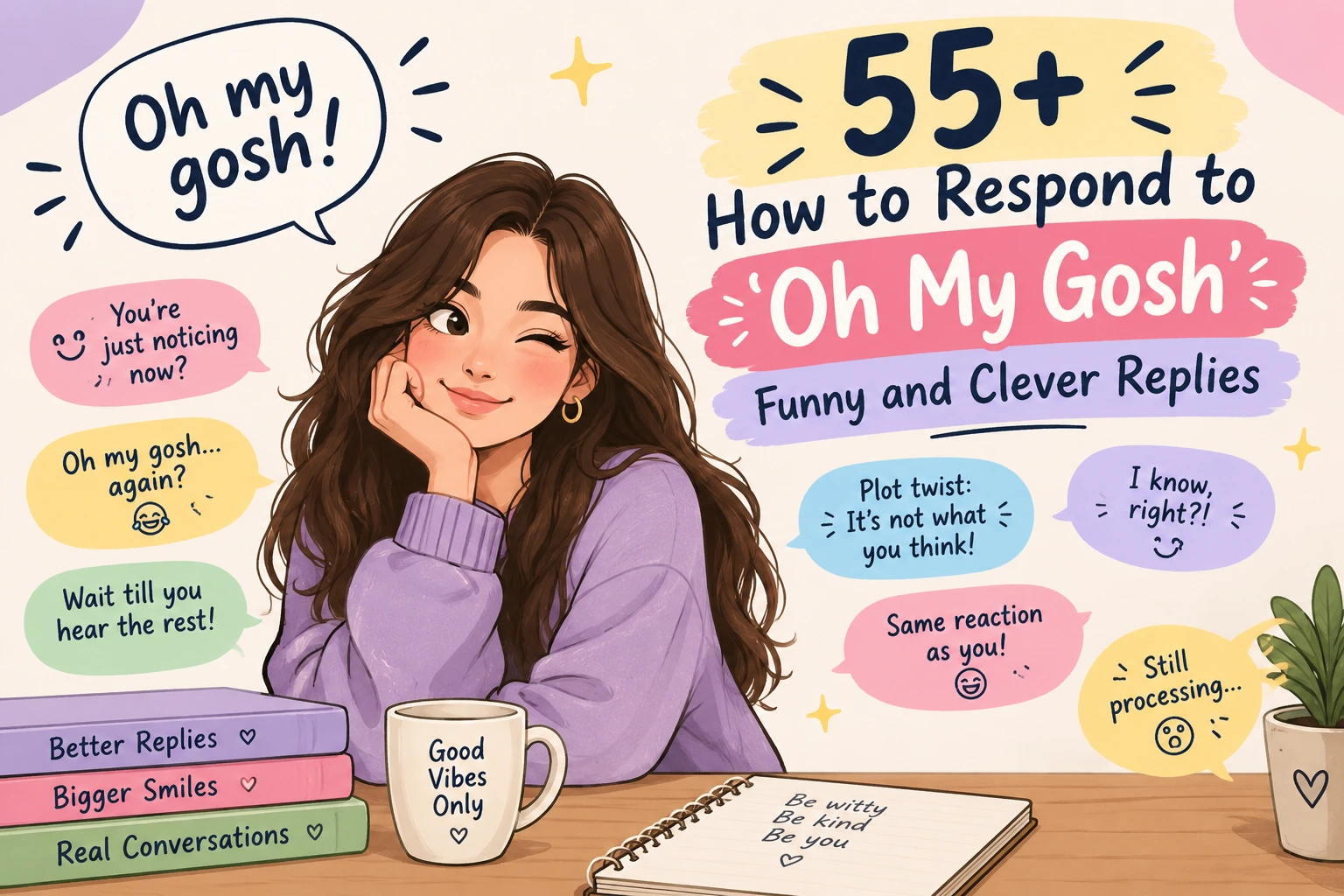
When someone says “Oh my gosh,” the conversation can go in several directions. They might be surprised by something you said, excited about good news, shocked by an unexpected situation, or simply reacting to a funny moment. Knowing how to respond can help you keep the conversation natural instead of leaving you wondering what to say next.
The right response depends on the situation and your relationship with the other person. A playful reply might work perfectly with a close friend, while a thoughtful response may be more appropriate when someone is genuinely shocked. If you’re texting your crush, you might even want to add a little flirtation. Having a variety of responses makes it easier to match the moment, express your personality, and keep conversations engaging. Here are more than 55 ways to respond to “Oh my gosh,” with examples for real-life situations.
What Does “Oh My Gosh” Mean?
“Oh my gosh” is a common expression people use to show surprise, excitement, disbelief, embarrassment, or shock. Its meaning depends heavily on the situation and the speaker’s tone.
For example, someone might say “Oh my gosh!” after receiving unexpected good news, seeing an adorable puppy, hearing surprising gossip, or discovering that something has gone wrong.
In text messages, the phrase can also communicate strong emotions without requiring a lengthy explanation. Sometimes it expresses genuine amazement; other times, it is simply a playful reaction.
When someone says “Oh my gosh” to you, the best response depends on what caused the reaction. You can ask a question, share their excitement, make a joke, or respond with a little flirtation.
When to Respond to “Oh My Gosh”
There are several situations in which someone might say “Oh my gosh.” Understanding the context helps you choose a response that feels natural.
- During casual conversations: A friend might say “Oh my gosh” after hearing an unexpected story. You can respond with “I know, right?” to share their reaction.
- When someone is surprised: If you reveal unexpected information, try “I know, it’s hard to believe!” to acknowledge their surprise.
- When texting your crush: If your crush reacts to a compliment with “Oh my gosh,” a playful reply such as “Was that too much?” can keep the conversation going.
- When someone is excited: If a friend shares exciting news and says “Oh my gosh,” respond with “I know! Isn’t it amazing?” to match their enthusiasm.
- When someone is embarrassed: A gentle response such as “Don’t worry, it happens to everyone” can help them feel more comfortable.
- When someone is genuinely shocked: If the situation is serious, avoid joking immediately. Ask “Are you okay?” or “What happened?” instead.
The key is to respond to the emotion behind the words rather than focusing only on the phrase itself.
Is “Oh My Gosh” Polite or Professional?
“Oh my gosh” is generally polite and widely accepted in everyday conversations. It is a mild expression of surprise that works well among friends, family members, classmates, and colleagues.
However, it is informal. In professional settings, its suitability depends on the situation. It may be perfectly acceptable during a friendly office conversation but less appropriate in a formal presentation, official email, or serious business discussion.
If someone uses it in a casual conversation, you can respond naturally with phrases such as “That’s surprising” or “I can hardly believe it.” For professional situations, thoughtful questions and calm acknowledgments are usually more appropriate.
The same principle applies when choosing a reply. A funny or flirty response can be enjoyable between close friends, but a considerate response is more suitable when someone is upset or overwhelmed.
57 Best Ways to Respond to “Oh My Gosh”
The following responses cover different moods, from funny and flirty to thoughtful and sincere. Choose the one that best fits your conversation.
Funny and Playful Responses
These replies are ideal for friends, siblings, and people who enjoy a little humor. They can turn an ordinary reaction into a memorable conversation.
1. “I know, right?”
Meaning: You completely agree with the other person’s reaction.
Tone: Casual, friendly, and playful.
Example: Friend: “Oh my gosh, that movie was incredible!” You: “I know, right? I wasn’t expecting that ending at all.”
Explanation: This is one of the easiest responses when someone expresses excitement or surprise. It shows that you share their feelings without making the conversation complicated.
2. “Don’t faint!”
Meaning: A humorous way to tease someone who seems extremely surprised.
Tone: Funny, teasing, and lighthearted.
Example: Friend: “Oh my gosh, you actually finished the entire assignment!” You: “Don’t faint! I know it’s a miracle.”
Explanation: Use this response when a friend reacts dramatically to something you’ve done. It works best when you already share a playful relationship.
3. “Wait until you hear the rest!”
Meaning: Suggests that something even more surprising is coming.
Tone: Exciting, playful, and dramatic.
Example: Friend: “Oh my gosh, you met your favorite singer?” You: “Wait until you hear the rest! We actually took a picture together.”
Explanation: This response builds suspense and encourages the other person to keep listening. It is particularly useful when you’re telling an interesting story.
4. “I haven’t even told you the best part!”
Meaning: Indicates that the story or situation is more exciting than the other person realizes.
Tone: Enthusiastic and playful.
Example: Friend: “Oh my gosh, you got the internship?” You: “I haven’t even told you the best part! It’s a paid internship.”
Explanation: Use this when you have more exciting information to share. It naturally keeps the conversation moving.
5. “You should see my reaction!”
Meaning: Suggests that you’re just as surprised or excited as the other person.
Tone: Funny, expressive, and relatable.
Example: Friend: “Oh my gosh, the tickets are sold out!” You: “You should see my reaction. I was completely shocked.”
Explanation: This reply is useful when you want to emphasize that the situation affected you just as strongly.
6. “And that’s not even the funniest part.”
Meaning: Suggests that something even more amusing happened.
Tone: Humorous and conversational.
Example: Friend: “Oh my gosh, you accidentally sent that message to the wrong person?” You: “And that’s not even the funniest part. They actually replied.”
Explanation: This response works especially well when sharing funny stories or embarrassing experiences with friends.
7. “I was waiting for that reaction!”
Meaning: You expected the person to be surprised or excited.
Tone: Confident, playful, and teasing.
Example: Friend: “Oh my gosh, you dyed your hair?” You: “I was waiting for that reaction! I knew you’d notice.”
Explanation: Use this when you’ve deliberately done or revealed something that you knew would attract attention.
8. “Welcome to the club!”
Meaning: Suggests that the other person has just discovered something you already know or experience.
Tone: Friendly, humorous, and casual.
Example: Friend: “Oh my gosh, this café has the best coffee!” You: “Welcome to the club! I’ve been telling you about it for months.”
Explanation: This is an enjoyable response when someone finally agrees with an opinion or discovers something you already appreciate.
9. “I wish I were exaggerating.”
Meaning: Emphasizes that something surprising or unbelievable is actually true.
Tone: Sarcastic, humorous, and expressive.
Example: Friend: “Oh my gosh, you waited three hours for your food?” You: “I wish I were exaggerating. It really took that long.”
Explanation: Use this when describing an unusual or frustrating experience. It adds humor without changing the facts.
10. “You haven’t seen anything yet!”
Meaning: Suggests that something even more exciting, surprising, or impressive is coming.
Tone: Confident, dramatic, and playful.
Example: Friend: “Oh my gosh, your room looks amazing!” You: “You haven’t seen anything yet! I still have to show you the balcony.”
Explanation: This response works when you’re revealing something exciting and want to build anticipation.
11. “I know, it’s a whole situation.”
Meaning: Acknowledges that something is complicated, surprising, or dramatic.
Tone: Casual, humorous, and slightly dramatic.
Example: Friend: “Oh my gosh, what happened at the party?” You: “I know, it’s a whole situation. Let me start from the beginning.”
Explanation: This is a natural response when a story involves several unexpected events. It encourages the other person to listen.
12. “Tell me about it!”
Meaning: Shows that you understand or strongly agree with the person’s reaction.
Tone: Friendly, expressive, and conversational.
Example: Friend: “Oh my gosh, this week has been exhausting!” You: “Tell me about it! I’ve barely had time to sleep.”
Explanation: This expression is particularly useful when someone is complaining or sharing a relatable experience.
13. “The drama is real!”
Meaning: Humorously acknowledges that a situation is unusually dramatic.
Tone: Funny, exaggerated, and informal.
Example: Friend: “Oh my gosh, everyone is talking about the announcement!” You: “The drama is real! I didn’t expect such a reaction.”
Explanation: Use this with friends when a situation attracts a lot of attention or becomes unexpectedly dramatic.
14. “I couldn’t have said it better myself.”
Meaning: Indicates that you completely agree with what the other person has expressed.
Tone: Witty, confident, and conversational.
Example: Friend: “Oh my gosh, that was the best performance I’ve ever seen!” You: “I couldn’t have said it better myself.”
Explanation: This is a polished but still relaxed way to agree with someone’s opinion.
15. “Now you’re speaking my language!”
Meaning: Shows enthusiasm because someone has mentioned something you enjoy or agree with.
Tone: Playful, enthusiastic, and friendly.
Example: Friend: “Oh my gosh, let’s order pizza and watch a movie!” You: “Now you’re speaking my language!”
Explanation: This reply is especially suitable when someone suggests an activity or idea that you genuinely love.
Flirty and Romantic Responses
If someone you like says “Oh my gosh,” a playful or affectionate response can add a little chemistry. These options work best when the other person is comfortable with flirting.
16. “Is that your way of saying you like it?”
Meaning: Playfully asks whether the other person’s reaction means they approve.
Tone: Flirty, teasing, and confident.
Example: Crush: “Oh my gosh, you look amazing!” You: “Is that your way of saying you like it?”
Explanation: This response works well when someone compliments you. It invites playful conversation without being overly direct.
17. “You’re making me blush.”
Meaning: Shows that someone’s words or reaction have made you feel shy or flattered.
Tone: Sweet, romantic, and playful.
Example: Crush: “Oh my gosh, you’re actually so charming.” You: “You’re making me blush. Keep going, though.”
Explanation: Use this when someone gives you a compliment or says something affectionate. It communicates interest while keeping the mood light.
18. “And I thought I was the dramatic one.”
Meaning: Teases the other person for reacting dramatically.
Tone: Flirty, humorous, and affectionate.
Example: Crush: “Oh my gosh, you remembered my favorite song!” You: “And I thought I was the dramatic one.”
Explanation: This response is suitable when you already have a playful connection and want to keep the conversation fun.
19. “Your reaction is adorable.”
Meaning: Compliments the other person for expressing surprise or excitement.
Tone: Affectionate, warm, and flirty.
Example: Crush: “Oh my gosh, you got me flowers?” You: “Your reaction is adorable. I’m glad you like them.”
Explanation: Use this when someone’s genuine excitement makes you smile. It is a sweet way to acknowledge their feelings.
20. “Should I surprise you more often?”
Meaning: Playfully suggests that you enjoy making the other person happy or surprised.
Tone: Flirty, confident, and teasing.
Example: Crush: “Oh my gosh, you actually remembered our first conversation!” You: “Should I surprise you more often?”
Explanation: This is a good option when you want to turn a pleasant surprise into a flirtatious exchange.
21. “I was hoping you’d react like that.”
Meaning: Shows that you expected or wanted the other person’s positive reaction.
Tone: Romantic, confident, and playful.
Example: Crush: “Oh my gosh, this is so thoughtful!” You: “I was hoping you’d react like that.”
Explanation: Use this when you’ve done something thoughtful and want to show that their happiness matters to you.
22. “You make everything more interesting.”
Meaning: Compliments the other person by suggesting that their presence makes ordinary moments enjoyable.
Tone: Romantic, sincere, and affectionate.
Example: Crush: “Oh my gosh, we always end up laughing at the strangest things.” You: “You make everything more interesting.”
Explanation: This works well when you share a comfortable connection and want to express genuine affection.
23. “I love making you smile.”
Meaning: Expresses happiness about being able to make the other person feel good.
Tone: Sweet, romantic, and sincere.
Example: Crush: “Oh my gosh, that was so sweet of you!” You: “I love making you smile.”
Explanation: Use this when someone appreciates a thoughtful gesture. It communicates affection without requiring a dramatic declaration.
24. “Careful, you’re making me fall for you.”
Meaning: Playfully suggests that the other person’s behavior is making you develop romantic feelings.
Tone: Bold, flirty, and humorous.
Example: Crush: “Oh my gosh, you remembered every little detail!” You: “Careful, you’re making me fall for you.”
Explanation: This response is best when mutual attraction is already apparent. It may feel too forward if you barely know the person.
25. “I could get used to that reaction.”
Meaning: Suggests that you enjoy the other person’s excitement or affection.
Tone: Confident, playful, and flirty.
Example: Crush: “Oh my gosh, you planned the perfect date!” You: “I could get used to that reaction.”
Explanation: This is a relaxed way to show that you enjoy making someone happy.
26. “You’re cute when you’re surprised.”
Meaning: Compliments someone on the way they react to unexpected events.
Tone: Affectionate, playful, and romantic.
Example: Crush: “Oh my gosh, you booked the restaurant I wanted!” You: “You’re cute when you’re surprised.”
Explanation: Use this when the relationship already includes affectionate teasing. It makes a pleasant moment feel more personal.
27. “Should I take that as a compliment?”
Meaning: Playfully asks whether the person’s reaction is positive.
Tone: Flirty, witty, and confident.
Example: Crush: “Oh my gosh, you’re full of surprises!” You: “Should I take that as a compliment?”
Explanation: This response is useful when the other person’s reaction is enthusiastic but slightly ambiguous.
28. “You’re giving me all the attention today.”
Meaning: Playfully acknowledges that someone is focusing on you.
Tone: Teasing, flirty, and lighthearted.
Example: Crush: “Oh my gosh, you look different today. In a good way!” You: “You’re giving me all the attention today.”
Explanation: Use this when someone is complimenting you or showing unusual interest. It keeps the interaction playful.
29. “I didn’t know I had that effect on you.”
Meaning: Teases someone about being impressed or surprised by you.
Tone: Bold, confident, and flirtatious.
Example: Crush: “Oh my gosh, I can’t believe you did that!” You: “I didn’t know I had that effect on you.”
Explanation: This is a confident response for a conversation that already has some flirtatious energy.
30. “Your happiness looks good on you.”
Meaning: Compliments someone on how attractive or pleasant they look when they’re happy.
Tone: Romantic, thoughtful, and warm.
Example: Crush: “Oh my gosh, this is exactly what I wanted!” You: “Your happiness looks good on you.”
Explanation: Use this when someone is genuinely excited. It is more heartfelt than a simple joke and works well in affectionate conversations.
Confident and Clever Responses
These replies are useful when you want to sound composed, witty, or self-assured without being overly dramatic.
31. “I know exactly what you mean.”
Meaning: Communicates that you understand the other person’s reaction or feelings.
Tone: Confident, calm, and conversational.
Example: Colleague: “Oh my gosh, that deadline was stressful!” You: “I know exactly what you mean. It was a demanding week.”
Explanation: This is a good response when someone expresses a feeling or opinion you genuinely share.
32. “That’s precisely what I was thinking.”
Meaning: Indicates that the other person has expressed an idea that matches your own.
Tone: Thoughtful, confident, and professional.
Example: Friend: “Oh my gosh, we should have planned this trip earlier!” You: “That’s precisely what I was thinking.”
Explanation: Use this when you agree with someone’s observation. It is especially suitable for thoughtful discussions.
33. “Surprising, isn’t it?”
Meaning: Acknowledges that something is unexpected.
Tone: Calm, confident, and slightly playful.
Example: Friend: “Oh my gosh, you finished the whole book in one day?” You: “Surprising, isn’t it?”
Explanation: This short response works well when you want to acknowledge surprise without adding too much to the conversation.
34. “I had a feeling you’d say that.”
Meaning: Suggests that you anticipated the person’s reaction.
Tone: Confident, clever, and playful.
Example: Friend: “Oh my gosh, this is exactly the kind of outfit I’d choose!” You: “I had a feeling you’d say that.”
Explanation: Use this when you know the other person well enough to anticipate their opinion or response.
35. “Some things are worth being surprised about.”
Meaning: Suggests that unexpected moments can be enjoyable or meaningful.
Tone: Thoughtful, composed, and optimistic.
Example: Friend: “Oh my gosh, I never expected you to organize all this!” You: “Some things are worth being surprised about.”
Explanation: This expression works when someone is impressed by something you have done. It sounds confident without being boastful.
36. “I like to keep things interesting.”
Meaning: Suggests that you enjoy adding excitement or variety to everyday life.
Tone: Confident, playful, and self-assured.
Example: Friend: “Oh my gosh, you changed your entire room!” You: “I like to keep things interesting.”
Explanation: Use this when someone reacts to a change, decision, or unexpected action. It communicates confidence and personality.
37. “That’s one way to put it.”
Meaning: Acknowledges someone’s reaction while suggesting there may be other ways to describe the situation.
Tone: Witty, composed, and slightly sarcastic.
Example: Friend: “Oh my gosh, your presentation was intense!” You: “That’s one way to put it.”
Explanation: This is useful when someone makes an exaggerated comment and you want to respond without fully agreeing or disagreeing.
38. “I’m glad you noticed.”
Meaning: Shows that you appreciate someone recognizing a detail or effort.
Tone: Confident, appreciative, and friendly.
Example: Friend: “Oh my gosh, you completely redesigned your portfolio!” You: “I’m glad you noticed. I spent the whole weekend working on it.”
Explanation: Use this when someone notices an improvement, achievement, or thoughtful detail. It acknowledges their attention while giving you room to explain.
39. “I had my reasons.”
Meaning: Suggests that you made a deliberate decision, even if it surprised someone.
Tone: Confident, mysterious, and playful.
Example: Friend: “Oh my gosh, you deleted all your social media apps?” You: “I had my reasons. I needed a break.”
Explanation: This response is useful when someone reacts strongly to a decision you’ve made. It lets you acknowledge their surprise without immediately explaining everything.
40. “Sometimes, the unexpected is the best part.”
Meaning: Suggests that unexpected experiences can be enjoyable or rewarding.
Tone: Optimistic, thoughtful, and confident.
Example: Friend: “Oh my gosh, I can’t believe we ended up at this amazing restaurant!” You: “Sometimes, the unexpected is the best part.”
Explanation: Use this when a spontaneous event turns out well. It is a natural way to share your positive outlook.
Thoughtful and Caring Responses
These responses are appropriate when someone is genuinely surprised, emotional, embarrassed, or overwhelmed. They help you acknowledge their feelings instead of immediately turning the moment into a joke.
41. “Are you okay?”
Meaning: Checks whether someone is feeling all right.
Tone: Caring, gentle, and concerned.
Example: Friend: “Oh my gosh, I can’t believe what just happened.” You: “Are you okay? Do you want to talk about it?”
Explanation: This is a suitable response when the person’s reaction suggests distress or shock. It shows that you’re paying attention to their emotional state.
42. “What’s on your mind?”
Meaning: Invites the other person to explain what they’re thinking or feeling.
Tone: Thoughtful, supportive, and open.
Example: Friend: “Oh my gosh, I don’t even know what to think.” You: “What’s on your mind? I’m listening.”
Explanation: Use this when someone seems overwhelmed or uncertain. It encourages them to express themselves without feeling pressured.
43. “I can see why you’re surprised.”
Meaning: Acknowledges that the person’s reaction is understandable.
Tone: Empathetic, calm, and reassuring.
Example: Colleague: “Oh my gosh, they changed the entire project schedule!” You: “I can see why you’re surprised. That’s a significant change.”
Explanation: This phrase works particularly well when someone is reacting to unexpected news. It validates their feelings without exaggerating the situation.
44. “Take your time. There’s no rush.”
Meaning: Reassures someone that they don’t need to respond or make a decision immediately.
Tone: Gentle, supportive, and patient.
Example: Friend: “Oh my gosh, I wasn’t expecting you to ask me that.” You: “Take your time. There’s no rush.”
Explanation: Use this when someone needs time to process information or consider a decision. It helps make the conversation feel comfortable.
45. “I didn’t expect that reaction.”
Meaning: Gently acknowledges that the other person’s response was unexpected.
Tone: Honest, thoughtful, and neutral.
Example: Friend: “Oh my gosh, you really remembered that?” You: “I didn’t expect that reaction, but I’m glad it made you happy.”
Explanation: This response works when you’re surprised by how strongly someone reacts. It gives them an opportunity to explain their feelings.
46. “Do you want to tell me what happened?”
Meaning: Offers someone the opportunity to explain a surprising or upsetting event.
Tone: Caring, patient, and supportive.
Example: Friend: “Oh my gosh, today has been unbelievable.” You: “Do you want to tell me what happened?”
Explanation: This is particularly useful when someone seems eager to share a story or is struggling to explain an emotional experience.
47. “That sounds like a lot to take in.”
Meaning: Recognizes that someone may be processing a large amount of unexpected information.
Tone: Empathetic, mature, and reassuring.
Example: Friend: “Oh my gosh, I just found out I’m moving to another city.” You: “That sounds like a lot to take in. How are you feeling about it?”
Explanation: Use this when someone shares significant news. It acknowledges the emotional weight of the situation and invites further conversation.
48. “I’m here if you need anything.”
Meaning: Reassures someone that you’re available to offer support.
Tone: Caring, sincere, and comforting.
Example: Friend: “Oh my gosh, everything is happening at once.” You: “I’m here if you need anything. You don’t have to handle everything alone.”
Explanation: This response is suitable when someone seems overwhelmed or is dealing with a difficult situation. It offers support without demanding an explanation.
49. “Let’s figure this out together.”
Meaning: Offers to work with someone to understand or resolve a problem.
Tone: Supportive, collaborative, and reassuring.
Example: Colleague: “Oh my gosh, the files aren’t opening, and the deadline is today.” You: “Let’s figure this out together. We can check the backup first.”
Explanation: Use this when someone’s reaction comes from a practical problem. It combines emotional reassurance with a willingness to take action.
50. “I understand why that caught you off guard.”
Meaning: Acknowledges that something happened unexpectedly and recognizes the person’s reaction.
Tone: Mature, empathetic, and considerate.
Example: Friend: “Oh my gosh, I never thought they’d announce the results today.” You: “I understand why that caught you off guard.”
Explanation: This is a thoughtful response when someone is surprised by an announcement or sudden change. It helps keep the conversation calm.
51. “You don’t have to figure everything out right now.”
Meaning: Reassures someone that they can take time to process a difficult or surprising situation.
Tone: Gentle, supportive, and compassionate.
Example: Friend: “Oh my gosh, I have so many decisions to make.” You: “You don’t have to figure everything out right now. Take it one step at a time.”
Explanation: Use this when someone feels overwhelmed by responsibilities or unexpected changes. It offers reassurance without minimizing their concerns.
52. “I’m glad you shared that with me.”
Meaning: Shows appreciation for someone’s willingness to share personal information or feelings.
Tone: Warm, sincere, and respectful.
Example: Friend: “Oh my gosh, I’ve never told anyone about this before.” You: “I’m glad you shared that with me. I appreciate your trust.”
Explanation: This expression is useful when someone opens up about a personal experience. It acknowledges their trust and encourages honest communication.
53. “That must have been unexpected.”
Meaning: Recognizes that someone has experienced something they did not anticipate.
Tone: Calm, understanding, and empathetic.
Example: Colleague: “Oh my gosh, the client just changed the requirements.” You: “That must have been unexpected. Have they explained what they need?”
Explanation: Use this when someone shares unexpected news, particularly in a professional setting. It acknowledges their surprise while keeping the conversation constructive.
54. “I’m listening. Tell me more.”
Meaning: Shows genuine interest and encourages someone to continue speaking.
Tone: Supportive, attentive, and thoughtful.
Example: Friend: “Oh my gosh, you won’t believe what happened at university today.” You: “I’m listening. Tell me more.”
Explanation: This is an excellent response when someone is excited to share a story. It shows interest without interrupting their enthusiasm.
55. “That really is something.”
Meaning: Acknowledges that an event or piece of information is unusual, remarkable, or surprising.
Tone: Thoughtful, calm, and slightly expressive.
Example: Friend: “Oh my gosh, they offered me a job right after the interview!” You: “That really is something. Congratulations!”
Explanation: Use this when you want to acknowledge an impressive or unexpected event without making an exaggerated statement.
56. “I can imagine how you must be feeling.”
Meaning: Expresses an effort to understand someone’s emotional reaction.
Tone: Compassionate, thoughtful, and sincere.
Example: Friend: “Oh my gosh, I finally got accepted into my dream university!” You: “I can imagine how you must be feeling. You’ve worked so hard for this.”
Explanation: This phrase is useful when someone shares emotionally significant news. It shows empathy while leaving room for them to describe their feelings in their own words.
57. “Let’s enjoy the moment!”
Meaning: Encourages someone to appreciate an exciting or positive experience.
Tone: Cheerful, warm, and encouraging.
Example: Friend: “Oh my gosh, we actually won the competition!” You: “Let’s enjoy the moment! We worked hard for this.”
Explanation: Use this when someone reacts with excitement to a positive achievement. It encourages shared happiness and keeps the moment memorable.
Real-Life Situations: Choosing the Right Response
The most suitable reply depends on why someone said “Oh my gosh.” Here are a few common situations and responses that fit naturally.
When Your Crush Says “Oh My Gosh”
If your crush says this after you compliment them or do something thoughtful, you can respond with a little flirtation.
Best reply: “You’re making me blush.”
For example, if your crush reacts enthusiastically to a compliment, this response keeps the conversation sweet without making it overly serious.
When a Friend Says “Oh My Gosh” After Hearing Good News
Share their excitement rather than responding with a flat acknowledgment.
Best reply: “I know, right? Isn’t it amazing?”
For example, if your friend gets accepted into a university and reacts with excitement, matching their enthusiasm makes the moment more enjoyable.
When Someone Is Genuinely Shocked
Avoid making jokes until you understand the situation.
Best reply: “Are you okay? What happened?”
For example, if a friend says “Oh my gosh” after receiving upsetting news, a caring question is more appropriate than a sarcastic comment.
When Someone Compliments You
Accept the compliment confidently and keep the exchange friendly.
Best reply: “Thank you! I’m glad you think so.”
For example, if a colleague says “Oh my gosh, your presentation was excellent,” this response acknowledges their compliment without sounding boastful.
When Someone Reacts Dramatically to Your Joke
If the person is laughing and enjoying the conversation, respond with humor.
Best reply: “Wait until you hear the rest!”
For example, if a friend is surprised by the first part of your story, this reply creates anticipation and encourages them to keep listening.
Common Mistakes to Avoid When Responding to “Oh My Gosh”
Even a short response can affect the tone of a conversation. Avoid these common mistakes to keep your replies natural.
1. Ignoring the emotion behind the phrase.
Someone saying “Oh my gosh” out of excitement needs a different response from someone saying it out of shock. Pay attention to their tone and the situation.
2. Using sarcasm at the wrong time.
Funny replies can be enjoyable among friends, but sarcasm may seem insensitive when someone is upset or genuinely surprised.
3. Overusing flirty responses.
Flirting is appropriate when both people are comfortable with it. Avoid assuming that every surprised reaction is an invitation to flirt.
4. Giving one-word responses to meaningful news.
If someone shares something important, a simple “Okay” can sound dismissive. Ask a follow-up question or acknowledge their feelings.
5. Trying too hard to sound clever.
You don’t need a complicated comeback for every message. A natural response often feels more genuine than an overly rehearsed one.
6. Making assumptions about someone’s reaction.
“Oh my gosh” doesn’t always mean excitement. Before celebrating or teasing, consider whether the person might actually be worried, embarrassed, or confused.
Pro Tips for Responding Naturally
1. Match the other person’s energy.
If someone is excited, share their enthusiasm. If they seem upset, slow down and respond with care. Matching their emotional tone helps your reply feel genuine.
2. Use follow-up questions to keep conversations going.
Instead of replying with only “I know, right?” try adding “What surprised you the most?” A thoughtful question can turn a short exchange into a meaningful conversation.
3. Let your relationship guide your wording.
A playful response may be perfect for a close friend but inappropriate for a colleague. Choose words that reflect how well you know the other person and how comfortable you are with each other.
Bonus: 10 Short Replies to “Oh My Gosh”
If you need a quick response while texting or talking in person, these short replies can help:
- “I know, right?”
- “Tell me about it!”
- “Isn’t it crazy?”
- “I was just as surprised!”
- “Wait, there’s more!”
- “You’re not ready for this.”
- “I can hardly believe it either.”
- “Right? I didn’t expect that!”
- “That’s exactly what I thought.”
- “Let’s talk about it!”
Conclusion
Knowing how to respond to “Oh my gosh” can make everyday conversations feel more natural and engaging. Whether you choose a funny comeback, a flirty remark, a confident acknowledgment, or a thoughtful question, the best response is the one that suits the moment. Pay attention to the other person’s emotions and consider your relationship before replying. You don’t need an elaborate sentence to make an impression. Sometimes, a simple, sincere response is all it takes to keep a conversation enjoyable, meaningful, and memorable.
Discover more
other ways to say thank you for your cooperation