
A simple message like “Hope you had a great holiday” can be a lovely way to reconnect with someone after a break. Whether it comes from a colleague, friend, family member, or someone you have recently met, responding thoughtfully can make the conversation feel warmer and more genuine. However, replying with the same “Thanks, you too” every time can sometimes feel a little repetitive.
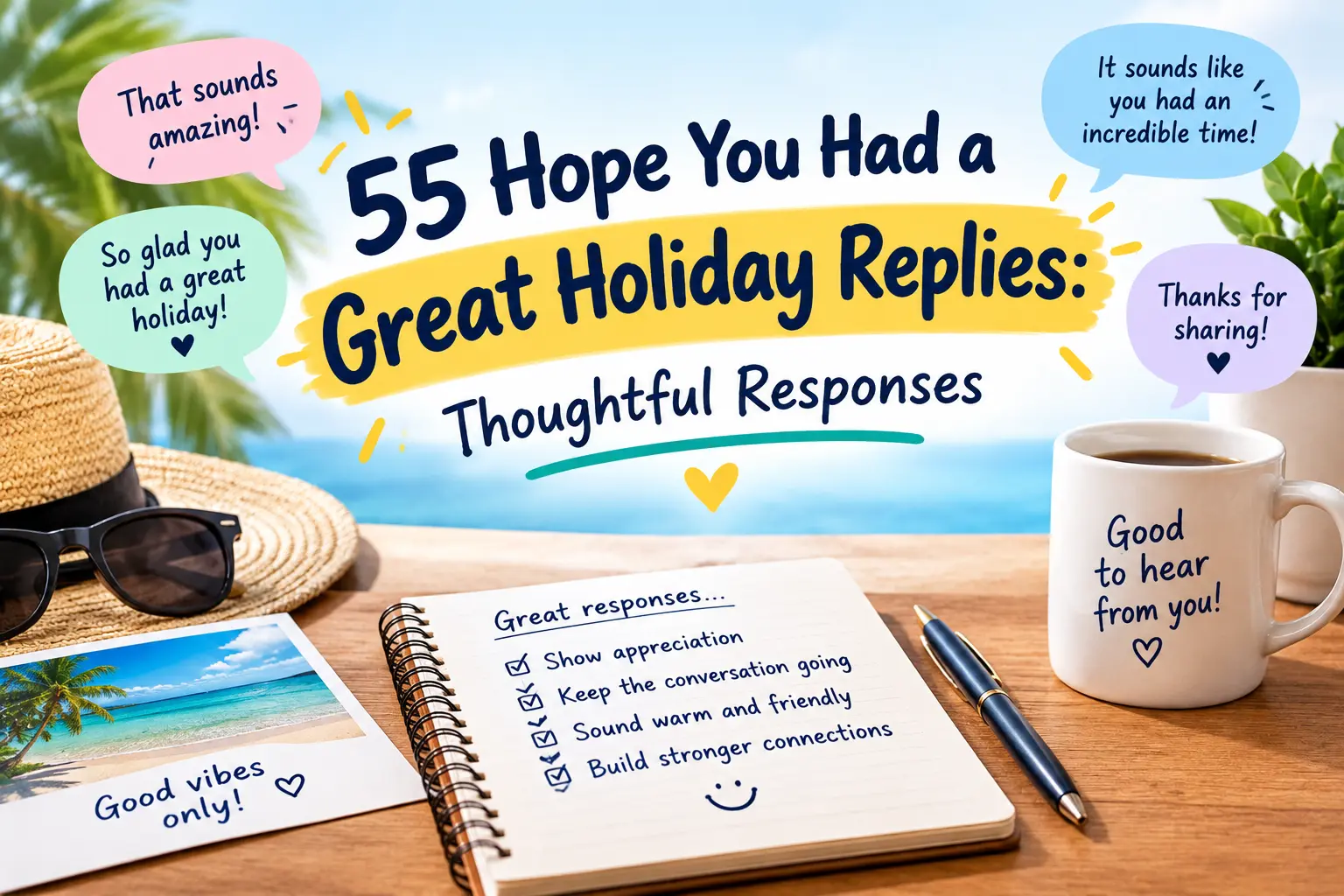
Having a variety of responses helps you match the other person’s tone, whether you’re replying to a professional email, a friendly text, or a casual conversation. Sometimes a short thank-you is all you need. Other times, sharing a little about your holiday can help keep the conversation going. Here are 55 natural and thoughtful replies to help you respond with warmth, confidence, and the right amount of personality.
What Does “Hope You Had a Great Holiday” Mean?
“Hope you had a great holiday” is a friendly expression people use to show interest in someone else’s time off. It communicates goodwill and suggests that the sender hopes the other person enjoyed their break, whether it was spent traveling, celebrating with family, relaxing at home, or doing something special.
The phrase is commonly used when people return to work or school after a holiday. It also appears in emails, text messages, social media conversations, and everyday interactions.
A thoughtful response acknowledges the other person’s kindness. Depending on your relationship, you might simply say thank you, return the good wishes, share a memorable moment, or ask about their holiday.
When to Use These Replies
The right response depends on the situation and your relationship with the person.
- Professional emails: Keep your response polite, concise, and warm. For example, “Thank you. I hope you had a wonderful holiday as well.”
- Friends and family: Feel free to be more personal. You could say, “Thanks! It was lovely to spend some time relaxing.”
- Casual text messages: Short, natural replies such as “Thanks! I really did” work perfectly.
- Romantic conversations: A warm or playful response can make the conversation more personal without feeling forced.
- After a long break: If you have not spoken for a while, use the opportunity to reconnect and ask about the other person’s holiday.
Is “Hope You Had a Great Holiday” Polite or Professional?
Yes. “Hope you had a great holiday” is both polite and suitable for most professional and casual situations. It expresses goodwill without being overly personal, which makes it particularly useful when reconnecting with colleagues, clients, classmates, or acquaintances.
In a workplace, a response such as “Thank you. I hope yours was equally enjoyable” sounds professional while remaining friendly. With close friends, you can be more relaxed and share details about what you did.
The key is to match the other person’s tone. You do not need a lengthy response to sound thoughtful. Even a short, sincere thank-you can make the interaction feel warm and respectful.
Polite and Appreciative Replies
1. “Thank you! I had a wonderful time.”
Meaning: A simple way to express gratitude while confirming that you enjoyed your holiday.
Tone: Warm, polite, and friendly.
Example: “Thank you! I had a wonderful time and really enjoyed the break.”
Why and when to use it: This is a versatile response that works in emails, text messages, and everyday conversations. It acknowledges the other person’s thoughtful message without making the exchange unnecessarily long.
2. “Thanks so much. I hope you enjoyed yours too.”
Meaning: Expresses appreciation while returning the same good wishes.
Tone: Courteous and considerate.
Example: “Thanks so much. I hope you enjoyed yours too and had some time to relax.”
Why and when to use it: Use this when you want to acknowledge the other person’s kindness and make the conversation feel mutual. It is particularly suitable for colleagues and acquaintances.
3. “That’s very kind of you. I had a lovely holiday.”
Meaning: Recognizes the thoughtfulness behind the message and shares a positive experience.
Tone: Gracious and sincere.
Example: “That’s very kind of you. I had a lovely holiday with my family.”
Why and when to use it: This response is useful when someone has taken the time to check in on you, especially in a slightly more formal conversation.
4. “Thank you for your kind wishes. It was a lovely break.”
Meaning: Acknowledges the other person’s wishes and briefly describes your holiday.
Tone: Professional and appreciative.
Example: “Thank you for your kind wishes. It was a lovely break, and I’m glad to be back.”
Why and when to use it: This is particularly appropriate for workplace emails, professional acquaintances, and people you do not know very well.
5. “I really appreciate that. My holiday was wonderful.”
Meaning: Expresses genuine gratitude while sharing a positive impression of your time off.
Tone: Warm and thoughtful.
Example: “I really appreciate that. My holiday was wonderful, and I feel refreshed.”
Why and when to use it: Choose this when you want your response to sound sincere rather than routine. It works well with colleagues, friends, and family.
6. “Thank you! It was exactly the break I needed.”
Meaning: Suggests that your holiday gave you the rest or enjoyment you had been looking for.
Tone: Relaxed and appreciative.
Example: “Thank you! It was exactly the break I needed after such a busy few weeks.”
Why and when to use it: This is a natural option when you have been working hard or dealing with a busy schedule and genuinely appreciated the time away.
7. “Thanks for asking. I had a really enjoyable holiday.”
Meaning: Shows appreciation for the person’s interest while answering their message.
Tone: Friendly and polite.
Example: “Thanks for asking. I had a really enjoyable holiday and got to spend quality time with my family.”
Why and when to use it: This works particularly well when someone is making an effort to reconnect or start a conversation after a break.
8. “Thank you. I hope your holiday was just as special.”
Meaning: Returns the good wishes while expressing genuine interest in the other person’s experience.
Tone: Thoughtful and gracious.
Example: “Thank you. I hope your holiday was just as special and filled with happy moments.”
Why and when to use it: Use this when you want to make the exchange more personal without becoming overly familiar.
9. “I had a fantastic holiday. Thank you for your wishes.”
Meaning: Communicates enthusiasm about your holiday while acknowledging the other person’s kindness.
Tone: Positive and appreciative.
Example: “I had a fantastic holiday. Thank you for your wishes, and I hope you had a great one too.”
Why and when to use it: This is suitable for friendly workplace conversations, emails, and messages to people with whom you have a comfortable relationship.
10. “Thank you! I couldn’t have asked for a better break.”
Meaning: Emphasizes how satisfying and enjoyable your holiday was.
Tone: Enthusiastic and sincere.
Example: “Thank you! I couldn’t have asked for a better break. It was refreshing to spend some time away from my routine.”
Why and when to use it: Use this when you genuinely had a memorable holiday and want your response to convey that enthusiasm.
Friendly and Casual Replies
11. “Thanks! It was great to switch off for a while.”
Meaning: Explains that you enjoyed taking a break from your everyday responsibilities.
Tone: Casual and relaxed.
Example: “Thanks! It was great to switch off for a while and forget about work.”
Why and when to use it: This is ideal for friends, familiar coworkers, and casual conversations about how you spent your time off.
12. “Thanks! I had a really good time.”
Meaning: A straightforward way to confirm that your holiday was enjoyable.
Tone: Natural and friendly.
Example: “Thanks! I had a really good time visiting my relatives.”
Why and when to use it: Choose this when you want a short, uncomplicated response that feels natural in almost any casual conversation.
13. “It was lovely, thanks for asking!”
Meaning: Shares a positive impression while appreciating the other person’s interest.
Tone: Cheerful and approachable.
Example: “It was lovely, thanks for asking! I finally got some time to catch up on my reading.”
Why and when to use it: This is a good choice for everyday conversations with friends, neighbors, and colleagues you know well.
14. “Thanks! I spent most of it relaxing, which was amazing.”
Meaning: Shares a little detail about how you spent your holiday.
Tone: Easygoing and conversational.
Example: “Thanks! I spent most of it relaxing, which was amazing after such a hectic month.”
Why and when to use it: Use this when you want to share a little about your experience without turning a simple exchange into a long conversation.
15. “I sure did! It was a much-needed escape.”
Meaning: Confirms that you enjoyed your holiday and needed the change of pace.
Tone: Lively and informal.
Example: “I sure did! It was a much-needed escape from my usual routine.”
Why and when to use it: This works well with friends and close colleagues, particularly after a demanding period.
16. “Thanks! It was full of good food and good memories.”
Meaning: Describes a holiday filled with enjoyable experiences and memorable moments.
Tone: Warm and cheerful.
Example: “Thanks! It was full of good food and good memories. I really enjoyed spending time with everyone.”
Why and when to use it: This is a lovely option when your holiday involved family gatherings, celebrations, or memorable meals.
17. “It was great! I wish it had lasted a little longer.”
Meaning: Expresses how much you enjoyed your holiday and how reluctant you were to return to your routine.
Tone: Playful and relatable.
Example: “It was great! I wish it had lasted a little longer, though.”
Why and when to use it: Use this with friends or familiar coworkers when you want to add a little personality to your reply.
18. “Thanks! I had some much-needed me time.”
Meaning: Explains that you used your holiday to focus on yourself and recharge.
Tone: Relaxed and personal.
Example: “Thanks! I had some much-needed me time and finally caught up on everything.”
Why and when to use it: This is particularly suitable when you spent your holiday resting, enjoying hobbies, or simply taking time away from other responsibilities.
19. “It was awesome! How about yours?”
Meaning: Shares your excitement and immediately invites the other person to talk about their experience.
Tone: Enthusiastic and friendly.
Example: “It was awesome! I went on a little trip. How about yours?”
Why and when to use it: This is a useful choice when you want to keep the conversation going instead of ending it with a simple thank-you.
20. “Thanks! I came back with plenty of memories.”
Meaning: Suggests that your holiday gave you memorable experiences worth remembering.
Tone: Warm and positive.
Example: “Thanks! I came back with plenty of memories and a few hundred photos.”
Why and when to use it: Choose this when you traveled, attended a celebration, or enjoyed activities that made your holiday memorable.
Professional and Workplace Replies
21. “Thank you. I had a pleasant and refreshing break.”
Meaning: Politely confirms that you enjoyed your time away and returned feeling refreshed.
Tone: Professional and courteous.
Example: “Thank you. I had a pleasant and refreshing break and am looking forward to resuming our work.”
Why and when to use it: This is appropriate for professional emails, conversations with managers, and messages to clients.
22. “Thank you. I hope you had an equally enjoyable holiday.”
Meaning: Acknowledges the message and politely returns the good wishes.
Tone: Formal and considerate.
Example: “Thank you. I hope you had an equally enjoyable holiday and are settling back into your routine.”
Why and when to use it: Use this when communicating with senior colleagues, clients, or professional acquaintances.
23. “I appreciate your thoughtful message. I had a wonderful break.”
Meaning: Expresses gratitude for the message and provides a brief update.
Tone: Respectful and warm.
Example: “I appreciate your thoughtful message. I had a wonderful break and am pleased to be back.”
Why and when to use it: This works well when you want to maintain a warm but professional relationship, particularly in email correspondence.
24. “Thank you. The holiday was both enjoyable and rejuvenating.”
Meaning: Describes your holiday as enjoyable and beneficial for your well-being.
Tone: Polished and professional.
Example: “Thank you. The holiday was both enjoyable and rejuvenating, and I’m ready to get back to work.”
Why and when to use it: Choose this when you want a slightly more refined response in a formal workplace setting.
25. “Many thanks. I had a lovely time away.”
Meaning: Offers a concise expression of gratitude while confirming that you enjoyed your time off.
Tone: Courteous and polished.
Example: “Many thanks. I had a lovely time away and appreciate your kind wishes.”
Why and when to use it: This is particularly useful in professional emails when you want to sound appreciative without adding unnecessary details.
26. “Thank you for your kind message. I had a restful holiday.”
Meaning: Acknowledges the sender’s kindness and explains that your holiday gave you an opportunity to rest.
Tone: Formal and appreciative.
Example: “Thank you for your kind message. I had a restful holiday and look forward to our upcoming projects.”
Why and when to use it: This is appropriate when replying to a manager, client, or business contact after a holiday break.
27. “I had a wonderful holiday, and I hope yours was equally rewarding.”
Meaning: Shares your positive experience while wishing the other person well.
Tone: Warm and professional.
Example: “I had a wonderful holiday, and I hope yours was equally rewarding. I’m looking forward to our next meeting.”
Why and when to use it: Use this when you want to combine courtesy with a natural transition back to work.
28. “Thank you. It was a welcome opportunity to recharge.”
Meaning: Explains that your holiday gave you a valuable opportunity to regain energy.
Tone: Professional and thoughtful.
Example: “Thank you. It was a welcome opportunity to recharge, and I’m ready to focus on our priorities again.”
Why and when to use it: This is particularly suitable when returning to work after a busy period or demanding project.
29. “I appreciate you asking. The break was very enjoyable.”
Meaning: Thanks the person for checking in while sharing a positive impression of your holiday.
Tone: Polite and approachable.
Example: “I appreciate you asking. The break was very enjoyable, and I hope you had some time to relax as well.”
Why and when to use it: This response works well in professional conversations where you want to maintain a friendly relationship.
30. “Thank you. I returned feeling refreshed and ready for the days ahead.”
Meaning: Communicates that your holiday helped you feel prepared to resume your responsibilities.
Tone: Confident and professional.
Example: “Thank you. I returned feeling refreshed and ready for the days ahead. I hope your holiday was equally pleasant.”
Why and when to use it: This is an effective response when reconnecting with colleagues or clients after an extended break.
Warm, Thoughtful, and Personal Replies
31. “Thank you! It was wonderful to spend time with my loved ones.”
Meaning: Highlights the importance of spending quality time with family or close friends.
Tone: Affectionate and sincere.
Example: “Thank you! It was wonderful to spend time with my loved ones and enjoy a few peaceful days together.”
Why and when to use it: Choose this when your holiday centered on family gatherings or spending meaningful time with people close to you.
32. “I had a beautiful holiday filled with special moments.”
Meaning: Communicates that your holiday was emotionally meaningful and memorable.
Tone: Sentimental and warm.
Example: “I had a beautiful holiday filled with special moments, especially the time I spent with my grandparents.”
Why and when to use it: This is suitable for personal conversations when you want to express more than just general enjoyment.
33. “Thank you! It gave me a chance to appreciate the little things.”
Meaning: Explains that your holiday helped you slow down and enjoy simple experiences.
Tone: Reflective and thoughtful.
Example: “Thank you! It gave me a chance to appreciate the little things, from quiet mornings to long conversations.”
Why and when to use it: Use this when your holiday was peaceful and gave you time to reflect or reconnect with yourself.
34. “It was a meaningful break, and I’m grateful for it.”
Meaning: Expresses appreciation for the personal value of your time away.
Tone: Grateful and mature.
Example: “It was a meaningful break, and I’m grateful for it. I got to reconnect with people I hadn’t seen in months.”
Why and when to use it: This works particularly well when your holiday involved personal milestones, important relationships, or memorable experiences.
35. “Thank you. It reminded me how important it is to slow down sometimes.”
Meaning: Shares a thoughtful lesson you took away from your holiday.
Tone: Reflective and sincere.
Example: “Thank you. It reminded me how important it is to slow down sometimes and enjoy the present.”
Why and when to use it: Choose this when you want to share a meaningful reflection rather than simply describing your activities.
36. “I had a lovely time and made some wonderful memories.”
Meaning: Emphasizes the enjoyable experiences and memories you gained during your holiday.
Tone: Warm and heartfelt.
Example: “I had a lovely time and made some wonderful memories with my family.”
Why and when to use it: This is an easy, natural response for friends, relatives, and people who genuinely care about your holiday.
37. “It was exactly what my mind and body needed.”
Meaning: Indicates that the holiday provided valuable rest and helped you recover from stress or fatigue.
Tone: Honest and thoughtful.
Example: “It was exactly what my mind and body needed after a particularly busy few months.”
Why and when to use it: Use this when you had been feeling exhausted and genuinely benefited from taking time off.
38. “Thank you! I came back with a grateful heart.”
Meaning: Expresses gratitude for the experiences and people that made your holiday special.
Tone: Heartfelt and optimistic.
Example: “Thank you! I came back with a grateful heart and some beautiful memories.”
Why and when to use it: This is suitable for personal messages when you want to express genuine appreciation for your experiences.
39. “It was a peaceful break, and I truly enjoyed every moment.”
Meaning: Describes a calm holiday that allowed you to appreciate your time away.
Tone: Calm and sincere.
Example: “It was a peaceful break, and I truly enjoyed every moment away from my usual responsibilities.”
Why and when to use it: Choose this when your holiday was more about rest and relaxation than travel or celebrations.
40. “Thanks! I’m carrying some lovely memories into the new season.”
Meaning: Expresses appreciation for the holiday and looks ahead with a positive attitude.
Tone: Optimistic and reflective.
Example: “Thanks! I’m carrying some lovely memories into the new season and feeling grateful for the experience.”
Why and when to use it: This works well in thoughtful conversations, particularly after a meaningful holiday or festive season.
Playful, Engaging, and Conversation-Starting Replies
41. “Thanks! The only downside was having to come back.”
Meaning: Jokes about how enjoyable your holiday was and how reluctant you were to return.
Tone: Lighthearted and humorous.
Example: “Thanks! The only downside was having to come back to my overflowing inbox.”
Why and when to use it: Use this with friends or coworkers who appreciate a little humor, especially after a relaxing holiday.
42. “I did! Now I’m already looking forward to the next one.”
Meaning: Confirms that you enjoyed your holiday and playfully expresses excitement about future time off.
Tone: Cheerful and humorous.
Example: “I did! Now I’m already looking forward to the next one, even though I’ve barely unpacked.”
Why and when to use it: This is a fun response for casual conversations with friends and familiar colleagues.
43. “Thanks! I think I enjoyed the food the most.”
Meaning: Highlights the food as your favorite part of the holiday.
Tone: Playful and friendly.
Example: “Thanks! I think I enjoyed the food the most. I’m still thinking about that amazing dinner.”
Why and when to use it: Choose this when food, celebrations, or family meals were a memorable part of your holiday.
44. “It was amazing! I’m still mentally on vacation.”
Meaning: Suggests that although your holiday has ended, you are still enjoying the feeling of being away.
Tone: Funny and relatable.
Example: “It was amazing! I’m still mentally on vacation, even though I’m back at my desk.”
Why and when to use it: This is ideal for casual workplace conversations or messages with friends after a long break.
45. “Thanks! My camera roll can confirm it was a great holiday.”
Meaning: Humorously suggests that you took plenty of photos to document your experiences.
Tone: Playful and modern.
Example: “Thanks! My camera roll can confirm it was a great holiday. I think I took more pictures than I needed.”
Why and when to use it: Use this when you traveled, attended events, or enjoyed activities worth photographing.
46. “It was fantastic! I could definitely get used to that lifestyle.”
Meaning: Expresses how much you enjoyed the relaxed or enjoyable nature of your holiday.
Tone: Enthusiastic and humorous.
Example: “It was fantastic! I could definitely get used to sleeping in and having no deadlines.”
Why and when to use it: This works well in casual conversations when you want to share your excitement with a little humor.
47. “Thanks! I returned with a full heart and an empty suitcase.”
Meaning: Suggests that you enjoyed your holiday and perhaps did a little shopping along the way.
Tone: Cheerful and witty.
Example: “Thanks! I returned with a full heart and an empty suitcase after bringing home far too many souvenirs.”
Why and when to use it: This is a playful choice when you have been traveling or collecting souvenirs.
48. “It was great! The memories will last much longer than the break.”
Meaning: Highlights the lasting value of the experiences you enjoyed during your holiday.
Tone: Warm and optimistic.
Example: “It was great! The memories will last much longer than the break, especially the time we spent together.”
Why and when to use it: Choose this when your holiday involved particularly meaningful experiences or special occasions.
49. “I had a blast! Now I just need another holiday to recover.”
Meaning: Humorously suggests that your holiday was so eventful that you need another break afterward.
Tone: Funny and energetic.
Example: “I had a blast! Now I just need another holiday to recover from all the activities.”
Why and when to use it: This is perfect for friends or close colleagues when your holiday was packed with activities and excitement.
50. “Thanks! It was so good that I’m considering making it a tradition.”
Meaning: Expresses how much you enjoyed your holiday and your desire to repeat the experience.
Tone: Positive and playful.
Example: “Thanks! It was so good that I’m considering making our family trip a yearly tradition.”
Why and when to use it: Use this when a particular holiday activity, trip, or gathering was especially enjoyable.
51. “I did, and I’m still smiling about it.”
Meaning: Expresses genuine happiness about your holiday and its lasting positive effect.
Tone: Affectionate and cheerful.
Example: “I did, and I’m still smiling about it. It was wonderful to see everyone again.”
Why and when to use it: This is a natural response when you want to show that your holiday meant something to you.
52. “Thanks! It was a perfect combination of fun and relaxation.”
Meaning: Explains that your holiday offered both enjoyable activities and sufficient rest.
Tone: Positive and balanced.
Example: “Thanks! It was a perfect combination of fun and relaxation. We explored a new city but also had plenty of time to rest.”
Why and when to use it: Choose this when your holiday involved a healthy balance of activities and downtime.
53. “Absolutely! Now, tell me about yours.”
Meaning: Confirms that you enjoyed your holiday and invites the other person to share their experience.
Tone: Friendly and engaging.
Example: “Absolutely! I had a great time with my family. Now, tell me about yours. Did you travel anywhere?”
Why and when to use it: This is especially useful when you want to turn a brief exchange into a genuine conversation.
54. “It was wonderful. I wish I could bottle up that feeling.”
Meaning: Describes a holiday so enjoyable that you wish you could preserve the happiness it brought.
Tone: Sentimental and expressive.
Example: “It was wonderful. I wish I could bottle up that feeling and keep it with me throughout the year.”
Why and when to use it: Use this for meaningful holidays that leave you feeling particularly happy or fulfilled.
55. “Thanks! It was one of those breaks I’ll remember for a long time.”
Meaning: Communicates that your holiday was especially memorable and important to you.
Tone: Sincere and reflective.
Example: “Thanks! It was one of those breaks I’ll remember for a long time, especially because I got to spend it with my favorite people.”
Why and when to use it: This is a thoughtful response when your holiday was particularly special and you want to express its lasting significance.
Conclusion
Responding to “Hope you had a great holiday” does not have to be complicated. A simple thank-you, a thoughtful return wish, or a short personal detail can make your reply feel genuine. The most suitable response depends on your relationship with the sender and the setting in which you’re communicating. Professional emails benefit from polite, concise language, while conversations with friends allow more humor and personality. You can also use the opportunity to reconnect by asking about the other person’s holiday. Ultimately, the best response is one that sounds natural, reflects how you genuinely feel, and makes the other person feel appreciated.
Discover more
best answers to how are you feeling