
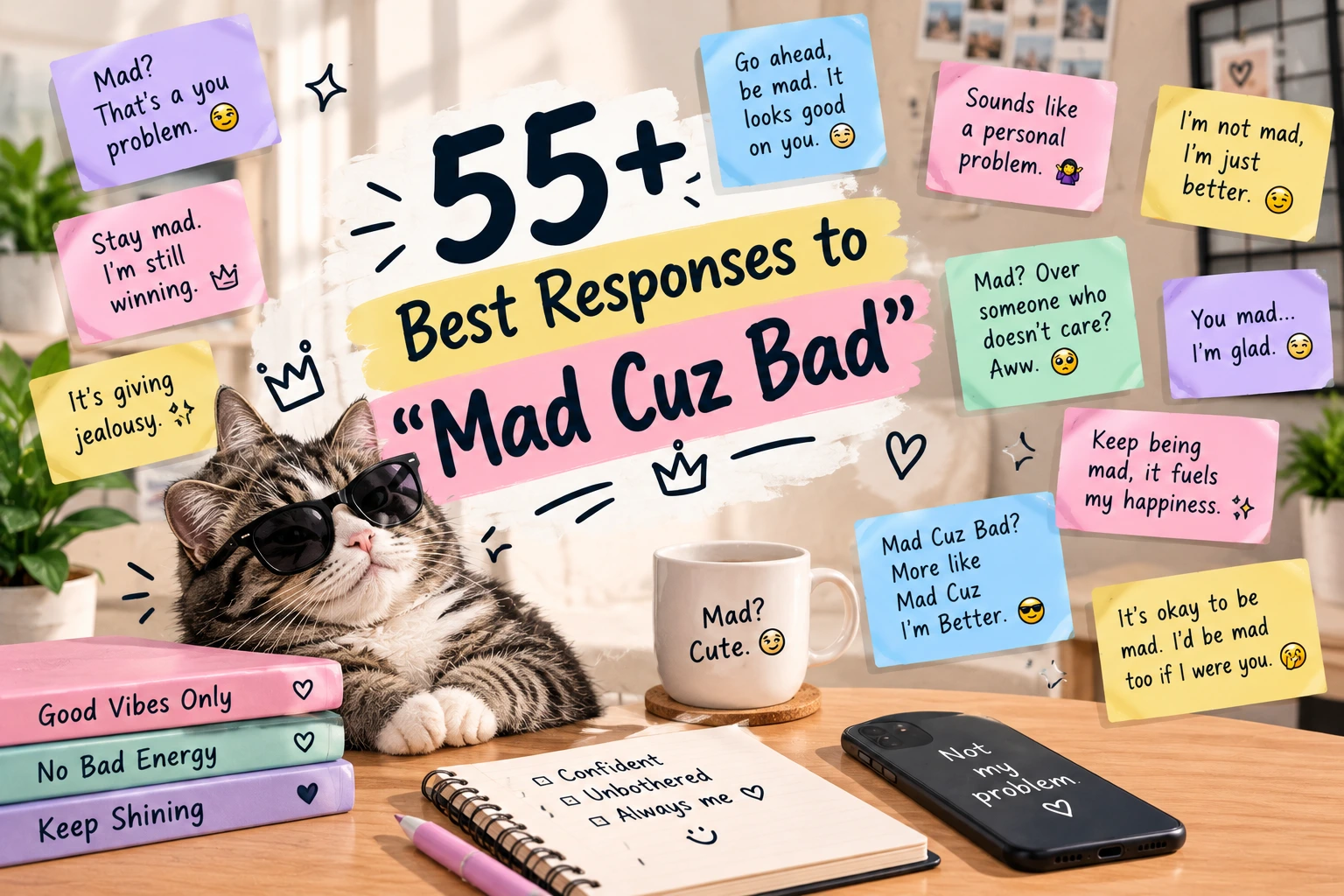
Sometimes, a short comeback says more than a long explanation. “Mad cuz bad” is one of those internet-style phrases that can quickly turn a playful conversation into a battle of witty replies. It is usually used to tease someone who seems annoyed because they lost, failed, or did not get the result they wanted. While the phrase is often humorous, the response you choose can completely change the mood of the conversation.
Knowing the best responses to “mad cuz bad” helps you keep the exchange funny without making it unnecessarily hostile. You can respond with sarcasm, confidence, clever humor, or even a calm one-liner depending on the situation. Whether you are replying to a friend, chatting in a game, texting someone, or dealing with harmless online banter, having a few creative responses ready can make your communication more natural and entertaining.
Section 1: What Does “Mad Cuz Bad” Mean?
“Mad cuz bad” is informal internet slang that basically means “You are angry because you are not good at something.”
It is commonly used after someone loses a game, gets criticized, fails at something, or becomes noticeably frustrated. The phrase suggests that the person’s anger is caused by their poor performance rather than by a legitimate problem.
For example:
“You’re complaining because you lost. Mad cuz bad.”
The phrase usually has a teasing, sarcastic, competitive, or mocking tone. Among friends, it can be completely harmless. However, in a serious argument, it may sound dismissive or insulting.
Because of that, your response should match the relationship and situation. A funny comeback works well with friends, while a calm response may be better when you do not want the conversation to become more hostile.
Section 2: When to Use It
“Mad cuz bad” is mainly appropriate for casual conversations and playful banter.
Casual Conversations
You might hear it between friends who are joking around.
Example:
“Bro, you lost one round and started complaining. Mad cuz bad.”
Gaming Conversations
It is especially common in competitive gaming chats.
Example:
“You rage-quit after losing? Mad cuz bad.”
Social Media
People sometimes use the phrase in comments or replies when teasing someone over a disagreement or competition.
Texting
A friend might send “mad cuz bad” after winning an argument or game.
When Not to Use It
Avoid using it in professional emails, workplace conversations, academic speeches, or serious discussions. The slang is highly informal and can sound immature or disrespectful in formal settings.
Instead, choose a response that keeps things light without escalating the situation.
Section 3: Is It Polite or Professional?
“Mad cuz bad” is not considered formal or professional language.
It is internet slang designed mainly for casual banter, gaming, memes, and conversations between people who understand each other’s humor.
Whether it is polite depends heavily on context. If your close friend says it after beating you in a game, you might laugh and respond with an equally playful comeback. But if someone uses it during a serious disagreement, it can feel dismissive because it ignores the actual reason someone may be upset.
If you want to keep the interaction friendly, choose a response that shows confidence without turning the exchange into a personal attack.
1. “Mad cuz I’m better.”
Meaning: You are jokingly saying that your confidence comes from being better.
Tone: Confident, playful
“Mad cuz I’m better? That sounds about right.”
Why to use it: Great for friendly competition when you want to answer with confidence.
Purpose and Personalization: Works particularly well in gaming or sports banter.
2. “Keep telling yourself that.”
Meaning: You are suggesting that the other person’s claim is not convincing.
Tone: Sarcastic, confident
“Keep telling yourself that if it helps.”
Why to use it: A short response that delivers sarcasm without becoming overly aggressive.
3. “Whatever helps you sleep at night.”
Meaning: You are humorously dismissing their explanation.
Tone: Witty, sarcastic
“Whatever helps you sleep at night, champ.”
Why to use it: Perfect when someone is making excuses after losing.
4. “That’s one way to cope.”
Meaning: You are joking that the person is trying to deal with losing.
Tone: Sarcastic, playful
“Calling it luck is definitely one way to cope.”
Why to use it: Useful when someone refuses to admit defeat.
5. “Cope harder.”
Meaning: You are teasing someone for being unable to accept the result.
Tone: Bold, humorous
“Cope harder, you almost had me.”
Why to use it: Best reserved for friendly competitive banter.
6. “Sounds like a skill issue.”
Meaning: You are joking that the problem comes from a lack of ability.
Tone: Internet slang, teasing
“The controls worked perfectly. Sounds like a skill issue.”
Why to use it: A classic gaming-style response.
7. “You’ll get over it.”
Meaning: You are playfully telling the person not to take the loss too seriously.
Tone: Lighthearted, teasing
“You’ll get over it eventually.”
Why to use it: Works when the conversation is clearly playful.
8. “I’d be mad too.”
Meaning: You jokingly admit that losing to you would be frustrating.
Tone: Confident, humorous
“Honestly, I’d be mad too if I lost like that.”
Why to use it: Great when you want a confident comeback with a humorous edge.
9. “Don’t hate the player.”
Meaning: A playful version of “don’t blame me for being good.”
Tone: Confident, classic
“Don’t hate the player; improve the game.”
Why to use it: Perfect for friendly competitions.
10. “Just take the L.”
Meaning: Accept that you lost.
Tone: Blunt, playful
“Come on, just take the L and move on.”
Why to use it: Short and effective during casual competitive banter.
11. “Better luck next time.”
Meaning: You are suggesting that they can try again.
Tone: Friendly, slightly teasing
“Better luck next time. You almost had it.”
Why to use it: Keeps the response competitive without sounding too harsh.
12. “It’s okay, losing builds character.”
Meaning: You are jokingly presenting the loss as a learning experience.
Tone: Humorous, sarcastic
“It’s okay. Losing builds character.”
Why to use it: Great for lighthearted situations where you want to sound dramatically encouraging.
13. “Excuses already?”
Meaning: You are teasing them for explaining their loss.
Tone: Playful, sarcastic
“Excuses already? We just finished the match.”
Why to use it: Works especially well immediately after a competition.
14. “I can hear the excuses from here.”
Meaning: You are joking that their explanation is obviously an excuse.
Tone: Witty, teasing
“I can hear the excuses from here.”
Why to use it: A fun response for friends who always blame something after losing.
15. “You’re taking this personally.”
Meaning: You are pointing out that they seem unusually bothered.
Tone: Calm, teasing
“You’re taking this personally, and I’m honestly impressed.”
Why to use it: Good when someone’s reaction seems much bigger than the situation.
16. “Stay mad, I guess.”
Meaning: You are jokingly telling them to remain annoyed.
Tone: Sarcastic, confident
“Stay mad, I guess. The scoreboard isn’t changing.”
Why to use it: Best for casual online banter.
17. “The scoreboard says enough.”
Meaning: The result speaks for itself.
Tone: Confident, composed
“No need to argue. The scoreboard says enough.”
Why to use it: A strong response when you want to avoid unnecessary arguing.
18. “Results speak louder.”
Meaning: Your performance matters more than their complaints.
Tone: Confident, mature
“You can argue all you want, but results speak louder.”
Why to use it: A more mature alternative to aggressive trash talk.
19. “Call it whatever you want.”
Meaning: You are not bothered by their opinion.
Tone: Calm, confident
“Call it luck, skill, or whatever you want.”
Why to use it: Excellent when you want to appear unbothered.
20. “If that makes you feel better.”
Meaning: You are playfully dismissing their explanation.
Tone: Sarcastic
“If blaming the lag makes you feel better.”
Why to use it: Great when someone is searching for reasons behind a loss.
21. “Whatever you say, boss.”
Meaning: A humorous way of showing that you are not taking their argument seriously.
Tone: Playful, sarcastic
“Whatever you say, boss. You still lost.”
Why to use it: Useful for casual conversations with friends.
22. “You almost had me.”
Meaning: You are jokingly acknowledging that they came close.
Tone: Playful, confident
“You almost had me. That was actually close.”
Why to use it: A good choice when you want to tease without being rude.
23. “Maybe next round.”
Meaning: They can try again later.
Tone: Friendly, competitive
“Maybe next round you’ll get me.”
Why to use it: Keeps the conversation competitive but friendly.
24. “Practice makes perfect.”
Meaning: You are jokingly suggesting that they need more practice.
Tone: Playful, teasing
“Practice makes perfect. Keep working on it.”
Why to use it: A classic response for competitive situations.
25. “No worries, everyone starts somewhere.”
Meaning: You are humorously treating them like a beginner.
Tone: Friendly, patronizing humor
“No worries, everyone starts somewhere.”
Why to use it: Best when you know the other person appreciates exaggerated teasing.
26. “You’ll improve eventually.”
Meaning: You are joking that they still have room to get better.
Tone: Teasing, confident
“Keep practicing. You’ll improve eventually.”
Why to use it: Works well between competitive friends.
27. “That sounds like a you problem.”
Meaning: You are saying their frustration is their responsibility.
Tone: Sarcastic, bold
“The game worked fine. Sounds like a you problem.”
Why to use it: A sharp comeback for casual banter.
28. “I’m not responsible for your feelings.”
Meaning: You are humorously refusing to take responsibility for their frustration.
Tone: Bold, sarcastic
“I won fair and square. I’m not responsible for your feelings.”
Why to use it: Use only when the conversation is clearly playful.
29. “That’s adorable.”
Meaning: You are humorously treating their complaint as amusing.
Tone: Sarcastic, playful
“That’s adorable. Are you finished complaining?”
Why to use it: Good for exaggerated friendly teasing.
30. “Aww, are we upset?”
Meaning: You are playfully pretending to be concerned.
Tone: Teasing, humorous
“Aww, are we upset about losing?”
Why to use it: Works when your friendship allows playful mockery.
31. “Need a timeout?”
Meaning: You are joking that they need a break because they are frustrated.
Tone: Playful
“Need a timeout before the rematch?”
Why to use it: A light way to tease someone without attacking them personally.
32. “Take a deep breath.”
Meaning: You are jokingly encouraging them to calm down.
Tone: Lighthearted
“Take a deep breath. It’s only one game.”
Why to use it: Useful when someone is becoming overly competitive.
33. “It’s just a game.”
Meaning: You are reminding them not to take the result too seriously.
Tone: Calm, friendly
“It’s just a game. We can play again.”
Why to use it: A good choice when you want to lower the tension.
34. “You’ll survive.”
Meaning: You are joking that losing is not a serious problem.
Tone: Playful, reassuring
“You lost one round. You’ll survive.”
Why to use it: Keeps the interaction humorous and relaxed.
35. “The salt is real.”
Meaning: “Salt” refers to visible frustration after losing.
Tone: Internet slang, humorous
“Wow, the salt is real today.”
Why to use it: Especially suitable for gaming chats and online conversations.
36. “That’s a lot of emotion for one loss.”
Meaning: Their reaction seems excessive compared with the situation.
Tone: Witty, teasing
“That’s a lot of emotion for one loss.”
Why to use it: A clever way to point out an overreaction.
37. “I didn’t know winning came with this much drama.”
Meaning: You are joking about their reaction to your victory.
Tone: Humorous, confident
“I didn’t know winning came with this much drama.”
Why to use it: Perfect for playful competitions.
38. “I’ll frame that excuse.”
Meaning: You are joking that their excuse is memorable.
Tone: Sarcastic, witty
“That excuse was incredible. I’ll frame it.”
Why to use it: Great when someone gives an elaborate explanation for losing.
39. “That excuse deserves an award.”
Meaning: You are humorously praising how creative their excuse is.
Tone: Sarcastic
“Honestly, that excuse deserves an award.”
Why to use it: Keeps the banter clever rather than aggressive.
40. “You’re really committed to that excuse.”
Meaning: They are refusing to accept that they lost.
Tone: Witty, teasing
“You’re really committed to that excuse, huh?”
Why to use it: Works well in casual conversations.
41. “I respect the confidence.”
Meaning: You are jokingly praising their confidence despite losing.
Tone: Playful, slightly sarcastic
“I respect the confidence, even if the score disagrees.”
Why to use it: A clever response that feels less hostile.
42. “Confidence is important.”
Meaning: You are sarcastically praising their belief in themselves.
Tone: Dry humor
“Confidence is important. Evidence is helpful too.”
Why to use it: Great when someone is confidently making an incorrect claim.
43. “That confidence is doing a lot of work.”
Meaning: Their confidence is stronger than the evidence supporting it.
Tone: Clever, sarcastic
“That confidence is doing a lot of work right now.”
Why to use it: A sophisticated comeback for witty conversations.
44. “Interesting theory.”
Meaning: You are politely pretending their excuse is convincing.
Tone: Dry, sarcastic
“Interesting theory. Unfortunately, the score disagrees.”
Why to use it: A subtle response that does not require an insult.
45. “I’ll let you believe that.”
Meaning: You are choosing not to argue with their version of events.
Tone: Calm, sarcastic
“I’ll let you believe that if it makes you happy.”
Why to use it: Perfect when you want to sound completely unbothered.
46. “Whatever helps you cope.”
Meaning: You are teasing them for trying to justify the loss.
Tone: Sarcastic, bold
“Whatever helps you cope with that score.”
Why to use it: Best for informal competitive banter.
47. “The denial is impressive.”
Meaning: You are joking that they are refusing to accept reality.
Tone: Sarcastic, witty
“The denial is genuinely impressive.”
Why to use it: A clever alternative to simply saying “cope.”
48. “We can run it back.”
Meaning: You are offering another round or another attempt.
Tone: Confident, friendly
“We can run it back if you want another chance.”
Why to use it: Excellent when you want to keep the competition going.
49. “Round two?”
Meaning: You are inviting them to try again.
Tone: Competitive, playful
“Round two? Maybe you’ll get lucky this time.”
Why to use it: Short, natural, and perfect for gaming or sports.
50. “Come back when you’re ready.”
Meaning: You are jokingly challenging them to try again.
Tone: Confident, playful
“Come back when you’re ready for the rematch.”
Why to use it: Works when both people enjoy competitive banter.
51. “I’ll give you another chance.”
Meaning: You are playfully acting as though you are giving them an opportunity to improve.
Tone: Confident, teasing
“Fine, I’ll give you another chance.”
Why to use it: A fun comeback when you want to continue the competition.
52. “Maybe the rematch will go better.”
Meaning: You are suggesting that they can try again.
Tone: Friendly, teasing
“Maybe the rematch will go better for you.”
Why to use it: Less aggressive than a typical trash-talk response.
53. “You’re making my win even more entertaining.”
Meaning: Their reaction is making the victory more amusing.
Tone: Confident, humorous
“Honestly, your reaction is making my win even more entertaining.”
Why to use it: Great for playful situations where someone is visibly annoyed.
54. “Thanks for proving my point.”
Meaning: Their reaction has accidentally supported your argument.
Tone: Clever, sarcastic
“Thanks for proving my point without me having to explain it.”
Why to use it: Useful when someone responds emotionally during an argument.
55. “And yet, here we are.”
Meaning: You are pointing out that the result has already happened despite their complaints.
Tone: Dry, confident
“You can explain it however you want, and yet, here we are.”
Why to use it: A subtle comeback for someone who keeps arguing about the result.
Conclusion
The best responses to “mad cuz bad” depend on the mood, relationship, and level of banter involved. A sarcastic comeback can make a conversation fun, while a calm response can prevent harmless teasing from turning into an argument. From “skill issue” and “take the L” to “good game, though” and “no hard feelings,” there are plenty of ways to respond naturally.
The key is knowing when to joke and when to ease off. Try different expressions based on the situation, and remember that the strongest comeback is often one that feels confident without becoming unnecessarily mean.
Discover more
how to respond to keep slaying