
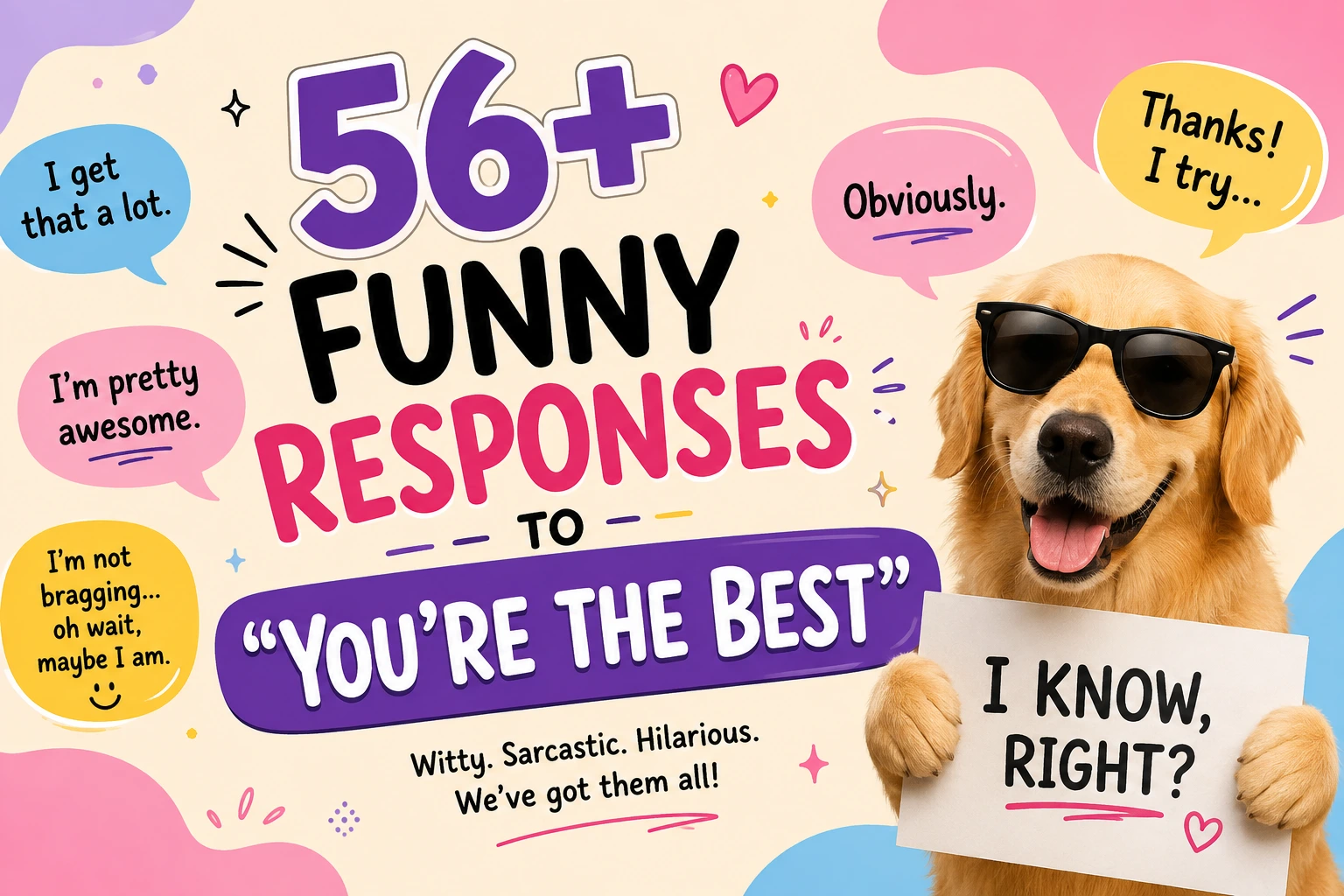
When someone tells you, “You’re the best,” a simple “thank you” works, but sometimes it feels a little too predictable. If the conversation is casual, a funny response can turn a basic compliment into a memorable moment. Whether a friend is thanking you for helping them, someone is appreciating your kindness, or a person you like is giving you a compliment, the right comeback can keep the conversation lively.
Funny responses to “You’re the best” work because they add personality. You can be humble, sarcastic, dramatic, playful, or completely ridiculous depending on your relationship with the person. The key is knowing your audience and choosing a response that sounds natural rather than forced.
In this guide, you’ll find 56+ funny responses to “You’re the best,” with realistic examples, meanings, tones, and situations to help you find the perfect comeback.
What Does “You’re the Best” Mean?
“You’re the best” is a compliment used to express appreciation, admiration, or affection toward someone.
Someone might say it after you help them with something, make their day easier, give them good advice, or simply do something thoughtful.
For example:
“Thanks for helping me finish that assignment. You’re the best!”
The phrase is usually positive and friendly. Depending on the relationship, it can be completely platonic, affectionate, or playful.
A funny response gives you an opportunity to accept the compliment without sounding overly serious. Instead of simply saying “Thank you,” you can respond with something like:
“I accept cash and compliments.”
The best response depends on your personality, the situation, and how close you are to the person.
When to Use Funny Responses to “You’re the Best”
Funny comebacks work best in casual conversations, especially with friends, siblings, classmates, teammates, or people you already have a comfortable relationship with.
With Friends
If a friend thanks you for helping them:
“You’re the best.”
You could reply:
“I’ve been saying that for years.”
Over Text
Funny responses are particularly easy to use in texting because you can exaggerate your reaction.
“You’re the best.”
“Finally, someone recognized my greatness.”
With Someone You Like
A playful response can keep the conversation light.
“You’re the best.”
“Careful, I might start believing you.”
At Work
Be a little more careful. Light humor can work with coworkers you know well, but avoid sarcastic or overly personal jokes with managers, clients, or professional contacts.
Is “You’re the Best” Polite or Professional?
“You’re the best” is polite and positive, but it is generally casual rather than formal.
It works naturally between friends and people who have an informal relationship. In professional settings, alternatives such as “I really appreciate your help” or “Thank you for your support” may be more appropriate.
Funny responses are also highly dependent on context. A playful line that works perfectly with your best friend might sound unprofessional in an email to a client.
The safest rule is simple: the closer the relationship, the more freedom you have to joke.
1. “I Know.”
Meaning: You confidently accept the compliment.
Tone: Confident, playful.
“You’re the best.” “I know.”
Why use it: The humor comes from responding with exaggerated confidence instead of modesty.
Personalization: Say it with a clearly playful tone so it sounds humorous rather than arrogant.
2. “Finally, you noticed.”
Meaning: You jokingly suggest that your greatness should have been obvious.
Tone: Sarcastic, playful.
“You’re the best.” “Finally, you noticed.”
Why use it: Perfect for a friend who already knows your sense of humor.
Personalization: It works especially well after you have helped them with something small.
3. “I’ve been waiting for you to say that.”
Meaning: You jokingly imply that you have been expecting the compliment.
Tone: Dramatic, funny.
“You’re the best.” “I’ve been waiting for you to say that.”
Why use it: Great for turning a simple compliment into a playful exchange.
4. “Tell me something I don’t know.”
Meaning: You jokingly act as though your excellence is obvious.
Tone: Confident, sarcastic.
“You’re the best.” “Tell me something I don’t know.”
Why use it: Works particularly well with friends who appreciate dry humor.
5. “I accept compliments in cash too.”
Meaning: You turn the compliment into a joke about payment.
Tone: Funny, cheeky.
“You’re the best.” “I accept compliments in cash too.”
Why use it: A fun response when someone is thanking you for doing them a favor.
6. “Please, hold your applause.”
Meaning: You pretend that everyone should be celebrating your greatness.
Tone: Dramatic, humorous.
“You’re the best.” “Please, hold your applause.”
Why use it: Great for an exaggerated, theatrical reaction.
7. “I do what I can for my fans.”
Meaning: You jokingly call the other person your fan.
Tone: Playful, confident.
“You’re the best.” “I do what I can for my fans.”
Why use it: Best with close friends who enjoy teasing.
8. “Put it on my résumé.”
Meaning: You joke that the compliment is an achievement worth documenting.
Tone: Witty, casual.
“You’re the best.” “Put it on my résumé.”
Why use it: Especially funny after helping someone solve a problem.
9. “That’s going straight to my ego.”
Meaning: You jokingly admit that the compliment will make you feel proud.
Tone: Self-aware, funny.
“You’re the best.” “That’s going straight to my ego.”
Why use it: It is playful without sounding genuinely arrogant.
10. “I’ll be accepting awards later.”
Meaning: You exaggerate the compliment as though you have won an award.
Tone: Dramatic, ridiculous.
“You’re the best.” “I’ll be accepting awards later.”
Why use it: Perfect for a friend who has just praised you dramatically.
11. “I’d like to thank my supporters.”
Meaning: You pretend the compliment is an award ceremony.
Tone: Theatrical, humorous.
“You’re the best.” “I’d like to thank my supporters.”
Why use it: A fun response when you want to exaggerate the moment.
12. “My work here is done.”
Meaning: You jokingly act as though you have completed your mission.
Tone: Dry, playful.
“You’re the best.” “My work here is done.”
Why use it: Great after helping someone with a small task.
13. “I’ll add that to my list of achievements.”
Meaning: You pretend the compliment is a major accomplishment.
Tone: Sarcastic, witty.
“You’re the best.” “I’ll add that to my list of achievements.”
Why use it: Ideal for casual conversations and texting.
14. “Don’t make me blush.”
Meaning: You jokingly pretend the compliment has embarrassed you.
Tone: Playful, slightly flirty.
“You’re the best.” “Don’t make me blush.”
Why use it: Works especially well when the conversation already has a warm or playful tone.
15. “You’re making it difficult to stay humble.”
Meaning: The compliment is making you feel too proud to remain modest.
Tone: Witty, confident.
“You’re the best.” “You’re making it difficult to stay humble.”
Why use it: A clever way to accept praise without taking it too seriously.
16. “I knew there was a reason I liked you.”
Meaning: You jokingly suggest their compliment has improved their status with you.
Tone: Playful, warm.
“You’re the best.” “I knew there was a reason I liked you.”
Why use it: Great for close friends or someone you have a playful connection with.
17. “Keep talking. I like this.”
Meaning: You jokingly encourage them to continue complimenting you.
Tone: Cheeky, confident.
“You’re the best.” “Keep talking. I like this.”
Why use it: Works when you want to keep the conversation playful.
18. “I’m framing this conversation.”
Meaning: You jokingly imply that the compliment is extremely valuable.
Tone: Silly, lighthearted.
“You’re the best.” “I’m framing this conversation.”
Why use it: A fun way to exaggerate how much you appreciate the compliment.
19. “I’ll remember this when I’m famous.”
Meaning: You pretend your current compliment will be remembered after you become famous.
Tone: Dramatic, humorous.
“You’re the best.” “I’ll remember this when I’m famous.”
Why use it: Great for playful conversations with friends.
20. “That’s exactly what my publicist said.”
Meaning: You pretend you are important enough to have a publicist.
Tone: Sarcastic, theatrical.
“You’re the best.” “That’s exactly what my publicist said.”
Why use it: Works particularly well if your humor is intentionally exaggerated.
21. “Please direct all praise to my manager.”
Meaning: You jokingly pretend that compliments should go through your management team.
Tone: Absurd, playful.
“You’re the best.” “Please direct all praise to my manager.”
Why use it: Perfect when you want a deliberately ridiculous comeback.
22. “I’ll try not to let this change me.”
Meaning: You joke that praise might make you arrogant.
Tone: Dry, sarcastic.
“You’re the best.” “I’ll try not to let this change me.”
Why use it: Works well with someone who understands subtle humor.
23. “Careful, I might start believing you.”
Meaning: You jokingly warn them that repeated compliments could make you believe them.
Tone: Playful, charming.
“You’re the best.” “Careful, I might start believing you.”
Why use it: One of the easiest responses for keeping a compliment exchange light.
24. “That’s going on my résumé and dating profile.”
Meaning: You humorously exaggerate the importance of the compliment.
Tone: Bold, silly.
“You’re the best.” “That’s going on my résumé and dating profile.”
Why use it: Best reserved for casual conversations where exaggerated humor fits.
25. “I charge extra for this level of excellence.”
Meaning: You pretend your help is a premium service.
Tone: Confident, comedic.
“You’re the best.” “I charge extra for this level of excellence.”
Why use it: Great after doing someone a favor.
26. “That’ll be five dollars.”
Meaning: You jokingly pretend compliments require payment.
Tone: Dry, playful.
“You’re the best.” “That’ll be five dollars.”
Why use it: Short, easy, and perfect for texting.
27. “I accept gratitude in the form of snacks.”
Meaning: You humorously request food instead of payment.
Tone: Casual, funny.
“You’re the best.” “I accept gratitude in the form of snacks.”
Why use it: Especially fun between friends.
28. “Compliment received. Processing ego boost.”
Meaning: You jokingly describe yourself as processing the compliment.
Tone: Quirky, modern.
“You’re the best.” “Compliment received. Processing ego boost.”
Why use it: Great for texting when you want something a little different.
29. “My ego would like to thank you.”
Meaning: You humorously blame your ego for enjoying the compliment.
Tone: Sarcastic, self-aware.
“You’re the best.” “My ego would like to thank you.”
Why use it: A good choice if you want to accept praise without sounding serious.
30. “I’ll be insufferable about this later.”
Meaning: You joke that the compliment will make you excessively confident.
Tone: Dry, sarcastic.
“You’re the best.” “I’ll be insufferable about this later.”
Why use it: Best with people who understand sarcastic humor.
31. “I knew my investment in being awesome would pay off.”
Meaning: You pretend being great was a deliberate investment.
Tone: Absurd, confident.
“You’re the best.” “I knew my investment in being awesome would pay off.”
Why use it: Works when you want an exaggerated response.
32. “This is why I have fans.”
Meaning: You jokingly label the person as one of your fans.
Tone: Playful, confident.
“You’re the best.” “This is why I have fans.”
Why use it: Great for close friends and casual group chats.
33. “I’ll take that as a formal endorsement.”
Meaning: You treat the compliment like an official recommendation.
Tone: Clever, humorous.
“You’re the best.” “I’ll take that as a formal endorsement.”
Why use it: A witty choice when you want something slightly more sophisticated.
34. “Excellent. My reputation remains intact.”
Meaning: You jokingly suggest the compliment confirms your reputation.
Tone: Dry, witty.
“You’re the best.” “Excellent. My reputation remains intact.”
Why use it: Great for understated humor.
35. “I was hoping you’d eventually figure that out.”
Meaning: You pretend they were slow to recognize your greatness.
Tone: Sarcastic, confident.
“You’re the best.” “I was hoping you’d eventually figure that out.”
Why use it: Best with someone you can comfortably tease.
36. “I’ll allow it.”
Meaning: You jokingly act like you have authority over the compliment.
Tone: Dry, confident.
“You’re the best.” “I’ll allow it.”
Why use it: Very short and effective in casual texting.
37. “Your taste is impeccable.”
Meaning: You compliment their judgment for recognizing your greatness.
Tone: Witty, sophisticated.
“You’re the best.” “Your taste is impeccable.”
Why use it: A clever alternative when you want to sound playful but polished.
38. “At last, some accurate information.”
Meaning: You jokingly call their compliment a factual statement.
Tone: Sarcastic, confident.
“You’re the best.” “At last, some accurate information.”
Why use it: Perfect for a friend who knows you are joking.
39. “I’m adding that to my collection of compliments.”
Meaning: You pretend to collect praise like objects.
Tone: Quirky, playful.
“You’re the best.” “I’m adding that to my collection of compliments.”
Why use it: Great when someone gives you an especially nice compliment.
40. “I’ll be thinking about this compliment all week.”
Meaning: You humorously exaggerate how much the compliment affected you.
Tone: Warm, funny.
“You’re the best.” “I’ll be thinking about this compliment all week.”
Why use it: Good when you want humor without sounding arrogant.
41. “You’ve just unlocked premium access to me.”
Meaning: You jokingly pretend their compliment earns special privileges.
Tone: Playful, modern.
“You’re the best.” “You’ve just unlocked premium access to me.”
Why use it: Best for casual texting and playful friendships.
42. “Congratulations, you’ve earned my approval.”
Meaning: You jokingly reverse the compliment and act like you are evaluating them.
Tone: Sarcastic, playful.
“You’re the best.” “Congratulations, you’ve earned my approval.”
Why use it: Works when both people enjoy exaggerated teasing.
43. “I knew you had excellent judgment.”
Meaning: You joke that complimenting you proves they have good taste.
Tone: Clever, confident.
“You’re the best.” “I knew you had excellent judgment.”
Why use it: A polished but funny response.
44. “Please put that in writing.”
Meaning: You jokingly request official proof of their compliment.
Tone: Dry, humorous.
“You’re the best.” “Please put that in writing.”
Why use it: Especially funny when the compliment comes after you have helped them.
45. “I’ll be quoting you forever.”
Meaning: You exaggerate the importance of their compliment.
Tone: Playful, dramatic.
“You’re the best.” “I’ll be quoting you forever.”
Why use it: A warm way to show that you enjoyed hearing it.
46. “This compliment has been added to my permanent record.”
Meaning: You jokingly treat the compliment like official documentation.
Tone: Absurd, funny.
“You’re the best.” “This compliment has been added to my permanent record.”
Why use it: Good for an intentionally over-the-top response.
47. “I’ll try to live up to the hype.”
Meaning: You jokingly acknowledge the high praise.
Tone: Humble, playful.
“You’re the best.” “I’ll try to live up to the hype.”
Why use it: This is a good choice if you want to be funny without sounding overly cocky.
48. “You’re just saying that because you need something.”
Meaning: You jokingly suspect their compliment has an ulterior motive.
Tone: Teasing, sarcastic.
“You’re the best.” “You’re just saying that because you need something.”
Why use it: Particularly funny when someone compliments you immediately before asking for a favor.
49. “Nice try. I’m still not doing your homework.”
Meaning: You jokingly reject the possibility that the compliment will earn them another favor.
Tone: Sarcastic, playful.
“You’re the best.” “Nice try. I’m still not doing your homework.”
Why use it: Perfect for classmates or friends who frequently ask for help.
50. “Flattery will get you everywhere.”
Meaning: You jokingly admit that compliments might work on you.
Tone: Playful, cheeky.
“You’re the best.” “Flattery will get you everywhere.”
Why use it: Great when someone is complimenting you while asking for something.
51. “I expect this level of appreciation regularly.”
Meaning: You jokingly demand more compliments.
Tone: Dramatic, sarcastic.
“You’re the best.” “I expect this level of appreciation regularly.”
Why use it: Use it when you want to exaggerate your reaction.
52. “And this is why you’re my favorite.”
Meaning: You playfully return the compliment.
Tone: Warm, funny.
“You’re the best.” “And this is why you’re my favorite.”
Why use it: A softer option that works particularly well with close friends.
53. “Keep this energy forever.”
Meaning: You jokingly encourage them to continue complimenting you.
Tone: Playful, warm.
“You’re the best.” “Keep this energy forever.”
Why use it: Works well in casual texts and friendly conversations.
54. “I’ll pretend I’m surprised.”
Meaning: You jokingly imply that you already knew you were the best.
Tone: Dry, sarcastic.
“You’re the best.” “I’ll pretend I’m surprised.”
Why use it: A short comeback for someone who appreciates dry humor.
55. “I’d like to thank absolutely everyone.”
Meaning: You pretend you have just won a major award.
Tone: Dramatic, ridiculous.
“You’re the best.” “I’d like to thank absolutely everyone.”
Why use it: Great when you want to make the moment deliberately over-the-top.
56. “Your compliment has been successfully accepted.”
Meaning: You jokingly respond like a computer receiving information.
Tone: Quirky, deadpan.
“You’re the best.” “Your compliment has been successfully accepted.”
Why use it: Perfect for someone who enjoys dry or slightly absurd humor.
57. “I’ll be available for autographs after this.”
Meaning: You jokingly pretend that the compliment has made you famous.
Tone: Dramatic, playful.
“You’re the best.” “I’ll be available for autographs after this.”
Why use it: A fun response when you want to exaggerate your newfound celebrity status.
58. “I knew being awesome would eventually pay off.”
Meaning: You pretend your awesomeness is finally receiving recognition.
Tone: Confident, funny.
“You’re the best.” “I knew being awesome would eventually pay off.”
Why use it: Works well when a friend gives you a compliment after you help them.
59. “I’ll take the compliment and pretend I’m humble.”
Meaning: You admit that you are enjoying the praise while joking about being modest.
Tone: Self-aware, sarcastic.
“You’re the best.” “I’ll take the compliment and pretend I’m humble.”
Why use it: A strong all-purpose response when you want confidence without taking yourself too seriously.
Real-Life Situations: What Should You Say?
When a Friend Thanks You for Helping Them
If your friend says, “You’re the best,” after you help them with something, keep it casual.
Best response:
“Put it on my résumé.”
It makes the interaction funny without making the compliment awkward.
When Someone You Like Says “You’re the Best”
A playful response can keep the conversation interesting.
Best response:
“Careful, I might start believing you.”
It accepts the compliment while leaving room for playful conversation.
When Your Friend Is Clearly Asking for Another Favor
Sometimes “You’re the best” is suspiciously timed.
Best response:
“You’re just saying that because you need something.”
It works especially well when you already know they are about to ask for a favor.
When Someone Gives You a Genuine Compliment
You do not always need to turn everything into sarcasm.
Best response:
“I’ll be thinking about this compliment all week.”
It is funny but still shows that you appreciated what they said.
When You Want to Be Extra Dramatic
If the conversation is already silly, lean into it.
Best response:
“I’d like to thank absolutely everyone.”
The exaggerated award-speech style makes the response memorable.
What to Avoid When Responding to “You’re the Best”
1. Do Not Sound Genuinely Arrogant
There is a difference between playful confidence and actually putting others down. Make sure your tone makes the joke obvious.
2. Avoid Sarcasm With People Who May Misread It
If you do not know someone’s sense of humor, choose something warmer and simpler.
3. Do Not Overdo the Joke
One funny comeback is enough. Turning every compliment into a ten-line comedy routine can make the conversation feel forced.
4. Avoid Insulting the Person Giving the Compliment
A playful response should build the interaction rather than embarrass the other person.
5. Match Their Energy
If someone is genuinely thanking you for something meaningful, a ridiculous response might not be appropriate. Sometimes “That means a lot” is the better answer.
Pro Tips for Giving a Funny Response
1. Exaggeration Makes Simple Replies Funnier
Responses like “I’ll be accepting awards later” work because they intentionally make a small compliment sound like a huge achievement.
2. Use Self-Deprecating Humor Carefully
A little self-awareness can make your response charming, but you do not need to put yourself down to be funny.
3. Let Your Relationship Guide the Joke
A sarcastic comeback can be hilarious between best friends but awkward with a new acquaintance. When in doubt, choose a light and friendly response.
Bonus: Quick One-Liner Responses
If you need something short and funny, try:
- “I know, right?”
- “Finally, some recognition.”
- “Put it on my résumé.”
- “I’ll take that.”
- “Careful, I have an ego.”
- “I accept.”
- “My fans agree.”
- “Tell me more.”
- “I’ll try to stay humble.”
- “Your judgment is excellent.”
- “I knew you had good taste.”
- “That’s going in my bio.”
Conclusion
“You’re the best” is a compliment that deserves more than a predictable “thanks” when the moment calls for something playful. A funny response can make the conversation warmer, more memorable, and much more personal.
From sarcastic lines like “Finally, you noticed” to dramatic comebacks like “I’ll be accepting awards later,” there are plenty of ways to respond while keeping your personality intact. Just remember to match your humor to the person and situation.
Discover more
other words for too hard to catch