
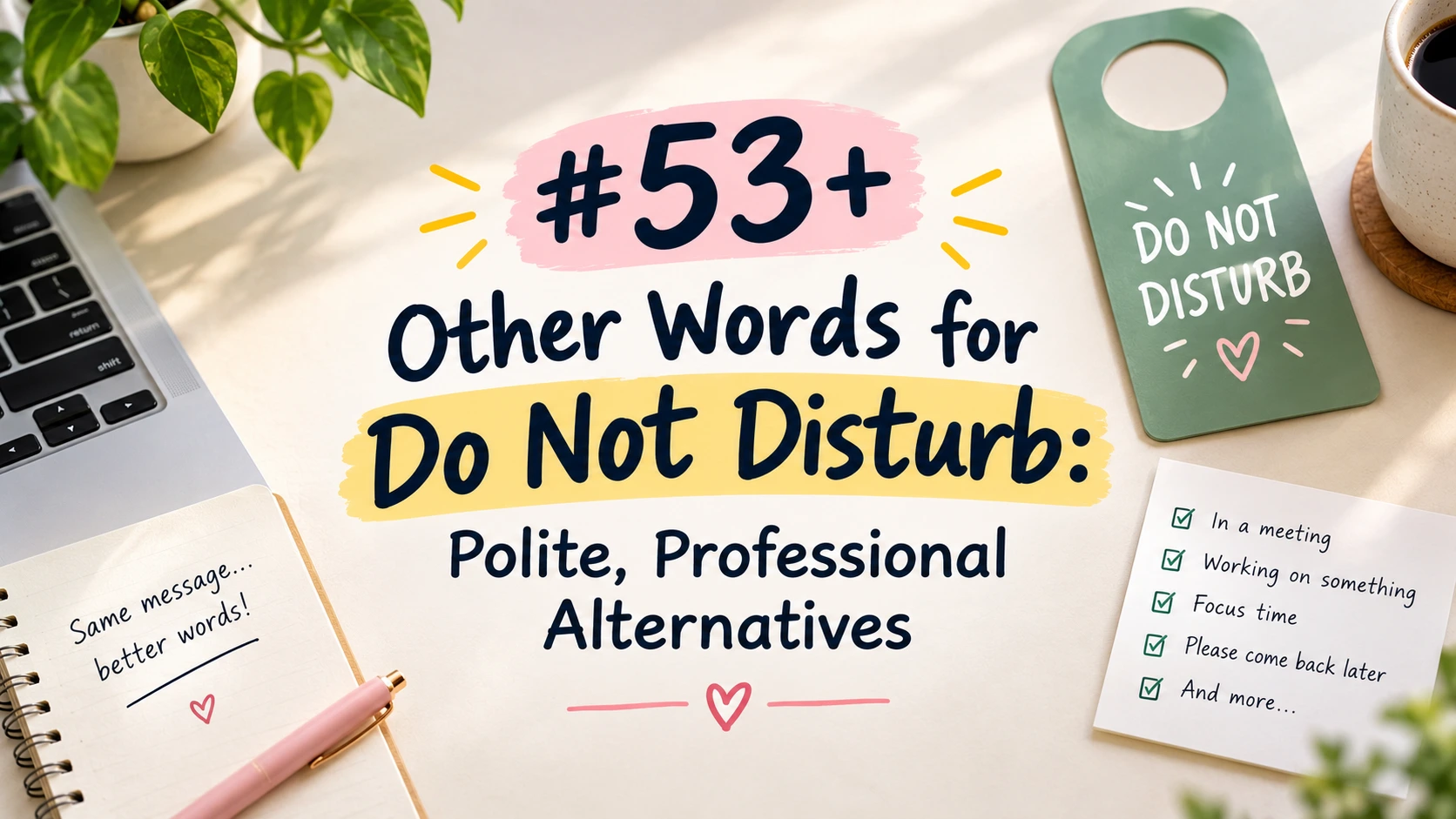
Sometimes, you need a little peace and quiet to finish an important task, recharge after a long day, or simply enjoy some time alone. The challenge is finding the right words to communicate that need without sounding rude or unapproachable. While “Do Not Disturb” is clear and familiar, it may feel too direct in certain situations. A softer expression can help you set boundaries while maintaining positive relationships with colleagues, friends, family, and guests. Whether you are updating your work status, writing a message, creating a sign for your door, or asking someone to respect your personal space, having different expressions gives you more flexibility. These alternatives to “Do Not Disturb” range from polite and professional to friendly, firm, and humorous, helping you communicate your need for uninterrupted time in a way that suits the situation.
What Does “Do Not Disturb” Mean?
“Do Not Disturb” is a request asking others not to interrupt, contact, or approach you for a period of time. It communicates that you need privacy, concentration, rest, or personal space.
The phrase appears in many everyday settings. You might see it on a hotel room door, use it as a phone setting, display it during an online meeting, or send it to a colleague who keeps interrupting your work.
For example, a student preparing for an exam might put a “Do Not Disturb” sign on the bedroom door. An employee might set their messaging status to indicate that they are concentrating on a deadline.
The phrase can sound firm, neutral, or even unfriendly, depending on the context. Choosing a suitable alternative allows you to communicate the same boundary with a tone that feels more natural.
When to Use Other Words for “Do Not Disturb”
Different situations call for different expressions. A message to your manager should usually sound different from a playful text to your friends.
- At work: “I’m focusing on a deadline right now. I’ll respond when I’m available.”
- While studying: “Quiet time, please. I need to concentrate.”
- At home: “Taking some personal time. Please give me a little space.”
- In a hotel room: “Please do not enter” or “Privacy requested.”
- On your phone: “Notifications paused” or “Focus mode enabled.”
- During a meeting: “Please avoid interruptions until the meeting ends.”
These expressions help you communicate your needs without leaving others guessing about whether you are busy, resting, or simply unavailable.
Is “Do Not Disturb” Polite or Professional?
Yes, “Do Not Disturb” can be both polite and professional. It is a standard expression used to establish boundaries, protect privacy, and prevent unnecessary interruptions. However, its tone depends on how and where you use it.
In a professional setting, a message such as “I’m unavailable for the next hour while I complete a report” often sounds more considerate than a blunt instruction to stay away. It explains the situation and gives others a reasonable expectation of when you might be available.
In casual settings, expressions such as “Taking a little me-time” or “Quiet time, please” can communicate the same message more warmly.
The goal is not to avoid setting boundaries. It is to communicate them clearly while respecting the other person’s situation.
Here are 58 alternatives for different situations, including professional communication, personal boundaries, signs, phone statuses, and casual conversations.
Polite and Respectful Alternatives
1. Please Give Me a Moment
- Meaning: You need a short period without interruptions.
- Tone: Polite, gentle, respectful.
- Example: “Please give me a moment to finish this email, and I’ll be happy to talk.”
- Why to use it: This is ideal when you need a brief pause without sounding dismissive.
- Purpose and personalization: Add a time estimate if possible, such as “Please give me five minutes.”
2. I Need a Little Quiet Time
- Meaning: You want a peaceful environment with minimal interruptions.
- Tone: Calm, friendly, considerate.
- Example: “I need a little quiet time this afternoon to organize my thoughts.”
- Why to use it: It works well with friends, family, or colleagues who understand your need for concentration.
- Purpose and personalization: Use it when you want quiet without making the request sound strict.
3. Please Respect My Privacy
- Meaning: You are asking others to avoid intruding on your personal space.
- Tone: Firm, respectful, serious.
- Example: “I’m handling a personal matter, so please respect my privacy for now.”
- Why to use it: This is suitable when your need for space is personal or sensitive.
- Purpose and personalization: You do not need to explain private details to justify the request.
4. I’ll Get Back to You Shortly
- Meaning: You are unavailable now but intend to respond later.
- Tone: Professional, reassuring.
- Example: “I’m reviewing the proposal at the moment. I’ll get back to you shortly.”
- Why to use it: It helps manage expectations in emails, chats, and workplace conversations.
- Purpose and personalization: Replace “shortly” with a specific time if you know when you will be available.
5. Please Allow Me Some Time to Focus
- Meaning: You need uninterrupted time to concentrate.
- Tone: Professional, courteous.
- Example: “Please allow me some time to focus on the presentation before our meeting.”
- Why to use it: This is useful when you are working on something that requires attention.
- Purpose and personalization: Mention the task to help others understand your request.
6. I Appreciate Your Understanding
- Meaning: You are politely asking others to accept your temporary unavailability.
- Tone: Warm, professional, diplomatic.
- Example: “I’ll be unavailable during the next hour. I appreciate your understanding.”
- Why to use it: It closes a boundary-setting message on a respectful note.
- Purpose and personalization: Pair it with a clear explanation of when you will return.
7. Please Give Me Some Space
- Meaning: You want some physical or emotional distance.
- Tone: Direct, personal, sincere.
- Example: “I’m feeling overwhelmed right now. Please give me some space.”
- Why to use it: This works when you need time to process your feelings or calm down.
- Purpose and personalization: Use a gentle explanation when appropriate, but keep your boundary clear.
8. I’ll Be Available Later
- Meaning: You are not available now but expect to be available afterward.
- Tone: Neutral, professional, reassuring.
- Example: “I’m tied up with a deadline this morning, but I’ll be available later.”
- Why to use it: It is practical for workplace chats and everyday scheduling.
- Purpose and personalization: Specify a time or part of the day whenever possible.
9. Kindly Avoid Interruptions
- Meaning: You are requesting that others refrain from interrupting you.
- Tone: Formal, courteous, firm.
- Example: “Kindly avoid interruptions while I conduct the training session.”
- Why to use it: This is appropriate for offices, workshops, presentations, and focused work.
- Purpose and personalization: Explain the duration or activity to make the request more precise.
10. Thank You for Giving Me Some Time
- Meaning: You appreciate someone allowing you to work or think without interruption.
- Tone: Appreciative, friendly.
- Example: “Thank you for giving me some time to review the documents carefully.”
- Why to use it: This is a gracious way to acknowledge someone’s patience.
- Purpose and personalization: It works especially well after a period of focused work or decision-making.
Professional and Workplace Alternatives
11. I’m Currently Unavailable
- Meaning: You cannot respond or engage at the moment.
- Tone: Neutral, professional.
- Example: “I’m currently unavailable but will respond to your message this afternoon.”
- Why to use it: This is useful for email autoresponders, work chats, and calendar statuses.
- Purpose and personalization: Include an expected response time when possible.
12. I’m in Focus Mode
- Meaning: You are deliberately concentrating and minimizing interruptions.
- Tone: Modern, professional, approachable.
- Example: “I’m in focus mode until noon, so please send anything urgent by email.”
- Why to use it: This works well in digital workplaces and teams that use status messages.
- Purpose and personalization: Mention an alternative contact method for urgent matters.
13. Please Hold All Non-Urgent Requests
- Meaning: You are asking others to postpone requests that do not need immediate attention.
- Tone: Firm, professional, organized.
- Example: “Please hold all non-urgent requests until the planning session is complete.”
- Why to use it: It is useful during busy periods or when managing a time-sensitive project.
- Purpose and personalization: Clarify what counts as urgent if your team needs guidance.
14. I’m Working on a Priority Task
- Meaning: You are focused on an important assignment.
- Tone: Professional, confident.
- Example: “I’m working on a priority task right now and will respond once it’s complete.”
- Why to use it: This communicates the reason for your unavailability without sounding unfriendly.
- Purpose and personalization: Use it when interruptions could affect a deadline or important deliverable.
15. Please Contact Me After the Meeting
- Meaning: You are asking someone to wait until a meeting has finished.
- Tone: Clear, professional, courteous.
- Example: “Please contact me after the meeting, and I’ll be happy to discuss the issue.”
- Why to use it: This is a straightforward way to manage interruptions during scheduled commitments.
- Purpose and personalization: If possible, specify the meeting’s end time.
16. I’m Not Taking Calls Right Now
- Meaning: You are temporarily unavailable for phone conversations.
- Tone: Direct, neutral.
- Example: “I’m not taking calls right now, but you can email me the details.”
- Why to use it: It is useful when you need to screen calls while working or resting.
- Purpose and personalization: Offer another way to reach you if necessary.
17. Please Allow Me to Complete This First
- Meaning: You need to finish your current task before responding to something else.
- Tone: Polite, confident, professional.
- Example: “Please allow me to complete this first, and then we can review your proposal together.”
- Why to use it: It helps establish priorities without rejecting the other person’s request.
- Purpose and personalization: Follow through by reconnecting once the task is complete.
18. I’ll Respond During My Next Available Window
- Meaning: You will reply when your schedule allows.
- Tone: Professional, organized.
- Example: “I’m in back-to-back meetings today and will respond during my next available window.”
- Why to use it: This suits busy professionals who manage their schedules carefully.
- Purpose and personalization: Provide a realistic timeframe to avoid uncertainty.
19. Please Keep Interruptions to a Minimum
- Meaning: You are asking others to interrupt only when necessary.
- Tone: Firm, professional.
- Example: “Please keep interruptions to a minimum while we finalize the quarterly report.”
- Why to use it: This works well for collaborative environments where some communication is unavoidable.
- Purpose and personalization: It is better than requesting complete silence when urgent questions may arise.
20. I’m Concentrating on a Deadline
- Meaning: You need uninterrupted time to finish work before a due date.
- Tone: Direct, work-focused.
- Example: “I’m concentrating on a deadline this afternoon. I’ll check messages once the report is submitted.”
- Why to use it: This gives colleagues a clear reason to delay non-urgent communication.
- Purpose and personalization: Mention the deadline when it helps others plan around your availability.
Firm and Boundary-Setting Alternatives
21. Please Do Not Interrupt Me
- Meaning: You are directly asking others not to interrupt.
- Tone: Firm, clear, serious.
- Example: “Please do not interrupt me during the examination unless it is necessary.”
- Why to use it: This is appropriate when clarity matters more than softness.
- Purpose and personalization: Use a calm tone so the message remains respectful.
22. I Need to Be Left Alone for a While
- Meaning: You want temporary solitude.
- Tone: Personal, direct, sometimes emotional.
- Example: “I’ve had a long day, and I need to be left alone for a while.”
- Why to use it: It works when you need time to recharge or process difficult emotions.
- Purpose and personalization: If others may worry, let them know when you expect to reconnect.
23. This Is My Quiet Time
- Meaning: You have set aside time for rest, reflection, or concentration.
- Tone: Calm, confident, personal.
- Example: “This is my quiet time, so I’ll join everyone after I’ve had a chance to relax.”
- Why to use it: This is helpful when you want to make personal boundaries part of your routine.
- Purpose and personalization: It works especially well with family or housemates.
24. Please Don’t Contact Me Unless It’s Urgent
- Meaning: You are asking others to contact you only about important matters.
- Tone: Firm, practical.
- Example: “I’m preparing for tomorrow’s presentation. Please don’t contact me unless it’s urgent.”
- Why to use it: This is useful during intense work periods or important personal commitments.
- Purpose and personalization: Define an appropriate emergency channel if necessary.
25. I Need Some Time to Myself
- Meaning: You want personal time without social interaction.
- Tone: Honest, gentle, self-assured.
- Example: “I appreciate the invitation, but I need some time to myself this evening.”
- Why to use it: It helps you decline interaction without blaming anyone.
- Purpose and personalization: You can reassure someone that you simply need time alone, not that you are upset with them.
26. Please Let Me Finish Before We Talk
- Meaning: You want to complete your thought or task before discussing something else.
- Tone: Assertive, respectful.
- Example: “Please let me finish before we talk through the next steps.”
- Why to use it: This works during conversations where interruptions make communication difficult.
- Purpose and personalization: It is particularly useful in meetings or discussions that require careful reasoning.
27. I Need a Break From Notifications
- Meaning: You want to stop receiving digital alerts temporarily.
- Tone: Casual, practical.
- Example: “I need a break from notifications while I study, so I’ll check my phone later.”
- Why to use it: This is a natural way to explain why you are muting messages or apps.
- Purpose and personalization: Set a specific time to check notifications again.
28. Please Respect My Time
- Meaning: You expect others to recognize your schedule and commitments.
- Tone: Assertive, professional.
- Example: “I have reserved this hour for focused work, so please respect my time and schedule non-urgent discussions afterward.”
- Why to use it: This is useful when interruptions have become a recurring problem.
- Purpose and personalization: Keep the conversation focused on work arrangements rather than personal criticism.
29. I Can’t Talk Right Now
- Meaning: You are temporarily unable to have a conversation.
- Tone: Direct, conversational.
- Example: “I can’t talk right now, but I’ll call you back after class.”
- Why to use it: This works for phone calls, texts, and in-person conversations.
- Purpose and personalization: Offer a better time to talk when you want to continue the conversation later.
30. Please Give Me the Privacy I Need
- Meaning: You are asking others to respect your need for personal space.
- Tone: Serious, firm, respectful.
- Example: “I’m dealing with something personal and would appreciate it if you gave me the privacy I need.”
- Why to use it: This is appropriate for sensitive situations when a softer hint has not worked.
- Purpose and personalization: You can establish the boundary without sharing information you prefer to keep private.
Relaxed, Friendly, and Casual Alternatives
31. Taking a Little Me-Time
- Meaning: You are spending time alone to relax or recharge.
- Tone: Friendly, casual, positive.
- Example: “I’m taking a little me-time this evening, so I’ll catch up with everyone tomorrow.”
- Why to use it: This is a relaxed way to communicate your need for solitude.
- Purpose and personalization: Suitable for friends, family, and social media statuses.
32. Quiet Time in Progress
- Meaning: You are currently enjoying or protecting a period of quiet.
- Tone: Light, friendly, slightly playful.
- Example: “Quiet time in progress. I’ll reply to messages after I finish reading.”
- Why to use it: It is a softer alternative for a status message or a note on your door.
- Purpose and personalization: Add an expected return time to make it more informative.
33. Taking a Break From the World
- Meaning: You are temporarily stepping away from social demands and distractions.
- Tone: Reflective, casual, expressive.
- Example: “I’m taking a break from the world this afternoon and spending some time offline.”
- Why to use it: This is suitable for a personal status or message to friends.
- Purpose and personalization: Use it when you want to communicate a broader digital or social break.
34. Offline for a While
- Meaning: You will not be checking messages or using online services for some time.
- Tone: Casual, modern, clear.
- Example: “I’m going offline for a while to finish my assignment. Talk later.”
- Why to use it: This works well in messaging apps and online communities.
- Purpose and personalization: If someone is waiting for your response, tell them when you expect to return.
35. Recharge Mode
- Meaning: You are taking time to restore your energy.
- Tone: Friendly, relaxed.
- Example: “Recharge mode this evening. I’ll catch up with you tomorrow.”
- Why to use it: This is useful when you need rest after a busy day.
- Purpose and personalization: It works as a casual status or text message.
36. Taking Some Personal Time
- Meaning: You are setting aside time for yourself.
- Tone: Neutral, mature, approachable.
- Example: “I’m taking some personal time this afternoon, but I’ll be back online tomorrow.”
- Why to use it: It is suitable for both personal messages and professional status updates.
- Purpose and personalization: You can use it without explaining why you need the time.
37. Heads Down, Getting Things Done
- Meaning: You are focused on completing tasks and prefer not to be interrupted.
- Tone: Casual, productive, confident.
- Example: “Heads down, getting things done until lunch. Send me anything urgent by email.”
- Why to use it: This is particularly useful for team chats and workplace status messages.
- Purpose and personalization: Include an end time so others know when they can approach you.
38. Enjoying a Little Peace and Quiet
- Meaning: You are taking time to enjoy a calm environment.
- Tone: Gentle, relaxed, warm.
- Example: “I’m enjoying a little peace and quiet this morning, so I’ll reply later.”
- Why to use it: This works well for personal messages and casual conversations.
- Purpose and personalization: Use it when your need for quiet is about relaxation rather than urgency.
39. Do Not Disturb: Recharging
- Meaning: You are unavailable because you are resting or restoring your energy.
- Tone: Friendly, modern, slightly playful.
- Example: “Do not disturb: recharging after a busy week. I’ll be back on Monday.”
- Why to use it: This makes a clear boundary sound approachable.
- Purpose and personalization: Great for a social media bio, status, or messaging app.
40. Catch You Later
- Meaning: You are ending the current interaction and will reconnect another time.
- Tone: Casual, friendly.
- Example: “I’m stepping away from my phone for a bit. Catch you later.”
- Why to use it: This is best when you are already having a relaxed conversation.
- Purpose and personalization: Use it when a detailed explanation is unnecessary.
Creative Alternatives for Signs, Statuses, and Special Situations
41. Privacy, Please
- Meaning: You are requesting privacy without a lengthy explanation.
- Tone: Concise, polite, slightly formal.
- Example: “Privacy, please. I’m taking a few minutes to prepare for the interview.”
- Why to use it: It works well on signs, doors, and temporary status messages.
- Purpose and personalization: Keep the wording visible and easy to understand.
42. Focus Time: Please Knock Only if Necessary
- Meaning: You are protecting a period of concentration while allowing essential interruptions.
- Tone: Professional, practical.
- Example: “Focus time: please knock only if necessary. I’ll be available after 2 p.m.”
- Why to use it: This is useful in shared offices or home workspaces.
- Purpose and personalization: State when your focus period ends.
43. Please Come Back Later
- Meaning: You are asking someone to return at another time.
- Tone: Direct, neutral.
- Example: “I’m in the middle of a confidential call. Please come back later.”
- Why to use it: This is appropriate when you cannot pause your current activity.
- Purpose and personalization: Where possible, offer a specific time for the person to return.
44. Session in Progress
- Meaning: A meeting, class, treatment, or other scheduled activity is currently underway.
- Tone: Formal, informative.
- Example: “Session in progress. Please wait until the discussion has ended before entering.”
- Why to use it: This works for meeting rooms, classrooms, consultations, and training sessions.
- Purpose and personalization: Add instructions for visitors if necessary.
45. Please Wait Until I’m Finished
- Meaning: You are asking someone to wait until your current activity is complete.
- Tone: Direct, practical.
- Example: “Please wait until I’m finished reviewing the files, and then I’ll help you.”
- Why to use it: This is useful when you want to postpone a conversation without refusing it.
- Purpose and personalization: Explain what you need to finish if that helps set expectations.
46. Notifications Paused
- Meaning: You have temporarily stopped receiving or responding to notifications.
- Tone: Neutral, digital, concise.
- Example: “Notifications paused while I work on the final draft. I’ll check messages afterward.”
- Why to use it: This is useful for digital status messages and personal productivity settings.
- Purpose and personalization: Use it when the focus is on digital interruptions rather than in-person privacy.
47. Focus Mode Enabled
- Meaning: You have activated a setting or routine intended to minimize distractions.
- Tone: Modern, professional, concise.
- Example: “Focus mode enabled until 11 a.m. Please email urgent requests.”
- Why to use it: This is effective for workplace chat statuses and digital devices.
- Purpose and personalization: Include your expected availability and an alternative for urgent matters.
48. Resting, Please Do Not Knock
- Meaning: You are resting and do not want visitors to interrupt.
- Tone: Clear, polite, practical.
- Example: “Resting, please do not knock. I’ll open the door when I’m ready.”
- Why to use it: This works for bedroom doors, guest rooms, and hotel-style privacy signs.
- Purpose and personalization: Use wording that fits the setting and the level of privacy you need.
49. Deep Work in Progress
- Meaning: You are doing concentrated work that requires sustained attention.
- Tone: Professional, productivity-focused.
- Example: “Deep work in progress until noon. Please save non-urgent questions for later.”
- Why to use it: This is ideal for people who need long stretches of uninterrupted concentration.
- Purpose and personalization: Share your availability with teammates before beginning the session.
50. Please Hold Questions Until the End
- Meaning: You want others to wait before asking questions.
- Tone: Professional, organized.
- Example: “Please hold questions until the end of the presentation so we can stay on schedule.”
- Why to use it: This is useful during presentations, training sessions, and group briefings.
- Purpose and personalization: If questions are urgent, make an exception clear.
51. Taking a Digital Detox
- Meaning: You are temporarily stepping away from devices or online communication.
- Tone: Casual, reflective.
- Example: “I’m taking a digital detox this weekend, so I may not respond to messages until Monday.”
- Why to use it: This is a natural way to explain a planned break from screens.
- Purpose and personalization: Let close contacts know how to reach you in an emergency if needed.
52. Please Allow Me to Recharge
- Meaning: You need time to rest and regain energy.
- Tone: Gentle, sincere, personal.
- Example: “It’s been a demanding week. Please allow me to recharge this evening, and I’ll catch up with you tomorrow.”
- Why to use it: This communicates your need for rest without making others feel rejected.
- Purpose and personalization: It works best with people who respect your personal boundaries.
53. Temporarily Away
- Meaning: You are not available at the moment but may return soon.
- Tone: Neutral, concise, professional.
- Example: “Temporarily away from my desk. I’ll respond when I return.”
- Why to use it: This is useful for workplace messaging statuses and out-of-office notifications.
- Purpose and personalization: Add a return time when you know it.
54. Please Respect This Quiet Space
- Meaning: You are asking others to maintain a calm environment.
- Tone: Respectful, firm, considerate.
- Example: “Please respect this quiet space while students are completing their examinations.”
- Why to use it: This works in libraries, study rooms, shared workspaces, and other quiet areas.
- Purpose and personalization: It is particularly effective when the request applies to a group.
55. Rest Mode: I’ll Be Back Soon
- Meaning: You are taking a break and plan to return later.
- Tone: Friendly, informal, reassuring.
- Example: “Rest mode: I’ll be back soon. Taking a short break before finishing the assignment.”
- Why to use it: This works for casual status messages and conversations with friends.
- Purpose and personalization: Replace “soon” with a more specific time when someone is waiting for you.
56. Please Avoid Unnecessary Interruptions
- Meaning: You want others to interrupt only when there is a good reason.
- Tone: Formal, firm, professional.
- Example: “Please avoid unnecessary interruptions while the team completes the final review.”
- Why to use it: This suits offices, workshops, and group tasks that require concentration.
- Purpose and personalization: It is less restrictive than a complete no-interruption rule.
57. Taking Time to Think
- Meaning: You need space to consider something before responding.
- Tone: Thoughtful, mature, calm.
- Example: “I’m taking some time to think through the decision. I’ll share my response tomorrow.”
- Why to use it: This is useful when a conversation or decision requires reflection.
- Purpose and personalization: Give a reasonable timeframe if someone is waiting for your answer.
58. Please Wait Until I’m Available
- Meaning: You are asking someone to postpone contact until you have time.
- Tone: Polite, direct, professional.
- Example: “I’m assisting another client right now. Please wait until I’m available, and I’ll be happy to help.”
- Why to use it: This works well in customer service, reception areas, and busy workplaces.
- Purpose and personalization: When possible, tell the person how long they may need to wait.
Conclusion
Finding other words for “Do Not Disturb” helps you communicate a need for privacy, concentration, or rest without relying on the same phrase every time. A professional message may call for “I’m currently unavailable,” while a friendly conversation might feel more natural with “Taking a little me-time.” The key is to match your wording to the situation and make your boundaries clear. You do not need to sound harsh to protect your time, and you do not need to overexplain your reasons. A clear boundary, expressed with respect, is a powerful form of communication.
Discover more
best responses to someone saying they appreciate you