
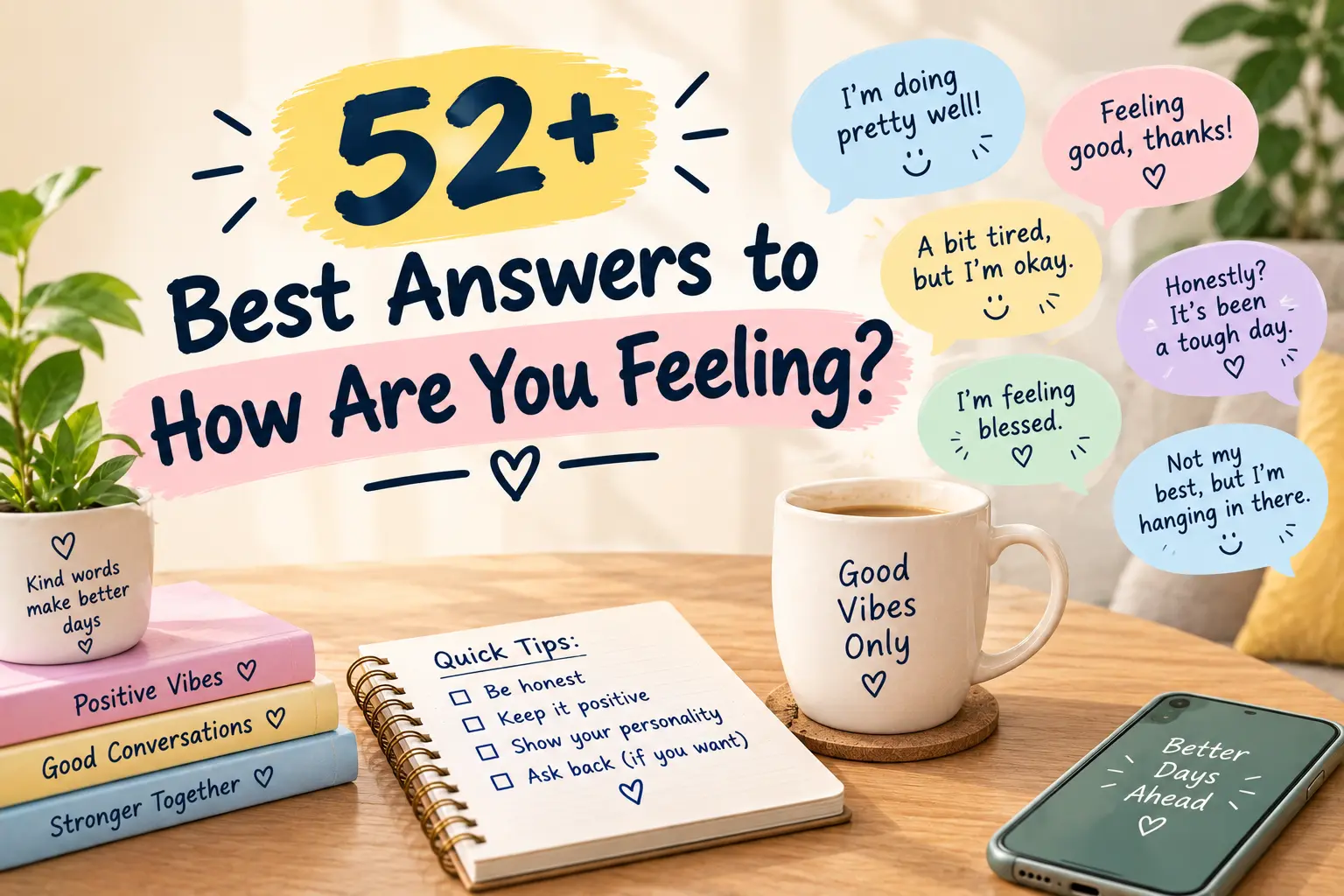
Sometimes, a simple question like “How are you feeling?” deserves more than an ordinary response. Whether someone is checking on your well-being, starting a conversation, or expressing genuine concern, your answer can shape the interaction. While “I’m fine” and “I’m good” are perfectly acceptable, thoughtful alternatives can help you communicate your emotions more naturally. The best answers to “How are you feeling?” depend on your mood, your relationship with the person asking, and the situation in which the question arises. A cheerful response can brighten a casual conversation, while a sincere answer can strengthen a meaningful relationship. In professional settings, a composed reply can also demonstrate confidence and courtesy. This guide explores more than 52 responses, from warm and appreciative to humorous, thoughtful, and professional, helping you find words that genuinely reflect how you feel.
What Does “How Are You Feeling?” Mean?
“How are you feeling?” is a common question people use to ask about someone’s physical condition, emotional state, or general well-being. Unlike “How are you?”, which often functions as a greeting, this question can suggest a deeper interest in how someone is actually doing.
Its meaning depends largely on context. A friend might ask it after noticing that you seem unusually quiet, while a colleague might use it to check on you after an illness or a stressful day. Sometimes, it is simply a friendly way to begin a conversation.
For example:
“You’ve seemed a little tired lately. How are you feeling?”
A natural response might be:
“I’m doing much better, thanks for asking.”
Your answer can be brief, humorous, optimistic, or honest. The important thing is to choose a response that suits your feelings and the relationship you share with the person asking.
When to Use It
Responses to “How are you feeling?” are useful in everyday conversations, professional interactions, personal relationships, and written communication. The most appropriate answer depends on the reason behind the question.
With Friends: You can be relaxed, humorous, or completely honest when talking to close friends.
Example: “Honestly, I’m feeling great. It’s been a surprisingly good week.”
With Family: A warm and sincere answer can help maintain meaningful communication.
Example: “I’m feeling better today. Thanks for checking on me.”
At Work: Choose a composed and courteous response, particularly when a colleague or manager asks about your well-being.
Example: “I’m doing well, thank you. I appreciate you asking.”
In Text Messages: Short, natural replies are usually sufficient, although you can share more if the conversation feels comfortable.
Example: “Much better today! How about you?”
In Emails: If someone checks on your well-being professionally, respond with a polite acknowledgment and a brief update.
Example: “Thank you for reaching out. I’m feeling much better and appreciate your concern.”
During Serious Conversations: When someone genuinely wants to know how you’re doing, an honest answer can encourage understanding and strengthen trust.
Example: “I’ve had a challenging week, but I’m gradually feeling more like myself.”
Is It Polite or Professional?
“How are you feeling?” is generally a polite and considerate question. It is appropriate in casual conversations, workplaces, healthcare settings, and personal relationships. It often conveys more concern than a routine greeting, particularly when someone has been unwell or experienced a difficult situation.
Your response, however, should reflect the setting. In professional environments, expressions such as “I’m doing well, thank you” or “I’m feeling much better” are courteous and straightforward. With friends and family, you have more freedom to use humor, share personal feelings, or respond informally.
If you’re uncomfortable discussing your emotional or physical condition, you can keep your answer brief without being impolite. A simple “I’m doing okay, thank you for asking” acknowledges the concern while maintaining your privacy.
1. I’m Feeling Great, Thanks for Asking.
Meaning: You are in a positive mood and appreciate the person’s concern.
Tone: Friendly and appreciative.
Example Sentence: “I’m feeling great, thanks for asking. How have you been?”
Short Explanation: This is a natural response when you’re genuinely happy and want to keep the conversation pleasant. It also acknowledges the other person’s kindness.
2. Much Better Than Yesterday.
Meaning: Your condition or mood has improved compared with the previous day.
Tone: Optimistic and sincere.
Example Sentence: “Much better than yesterday. I finally managed to get some proper rest.”
Short Explanation: Use this when someone knows you’ve been having a difficult time and wants an update.
3. I’m Doing Quite Well, Actually.
Meaning: You are feeling good and generally satisfied with how things are going.
Tone: Polished and friendly.
Example Sentence: “I’m doing quite well, actually. It’s been a productive week so far.”
Short Explanation: This response is suitable for both casual conversations and professional interactions.
4. Better Than I Expected.
Meaning: Your current condition is more positive than you anticipated.
Tone: Reflective and optimistic.
Example Sentence: “Better than I expected, especially considering how stressful the past few days have been.”
Short Explanation: Choose this when you’ve overcome a challenging situation and feel pleasantly surprised by your progress.
5. I’m Hanging in There.
Meaning: You’re managing, even though things may not be particularly easy.
Tone: Honest and understated.
Example Sentence: “I’m hanging in there. It’s been a busy month, but I’m managing.”
Short Explanation: This is a natural way to acknowledge difficulties without going into unnecessary detail.
6. Feeling Refreshed and Recharged.
Meaning: You feel rested, energized, and ready to take on new activities.
Tone: Positive and energetic.
Example Sentence: “I’m feeling refreshed and recharged after taking the weekend off.”
Short Explanation: This works particularly well after a break, vacation, or period of rest.
7. I’m Doing Better, One Day at a Time.
Meaning: You’re gradually improving without expecting immediate results.
Tone: Hopeful and thoughtful.
Example Sentence: “I’m doing better, one day at a time. I’m learning to be patient with myself.”
Short Explanation: Use this when you’re recovering from a difficult experience and want to express steady progress.
8. Honestly, I’ve Been Feeling Fantastic.
Meaning: You’re experiencing an especially positive mood or condition.
Tone: Enthusiastic and sincere.
Example Sentence: “Honestly, I’ve been feeling fantastic. Everything seems to be falling into place lately.”
Short Explanation: This is ideal when you want to express genuine excitement about how you’re doing.
9. A Little Tired, but Otherwise Good.
Meaning: You’re experiencing some fatigue but are generally feeling well.
Tone: Casual and honest.
Example Sentence: “A little tired, but otherwise good. I’ve had quite a few things to finish this week.”
Short Explanation: This balanced response is useful when you want to be truthful without making a minor inconvenience sound serious.
10. I’m Feeling More Like Myself Again.
Meaning: You’re gradually returning to your usual emotional or physical state.
Tone: Reassuring and sincere.
Example Sentence: “I’m feeling more like myself again after taking a few days to rest.”
Short Explanation: Use this when recovering from illness, stress, or an emotionally difficult period.
11. Couldn’t Be Happier.
Meaning: You’re exceptionally pleased with your current situation.
Tone: Cheerful and confident.
Example Sentence: “Couldn’t be happier. I finally finished the project I’ve been working on.”
Short Explanation: This works when you’re genuinely delighted and want to share your enthusiasm.
12. I’m Taking Things as They Come.
Meaning: You’re approaching life without putting too much pressure on yourself.
Tone: Calm and reflective.
Example Sentence: “I’m taking things as they come and trying not to worry about everything at once.”
Short Explanation: This response is appropriate when your circumstances are uncertain and you’re focusing on managing one thing at a time.
13. Feeling Pretty Good Today.
Meaning: You’re in a reasonably positive state at the moment.
Tone: Relaxed and friendly.
Example Sentence: “Feeling pretty good today. I think getting some fresh air helped.”
Short Explanation: This is a simple, natural response for everyday conversations.
14. I’m Grateful, and That’s What Matters.
Meaning: You appreciate the positive aspects of your life, even if everything isn’t perfect.
Tone: Thoughtful and appreciative.
Example Sentence: “I’m grateful, and that’s what matters. There are still challenges, but I’m managing.”
Short Explanation: Use this when you want to express a positive outlook without pretending that everything is going perfectly.
15. A Little Overwhelmed, to Be Honest.
Meaning: You’re dealing with more responsibilities or emotions than you can comfortably manage.
Tone: Honest and vulnerable.
Example Sentence: “A little overwhelmed, to be honest. I’ve got several deadlines coming up.”
Short Explanation: This is a useful response when you feel comfortable sharing that things are difficult.
16. I’m Feeling Peaceful and Content.
Meaning: You’re experiencing emotional calmness and satisfaction.
Tone: Calm and thoughtful.
Example Sentence: “I’m feeling peaceful and content. It’s nice to have a little time to myself.”
Short Explanation: This works when you want to describe a quiet, positive emotional state.
17. Better Than Fine, Actually.
Meaning: You’re doing noticeably better than simply being okay.
Tone: Cheerful and conversational.
Example Sentence: “Better than fine, actually. I’ve had some wonderful news today.”
Short Explanation: This response adds personality to a familiar expression and can naturally invite further conversation.
18. I’m Managing, Thanks for Checking In.
Meaning: You’re coping with your current circumstances and appreciate the concern.
Tone: Polite and sincere.
Example Sentence: “I’m managing, thanks for checking in. I really appreciate it.”
Short Explanation: This is suitable for colleagues, acquaintances, and friends when you want to acknowledge their concern without sharing too much.
19. Feeling a Little Under the Weather.
Meaning: You’re experiencing mild illness or physical discomfort.
Tone: Casual and honest.
Example Sentence: “I’m feeling a little under the weather, so I’m taking it easy today.”
Short Explanation: This familiar expression is useful when you’re not feeling physically well but don’t want to provide extensive details.
20. I’m in a Really Good Place Right Now.
Meaning: You’re feeling emotionally settled and generally satisfied with your circumstances.
Tone: Confident and reflective.
Example Sentence: “I’m in a really good place right now. I’ve finally found a routine that works for me.”
Short Explanation: Use this when your overall well-being has improved and you’re comfortable sharing that progress.
21. Feeling a Bit Drained, but I’ll Be Fine.
Meaning: You’re low on energy but believe you can manage your current situation.
Tone: Honest and reassuring.
Example Sentence: “Feeling a bit drained, but I’ll be fine after getting some rest.”
Short Explanation: This is appropriate when you’re tired and want to acknowledge it without turning the conversation into a lengthy explanation.
22. I’m Enjoying the Little Things.
Meaning: You’re finding happiness in simple everyday experiences.
Tone: Positive and thoughtful.
Example Sentence: “I’m enjoying the little things lately. Even a quiet morning feels special.”
Short Explanation: This response conveys contentment and works particularly well in meaningful conversations.
23. Couldn’t Ask for Better.
Meaning: You’re completely satisfied with how you’re feeling.
Tone: Confident and upbeat.
Example Sentence: “Couldn’t ask for better. I’ve had a genuinely lovely day.”
Short Explanation: Choose this when things are going particularly well and you want to communicate your satisfaction naturally.
24. I’m Feeling a Little Uncertain.
Meaning: You’re experiencing doubt or mixed emotions about something.
Tone: Thoughtful and honest.
Example Sentence: “I’m feeling a little uncertain about the changes, but I’m trying to stay open-minded.”
Short Explanation: This is helpful when you’re unsure about a situation and want to communicate your feelings without exaggerating them.
25. I’m Keeping My Spirits Up.
Meaning: You’re trying to maintain a positive outlook despite difficulties.
Tone: Resilient and optimistic.
Example Sentence: “I’m keeping my spirits up, even though things have been rather demanding lately.”
Short Explanation: Use this when you want to express determination without pretending that everything is easy.
26. Feeling Fantastic and Ready for Anything.
Meaning: You’re energetic, enthusiastic, and prepared for upcoming activities.
Tone: Motivational and upbeat.
Example Sentence: “Feeling fantastic and ready for anything. I’m looking forward to the weekend.”
Short Explanation: This works particularly well in cheerful conversations when you want to share your enthusiasm.
27. I’m Doing Okay, All Things Considered.
Meaning: You’re managing reasonably well despite challenging circumstances.
Tone: Mature and realistic.
Example Sentence: “I’m doing okay, all things considered. There have been a few unexpected challenges.”
Short Explanation: This response is useful when your situation is complicated but you don’t want to focus exclusively on the difficulties.
28. A Little Better Every Day.
Meaning: You’re experiencing gradual improvement.
Tone: Hopeful and encouraging.
Example Sentence: “A little better every day. I’m happy with the progress I’ve made.”
Short Explanation: Use this when you want to emphasize steady improvement rather than an immediate transformation.
29. I’m Feeling Surprisingly Optimistic.
Meaning: You have a positive outlook that you didn’t necessarily expect to have.
Tone: Reflective and hopeful.
Example Sentence: “I’m feeling surprisingly optimistic about the opportunities ahead.”
Short Explanation: This is useful when your attitude has improved despite uncertainty or recent setbacks.
30. Somewhere Between Exhausted and Excited.
Meaning: You’re experiencing both fatigue and enthusiasm.
Tone: Humorous and expressive.
Example Sentence: “Somewhere between exhausted and excited. I’ve got a lot happening this week.”
Short Explanation: This playful response is ideal when you’re experiencing conflicting emotions.
31. I’m Feeling Quite Accomplished.
Meaning: You’re satisfied with what you’ve achieved.
Tone: Confident and positive.
Example Sentence: “I’m feeling quite accomplished after finally completing that challenging assignment.”
Short Explanation: Use this when you’ve made meaningful progress or finished something important.
32. A Little Restless, If I’m Being Honest.
Meaning: You’re finding it difficult to relax or feel settled.
Tone: Honest and reflective.
Example Sentence: “A little restless, if I’m being honest. I think I need a change of scenery.”
Short Explanation: This response helps communicate an unsettled mood without making it sound overly serious.
33. I’m Feeling Motivated and Focused.
Meaning: You’re mentally prepared and enthusiastic about your goals.
Tone: Ambitious and energetic.
Example Sentence: “I’m feeling motivated and focused. I’ve finally organized my priorities.”
Short Explanation: This is suitable when discussing work, studies, personal projects, or future plans.
34. Not My Best Day, but I’m Getting Through It.
Meaning: You’re having a difficult day but are managing as best you can.
Tone: Honest and resilient.
Example Sentence: “Not my best day, but I’m getting through it. Hopefully, tomorrow will be easier.”
Short Explanation: This is a sincere response when you want to acknowledge a difficult day without dwelling on it.
35. Feeling Lighthearted and Carefree.
Meaning: You’re relaxed and not particularly troubled by your current circumstances.
Tone: Cheerful and relaxed.
Example Sentence: “Feeling lighthearted and carefree after spending some time away from work.”
Short Explanation: Use this when you’re enjoying a pleasant period and want to describe your mood more vividly.
36. I’m Taking Better Care of Myself.
Meaning: You’re making an effort to improve your physical or emotional well-being.
Tone: Thoughtful and positive.
Example Sentence: “I’m taking better care of myself and trying to maintain a healthier routine.”
Short Explanation: This response works when someone is checking on your general well-being and you’re comfortable sharing recent changes.
37. A Little Bit of Everything, Honestly.
Meaning: You’re experiencing a mixture of emotions.
Tone: Candid and conversational.
Example Sentence: “A little bit of everything, honestly. I’m excited about some things and uncertain about others.”
Short Explanation: This is useful when a single emotion cannot adequately describe how you’re feeling.
38. I’m Feeling Quite Hopeful.
Meaning: You believe that positive outcomes are possible.
Tone: Optimistic and thoughtful.
Example Sentence: “I’m feeling quite hopeful about the coming months. There are some interesting opportunities ahead.”
Short Explanation: Use this when you want to express optimism without making unrealistic promises about the future.
39. Just Taking a Moment to Recharge.
Meaning: You’re giving yourself time to rest and regain energy.
Tone: Calm and self-aware.
Example Sentence: “I’m just taking a moment to recharge after a particularly busy week.”
Short Explanation: This is a natural response when you need some downtime and want to communicate it clearly.
40. I’m Feeling More Confident These Days.
Meaning: Your confidence has increased recently.
Tone: Positive and self-assured.
Example Sentence: “I’m feeling more confident these days, especially about the decisions I’m making.”
Short Explanation: Use this when you’ve noticed a positive change in your outlook or sense of self-assurance.
41. A Little Melancholic, but Nothing I Can’t Handle.
Meaning: You’re feeling somewhat sad or reflective but believe you can manage the emotion.
Tone: Thoughtful and expressive.
Example Sentence: “A little melancholic, but nothing I can’t handle. It’s just one of those reflective days.”
Short Explanation: This is useful when you want to describe a subdued emotional state with greater precision.
42. I’m Feeling Genuinely Appreciated.
Meaning: You feel valued and recognized by the people around you.
Tone: Warm and grateful.
Example Sentence: “I’m feeling genuinely appreciated after the thoughtful messages I received today.”
Short Explanation: Use this when a positive experience has made you feel recognized or supported.
43. I’m Doing Well, and I Hope You Are Too.
Meaning: You’re feeling good and extend the same courtesy to the other person.
Tone: Polite and friendly.
Example Sentence: “I’m doing well, and I hope you are too. Thank you for asking.”
Short Explanation: This is a versatile response that works in both professional and casual conversations.
44. Feeling a Little More Balanced.
Meaning: You’re experiencing greater stability in your emotions or daily routine.
Tone: Calm and reflective.
Example Sentence: “Feeling a little more balanced now that I’ve managed to organize my schedule.”
Short Explanation: Use this when you’ve made progress in managing competing responsibilities or emotions.
45. I’m Feeling Adventurous Today.
Meaning: You’re in the mood to explore new experiences or try something different.
Tone: Energetic and playful.
Example Sentence: “I’m feeling adventurous today. I might finally try something completely new.”
Short Explanation: This is a lively response for casual conversations when you’re feeling curious and enthusiastic.
46. A Bit Mentally Exhausted, but Otherwise Fine.
Meaning: You’re experiencing mental fatigue but are generally managing well.
Tone: Honest and composed.
Example Sentence: “A bit mentally exhausted, but otherwise fine. I’ve had a lot to think about recently.”
Short Explanation: This response communicates your condition clearly without requiring you to explain every detail.
47. I’m Feeling Content With Where I Am.
Meaning: You’re satisfied with your present circumstances.
Tone: Mature and reflective.
Example Sentence: “I’m feeling content with where I am. I still have goals, but I’m enjoying the journey.”
Short Explanation: Use this when you want to express satisfaction without suggesting that everything in your life is perfect.
48. I’m Holding Up Pretty Well.
Meaning: You’re coping reasonably well despite possible challenges.
Tone: Reassuring and understated.
Example Sentence: “I’m holding up pretty well, considering how much has happened lately.”
Short Explanation: This is appropriate when someone knows you’re dealing with a difficult situation and wants to check on you.
49. Feeling Like Today Might Be a Good Day.
Meaning: You’re optimistic about the day ahead.
Tone: Cheerful and hopeful.
Example Sentence: “Feeling like today might be a good day. I’ve got a positive feeling about it.”
Short Explanation: This works well for casual morning conversations and upbeat text exchanges.
50. I’m Doing My Best, and That’s Enough for Now.
Meaning: You’re making a sincere effort without expecting yourself to achieve everything immediately.
Tone: Self-assured and thoughtful.
Example Sentence: “I’m doing my best, and that’s enough for now. I’m learning to appreciate my progress.”
Short Explanation: Use this when you want to communicate a realistic and compassionate attitude toward your circumstances.
51. Feeling Calm, Collected, and Ready.
Meaning: You’re emotionally composed and prepared for what’s ahead.
Tone: Confident and professional.
Example Sentence: “Feeling calm, collected, and ready for the presentation this afternoon.”
Short Explanation: This response works particularly well before important meetings, presentations, or other challenging activities.
52. I’m Feeling Pretty Human Today.
Meaning: You’re experiencing ordinary emotions, energy levels, and imperfections.
Tone: Humorous and relatable.
Example Sentence: “I’m feeling pretty human today: a little tired, a little hungry, and doing my best.”
Short Explanation: This lighthearted response is suitable for informal conversations when you want to avoid giving a lengthy explanation.
53. Honestly, I’m Still Figuring That Out.
Meaning: You’re uncertain about your current emotional state.
Tone: Honest and introspective.
Example Sentence: “Honestly, I’m still figuring that out. It’s been a complicated few days.”
Short Explanation: Use this when you don’t have a clear answer and would rather be honest than give an automatic response.
54. I’m Feeling Better Now That We’ve Talked.
Meaning: The conversation has improved your mood or helped you feel more comfortable.
Tone: Warm and appreciative.
Example Sentence: “I’m feeling better now that we’ve talked. I really appreciate you taking the time to listen.”
Short Explanation: This works when someone’s genuine attention has helped you feel more supported.
55. A Little Unsettled, but I Appreciate You Asking.
Meaning: You’re experiencing some discomfort or uncertainty and appreciate the person’s concern.
Tone: Sincere and considerate.
Example Sentence: “A little unsettled, but I appreciate you asking. I’m trying to work through a few things.”
Short Explanation: This is a thoughtful response when you want to acknowledge your feelings while showing appreciation for someone’s concern.
Conclusion
Finding the right answer to “How are you feeling?” can make everyday conversations more genuine and meaningful. Whether you choose a cheerful response, a professional acknowledgment, or an honest description of your emotions, the most effective answer is one that reflects how you actually feel. Alternatives such as “I’m doing quite well,” “I’m taking things as they come,” and “I’m feeling more like myself again” allow you to communicate with greater clarity and personality. Experiment with different expressions, consider the context, and remember that a sincere, simple answer can be just as meaningful as an elaborate one.
Discover more