

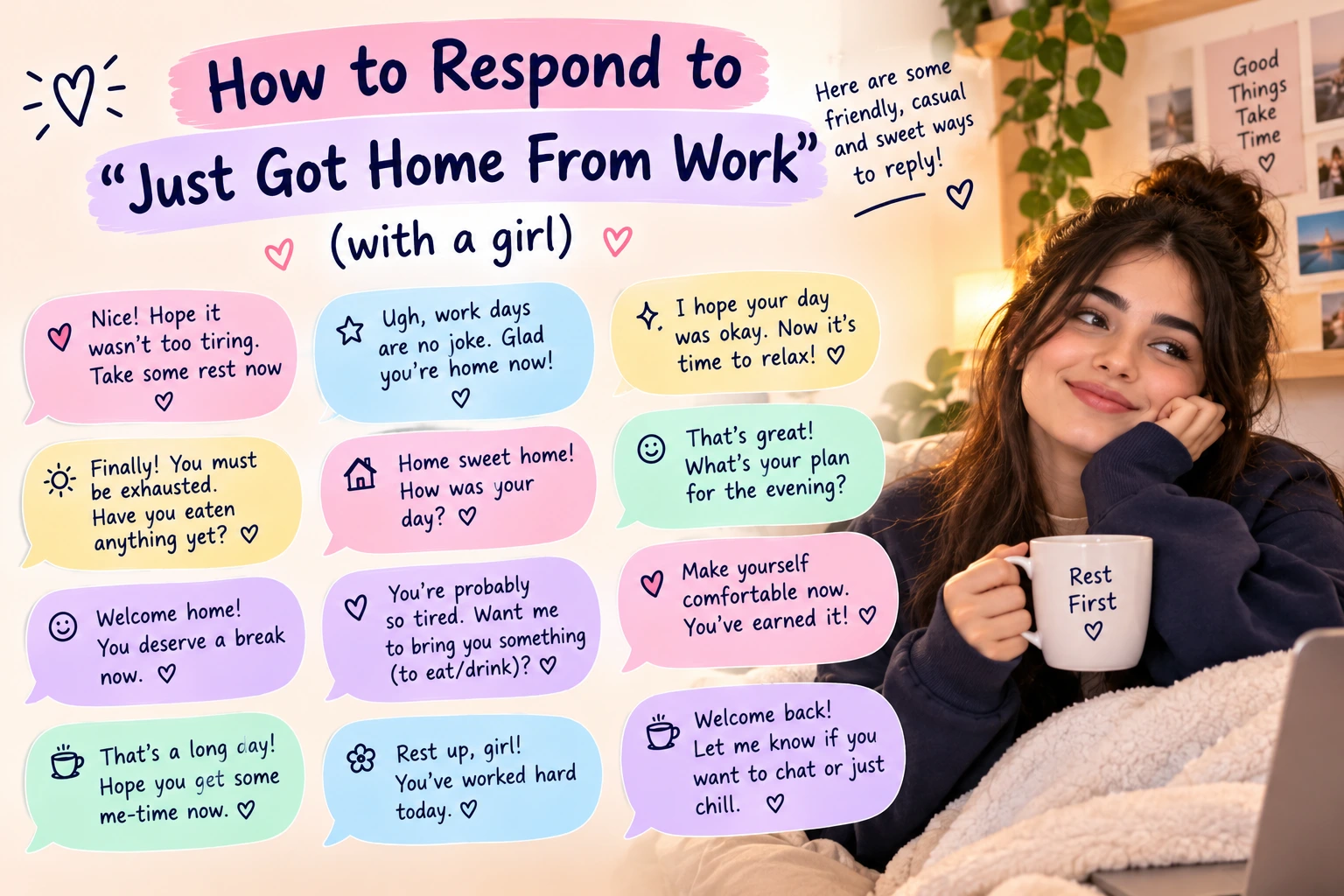
Getting a message that says, “Just got home from work,” may seem simple, but it often opens the door to a much better conversation. The person could be tired, relieved, excited to finally relax, or simply letting you know they are free.
Your response can set the tone for what comes next. A thoughtful reply can show that you care, while a funny one can make the conversation feel lighter. If you are texting a friend, talking to someone you like, or replying to a coworker, choosing the right words makes a difference.
Instead of always saying, “Nice,” or “Glad you’re home,” you can make your response more personal. These how to respond to just got home from work alternatives give you plenty of ways to sound caring, funny, confident, curious, or professional without forcing the conversation.
1. What Does “Just Got Home From Work” Mean?
“Just got home from work” usually means that someone has finished their workday and has arrived home.
People often say this to explain why they were unavailable earlier or to signal that they are now free to talk. It can also carry an emotional tone. Depending on the person, they may sound tired, relieved, happy, or ready to relax.
For example, if a friend texts, “Just got home from work,” they may simply be updating you. A natural response could be, “Finally! How was your day?”
The best reply depends on your relationship and the mood of the conversation.
2. When to Use It
The phrase is most common in casual conversations, especially through text messages, social media, and everyday chats.
You might use a warm response when a friend has had a long day, a playful response when someone you know well arrives home, or a professional response when a coworker tells you they are available after work.
For example:
- Casual: “Welcome home! How was work?”
- Caring: “You must be exhausted. Get some rest.”
- Playful: “You survived another day!”
- Professional: “Glad you made it home. We can continue tomorrow.”
- Conversational: “How did your day go?”
In most situations, short and natural replies work better than overly formal language.
3. Is It Polite or Professional?
“Just got home from work” is polite, but it is mainly a casual and conversational phrase.
It works naturally with friends, family members, classmates, and people you regularly text. It can also appear in workplace messages when coworkers have a relaxed relationship.
For formal business communication, a more neutral response is usually better. For example, “Thanks for letting me know. We can pick this up tomorrow” sounds more professional than a playful response.
The key is to match your reply to the relationship. A warm message can feel personal with a friend, while a concise and respectful response works better with a colleague or professional contact.
1. “Welcome home!”
Meaning: A warm way to acknowledge that someone has arrived home.
Tone: Friendly, warm.
Example Sentence: “Welcome home! How was your day?”
Short Explanation: Use this when you want to sound genuinely happy that they are finally home.
Purpose and Personalization: Add “How was work?” if you want to turn it into a conversation.
2. “Finally home!”
Meaning: Shows that you recognize they have finished a long day.
Tone: Casual, cheerful.
Example Sentence: “Finally home! I hope work wasn’t too exhausting.”
Short Explanation: Great for someone who has been waiting all day to relax.
3. “How was your day?”
Meaning: A simple invitation to talk about their workday.
Tone: Caring, conversational.
Example Sentence: “How was your day? Anything interesting happen?”
Short Explanation: Use this when you genuinely want to hear about their day.
4. “You made it!”
Meaning: A playful way to celebrate the end of their workday.
Tone: Friendly, playful.
Example Sentence: “You made it! Now you can finally relax.”
Short Explanation: This works especially well after someone has had a busy or stressful day.
5. “Glad you’re home safely.”
Meaning: Shows concern for their well-being.
Tone: Caring, thoughtful.
Example Sentence: “Glad you’re home safely. Get some rest tonight.”
Short Explanation: A good choice when you want your reply to feel sincere.
6. “Time to relax!”
Meaning: Suggests that work is finished and relaxation can begin.
Tone: Cheerful, encouraging.
Example Sentence: “Time to relax! You’ve earned a quiet evening.”
Short Explanation: Use it when someone sounds tired after work.
7. “Sounds like it’s finally time to switch off.”
Meaning: Encourages them to mentally leave work behind.
Tone: Calm, supportive.
Example Sentence: “Sounds like it’s finally time to switch off and enjoy your evening.”
Short Explanation: This feels thoughtful without sounding overly serious.
8. “Rough day?”
Meaning: Asks whether their workday was difficult.
Tone: Caring, direct.
Example Sentence: “Just got home from work? Rough day?”
Short Explanation: Use this when their message sounds tired or frustrated.
9. “You must be exhausted.”
Meaning: Acknowledges that work may have taken a lot of energy.
Tone: Empathetic.
Example Sentence: “You must be exhausted after today. Take it easy tonight.”
Short Explanation: A natural response when someone has worked a long shift.
10. “Hope you can finally put your feet up.”
Meaning: Wishes them a chance to rest.
Tone: Warm, relaxed.
Example Sentence: “Hope you can finally put your feet up and enjoy your evening.”
Short Explanation: This has a friendly, comforting feel.
11. “How did work go?”
Meaning: Directly asks about their workday.
Tone: Casual, interested.
Example Sentence: “How did work go? Was it as busy as you expected?”
Short Explanation: A reliable choice when you want to keep the conversation going.
12. “Long day?”
Meaning: Asks whether their workday felt tiring or lengthy.
Tone: Casual, caring.
Example Sentence: “You just got home? Long day?”
Short Explanation: Short, natural, and easy to send over text.
13. “Glad you’re finally off the clock.”
Meaning: Recognizes that their workday has ended.
Tone: Friendly, relaxed.
Example Sentence: “Glad you’re finally off the clock. What are you doing tonight?”
Short Explanation: Perfect for someone who has had a demanding day.
14. “You survived another workday.”
Meaning: Jokes about getting through another day at work.
Tone: Funny, playful.
Example Sentence: “You survived another workday. That deserves a good dinner.”
Short Explanation: Best for friends or people who enjoy casual humor.
15. “Welcome back to civilization.”
Meaning: Jokingly suggests that work felt like another world.
Tone: Humorous, playful.
Example Sentence: “Welcome back to civilization. What did you miss?”
Short Explanation: Use this with someone who likes exaggerated jokes.
16. “Now the real day begins.”
Meaning: Suggests that personal time can finally start.
Tone: Playful, energetic.
Example Sentence: “Now the real day begins. What’s the plan?”
Short Explanation: A fun reply when you want to shift the conversation toward evening plans.
17. “What’s on the agenda now?”
Meaning: Asks what they plan to do after work.
Tone: Curious, casual.
Example Sentence: “What’s on the agenda now? Dinner and a movie?”
Short Explanation: Great for keeping the conversation moving.
18. “Work is officially over. Congratulations.”
Meaning: Celebrates the end of their workday.
Tone: Funny, lighthearted.
Example Sentence: “Work is officially over. Congratulations on making it through Monday.”
Short Explanation: Especially fun at the end of a difficult day.
19. “You’re free!”
Meaning: Celebrates their freedom from work.
Tone: Playful, upbeat.
Example Sentence: “You’re free! No more emails until tomorrow.”
Short Explanation: A short response that instantly adds energy.
20. “That must feel good.”
Meaning: Acknowledges the relief of getting home.
Tone: Warm, empathetic.
Example Sentence: “That must feel good after such a busy day.”
Short Explanation: Use this when you want to sound understanding rather than overly cheerful.
21. “Home sweet home.”
Meaning: Suggests that home is a welcome break from work.
Tone: Warm, casual.
Example Sentence: “Home sweet home. Forget about work for a while.”
Short Explanation: A familiar expression that works well in relaxed conversations.
22. “Now you can breathe.”
Meaning: Suggests that they can finally relax.
Tone: Supportive, caring.
Example Sentence: “Now you can breathe. Leave the work stress behind.”
Short Explanation: This is especially suitable after a stressful shift.
23. “Did anything interesting happen today?”
Meaning: Invites them to share something from their day.
Tone: Curious, conversational.
Example Sentence: “Did anything interesting happen today, or was it just another busy day?”
Short Explanation: Great when you want more than a one-word conversation.
24. “Tell me everything.”
Meaning: Shows strong interest in hearing about their day.
Tone: Warm, playful.
Example Sentence: “You’re finally home? Tell me everything. How was work?”
Short Explanation: Use this with someone you know well.
25. “You deserve some downtime.”
Meaning: Says they deserve time to rest.
Tone: Caring, supportive.
Example Sentence: “You deserve some downtime after today.”
Short Explanation: A thoughtful choice when someone has been working hard.
26. “Forget work for tonight.”
Meaning: Encourages them to stop thinking about work.
Tone: Supportive, relaxed.
Example Sentence: “Forget work for tonight. You’ve done enough.”
Short Explanation: This sounds caring when someone has had a stressful day.
27. “What’s your first move now?”
Meaning: Asks what they will do first after getting home.
Tone: Curious, playful.
Example Sentence: “What’s your first move now: food, shower, or sleep?”
Short Explanation: This creates an easy and fun conversation.
28. “Did you have a good day?”
Meaning: Asks about their overall experience.
Tone: Friendly, caring.
Example Sentence: “Did you have a good day, or was work chaotic?”
Short Explanation: Simple enough for everyday texting but still shows interest.
29. “Go get some rest.”
Meaning: Encourages them to relax after work.
Tone: Caring, gentle.
Example Sentence: “Go get some rest. You’ve had a long day.”
Short Explanation: Best when you know they are tired.
30. “You’ve earned your evening.”
Meaning: Suggests that they deserve personal time after working.
Tone: Supportive, warm.
Example Sentence: “You’ve earned your evening. Put your phone down and relax for a bit.”
Short Explanation: A thoughtful alternative to simply saying “rest.”
31. “Was work kind to you today?”
Meaning: A creative way to ask whether the workday went well.
Tone: Thoughtful, slightly playful.
Example Sentence: “Was work kind to you today, or did it cause trouble again?”
Short Explanation: This sounds more personal than a standard “How was work?”
32. “Did work behave itself?”
Meaning: Jokingly asks whether the workday went smoothly.
Tone: Playful, humorous.
Example Sentence: “Did work behave itself today?”
Short Explanation: A fun choice for a friend or someone you text regularly.
33. “How are you feeling now?”
Meaning: Focuses on their current mood rather than work itself.
Tone: Caring, thoughtful.
Example Sentence: “How are you feeling now that you’re finally home?”
Short Explanation: Use this when you care more about the person than the details of their job.
34. “What kind of evening are you having?”
Meaning: Asks about their plans and mood.
Tone: Curious, conversational.
Example Sentence: “What kind of evening are you having? Quiet night or something fun?”
Short Explanation: This gives them several ways to continue the conversation.
35. “I hope today wasn’t too draining.”
Meaning: Shows concern about their energy and mood.
Tone: Warm, considerate.
Example Sentence: “I hope today wasn’t too draining. You sounded busy earlier.”
Short Explanation: This works well when someone has had a demanding schedule.
36. “Another day down.”
Meaning: Celebrates finishing another workday.
Tone: Casual, encouraging.
Example Sentence: “Another day down. Now you can enjoy some peace.”
Short Explanation: Short and natural for everyday texting.
37. “Glad you can finally relax.”
Meaning: Acknowledges that their workday has ended.
Tone: Warm, supportive.
Example Sentence: “Glad you can finally relax. What are you having for dinner?”
Short Explanation: It combines care with an easy conversation starter.
38. “What’s the recovery plan?”
Meaning: Jokingly asks how they plan to recover from a tiring day.
Tone: Funny, playful.
Example Sentence: “What’s the recovery plan tonight: food, TV, or complete silence?”
Short Explanation: Great for a friend who has had a long day.
39. “That calls for a quiet evening.”
Meaning: Suggests that they should take things easy.
Tone: Calm, thoughtful.
Example Sentence: “That calls for a quiet evening and something good to eat.”
Short Explanation: A gentle response when someone sounds worn out.
40. “You made it through the day.”
Meaning: Recognizes their effort.
Tone: Encouraging, supportive.
Example Sentence: “You made it through the day. Now forget about work and relax.”
Short Explanation: Useful when someone has had a particularly challenging day.
41. “So, what’s the verdict on today?”
Meaning: Asks them to sum up their day.
Tone: Curious, playful.
Example Sentence: “So, what’s the verdict on today? Productive or completely chaotic?”
Short Explanation: This gives the conversation a more interesting opening.
42. “Was it a productive day?”
Meaning: Asks whether they feel they accomplished much.
Tone: Neutral, professional.
Example Sentence: “Was it a productive day? I hope you managed to finish everything.”
Short Explanation: Suitable for a coworker or professional contact.
43. “Sounds like you’re ready to switch into weekend mode.”
Meaning: Suggests they are ready to relax after work.
Tone: Casual, cheerful.
Example Sentence: “Sounds like you’re ready to switch into weekend mode.”
Short Explanation: Particularly useful on Friday or before a break.
44. “What are you doing to unwind?”
Meaning: Asks how they plan to relax.
Tone: Thoughtful, conversational.
Example Sentence: “What are you doing to unwind after work?”
Short Explanation: A natural way to move the conversation toward their evening.
45. “I hope you get some proper rest tonight.”
Meaning: Wishes them a peaceful and restful evening.
Tone: Caring, sincere.
Example Sentence: “I hope you get some proper rest tonight. You’ve been working nonstop.”
Short Explanation: Best when you want to sound genuinely considerate.
46. “Workday complete.”
Meaning: Marks the end of their work responsibilities.
Tone: Casual, concise.
Example Sentence: “Workday complete. Now it’s officially relaxation time.”
Short Explanation: Works well as a short text response.
47. “Now comes the best part of the day.”
Meaning: Suggests that personal time is more enjoyable than work.
Tone: Cheerful, playful.
Example Sentence: “Now comes the best part of the day. What are you having for dinner?”
Short Explanation: Use this when you want to make the conversation more positive.
48. “What kept you busy today?”
Meaning: Invites them to explain what they worked on.
Tone: Curious, friendly.
Example Sentence: “What kept you busy today? You sounded occupied earlier.”
Short Explanation: This works well when you want to learn more without sounding intrusive.
49. “I hope your evening is better than your workday.”
Meaning: Wishes them a more enjoyable evening.
Tone: Warm, slightly humorous.
Example Sentence: “I hope your evening is better than your workday. You definitely deserve it.”
Short Explanation: A nice choice when work has been frustrating.
50. “You’re officially off duty.”
Meaning: Tells them that work is finished for the day.
Tone: Playful, encouraging.
Example Sentence: “You’re officially off duty. No thinking about spreadsheets tonight.”
Short Explanation: Works especially well with coworkers or friends who talk about work often.
51. “Give yourself a break.”
Meaning: Encourages them to stop working and rest.
Tone: Supportive, caring.
Example Sentence: “Give yourself a break. You’ve done enough for today.”
Short Explanation: Use this when someone has trouble switching off after work.
52. “What’s the first thing you’re doing now that you’re home?”
Meaning: Asks about their immediate plans.
Tone: Curious, friendly.
Example Sentence: “What’s the first thing you’re doing now that you’re home?”
Short Explanation: This creates a natural opening for a longer conversation.
53. “I hope you left work at work.”
Meaning: Encourages them not to carry workplace stress into their evening.
Tone: Thoughtful, supportive.
Example Sentence: “I hope you left work at work and can enjoy your evening.”
Short Explanation: A meaningful response for someone who often worries about work after hours.
54. “Sounds like it’s time to recharge.”
Meaning: Suggests that they should rest and regain their energy.
Tone: Supportive, calm.
Example Sentence: “Sounds like it’s time to recharge. Take the evening easy.”
Short Explanation: A polished alternative to “Go rest.”
55. “How does it feel to finally be home?”
Meaning: Asks about their emotional state after work.
Tone: Warm, thoughtful.
Example Sentence: “How does it feel to finally be home after such a long day?”
Short Explanation: This feels more personal than a routine “How was work?”
56. “Time to leave the work stress behind.”
Meaning: Encourages them to focus on their personal life.
Tone: Motivational, caring.
Example Sentence: “Time to leave the work stress behind and enjoy your evening.”
Short Explanation: A good choice when someone needs encouragement to relax.
57. “Glad you’re done for the day. What’s next?”
Meaning: Acknowledges their finished workday and asks about their plans.
Tone: Friendly, conversational.
Example Sentence: “Glad you’re done for the day. What’s next, dinner or a movie?”
Short Explanation: This is one of the easiest ways to keep the conversation moving naturally.
58. “Another workday conquered.”
Meaning: Playfully celebrates getting through another day.
Tone: Confident, humorous.
Example Sentence: “Another workday conquered. Now reward yourself with something good.”
Short Explanation: Great for friends who enjoy motivational humor.
59. “Now you can enjoy your own time.”
Meaning: Encourages them to focus on themselves after work.
Tone: Warm, supportive.
Example Sentence: “Now you can enjoy your own time. Hope you have a peaceful evening.”
Short Explanation: A simple but thoughtful response that works in many situations.
Conclusion
Knowing how to respond to “just got home from work” gives you an easy way to make everyday conversations more engaging. You do not need a complicated message. Sometimes “Welcome home!” is enough, while other moments call for a thoughtful question like “What’s the recovery plan?” or “How are you feeling now?”
The most effective response is the one that matches the person, relationship, and mood. Keep it natural, pay attention to their energy, and let the conversation develop instead of forcing it.
Discover more
formal replies to see you soon