

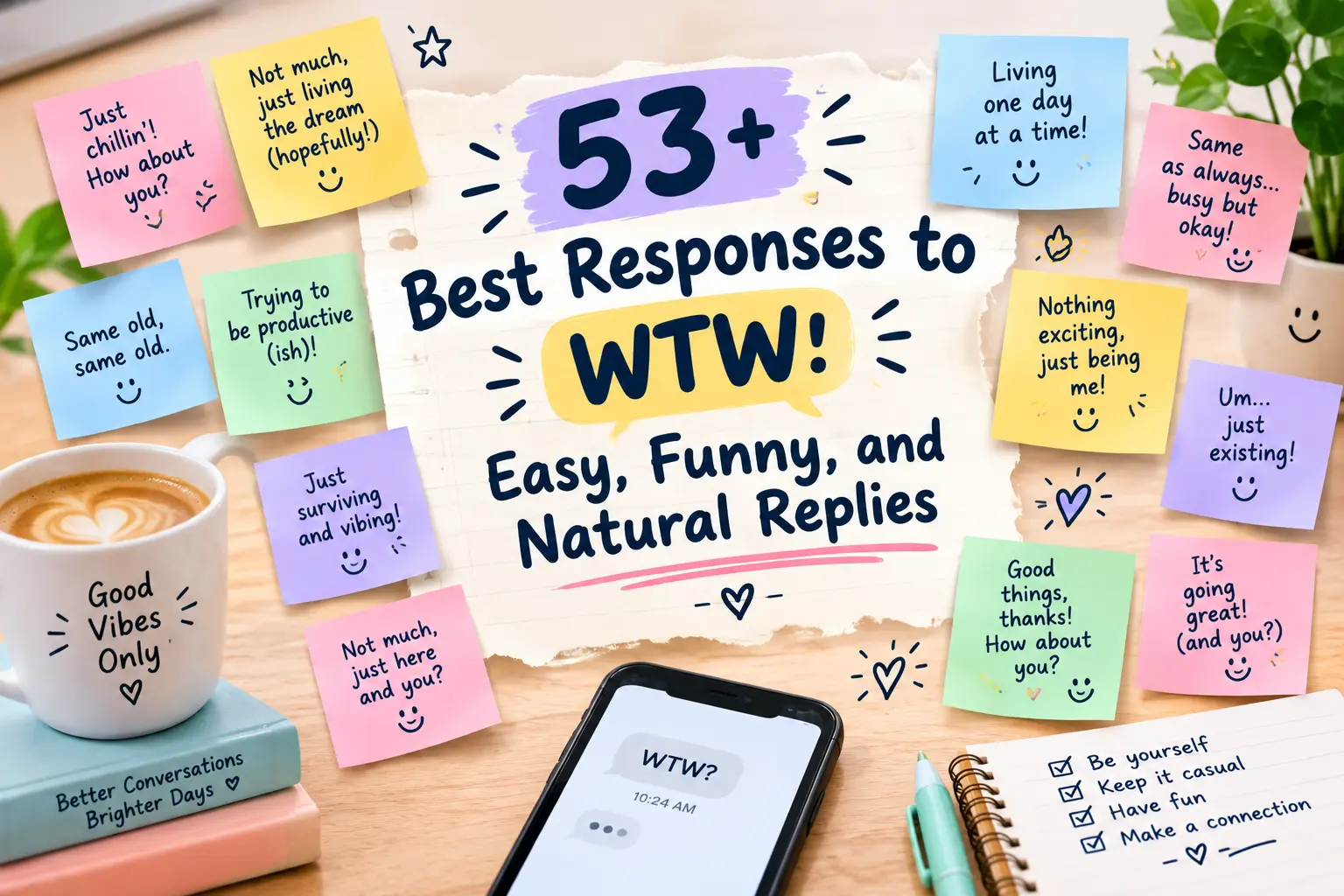
Have you ever received a text that simply says, “WTW?”
It is short, but it can leave you wondering what to say next.
WTW usually means “What’s the word?” In texting, it can also mean “What’s up?” or “What’s happening?”
The good news is that you do not need a complicated reply. A simple answer can keep the conversation going.
Your reply can be funny, friendly, confident, or casual. It all depends on who sent the message and the mood of the chat.
In this guide, you will find 53+ best responses to WTW. Each one comes with a simple example so you can easily choose the right reply.
What Does WTW Mean?
WTW is a common texting abbreviation.
Most of the time, it means “What’s the word?” It is another way to ask what is happening or what you are doing.
For example:
Person: “WTW?”
You: “Not much. Just relaxing.”
In some conversations, WTW can also mean “What’s up?” or “What’s the way?” The meaning depends on the context.
If you are not sure what the person means, you can simply ask.
Example: “WTW as in what’s up?”
When Should You Use a Response to WTW?
You can reply to WTW in many situations.
You might be talking to a close friend. You might also be starting a conversation with someone from school or work.
The best response depends on your relationship with the person.
A casual reply works well with friends. A polite reply is better for someone you do not know well.
Is WTW Polite or Professional?
WTW is mainly a casual texting phrase.
It is fine for friends, classmates, and casual conversations. However, it may not be the best choice for a formal email or professional message.
In a work setting, use a clearer phrase such as:
- “What’s the update?”
- “How are things going?”
- “What’s happening?”
- “Do you have any updates?”
Here are simple replies you can use in different situations.
1. “Not much, what about you?”
Meaning: You are saying that nothing special is happening.
Example:
“Not much, what about you? How’s your day going?”
Why use it: It is simple and keeps the conversation moving.
2. “Nothing much. You?”
This is one of the easiest replies.
Example:
“Nothing much. You? What are you up to?”
Why use it: It sounds natural and works in almost any casual chat.
3. “Just chilling.”
You can use this when you are relaxing.
Example:
“Just chilling at home. What about you?”
Why use it: It is short and friendly.
4. “Just getting through the day.”
This works when your day has been tiring.
Example:
“Just getting through the day. It has been a long one.”
Why use it: It sounds honest without being too serious.
5. “Just studying.”
Use this when you are busy with school or university work.
Example:
“Just studying for tomorrow’s test.”
Why use it: It gives the other person something to ask about.
6. “Just working on a few things.”
This is a good reply when you are busy.
Example:
“Just working on a few things. I’ll be free later.”
Why use it: It sounds natural and does not give too much detail.
7. “Just relaxing.”
Keep it simple when you are having a quiet day.
Example:
“Just relaxing after a busy morning.”
Why use it: It is friendly and easy.
8. “Nothing exciting yet.”
This reply can make the conversation more playful.
Example:
“Nothing exciting yet. Maybe that will change soon.”
Why use it: It leaves room for the other person to continue the chat.
9. “Waiting for something interesting to happen.”
This is a fun way to answer.
Example:
“Waiting for something interesting to happen. Any ideas?”
Why use it: It invites the other person to suggest something.
10. “Trying to decide what to do.”
Use this when you have no plans.
Example:
“Trying to decide what to do tonight.”
Why use it: It can naturally lead to making plans.
11. “Just taking it easy.”
This means you are having a relaxed time.
Example:
“Just taking it easy after class.”
Why use it: It sounds casual and friendly.
12. “Same old, same old.”
This means nothing new is happening.
Example:
“Same old, same old. School and assignments.”
Why use it: It is a short and familiar response.
13. “You tell me.”
Turn the question back to them.
Example:
“You tell me. What’s happening with you?”
Why use it: It works well when you want them to start the conversation.
14. “What’s the plan?”
This is useful when you think they may have something in mind.
Example:
“What’s the plan for today?”
Why use it: It can quickly turn a random text into a real conversation.
15. “What’s happening?”
You can answer WTW with another casual question.
Example:
“What’s happening? Anything interesting?”
Why use it: It keeps the tone relaxed.
16. “Just here, surviving.”
This is a playful response to a busy day.
Example:
“Just here, surviving another Monday.”
Why use it: It adds a little humor without trying too hard.
17. “Trying to stay productive.”
Use this when you are working on something.
Example:
“Trying to stay productive instead of scrolling.”
Why use it: It sounds casual and relatable.
18. “Just finished my work.”
This gives the other person a clear topic.
Example:
“Just finished my work. Finally free.”
Why use it: They can easily ask what you were working on.
19. “Finally free.”
Use this when you have just become available.
Example:
“Finally free. What’s up?”
Why use it: It can quickly lead to plans or a longer chat.
20. “I was about to ask you the same thing.”
This is a clever response.
Example:
“I was about to ask you the same thing. What are you doing?”
Why use it: It creates a playful back-and-forth.
21. “Nothing yet. Got any ideas?”
Use this when you want suggestions.
Example:
“Nothing yet. Got any ideas for tonight?”
Why use it: It encourages the other person to keep talking.
22. “Waiting for your update.”
This is a playful way to respond.
Example:
“Waiting for your update. What’s going on?”
Why use it: It puts the conversation back in their hands.
23. “The usual.”
This is a very short reply.
Example:
“The usual. Work, food, and sleep.”
Why use it: It works well with people who already know you.
24. “Living the usual routine.”
This gives a little more information.
Example:
“Living the usual routine. Classes all day.”
Why use it: It sounds relaxed and natural.
25. “Busy, but I’m surviving.”
This works when you have had a hectic day.
Example:
“Busy, but I’m surviving. How about you?”
Why use it: It is honest but still light.
26. “Just enjoying some quiet time.”
Use this when you want a peaceful conversation.
Example:
“Just enjoying some quiet time at home.”
Why use it: It sounds calm and friendly.
27. “Currently doing absolutely nothing.”
This is a funny option.
Example:
“Currently doing absolutely nothing. It’s going great.”
Why use it: The humor makes a simple answer more interesting.
28. “Trying to figure that out myself.”
Use this when you have no idea what is happening.
Example:
“Trying to figure that out myself. Any suggestions?”
Why use it: It is casual and invites a response.
29. “Depends. What did you have in mind?”
This is useful when you think they may want to make plans.
Example:
“Depends. What did you have in mind?”
Why use it: It gets straight to the point.
30. “I’m free. What’s up?”
This is great when you are available to talk.
Example:
“I’m free now. What’s up?”
Why use it: It clearly shows that you are open to a conversation.
31. “Not much. Just catching up on things.”
Use this when you have small tasks to finish.
Example:
“Not much. Just catching up on things I missed.”
Why use it: It sounds natural without being too detailed.
32. “Just taking a break.”
This is useful when you are busy.
Example:
“Just taking a break from studying.”
Why use it: It gives the other person an easy topic.
33. “Trying not to fall asleep.”
Use this when you are tired.
Example:
“Trying not to fall asleep during this lecture.”
Why use it: It adds humor to an ordinary update.
34. “Just waiting for the day to end.”
This works after a tiring day.
Example:
“Just waiting for the day to end. I’m exhausted.”
Why use it: It sounds honest and relatable.
35. “Nothing much. Tell me something interesting.”
This is a great conversation starter.
Example:
“Nothing much. Tell me something interesting.”
Why use it: It gives the other person a clear way to continue.
36. “What makes you ask?”
Use this when you want to know why they are texting.
Example:
“What makes you ask? Something happening?”
Why use it: It adds curiosity to the conversation.
37. “That depends. What’s going on?”
This works when the question feels like it has a reason behind it.
Example:
“That depends. What’s going on?”
Why use it: It keeps the conversation open.
38. “Waiting for the weekend.”
This is perfect after a busy week.
Example:
“Waiting for the weekend already.”
Why use it: It is simple and relatable.
39. “Trying to survive my schedule.”
This is a funny answer for a packed day.
Example:
“Trying to survive my schedule. It’s been crazy.”
Why use it: It adds personality to your reply.
40. “Just doing my thing.”
This is a confident and casual reply.
Example:
“Just doing my thing. What about you?”
Why use it: It sounds relaxed and self-assured.
41. “Nothing worth reporting.”
This gives your reply a dry sense of humor.
Example:
“Nothing worth reporting. Same routine.”
Why use it: It is short and slightly witty.
42. “Waiting for some good news.”
Use this when you are hoping for something positive.
Example:
“Waiting for some good news today.”
Why use it: It can encourage the other person to ask more.
43. “Just enjoying the moment.”
This is a calm and positive answer.
Example:
“Just enjoying the moment and taking a break.”
Why use it: It sounds thoughtful without being too formal.
44. “Nothing planned yet.”
Use this when your schedule is open.
Example:
“Nothing planned yet. Why?”
Why use it: It can quickly lead to a plan.
45. “You tell me what’s happening.”
This is a simple way to turn the question around.
Example:
“You tell me what’s happening. I’m listening.”
Why use it: It keeps the conversation focused on them.
46. “Just waiting for your message.”
This is a playful reply.
Example:
“Just waiting for your message, apparently.”
Why use it: It adds personality while staying casual.
47. “Nothing much. What’s new?”
Use this when you have not talked for a while.
Example:
“Nothing much. What’s new with you?”
Why use it: It can restart an old conversation naturally.
48. “Just catching my breath after today.”
Use this after a busy day.
Example:
“Just catching my breath after today. It was hectic.”
Why use it: It explains why you may be slow to reply.
49. “Trying to plan my next move.”
This is a slightly mysterious answer.
Example:
“Trying to plan my next move. Why?”
Why use it: It can make the conversation more interesting.
50. “Waiting for something fun.”
This is a good option when you are bored.
Example:
“Waiting for something fun to happen.”
Why use it: It can encourage the other person to suggest something.
51. “Just scrolling and pretending to be productive.”
This is a funny modern reply.
Example:
“Just scrolling and pretending to be productive.”
Why use it: It is relatable and easy to send.
52. “Currently accepting interesting plans.”
Use this when you are open to doing something.
Example:
“Currently accepting interesting plans for tonight.”
Why use it: It gives the other person an opening to suggest an idea.
53. “You tell me. What’s the word?”
This mirrors their original message.
Example:
“You tell me. What’s the word?”
Why use it: It creates a playful response without overthinking it.
54. “Just waiting for you to make the conversation interesting.”
This is a teasing response.
Example:
“Just waiting for you to make the conversation interesting.”
Why use it: It works when you already have a relaxed friendship.
55. “Same planet, different day.”
This is a creative way to say nothing much is happening.
Example:
“Same planet, different day. What about you?”
Why use it: It gives a basic reply a little personality.
56. “Nothing crazy. What’s going on?”
This is a simple all-purpose reply.
Example:
“Nothing crazy. What’s going on with you?”
Why use it: It sounds natural and works in most casual chats.
Real-Life Situations
The best response to WTW depends on the situation.
If your friend sends “WTW?” while you are free, you can say:
“I’m free. What’s the plan?”
If you are studying, try:
“Just studying. I’ll be free later.”
If you are bored, you can say:
“Nothing much. Got any ideas?”
If you are busy, keep it short:
“A little busy right now. I’ll text you later.”
If you want to start a longer conversation, try:
“Nothing much. What’s new with you?”
These replies work because they give the other person something to respond to.
What Should You Avoid When Replying to WTW?
You do not need to overthink a short text.
Avoid sending a long explanation when a simple answer will work.
For example, you do not need to explain your entire day when someone simply asks, “WTW?”
You should also avoid replies that completely end the conversation.
A response like “Nothing” may make the chat stop.
Instead, try:
“Nothing much. What about you?”
One small question can keep the conversation going.
Pro Tips for Better WTW Replies
Keep your reply close to the other person’s tone.
If they are casual, you can be casual too.
If they are joking, add a little humor.
If you are busy, be honest instead of forcing a conversation.
You can also use WTW as a chance to start a new topic.
For example:
“Not much. Did you finish that project?”
This turns a simple text into a real conversation.
Most importantly, do not feel like you need the perfect response. Natural replies usually work better than complicated ones.
Conclusion
The best responses to “WTW” are not necessarily the funniest or most clever ones. They are the replies that match your personality and give the conversation somewhere to go. You can keep things simple with “Just chilling. You?” or make them more playful with “Currently negotiating with my motivation.”
The important thing is to understand the context. If you want plans, say so. If you are busy, be honest. If you want to keep chatting, give the other person an opening.
Discover more
how to respond to gracias amigo