
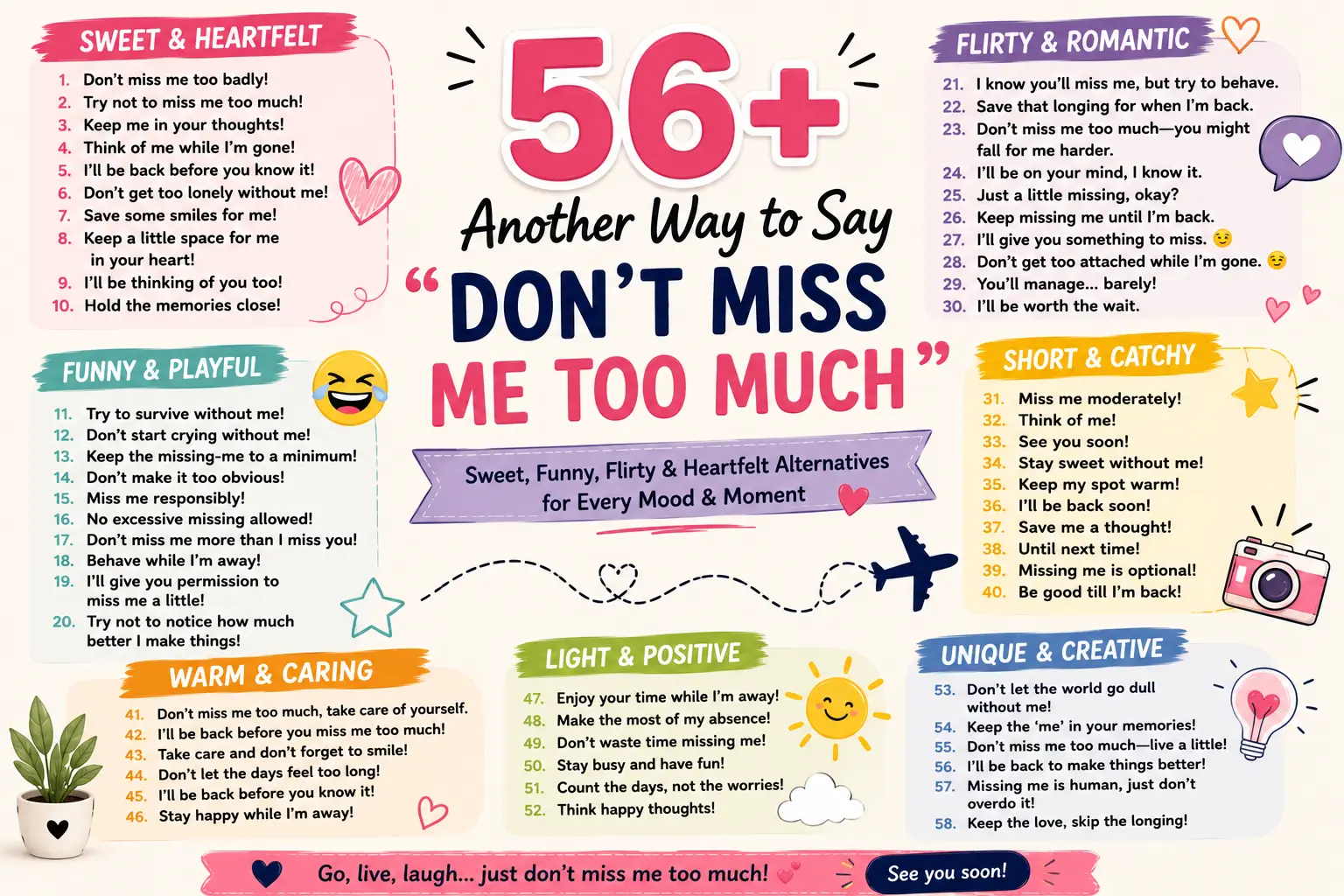
Leaving someone for a while does not always have to end with a simple “goodbye.” Sometimes, a playful “Don’t miss me too much” adds warmth, humor, and personality to the farewell. Whether you’re heading home after spending time with friends, leaving for a trip, ending a conversation, or simply teasing someone, the right alternative can make your message feel more natural.
Finding another way to say “Don’t miss me too much” also gives you the opportunity to match your words to the situation. You might want to sound funny, sweet, confident, casual, or thoughtful. Instead of repeating the same phrase, choosing a creative alternative can make ordinary conversations more memorable and expressive.
In this guide, you’ll discover 56+ ways to say “Don’t miss me too much”, along with meanings, tones, examples, and practical explanations.
What Does “Don’t Miss Me Too Much” Mean?
“Don’t miss me too much” is a playful or affectionate expression typically used when saying goodbye or temporarily leaving someone.
It usually means, “I know you might miss me, but try not to miss me excessively.” The phrase often carries a lighthearted, teasing, or warm emotional tone rather than being a serious request.
For example:
“I’m heading home now. Don’t miss me too much!”
Depending on the relationship, it can sound humorous, confident, sentimental, or gently teasing. The meaning also depends heavily on context and delivery.
When to Use “Don’t Miss Me Too Much”
The phrase is most natural in casual and personal conversations, but there are many situations where creative alternatives can work.
1. With Friends
Use it when leaving after spending time together.
“I’m heading home. Don’t miss me too much!”
2. Before a Trip
It can make a goodbye feel playful rather than overly emotional.
“See you next week—don’t miss me too much!”
3. In Text Messages
A short alternative can add personality to a goodbye.
“Try not to notice my absence too much!”
4. With Classmates
You can use a lighthearted version when you’re going somewhere for a while.
“I’ll see you after the break. Try not to miss me!”
5. On Social Media
A witty variation can work as a caption when announcing your temporary absence.
“Taking a little break. Try not to miss me too much.”
6. In Workplace Conversations
The original phrase is usually too personal for formal business communication. Instead, choose something neutral such as:
“I’ll see everyone when I’m back.”
7. In Emails
For professional emails, avoid overly sentimental wording. A simple closing works better:
“I look forward to catching up when I return.”
Is “Don’t Miss Me Too Much” Polite or Professional?
“Don’t miss me too much” is generally polite, but it is informal and playful rather than professional.
It works best with friends, classmates, family members, or people you know well. In professional environments, particularly when speaking with clients, managers, or formal contacts, a more neutral farewell is usually appropriate.
For example, instead of:
“Don’t miss me too much!”
you could say:
“I look forward to seeing you when I return.”
The original phrase can also sound slightly self-confident or teasing, which is exactly why it works well in casual conversations. However, your relationship with the listener matters. A playful phrase may feel charming between friends but inappropriate in a formal setting.
1. Try Not to Miss Me Too Much
Meaning: A direct but slightly softer version of the original phrase.
Tone: Playful, friendly
“I’ll be back soon, so try not to miss me too much.”
Why use it: This is an easy alternative when you want to keep the same playful meaning.
Purpose and Personalization: Ideal for casual conversations and friendly goodbyes.
2. Save Some Missing for Later
Meaning: A humorous way of suggesting that the other person should not miss you excessively.
Tone: Funny, playful
“I’ll only be gone for a few days, so save some missing for later.”
Why use it: Use this when you want your goodbye to sound witty.
Purpose and Personalization: Particularly fun in casual texts.
3. Keep the Missing to a Minimum
Meaning: A humorous request not to miss you excessively.
Tone: Witty, teasing
“I’ll see you soon, so please keep the missing to a minimum.”
Why use it: Great when you enjoy dry or playful humor.
Purpose and Personalization: Adds a mock-formal twist to an otherwise casual goodbye.
4. Try to Cope Without Me
Meaning: A playful exaggeration suggesting your absence will be noticed.
Tone: Funny, confident
“I’ll be gone for the weekend, so try to cope without me.”
Why use it: Perfect for lighthearted conversations.
Purpose and Personalization: Works especially well with people who appreciate sarcasm.
5. Don’t Let My Absence Get to You
Meaning: A playful way of saying that the person should not become too affected by your absence.
Tone: Teasing, confident
“I’ll be away for a few days, so don’t let my absence get to you.”
Why use it: Good when you want something more expressive than the original phrase.
Purpose and Personalization: Suitable for friends and casual conversations.
6. I’ll Be Back Before You Know It
Meaning: Reassures someone that the separation will not last long.
Tone: Reassuring, warm
“I’m heading out for a few days, but I’ll be back before you know it.”
Why use it: Use this when you want to focus more on reassurance than teasing.
Purpose and Personalization: A warm choice for everyday goodbyes.
7. Keep Yourself Busy While I’m Gone
Meaning: A playful suggestion that the other person should stay occupied during your absence.
Tone: Friendly, humorous
“Keep yourself busy while I’m gone—I’ll see you soon.”
Why use it: Works well in relaxed conversations.
Purpose and Personalization: Adds humor without sounding overly sentimental.
8. I Won’t Be Gone for Long
Meaning: You are reassuring the other person that your absence is temporary.
Tone: Warm, reassuring
“Don’t worry, I won’t be gone for long.”
Why use it: Best when you want to sound considerate.
Purpose and Personalization: A simple alternative for a sincere goodbye.
9. Save the Dramatic Welcome for When I Return
Meaning: Jokingly suggests that the other person should wait to celebrate your return.
Tone: Funny, playful
“I’ll only be away for three days, so save the dramatic welcome for when I return.”
Why use it: Great for humorous friendships.
Purpose and Personalization: Gives your farewell a theatrical, entertaining touch.
10. I’ll Try Not to Be Gone Too Long
Meaning: You acknowledge that your absence may be noticed.
Tone: Warm, thoughtful
“I’ll try not to be gone too long. Take care!”
Why use it: A gentler alternative when you want to sound considerate.
Purpose and Personalization: Suitable for both casual and semi-formal situations.
11. Don’t Get Too Used to Me Being Away
Meaning: A playful reminder that you’ll return soon.
Tone: Teasing, confident
“I’ll be back next week, so don’t get too used to me being away.”
Why use it: Perfect for friendly goodbyes.
Purpose and Personalization: Adds a confident, playful edge.
12. I’ll Leave You to Survive Without Me
Meaning: A humorous exaggeration about your importance.
Tone: Funny, sarcastic
“I’m heading out now. I’ll leave you to survive without me.”
Why use it: Best with friends who understand your humor.
Purpose and Personalization: Makes an ordinary goodbye much more entertaining.
13. Keep the Nostalgia Under Control
Meaning: A humorous suggestion not to become overly sentimental about your absence.
Tone: Witty, playful
“I’ll only be gone for a week, so keep the nostalgia under control.”
Why use it: Works well when you want an unusual expression.
Purpose and Personalization: Great for witty text messages.
14. I’ll Be Back Soon Enough
Meaning: Reassures someone that they won’t have to wait long.
Tone: Calm, reassuring
“Enjoy your week—I’ll be back soon enough.”
Why use it: Use this when you want a relaxed farewell.
Purpose and Personalization: Works in both casual conversations and messages.
15. Keep Calm Until I’m Back
Meaning: Playfully suggests that your return is worth waiting for.
Tone: Funny, confident
“Keep calm until I’m back!”
Why use it: A short, catchy alternative for casual messages.
Purpose and Personalization: Great for captions and quick texts.
16. I’ll See You Before You Start Missing Me
Meaning: You jokingly promise to return before your absence becomes noticeable.
Tone: Playful, warm
“I’ll see you before you start missing me.”
Why use it: Perfect for a short absence.
Purpose and Personalization: Combines reassurance with gentle humor.
17. Don’t Make My Absence Too Obvious
Meaning: A humorous way of saying that you expect to be missed.
Tone: Witty, teasing
“I’ll be away this weekend, so don’t make my absence too obvious.”
Why use it: Great for playful conversations.
Purpose and Personalization: Adds personality to a standard goodbye.
18. Remember, I’m Only Temporarily Gone
Meaning: You remind someone that your absence won’t last forever.
Tone: Reassuring, thoughtful
“Remember, I’m only temporarily gone. I’ll see you soon.”
Why use it: Good when you want your goodbye to feel reassuring.
Purpose and Personalization: A gentle alternative for meaningful farewells.
19. Keep My Seat Warm
Meaning: A playful request to save your place until you return.
Tone: Friendly, humorous
“I’ll see you next week—keep my seat warm!”
Why use it: Useful when you are leaving a group or familiar place temporarily.
Purpose and Personalization: Creates a sense of continuity.
20. I Expect a Proper Welcome Back
Meaning: You jokingly suggest that your return deserves attention.
Tone: Playful, confident
“I’ll be back Friday, and I expect a proper welcome back.”
Why use it: Great for friendly group conversations.
Purpose and Personalization: Adds humor to the anticipation of returning.
21. Try Not to Notice I’m Gone
Meaning: A playful way to suggest that your absence might be noticeable.
Tone: Teasing, casual
“I’ll be gone for a couple of days, so try not to notice I’m gone.”
Why use it: Works well when you want a lighthearted goodbye.
Purpose and Personalization: Particularly effective in friendly chats.
22. Keep the Memories Fresh Until I Return
Meaning: Encourages someone to remember the good times until you meet again.
Tone: Warm, sentimental
“Keep the memories fresh until I return.”
Why use it: Suitable when you want something more thoughtful.
Purpose and Personalization: Works for meaningful farewells without sounding overly dramatic.
23. I’ll Be Back Before the Silence Gets Too Loud
Meaning: A creative way to suggest that your absence may be noticeable.
Tone: Poetic, thoughtful
“I’ll be back before the silence gets too loud.”
Why use it: Ideal for a more expressive goodbye.
Purpose and Personalization: Gives your message a slightly poetic quality.
24. Don’t Let My Absence Ruin the Fun
Meaning: You jokingly suggest that your presence contributes to the fun.
Tone: Funny, confident
“Don’t let my absence ruin the fun!”
Why use it: Great for groups of friends.
Purpose and Personalization: Adds playful confidence to your farewell.
25. I’ll Be Back in No Time
Meaning: You reassure the person that your absence will be brief.
Tone: Friendly, reassuring
“Take care—I’ll be back in no time.”
Why use it: A natural choice for short separations.
Purpose and Personalization: Simple and versatile.
26. Keep Things Interesting Until I Return
Meaning: Encourages the other person to enjoy themselves while you are away.
Tone: Friendly, upbeat
“Keep things interesting until I return!”
Why use it: Works well when leaving a group or social setting.
Purpose and Personalization: Keeps the farewell positive.
27. I’ll Leave You to Miss Me in Peace
Meaning: A deliberately dramatic and humorous way of saying goodbye.
Tone: Sarcastic, playful
“Alright, I’ll leave you to miss me in peace.”
Why use it: Perfect for people who enjoy exaggerated humor.
Purpose and Personalization: Best kept for casual relationships.
28. Don’t Get Too Sentimental
Meaning: A playful warning not to become overly emotional about your departure.
Tone: Teasing, casual
“I’ll see you next week, so don’t get too sentimental.”
Why use it: Works well when you want to lighten a farewell.
Purpose and Personalization: Great for friends and classmates.
29. Keep the Countdown to My Return Going
Meaning: Encourages someone to look forward to your return.
Tone: Playful, upbeat
“Keep the countdown to my return going!”
Why use it: Suitable for longer trips or planned absences.
Purpose and Personalization: Makes the goodbye feel energetic rather than sad.
30. I’ll Be Back Before You Can Complain
Meaning: You jokingly suggest that your absence will be short.
Tone: Funny, teasing
“I’ll be back before you can complain about me being gone.”
Why use it: Great for close friends.
Purpose and Personalization: Adds playful banter to your goodbye.
Sweet and Thoughtful Alternatives
31. I’ll See You Again Soon
Meaning: A simple reassurance that you’ll meet again.
Tone: Warm, sincere
“Take care. I’ll see you again soon.”
Why use it: Choose this when you want a genuine but simple farewell.
Purpose and Personalization: Suitable for almost any personal goodbye.
32. Until We Meet Again
Meaning: A graceful way to say goodbye until the next meeting.
Tone: Elegant, warm
“Take care, and until we meet again.”
Why use it: Best when you want your farewell to sound polished.
Purpose and Personalization: Works particularly well in meaningful conversations.
33. I’ll Be Thinking of You Too
Meaning: You return the sentiment and acknowledge that the other person may miss you.
Tone: Warm, caring
“I’ll be thinking of you too while I’m away.”
Why use it: A sincere alternative when you want to reciprocate warmth.
Purpose and Personalization: Suitable for people you care about.
34. Take Care Until I’m Back
Meaning: You encourage the person to look after themselves while you’re away.
Tone: Caring, gentle
“Take care until I’m back. See you soon!”
Why use it: A warm and natural goodbye.
Purpose and Personalization: Works well in messages and conversations.
35. I’ll See You on the Other Side of This Goodbye
Meaning: A creative way of emphasizing that the goodbye is temporary.
Tone: Thoughtful, expressive
“Take care—I’ll see you on the other side of this goodbye.”
Why use it: Best for a more meaningful farewell.
Purpose and Personalization: Gives an ordinary goodbye a memorable quality.
36. Until Next Time
Meaning: A concise way of saying you’ll meet again.
Tone: Friendly, polished
“Have a great week. Until next time!”
Why use it: Works in many casual and semi-formal situations.
Purpose and Personalization: Short, natural, and versatile.
37. Keep Smiling Until I’m Back
Meaning: Encourages someone to stay positive while you’re away.
Tone: Sweet, uplifting
“Keep smiling until I’m back!”
Why use it: Great for a cheerful farewell.
Purpose and Personalization: Adds positivity to your goodbye.
38. I’ll Be Back Before You Know It
Meaning: Reassures someone that the wait will be short.
Tone: Warm, reassuring
“Don’t worry, I’ll be back before you know it.”
Why use it: Ideal when someone seems reluctant to say goodbye.
Purpose and Personalization: Keeps the mood optimistic.
39. Save Our Conversation for When I’m Back
Meaning: Suggests continuing the conversation later.
Tone: Friendly, thoughtful
“Save the rest of that story for when I’m back.”
Why use it: Great when leaving in the middle of a conversation.
Purpose and Personalization: Creates something to look forward to.
40. We’ll Pick Up Right Where We Left Off
Meaning: Reassures someone that your connection or conversation can continue after the break.
Tone: Warm, reassuring
“Enjoy your week—we’ll pick up right where we left off.”
Why use it: Useful when you’re temporarily stepping away.
Purpose and Personalization: Works especially well for friends, classmates, and teammates.
Funny Responses and Playful Alternatives
41. Try to Manage Without My Commentary
Meaning: Jokingly suggests that your presence—and opinions—will be missed.
Tone: Sarcastic, funny
“I’ll be gone tomorrow, so try to manage without my commentary.”
Why use it: Perfect for playful friendships.
Purpose and Personalization: Adds personality without being overly sentimental.
42. I’m Giving You a Temporary Break From Me
Meaning: You jokingly frame your absence as a benefit.
Tone: Humorous, teasing
“I’m giving you a temporary break from me. Enjoy it!”
Why use it: Great for lighthearted conversations.
Purpose and Personalization: Turns the goodbye into a joke.
43. Enjoy the Peace While It Lasts
Meaning: Humorously suggests your return will end the peaceful period.
Tone: Funny, teasing
“Enjoy the peace while it lasts—I’ll be back soon.”
Why use it: Ideal for playful banter.
Purpose and Personalization: Works especially well among friends.
44. I’ll Try Not to Become a Distant Memory
Meaning: A humorous exaggeration about being away.
Tone: Playful, witty
“I’ll only be gone for a week, so I’ll try not to become a distant memory.”
Why use it: Good for a more creative farewell.
Purpose and Personalization: Adds humor with a slightly sentimental touch.
45. Don’t Start Counting the Minutes
Meaning: Jokingly suggests that someone might eagerly await your return.
Tone: Playful, confident
“I’ll see you Friday, so don’t start counting the minutes.”
Why use it: Works well in casual conversations.
Purpose and Personalization: A confident alternative with a teasing edge.
46. I’ll Give You Time to Appreciate My Absence
Meaning: Humorously suggests that your absence will make your presence more noticeable.
Tone: Sarcastic, witty
“I’ll give you time to appreciate my absence.”
Why use it: Best with people who enjoy playful sarcasm.
Purpose and Personalization: Adds a clever twist to a goodbye.
47. Don’t Miss the Chaos Too Much
Meaning: Suggests that your presence brings some entertaining chaos.
Tone: Funny, casual
“I’ll be away this weekend—don’t miss the chaos too much.”
Why use it: Great for a playful group dynamic.
Purpose and Personalization: Especially suitable when you’re known for being energetic or humorous.
48. I’ll Be Back to Disturb the Peace Soon
Meaning: Jokingly suggests your return will bring your usual energy back.
Tone: Funny, playful
“Enjoy the quiet—I’ll be back to disturb the peace soon.”
Why use it: Perfect for close friends or classmates.
Purpose and Personalization: Turns a goodbye into a memorable joke.
49. Try Not to Make a Big Deal About My Absence
Meaning: A humorous way of suggesting that people should not become overly emotional.
Tone: Teasing, confident
“I’ll be gone for a few days, so try not to make a big deal about my absence.”
Why use it: Works best in casual conversations.
Purpose and Personalization: Gives your farewell a playful attitude.
50. I’ll Be Back Before the Group Chat Gets Boring
Meaning: Jokingly suggests that your presence keeps the conversation entertaining.
Tone: Funny, modern
“I’ll be back before the group chat gets boring.”
Why use it: Great for friends and group chats.
Purpose and Personalization: Particularly suited to casual digital communication.
Professional Alternatives for a Temporary Goodbye
51. I Look Forward to Seeing You Again
Meaning: Expresses positive anticipation for the next meeting.
Tone: Professional, warm
“Thank you for your time. I look forward to seeing you again.”
Why use it: An excellent professional alternative.
Purpose and Personalization: Suitable for coworkers, clients, and professional contacts.
52. I’ll See You When I Return
Meaning: Clearly communicates that the separation is temporary.
Tone: Professional, neutral
“I’ll see you when I return next week.”
Why use it: Good for workplace conversations.
Purpose and Personalization: Keeps the farewell simple and appropriate.
53. I Look Forward to Catching Up When I’m Back
Meaning: Shows that you expect to reconnect after your absence.
Tone: Professional, friendly
“I look forward to catching up when I’m back.”
Why use it: Ideal for colleagues and professional acquaintances.
Purpose and Personalization: Friendly without becoming overly personal.
54. Until We Connect Again
Meaning: A polished way to indicate that you’ll communicate again.
Tone: Professional, elegant
“Thank you again, and until we connect again.”
Why use it: Suitable for professional messages and correspondence.
Purpose and Personalization: Adds a refined touch to a standard farewell.
55. I’ll Be Back in Touch Soon
Meaning: Promises future communication.
Tone: Professional, reassuring
“I’ll be back in touch soon with an update.”
Why use it: Excellent for business emails and workplace messages.
Purpose and Personalization: Clear, direct, and professional.
56. I Hope We Can Catch Up Soon
Meaning: Expresses interest in reconnecting.
Tone: Warm, professional
“Have a great week. I hope we can catch up soon.”
Why use it: Works well with colleagues and acquaintances.
Purpose and Personalization: Friendly while maintaining professional boundaries.
57. I’ll Look Forward to Our Next Conversation
Meaning: Shows positive anticipation for future communication.
Tone: Formal, polished
“Thank you for the conversation. I’ll look forward to our next discussion.”
Why use it: Appropriate for formal professional interactions.
Purpose and Personalization: A sophisticated alternative when “miss me” would be inappropriate.
58. Until We Meet Again, Take Care
Meaning: Combines a farewell with a caring reminder.
Tone: Warm, polished
“Until we meet again, take care and have a wonderful week.”
Why use it: Suitable for both personal and semi-formal situations.
Purpose and Personalization: Gives a farewell a graceful finish.
59. I’ll Be Thinking of the Next Time We Meet
Meaning: Expresses anticipation for seeing someone again.
Tone: Thoughtful, warm
“I’ll be thinking of the next time we meet. Take care until then.”
Why use it: Useful when you want a sincere alternative.
Purpose and Personalization: More reflective than a typical casual goodbye.
60. Until My Return, Take Good Care
Meaning: A polished way to say goodbye while emphasizing that you’ll return.
Tone: Elegant, caring
“Until my return, take good care and enjoy your week.”
Why use it: Works well when you want something graceful and considerate.
Purpose and Personalization: A refined alternative that suits both personal and semi-formal farewells.
Quick Alternatives to “Don’t Miss Me Too Much”
If you need something short and natural, try:
- “Try not to miss me!”
- “See you soon!”
- “I’ll be back before you know it.”
- “Keep yourself busy while I’m gone.”
- “Until next time!”
- “Take care until I’m back.”
- “Save the welcome for when I return!”
- “Don’t get too sentimental!”
- “I’ll see you soon enough.”
- “Keep the missing under control!”
- “Enjoy the peace while it lasts!”
- “I’ll be back in no time.”
- “Keep my seat warm!”
- “Don’t make my absence too obvious.”
- “I’ll see you before you know it.”
How to Choose the Right Alternative
The best alternative depends on your relationship, the situation, and the tone you want to create.
For a close friend:
“Try to cope without me!”
For a funny goodbye:
“Enjoy the peace while it lasts!”
For a sweet farewell:
“Take care until I’m back.”
For a playful text:
“Save some missing for later.”
For a professional setting:
“I look forward to seeing you again.”
For a formal email:
“I look forward to catching up when I return.”
For a meaningful goodbye:
“Until we meet again.”
The goal isn’t to find the fanciest phrase. It’s to choose wording that sounds natural for you and appropriate for the person you’re talking to.
Conclusion
Finding another way to say “Don’t miss me too much” can turn an ordinary goodbye into something more personal, humorous, or memorable. From playful expressions like “Enjoy the peace while it lasts” to polished options such as “I look forward to seeing you again,” there is a response for almost every situation.
The key is to consider your relationship and the mood of the conversation before choosing your words. Experiment with different expressions, keep your personality in the message, and don’t be afraid to move beyond predictable goodbyes. The best alternatives feel effortless, genuine, and perfectly suited to the moment.
Discover more