

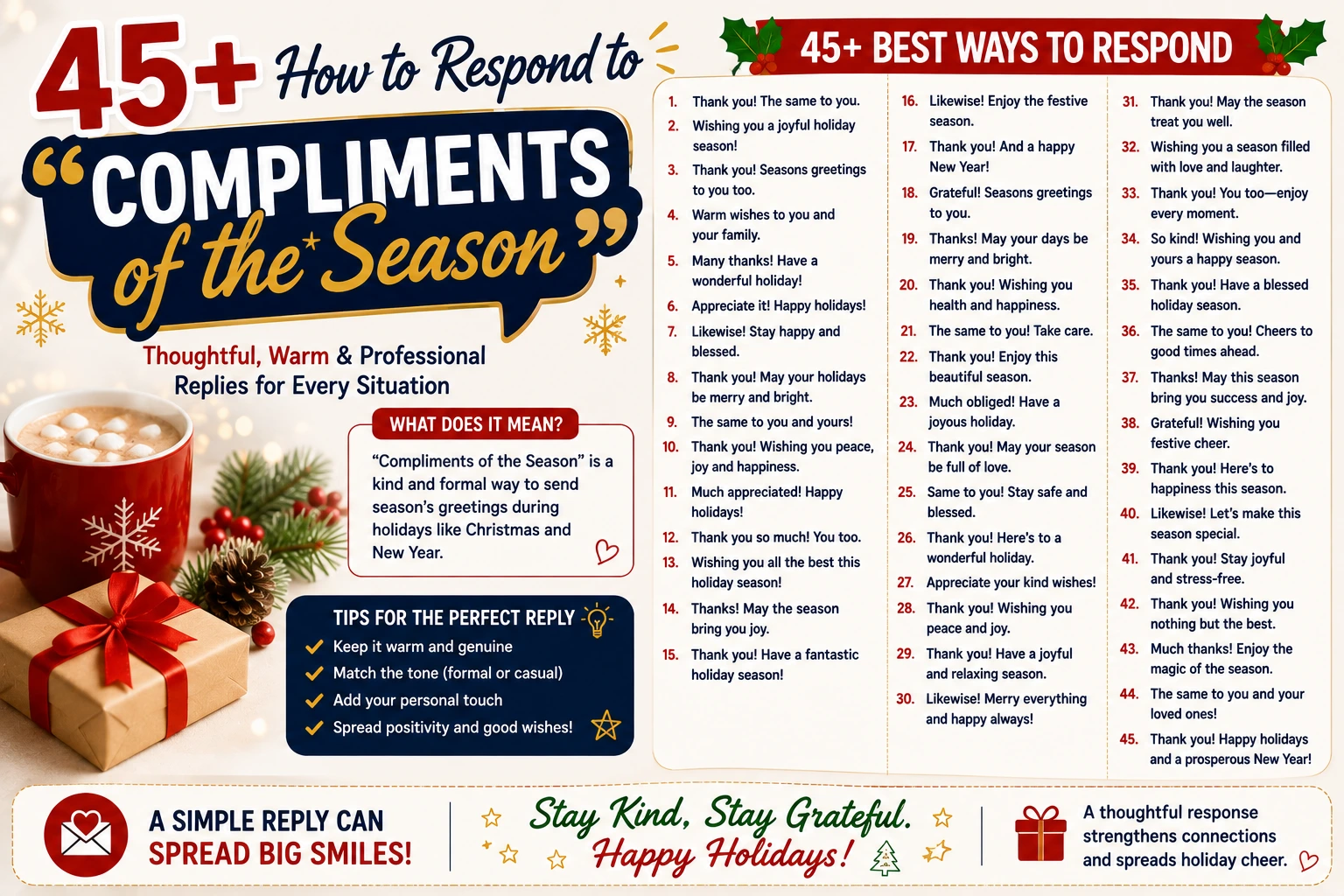
The holiday season brings plenty of warm greetings, but sometimes a simple “Compliments of the season!” can leave you wondering what to say next. Whether you hear it from a colleague, friend, client, teacher, or family member, knowing how to respond can make the conversation feel more natural and thoughtful.
“Compliments of the season” is a courteous way of extending good wishes during a festive or holiday period. Your response can be equally warm, professional, cheerful, or personal depending on who is speaking to you.
Instead of relying on the same “Thank you, you too!” every time, you can choose an expression that better matches the relationship and situation. Below, you’ll find 45+ ways to respond to compliments of the season, from polished workplace replies to friendly and heartfelt responses for people you know well.
What Does “How to Respond to Compliments of the Season” Mean?
“Compliments of the season” is a traditional expression used to offer someone warm wishes, happiness, and goodwill during a festive season or holiday period.
It is often used around Christmas, New Year, Eid, or other significant celebrations. The phrase has a warm and courteous tone and is especially common in professional communication, greeting cards, formal messages, and workplace conversations.
For example:
“Compliments of the season! Wishing you and your family a wonderful holiday.”
A natural response might be:
“Thank you! Compliments of the season to you and your family as well.”
The best response depends on the relationship. A colleague may appreciate a polished reply, while a close friend might prefer something more relaxed and personal.
When to Use “Compliments of the Season”
You can use or respond to this phrase in many different situations.
1. Workplace Conversations
It works well when greeting colleagues, managers, clients, or business partners.
Example:
“Thank you for the kind wishes. Compliments of the season to you too.”
2. Emails
The phrase is especially appropriate in professional holiday emails.
Example:
“Thank you for your thoughtful message. Wishing you a joyful and peaceful season as well.”
3. Social Media
You can respond casually when someone posts or comments seasonal wishes.
Example:
“Thank you so much! Wishing you a beautiful holiday season too!”
4. Family Messages
A warmer and more personal response works well with relatives.
Example:
“Thank you! May this season bring happiness, peace, and countless beautiful moments to our family.”
5. Speeches and Formal Events
The phrase can also appear in speeches, announcements, and official greetings.
Example:
“Thank you for your kind wishes. I extend the same warm greetings to everyone gathered here today.”
Is It Polite or Professional?
Yes. “Compliments of the season” is polite, respectful, and generally professional.
It can work particularly well in formal environments because it sounds courteous without being overly personal. Businesses often use similar seasonal greetings when communicating with customers, employees, partners, and clients.
However, the expression can sound somewhat traditional. In casual conversations, alternatives such as “Happy holidays!”, “Wishing you a wonderful season!”, or “Thank you! Same to you!” may feel more natural.
The key is to match your response to the person and situation. A professional setting calls for polished language, while a conversation with a close friend can be much more relaxed.
1. Thank you! Compliments of the season to you too.
Meaning: You are returning the same seasonal greeting.
Tone: Polite, warm, versatile.
“Thank you! Compliments of the season to you too. I hope you have a wonderful celebration.”
Why use it: This is the safest all-purpose response when you want something simple and respectful.
2. Thank you for your kind wishes.
Meaning: You appreciate the person’s seasonal greeting.
Tone: Formal, gracious.
“Thank you for your kind wishes. I truly appreciate them.”
Why use it: Ideal for professional emails, clients, teachers, or senior colleagues.
3. Wishing you the same and much happiness this season.
Meaning: You are returning their good wishes while adding warmth.
Tone: Warm, thoughtful.
“Wishing you the same and much happiness this season.”
Why use it: A polished alternative when you want your reply to sound more personal.
4. Many thanks, and warm wishes to you as well.
Meaning: You are expressing appreciation and returning the greeting.
Tone: Elegant, professional.
“Many thanks, and warm wishes to you as well during this festive season.”
Why use it: Particularly suitable for formal correspondence.
5. Thank you! Wishing you a joyful season too.
Meaning: You hope they enjoy the holiday period.
Tone: Friendly, cheerful.
“Thank you! Wishing you a joyful season too, filled with happiness and laughter.”
Why use it: A natural choice for friends, classmates, coworkers, and acquaintances.
6. Warmest wishes to you and your loved ones.
Meaning: You are extending heartfelt seasonal wishes to them and their family.
Tone: Heartfelt, respectful.
“Thank you for thinking of me. Warmest wishes to you and your loved ones.”
Why use it: Great when you want your response to feel sincere rather than routine.
7. Thank you! May your season be filled with happiness.
Meaning: You are wishing them a happy and positive holiday period.
Tone: Warm, thoughtful.
“Thank you! May your season be filled with happiness, peace, and wonderful memories.”
Why use it: Perfect for greeting cards and meaningful personal messages.
8. The same to you and your family.
Meaning: You are returning their wishes to them and their family.
Tone: Simple, warm.
“Thank you! The same to you and your family.”
Why use it: Short, natural, and appropriate when you do not want an elaborate response.
9. Thank you for the lovely seasonal wishes.
Meaning: You appreciate the thoughtful greeting.
Tone: Polished, friendly.
“Thank you for the lovely seasonal wishes. I hope you have a memorable celebration.”
Why use it: Works especially well in written communication.
10. Wishing you peace, joy, and prosperity this season.
Meaning: You are offering several positive wishes for the holiday period.
Tone: Formal, sophisticated.
“Thank you for your message. Wishing you peace, joy, and prosperity this season.”
Why use it: Excellent for professional greetings and business communication.
11. Thank you! I hope you have a wonderful holiday season.
Meaning: You appreciate their greeting and wish them well.
Tone: Friendly, natural.
“Thank you! I hope you have a wonderful holiday season with your family.”
Why use it: One of the most natural modern alternatives.
12. Your kind wishes are greatly appreciated.
Meaning: You sincerely value their greeting.
Tone: Formal, professional.
“Your kind wishes are greatly appreciated. I wish you a peaceful and successful season ahead.”
Why use it: Best suited to formal emails and professional relationships.
13. Thank you, and may the season bring you many blessings.
Meaning: You hope the season brings positive experiences and blessings.
Tone: Heartfelt, respectful.
“Thank you, and may the season bring you many blessings and beautiful moments.”
Why use it: Useful when speaking to someone with whom you share a warm or meaningful relationship.
14. Happy holidays to you too!
Meaning: You are returning the holiday greeting in a simple way.
Tone: Casual, cheerful.
“Thank you! Happy holidays to you too!”
Why use it: Perfect for everyday conversations and social media.
15. Thank you! Sending warm wishes your way.
Meaning: You are sending your own positive seasonal thoughts.
Tone: Friendly, affectionate.
“Thank you! Sending warm wishes your way and hoping you have a fantastic season.”
Why use it: Great for friends, acquaintances, and informal messages.
16. I sincerely appreciate your thoughtful wishes.
Meaning: You genuinely value the person’s message.
Tone: Formal, gracious.
“I sincerely appreciate your thoughtful wishes and extend my warmest greetings to you.”
Why use it: A refined option for professional correspondence.
17. Wishing you a season full of joy and wonderful memories.
Meaning: You hope they enjoy meaningful experiences.
Tone: Warm, sentimental.
“Thank you! Wishing you a season full of joy and wonderful memories.”
Why use it: Suitable for friends, relatives, and heartfelt cards.
18. Thank you! May your celebrations be bright and memorable.
Meaning: You are wishing them enjoyable celebrations.
Tone: Cheerful, elegant.
“Thank you! May your celebrations be bright and memorable.”
Why use it: A creative response when you want something more distinctive.
19. Many thanks! Wishing you all the best this season.
Meaning: You are returning good wishes while keeping the message concise.
Tone: Professional, friendly.
“Many thanks! Wishing you all the best this season and in the year ahead.”
Why use it: Great for workplace conversations and emails.
20. Thank you for remembering me during this special time.
Meaning: You appreciate that the person took time to send wishes.
Tone: Personal, heartfelt.
“Thank you for remembering me during this special time. Your message truly means a lot.”
Why use it: Best when you want to acknowledge the thought behind the greeting.
21. Warm wishes in return.
Meaning: You are politely returning their seasonal greeting.
Tone: Concise, elegant.
“Thank you for your message. Warm wishes in return.”
Why use it: Ideal for short emails, cards, and professional replies.
22. Thank you! May you enjoy a beautiful and peaceful season.
Meaning: You hope they experience peace and happiness.
Tone: Warm, graceful.
“Thank you! May you enjoy a beautiful and peaceful season with those closest to you.”
Why use it: Works well for personal and semi-formal messages.
23. Wishing you and yours a wonderful season.
Meaning: You are extending wishes to the person and their loved ones.
Tone: Warm, traditional.
“Thank you for your kind message. Wishing you and yours a wonderful season.”
Why use it: A charming alternative to a standard “you too.”
24. Thank you! I hope this season brings you plenty of happiness.
Meaning: You wish them emotional happiness during the holidays.
Tone: Friendly, sincere.
“Thank you! I hope this season brings you plenty of happiness and memorable moments.”
Why use it: Great for people you know personally.
25. Your wishes mean a great deal. Thank you.
Meaning: You are emphasizing your genuine appreciation.
Tone: Heartfelt, sincere.
“Your wishes mean a great deal. Thank you for such a thoughtful message.”
Why use it: Use this when you want your response to feel especially personal.
26. Thank you, and best wishes for the season ahead.
Meaning: You are returning their wishes while looking toward the future.
Tone: Professional, polished.
“Thank you for your kind greeting, and best wishes for the season ahead.”
Why use it: Excellent for business emails and professional networking.
27. Wishing you a festive season filled with laughter and love.
Meaning: You hope their celebrations are joyful and meaningful.
Tone: Warm, affectionate.
“Thank you! Wishing you a festive season filled with laughter and love.”
Why use it: Best for close friends and family.
28. Thank you! I hope you have a truly memorable celebration.
Meaning: You hope they have a special holiday experience.
Tone: Friendly, polished.
“Thank you! I hope you have a truly memorable celebration surrounded by people you love.”
Why use it: A natural response that feels warmer than simply saying “you too.”
29. Season’s greetings to you as well!
Meaning: You are returning their seasonal greeting.
Tone: Traditional, professional.
“Thank you for your thoughtful message. Season’s greetings to you as well!”
Why use it: Particularly useful in formal or business settings.
30. Thank you for your warm seasonal greeting.
Meaning: You acknowledge and appreciate their greeting.
Tone: Formal, courteous.
“Thank you for your warm seasonal greeting. Wishing you continued happiness and success.”
Why use it: A strong choice for professional correspondence.
31. May this season bring you peace and happiness.
Meaning: You are offering sincere wishes for their well-being.
Tone: Thoughtful, graceful.
“Thank you for your kind words. May this season bring you peace and happiness.”
Why use it: Ideal for meaningful personal messages.
32. Thank you! Sending you my very best wishes.
Meaning: You are returning the greeting with warmth.
Tone: Friendly, polished.
“Thank you! Sending you my very best wishes for a joyful season.”
Why use it: A versatile expression suitable for both personal and professional communication.
33. Wishing you a joyful celebration and a wonderful year ahead.
Meaning: You are wishing them well during the season and beyond it.
Tone: Optimistic, professional.
“Thank you for your wishes. Wishing you a joyful celebration and a wonderful year ahead.”
Why use it: Especially effective around the transition from one year to another.
34. Thank you! May your holidays be filled with beautiful moments.
Meaning: You hope they enjoy memorable experiences.
Tone: Warm, cheerful.
“Thank you! May your holidays be filled with beautiful moments and cherished memories.”
Why use it: A lovely choice for friends, relatives, or greeting cards.
35. I truly appreciate your thoughtful greeting.
Meaning: You sincerely value their message.
Tone: Gracious, professional.
“I truly appreciate your thoughtful greeting and wish you the very best this season.”
Why use it: Suitable when you want to sound sincere without being overly formal.
36. Thank you! Wishing you happiness today and throughout the season.
Meaning: You are offering an extended wish for happiness.
Tone: Warm, positive.
“Thank you! Wishing you happiness today and throughout the season.”
Why use it: Works well in personal texts and social media responses.
37. Your kind wishes are warmly returned.
Meaning: You are formally returning their good wishes.
Tone: Elegant, formal.
“Your kind wishes are warmly returned. May you enjoy a peaceful and prosperous season.”
Why use it: Best for formal letters, business messages, and ceremonial communication.
38. Thank you! Wishing you a season of joy, peace, and togetherness.
Meaning: You hope they enjoy meaningful time with others.
Tone: Heartfelt, uplifting.
“Thank you! Wishing you a season of joy, peace, and togetherness with your loved ones.”
Why use it: A thoughtful choice for family and close relationships.
39. Many thanks, and may the festive spirit stay with you.
Meaning: You hope the happiness of the season continues.
Tone: Creative, warm.
“Many thanks, and may the festive spirit stay with you throughout the season.”
Why use it: Use this when you want your response to feel a little more memorable.
40. Thank you! I hope this season treats you wonderfully.
Meaning: You hope they have a positive and enjoyable season.
Tone: Casual, friendly.
“Thank you! I hope this season treats you wonderfully and gives you plenty to celebrate.”
Why use it: A relaxed alternative for friends and casual acquaintances.
41. Wishing you abundant happiness and countless reasons to smile.
Meaning: You are wishing them deep happiness and positive experiences.
Tone: Inspirational, heartfelt.
“Thank you for your lovely wishes. Wishing you abundant happiness and countless reasons to smile.”
Why use it: Ideal when you want your response to feel especially warm.
42. Thank you! May your season be as wonderful as your wishes.
Meaning: You are creatively complimenting their greeting while returning it.
Tone: Playful, warm.
“Thank you! May your season be as wonderful as your wishes.”
Why use it: A memorable option for someone you know well.
43. I’m grateful for your thoughtful words. Wishing you the same.
Meaning: You appreciate their message and return the sentiment.
Tone: Sincere, versatile.
“I’m grateful for your thoughtful words. Wishing you the same and even more happiness this season.”
Why use it: Great when you want a personal response without sounding overly sentimental.
44. Thank you! Here’s to a season filled with happiness and hope.
Meaning: You are expressing optimism about the season.
Tone: Cheerful, motivational.
“Thank you! Here’s to a season filled with happiness, hope, and meaningful moments.”
Why use it: A lively choice for friends, coworkers, and social media.
45. Wishing you and your family a peaceful and prosperous season.
Meaning: You are extending positive wishes to their entire family.
Tone: Formal, respectful.
“Thank you for your kind wishes. Wishing you and your family a peaceful and prosperous season.”
Why use it: Particularly appropriate for professional contacts and respected acquaintances.
46. Thank you! May your celebrations be filled with warmth and happiness.
Meaning: You hope their celebrations are joyful and meaningful.
Tone: Warm, elegant.
“Thank you! May your celebrations be filled with warmth, happiness, and wonderful company.”
Why use it: A polished option for cards, emails, and personal messages.
47. Sending the warmest seasonal wishes right back to you!
Meaning: You are enthusiastically returning their greeting.
Tone: Cheerful, friendly.
“Thank you for the lovely message—sending the warmest seasonal wishes right back to you!”
Why use it: Perfect for casual messages and social media.
48. Thank you for your kind wishes. May the season bring you everything wonderful.
Meaning: You hope the season brings them happiness and positive experiences.
Tone: Heartfelt, elegant.
“Thank you for your kind wishes. May the season bring you everything wonderful.”
Why use it: A graceful response when you want to end the conversation on a warm note.
49. Wishing you a season of happiness, reflection, and new beginnings.
Meaning: You are looking beyond celebration toward personal growth and the future.
Tone: Reflective, motivational.
“Thank you for your thoughtful wishes. Wishing you a season of happiness, reflection, and new beginnings.”
Why use it: Especially fitting around New Year or other periods associated with fresh starts.
50. Thank you! May the coming days bring you joy, peace, and countless blessings.
Meaning: You are offering an extended and heartfelt seasonal wish.
Tone: Warm, sincere, uplifting.
“Thank you! May the coming days bring you joy, peace, and countless blessings.”
Why use it: A beautiful closing response for someone who has sent a particularly thoughtful seasonal greeting.
How to Choose the Right Response
Not every situation requires a long or sophisticated reply. The best response is one that sounds natural for you and matches your relationship with the other person.
For a professional setting, choose expressions such as:
- “Thank you for your kind wishes.”
- “Warm wishes in return.”
- “Many thanks, and warm wishes to you as well.”
- “Wishing you peace, joy, and prosperity this season.”
For friends and family, you can be more personal:
- “Thank you! Wishing you a beautiful season too!”
- “May your celebrations be filled with warmth and happiness.”
- “Wishing you and yours a wonderful season.”
- “Sending warm wishes your way!”
For short text messages, simplicity usually works best:
- “Thank you! Same to you!”
- “Happy holidays to you too!”
- “Warm wishes in return!”
- “Thank you! You too!”
The goal isn’t to find the fanciest phrase. It is to choose one that genuinely fits the moment.
Conclusion
Knowing how to respond to compliments of the season gives you more ways to communicate warmth, respect, and goodwill. While “Thank you, you too” is perfectly acceptable, a more thoughtful response can make your message feel memorable and personal. Whether you are replying to a colleague, client, friend, teacher, or family member, there is an expression that fits the occasion. Experiment with different phrases, adjust them to your relationship, and add a personal touch when appropriate. The most effective seasonal greeting is ultimately one that sounds sincere and natural.
Discover more
theres more than one way to skin a cat similar sayings