

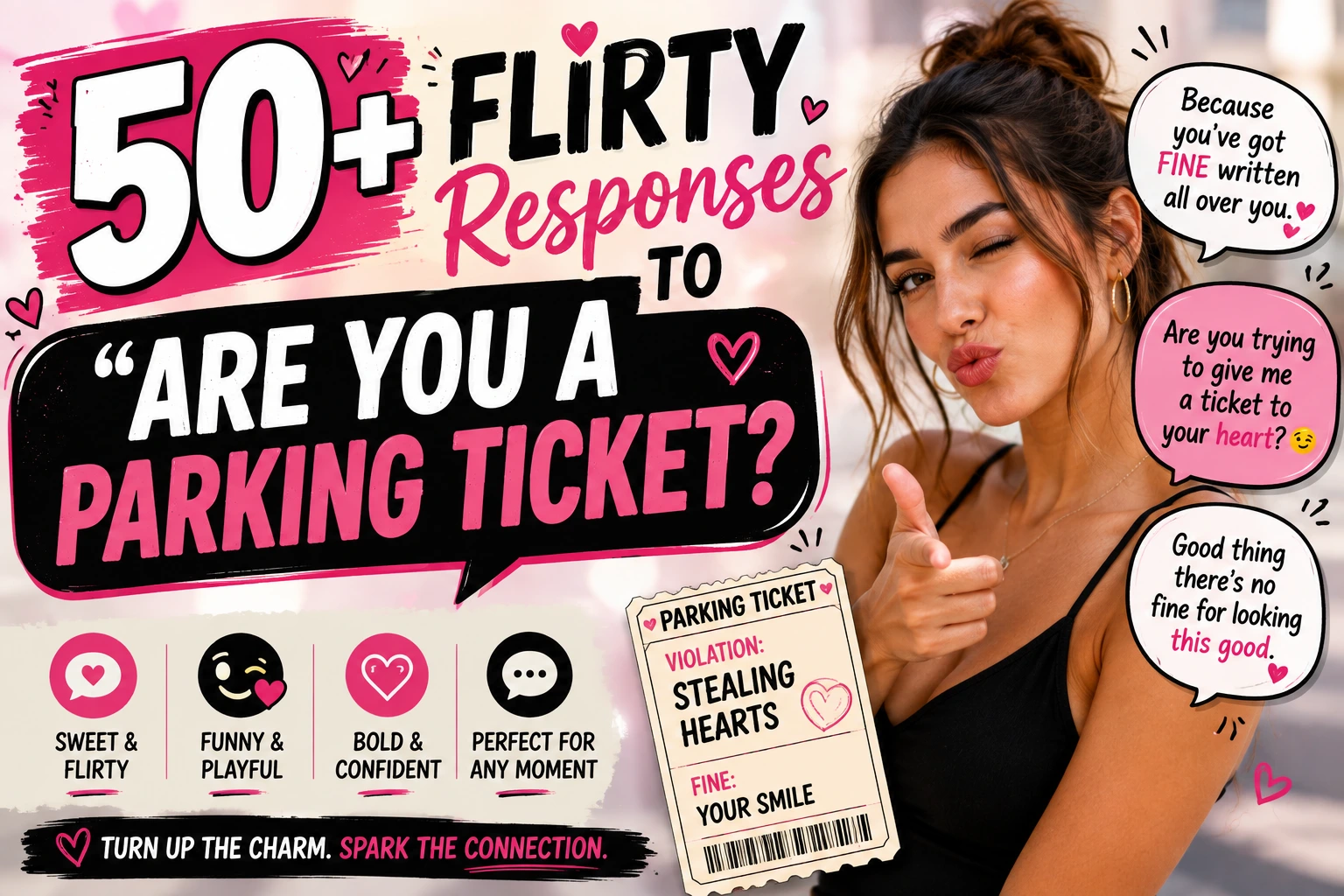
Sometimes the best flirty conversations start with a cheesy one-liner. “Are you a parking ticket?” is a classic pickup-line setup, usually followed by something like “Because you’ve got FINE written all over you.” It is playful, predictable, and intentionally corny—which is exactly why people use it.
But the fun does not have to stop after hearing the line. A clever response can turn an ordinary pickup line into a funny, confident, or memorable conversation. Whether the goal is to flirt back, tease the person, keep things light, or politely shut down the conversation, the right reply depends on the mood and the relationship.
This guide explores more than 50 flirty responses to “Are you a parking ticket?” along with meanings, tones, examples, and tips for choosing a response that feels natural rather than forced.
Section 1: What Does “Are You a Parking Ticket?” Mean?
“Are you a parking ticket?” is usually the opening part of a playful pickup line.
The person may be trying to create a compliment-based joke, typically implying that the other person is attractive or “fine.” The humor comes from connecting an ordinary parking ticket with a flattering description.
The phrase is generally casual, playful, and flirtatious. It is not normally intended to be taken literally.
For example:
“Are you a parking ticket?”
A playful response could be:
“Depends. Are you planning to appeal?”
The best response depends on whether the person wants to flirt back, tease the line, keep the conversation friendly, or make it clear that they are not interested.
Section 2: When to Use It
The “parking ticket” pickup line belongs primarily in casual social situations. It can appear in texting, dating conversations, social media messages, parties, or playful conversations between people who already know each other.
In Casual Texting
A humorous response can keep the conversation moving.
Example:
“Are you a parking ticket?”
“Wow, starting with the dad jokes already?”
In a Friendly Conversation
A teasing answer can acknowledge the joke without making the interaction overly serious.
Example:
“Are you a parking ticket?”
“That was impressively cheesy.”
In a Flirty Conversation
If both people are comfortable with playful flirting, a confident comeback can match the energy.
Example:
“Are you a parking ticket?”
“Maybe. What are you going to do about it?”
In Professional Settings
This type of pickup line generally does not belong in professional emails, workplace conversations, formal speeches, interviews, or academic settings. If someone uses it in such a setting, a neutral response is usually more appropriate.
Section 3: Is It Polite or Professional?
“Are you a parking ticket?” is casual rather than professional.
It can be harmless when used between people who are comfortable with playful conversation, but it may feel awkward or inappropriate in formal environments.
A good rule is simple: match the tone to the setting and relationship.
With a close friend, a silly comeback can work well. In a professional environment, it is better to keep the response neutral and redirect the conversation.
For casual conversations, however, creativity is part of the fun. A good comeback does not need to be overly romantic. It can be witty, teasing, confident, or simply funny.
1. “Only if you plan on getting fined.”
Meaning: Turns the original joke into another playful pun.
Tone: Flirty, teasing.
Example Sentence: “Only if you plan on getting fined for that terrible pickup line.”
Short Explanation: Use this when you want to tease the person while playing along.
2. “That was definitely a parking-lot-level pickup line.”
Meaning: Calls out the cheesiness of the line.
Tone: Funny, sarcastic.
Example Sentence: “That was definitely a parking-lot-level pickup line.”
Short Explanation: Perfect when humor is more appealing than serious flirting.
3. “Is that the best line you’ve got?”
Meaning: Challenges the person to come up with something better.
Tone: Confident, playful.
Example Sentence: “Is that the best line you’ve got?”
Short Explanation: This keeps the conversation going while giving the other person an opportunity to impress.
4. “You’ll have to do better than that.”
Meaning: Playfully rejects the opening line without ending the conversation.
Tone: Teasing, confident.
Example Sentence: “You’ll have to do better than that.”
Short Explanation: Great when you want to challenge the person without being too direct.
5. “That was painfully smooth.”
Meaning: Pretends to criticize the line while acknowledging the effort.
Tone: Playful, humorous.
Example Sentence: “That was painfully smooth. I’ll give you points for trying.”
Short Explanation: Works well when the conversation already has a joking tone.
6. “Do I at least get a receipt?”
Meaning: Extends the parking-ticket theme with another joke.
Tone: Witty, playful.
Example Sentence: “Do I at least get a receipt with that compliment?”
Short Explanation: A creative option for keeping the wordplay going.
7. “Careful, that line might get you towed.”
Meaning: Turns the parking theme back on the person.
Tone: Funny, teasing.
Example Sentence: “Careful, that line might get you towed.”
Short Explanation: Best for someone who enjoys quick jokes and wordplay.
8. “That line needs a parking permit.”
Meaning: Jokes that the pickup line needs official permission to exist.
Tone: Sarcastic, humorous.
Example Sentence: “That line needs a parking permit before it goes any further.”
Short Explanation: A fun response when the original line is especially cheesy.
9. “I’ve heard better lines at a traffic stop.”
Meaning: Teases the person about their choice of pickup line.
Tone: Savage, humorous.
Example Sentence: “I’ve heard better lines at a traffic stop.”
Short Explanation: Use this when the conversation is clearly based on friendly banter.
10. “That was corny, but points for confidence.”
Meaning: Admits the line was cheesy while complimenting the person’s confidence.
Tone: Friendly, playful.
Example Sentence: “That was corny, but points for confidence.”
Short Explanation: A balanced response that does not come across as unnecessarily harsh.
11. “Are you always this cheesy?”
Meaning: Lightly calls out the person’s flirting style.
Tone: Teasing, casual.
Example Sentence: “Are you always this cheesy, or is today special?”
Short Explanation: Useful when you want to tease without rejecting the conversation.
12. “I’ll pretend that was smooth.”
Meaning: Playfully gives the person credit for a questionable line.
Tone: Sarcastic, funny.
Example Sentence: “I’ll pretend that was smooth.”
Short Explanation: A short comeback that works particularly well over text.
13. “That was almost impressive.”
Meaning: Gives a deliberately understated compliment.
Tone: Teasing, confident.
Example Sentence: “That was almost impressive. Keep going.”
Short Explanation: Use this when playful competition fits the conversation.
14. “You really committed to the parking theme.”
Meaning: Acknowledges the creativity behind the pickup line.
Tone: Funny, lighthearted.
Example Sentence: “You really committed to the parking theme, didn’t you?”
Short Explanation: Good for keeping the exchange humorous without making it too flirty.
15. “That deserves a warning, not a ticket.”
Meaning: Plays with the idea of someone getting in trouble for a bad pickup line.
Tone: Witty, teasing.
Example Sentence: “That deserves a warning, not a ticket.”
Short Explanation: A playful comeback for someone who enjoys exaggerated humor.
16. “I’m going to need a better opening.”
Meaning: Suggests that the conversation can continue, but the opener was weak.
Tone: Confident, playful.
Example Sentence: “I’m going to need a better opening than that.”
Short Explanation: Works when you want to challenge the person to be more creative.
17. “That line has been parked here too long.”
Meaning: Turns “parking” into a joke about an overused pickup line.
Tone: Clever, sarcastic.
Example Sentence: “That line has been parked here too long.”
Short Explanation: Particularly effective for someone who appreciates wordplay.
18. “Was that supposed to work?”
Meaning: Playfully questions the effectiveness of the pickup line.
Tone: Confident, teasing.
Example Sentence: “Was that supposed to work?”
Short Explanation: A short response that can encourage the person to try again.
19. “Interesting strategy.”
Meaning: Pretends to analyze the pickup line seriously.
Tone: Dry, witty.
Example Sentence: “Interesting strategy. I respect the commitment.”
Short Explanation: Ideal for a dry sense of humor.
20. “I’ll give you creativity points.”
Meaning: Compliments the effort without necessarily accepting the flirtation.
Tone: Friendly, playful.
Example Sentence: “I’ll give you creativity points for that one.”
Short Explanation: Great when you want to keep things light and friendly.
21. “That was smoother than expected.”
Meaning: Suggests that the line was surprisingly effective.
Tone: Playful, lightly flirty.
Example Sentence: “That was smoother than expected.”
Short Explanation: A good choice when you want to acknowledge the effort positively.
22. “Okay, that was actually clever.”
Meaning: Gives genuine credit for the wordplay.
Tone: Friendly, appreciative.
Example Sentence: “Okay, that was actually clever.”
Short Explanation: Use this when the joke genuinely made you laugh.
23. “I wasn’t prepared for that one.”
Meaning: Shows that the line caught you off guard.
Tone: Playful, surprised.
Example Sentence: “I wasn’t prepared for that one, honestly.”
Short Explanation: A natural reaction when someone surprises you with a clever opener.
24. “That came out of nowhere.”
Meaning: Highlights the unexpected nature of the pickup line.
Tone: Casual, amused.
Example Sentence: “That came out of nowhere.”
Short Explanation: Good when you want to acknowledge the attempt without immediately flirting back.
25. “Well, that’s one way to start a conversation.”
Meaning: Lightly comments on the unusual opener.
Tone: Friendly, witty.
Example Sentence: “Well, that’s one way to start a conversation.”
Short Explanation: Useful when you want to remain open but relaxed.
26. “You came prepared, didn’t you?”
Meaning: Suggests that the person had the pickup line ready.
Tone: Teasing, friendly.
Example Sentence: “You came prepared with that one, didn’t you?”
Short Explanation: A playful way to make the other person explain themselves.
27. “That was suspiciously rehearsed.”
Meaning: Jokes that the person practiced the line beforehand.
Tone: Sarcastic, playful.
Example Sentence: “That was suspiciously rehearsed.”
Short Explanation: Works well for humorous conversations where teasing is welcome.
28. “You definitely rehearsed that.”
Meaning: Playfully accuses the person of practicing the line.
Tone: Funny, teasing.
Example Sentence: “You definitely rehearsed that before sending it.”
Short Explanation: Particularly natural in texting.
29. “Bold choice.”
Meaning: A short, understated reaction to an unusual pickup line.
Tone: Dry, confident.
Example Sentence: “A parking-ticket pickup line? Bold choice.”
Short Explanation: Great when you prefer short responses.
30. “Respect the confidence.”
Meaning: Compliments the person’s willingness to use a cheesy line.
Tone: Friendly, humorous.
Example Sentence: “I respect the confidence, even if the line is questionable.”
Short Explanation: A balanced response that keeps the interaction positive.
31. “That was a risky opening.”
Meaning: Suggests that the pickup line could easily have failed.
Tone: Witty, playful.
Example Sentence: “That was a risky opening, but somehow it worked.”
Short Explanation: Useful when the person has managed to surprise you.
32. “You’re really testing the limits of cheesy.”
Meaning: Jokes about how corny the line is.
Tone: Funny, teasing.
Example Sentence: “You’re really testing the limits of cheesy today.”
Short Explanation: Best for someone who can appreciate playful criticism.
33. “I’m impressed by the commitment to the bit.”
Meaning: Compliments the person’s dedication to the joke.
Tone: Clever, humorous.
Example Sentence: “I’m impressed by the commitment to the bit.”
Short Explanation: A more sophisticated alternative to simply calling the line cheesy.
34. “That was unexpectedly entertaining.”
Meaning: Says the line was amusing even if it was not particularly smooth.
Tone: Friendly, witty.
Example Sentence: “That was unexpectedly entertaining.”
Short Explanation: A good option when humor is more important than flirting.
35. “I’ll allow it.”
Meaning: Playfully gives approval to the pickup line.
Tone: Confident, teasing.
Example Sentence: “I’ll allow it this time.”
Short Explanation: Works when you want a short, confident comeback.
36. “That gets partial credit.”
Meaning: Pretends to grade the pickup line.
Tone: Funny, playful.
Example Sentence: “That gets partial credit. Try again.”
Short Explanation: Great for conversations where playful challenges are welcome.
37. “You get points for originality.”
Meaning: Compliments the creativity behind the line.
Tone: Friendly, appreciative.
Example Sentence: “You get points for originality.”
Short Explanation: Use this when the line actually feels creative rather than generic.
38. “I’m not sure whether to laugh or be impressed.”
Meaning: Shows mixed amusement and appreciation.
Tone: Playful, witty.
Example Sentence: “I’m not sure whether to laugh or be impressed.”
Short Explanation: A flexible response that can fit many casual conversations.
39. “You really went for it.”
Meaning: Acknowledges the person’s confidence.
Tone: Lighthearted, teasing.
Example Sentence: “You really went for it with that one.”
Short Explanation: Works when the boldness of the approach is more amusing than the actual line.
40. “That’s certainly an introduction.”
Meaning: Humorously acknowledges an unusual first message.
Tone: Dry, casual.
Example Sentence: “That’s certainly an introduction.”
Short Explanation: Useful when you want to remain neutral but amused.
41. “I have questions.”
Meaning: Suggests that the pickup line has created curiosity.
Tone: Funny, playful.
Example Sentence: “I have questions about how you arrived at that line.”
Short Explanation: Encourages the person to explain their thought process.
42. “What made you choose that line?”
Meaning: Directly asks about the person’s approach.
Tone: Curious, conversational.
Example Sentence: “What made you choose that line?”
Short Explanation: Ideal when you are more curious than impressed.
43. “Okay, explain yourself.”
Meaning: Playfully asks the person to defend the pickup line.
Tone: Teasing, confident.
Example Sentence: “Okay, explain yourself. Why a parking ticket?”
Short Explanation: Keeps the conversation moving naturally.
44. “I need to hear the logic behind this.”
Meaning: Jokes that the pickup line needs an explanation.
Tone: Clever, humorous.
Example Sentence: “I need to hear the logic behind this one.”
Short Explanation: Great for someone who likes witty conversations.
45. “You have my attention now.”
Meaning: Signals that the unusual opening succeeded in getting noticed.
Tone: Confident, lightly flirty.
Example Sentence: “You have my attention now. What comes next?”
Short Explanation: A stronger response when the conversation is going well.
46. “Okay, I’ll admit that was good.”
Meaning: Gives genuine credit after initially being skeptical.
Tone: Warm, playful.
Example Sentence: “Okay, I’ll admit that was good.”
Short Explanation: Works when the line actually lands well.
47. “That was smoother than your average parking job.”
Meaning: Combines the compliment with another parking joke.
Tone: Funny, clever.
Example Sentence: “That was smoother than your average parking job.”
Short Explanation: A natural extension of the original theme.
48. “You might have earned yourself a second chance.”
Meaning: Playfully suggests that the line was good enough to continue the conversation.
Tone: Teasing, confident.
Example Sentence: “You might have earned yourself a second chance after that.”
Short Explanation: Best when both people are clearly comfortable with the playful tone.
49. “I’ll give you that one.”
Meaning: Acknowledges that the line was clever or funny.
Tone: Casual, confident.
Example Sentence: “I’ll give you that one. It was pretty clever.”
Short Explanation: A simple response when you want to reward the effort.
50. “You almost made that work.”
Meaning: Teases the person while leaving the conversation open.
Tone: Playful, confident.
Example Sentence: “You almost made that work. Almost.”
Short Explanation: A fun response when you want to keep the banter going.
51. “That was dangerously cheesy.”
Meaning: Jokes about the extreme cheesiness of the pickup line.
Tone: Humorous, teasing.
Example Sentence: “That was dangerously cheesy, but I’ll give you credit.”
Short Explanation: Works particularly well with someone who enjoys silly humor.
52. “You parked that line perfectly.”
Meaning: Turns the original parking theme into a compliment about the delivery.
Tone: Clever, playful.
Example Sentence: “Okay, you parked that line perfectly.”
Short Explanation: A creative response for someone who wants to continue the wordplay.
53. “That line just got a parking violation.”
Meaning: Jokes that the pickup line broke the rules.
Tone: Funny, sarcastic.
Example Sentence: “That line just got a parking violation for excessive cheesiness.”
Short Explanation: Great for humorous conversations with plenty of banter.
54. “I think your pickup line needs directions.”
Meaning: Jokes that the line has gone in the wrong direction.
Tone: Witty, playful.
Example Sentence: “I think your pickup line needs directions.”
Short Explanation: A creative comeback that stays connected to the parking theme.
55. “You can keep the ticket; the joke was enough.”
Meaning: Playfully acknowledges the joke while moving beyond the pickup line.
Tone: Warm, humorous.
Example Sentence: “You can keep the ticket; the joke was enough to get my attention.”
Short Explanation: Useful when you want to transition from the pickup line into a normal conversation.
Conclusion
A good response to “Are you a parking ticket?” does not have to be overly flirty or complicated. The best comeback depends on the mood, your relationship with the person, and how comfortable you feel with the conversation. You can tease the cheesy line, return the playful energy, ask a curious question, or simply acknowledge the joke.
The key is authenticity. Choose an expression that actually sounds like something you would say instead of forcing a clever response. Sometimes the funniest answer is short and unexpected, while other moments call for a confident challenge.
Discover more
Discover more