

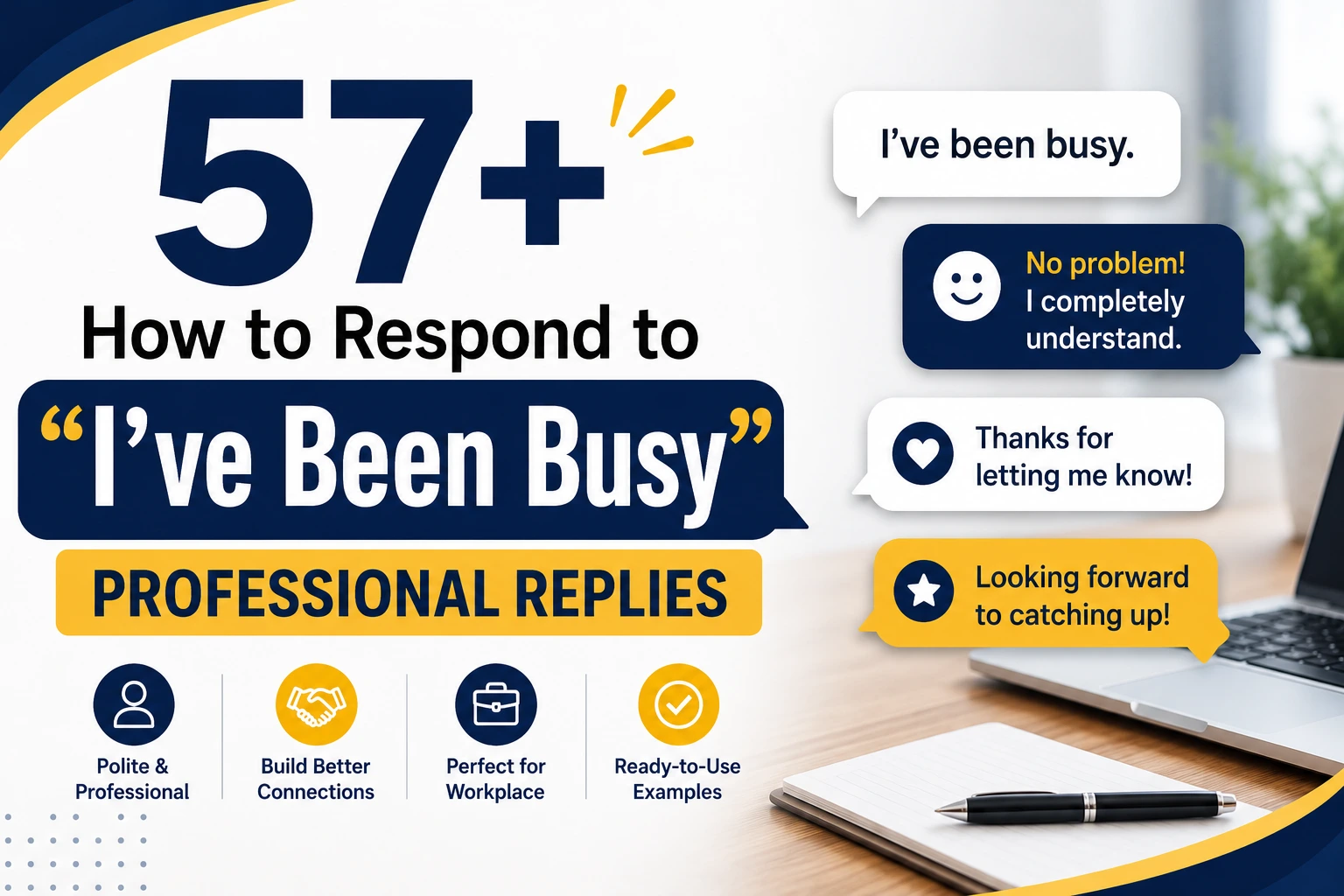
“I’ve been busy” is one of those simple messages that can leave you wondering what to say next. Maybe someone is explaining why they disappeared, responding late, missing a meeting, or simply catching up after a hectic week. Your response can shape the entire conversation, depending on whether you want to sound understanding, friendly, professional, playful, or genuinely concerned.
Knowing how to respond to “I’ve been busy” helps you avoid sounding annoyed or overly demanding while still keeping the conversation natural. Instead of relying on the same predictable reply, you can choose an expression that matches the relationship and situation. Creative alternatives make communication feel more personal, thoughtful, and effective. Whether you are replying to a friend, coworker, classmate, family member, or someone you care about, the right words can show understanding without putting unnecessary pressure on the other person.
Section 1: What Does “I’ve Been Busy” Mean?
“I’ve been busy” usually means that someone has had a lot of responsibilities, activities, work, studies, or personal commitments recently.
People often use this phrase when explaining why they have not replied to messages, returned a call, made plans, completed something, or stayed in touch.
For example:
“Sorry for the late reply. I’ve been busy with work.”
The emotional tone depends heavily on context. It can sound apologetic, explanatory, casual, stressed, or even slightly distant. Sometimes the person genuinely has a packed schedule; other times, they may simply be giving a brief explanation without wanting to discuss the details.
A good response should therefore consider the situation. If someone sounds overwhelmed, empathy is appropriate. If they sound casual, a relaxed response works better. In a professional setting, it is usually best to acknowledge their workload without becoming overly personal.
Section 2: When to Use It
Responses to “I’ve been busy” can be used in many different situations.
Casual Conversations
When a friend says they have been busy, you can keep your response relaxed:
“No worries, I totally understand.”
“Sounds like you’ve had a lot going on.”
Professional Conversations
At work, a respectful and concise response is more appropriate:
“I completely understand. Thanks for getting back to me.”
“No problem. I appreciate the update.”
Text Messages
For texting, you can be warm and conversational:
“It’s all good. How have things been?”
“I figured you had a lot going on.”
When Someone Seems Overwhelmed
If the person sounds stressed, acknowledge their situation:
“That sounds like a lot. I hope things calm down for you soon.”
When You Want to Continue the Conversation
You can use their explanation as an opening:
“No worries. What’s been keeping you so busy?”
When You Feel Slightly Ignored
If you were waiting for them, you can still be honest without sounding confrontational:
“I understand. I was just wondering how you were doing.”
The key is to match your response to the relationship, context, and emotional tone of the conversation.
Section 3: Is It Polite or Professional?
Responding to “I’ve been busy” can be polite and professional as long as your wording is appropriate.
In a workplace conversation, avoid sarcastic or emotionally charged responses such as “Everyone is busy” or “You could have replied.” Even if you feel frustrated, these responses can make the conversation unnecessarily tense.
Instead, choose neutral expressions such as:
“I understand. Thanks for letting me know.”
“No worries. I appreciate the update.”
“Completely understandable. Let me know when you have some time.”
In casual conversations, you have more freedom to be humorous, affectionate, or playful. For example:
“Busy being productive or busy being mysterious?”
The most effective response is not necessarily the longest one. It is the one that acknowledges what the person said while communicating exactly what you want them to understand.
Section 4: 57+ Ways to Respond to “I’ve Been Busy”
1. No worries, I understand.
Meaning: You are telling the person that their busy schedule is understandable.
Tone: Friendly, reassuring, neutral.
Example Sentence: “No worries, I understand. Things get hectic sometimes.”
Short Explanation: Use this when you want to respond kindly without making the conversation complicated.
Purpose and Personalization: It is one of the safest responses for friends, classmates, coworkers, and acquaintances.
2. I completely understand.
Meaning: You recognize that they may have had legitimate responsibilities.
Tone: Empathetic, mature, professional.
Example Sentence: “I completely understand. I know you’ve had a lot on your plate.”
Short Explanation: This works especially well when someone sounds apologetic about being unavailable.
Purpose and Personalization: It communicates patience without demanding an explanation.
3. It’s all good.
Meaning: You are saying that there is no problem.
Tone: Casual, relaxed, friendly.
Example Sentence: “It’s all good. I figured you were caught up with things.”
Short Explanation: Perfect for informal texts and everyday conversations.
Purpose and Personalization: It keeps the interaction easygoing.
4. No problem at all.
Meaning: Their absence or delayed response did not cause an issue.
Tone: Warm, polite, professional.
Example Sentence: “No problem at all. Thanks for getting back to me.”
Short Explanation: Use this when you want to sound understanding without being overly familiar.
Purpose and Personalization: Particularly useful in professional communication.
5. Sounds like you’ve had a lot going on.
Meaning: You acknowledge that their schedule has been demanding.
Tone: Empathetic, conversational.
Example Sentence: “Sounds like you’ve had a lot going on lately. I hope everything is okay.”
Short Explanation: This is useful when you want to show genuine interest.
Purpose and Personalization: It naturally invites the person to share more.
6. I figured you were busy.
Meaning: You already assumed their lack of communication had a reasonable explanation.
Tone: Casual, understanding.
Example Sentence: “I figured you were busy, so I didn’t want to bother you.”
Short Explanation: This works well when you want to reassure someone that you did not take their silence personally.
Purpose and Personalization: It gives the conversation a relaxed feel.
7. That’s understandable.
Meaning: You accept their explanation without judgment.
Tone: Neutral, mature, professional.
Example Sentence: “That’s understandable. I hope your schedule gets easier soon.”
Short Explanation: A concise response that works in both personal and professional settings.
Purpose and Personalization: Ideal when you want to keep your reply short.
8. I hope things have settled down a little.
Meaning: You hope their hectic schedule has become more manageable.
Tone: Caring, thoughtful.
Example Sentence: “I hope things have settled down a little for you.”
Short Explanation: Use this when the person has been busy for an extended period.
Purpose and Personalization: It shows concern without being intrusive.
9. You’ve got a lot on your plate, huh?
Meaning: You recognize that they have many responsibilities.
Tone: Casual, empathetic.
Example Sentence: “You’ve got a lot on your plate, huh? Take your time.”
Short Explanation: Best suited to friends and people you know well.
Purpose and Personalization: It sounds natural and conversational.
10. Take your time.
Meaning: You are not pressuring them to respond immediately.
Tone: Patient, supportive.
Example Sentence: “Take your time. Just get back to me when you can.”
Short Explanation: Use this when there is no urgent deadline.
Purpose and Personalization: It removes pressure from the conversation.
11. I get it. Life gets hectic.
Meaning: You understand that everyday responsibilities can become overwhelming.
Tone: Casual, empathetic.
Example Sentence: “I get it. Life gets hectic sometimes.”
Short Explanation: This sounds natural in friendly conversations.
Purpose and Personalization: It creates a sense of mutual understanding.
12. Don’t worry about it.
Meaning: You are reassuring them that their absence is not a major issue.
Tone: Relaxed, supportive.
Example Sentence: “Don’t worry about it. We can catch up whenever you’re free.”
Short Explanation: A good choice when someone seems worried about disappointing you.
Purpose and Personalization: It keeps the conversation positive.
13. Thanks for letting me know.
Meaning: You appreciate their explanation or update.
Tone: Polite, professional.
Example Sentence: “Thanks for letting me know. We can discuss it tomorrow.”
Short Explanation: Particularly effective in workplace conversations.
Purpose and Personalization: It acknowledges their message without adding pressure.
14. I appreciate the update.
Meaning: You value the information they provided.
Tone: Professional, respectful.
Example Sentence: “I appreciate the update. Please let me know when you’re available.”
Short Explanation: Excellent for emails, workplace chats, and formal communication.
Purpose and Personalization: It sounds polished without being stiff.
15. No need to apologize.
Meaning: You are telling them that they do not need to feel guilty.
Tone: Reassuring, kind.
Example Sentence: “No need to apologize. I understand you’ve been busy.”
Short Explanation: Use this when someone has apologized for replying late.
Purpose and Personalization: It helps reduce unnecessary guilt.
16. I hope everything is going well.
Meaning: You are expressing concern about their overall situation.
Tone: Caring, polite.
Example Sentence: “I hope everything is going well despite the busy schedule.”
Short Explanation: Good when you want to check on someone without asking personal questions.
Purpose and Personalization: It shifts the focus from their absence to their well-being.
17. What’s been keeping you busy?
Meaning: You are inviting them to explain what has occupied their time.
Tone: Curious, friendly.
Example Sentence: “What’s been keeping you busy lately?”
Short Explanation: Use this when you genuinely want to hear about their life.
Purpose and Personalization: It naturally keeps the conversation going.
18. Busy with work or life in general?
Meaning: You are asking what kind of responsibilities have occupied them.
Tone: Casual, conversational.
Example Sentence: “Busy with work or life in general?”
Short Explanation: This is a relaxed follow-up for someone you know well.
Purpose and Personalization: It encourages an easy, open-ended answer.
19. I hope you’re taking care of yourself too.
Meaning: You are acknowledging their workload while showing concern for their well-being.
Tone: Caring, supportive.
Example Sentence: “You’ve been busy lately. I hope you’re taking care of yourself too.”
Short Explanation: Use this when someone sounds exhausted or overwhelmed.
Purpose and Personalization: It adds a thoughtful touch to an otherwise ordinary response.
20. You must have had a packed schedule.
Meaning: You assume their schedule has been full.
Tone: Understanding, polished.
Example Sentence: “You must have had a packed schedule lately.”
Short Explanation: This works in both professional and casual conversations.
Purpose and Personalization: It sounds more expressive than simply saying “I understand.”
21. I can imagine.
Meaning: You suggest that you understand how demanding their situation may be.
Tone: Empathetic, warm.
Example Sentence: “I can imagine. It sounds like you’ve had a hectic week.”
Short Explanation: A short but emotionally aware response.
Purpose and Personalization: Best when you want to show empathy without overexplaining.
22. Sounds like a hectic week.
Meaning: You recognize that their recent schedule has been demanding.
Tone: Casual, sympathetic.
Example Sentence: “Sounds like a hectic week. Hopefully next week is calmer.”
Short Explanation: Ideal for everyday conversations.
Purpose and Personalization: It keeps your response light while showing understanding.
23. I know how that goes.
Meaning: You relate to the experience of being overwhelmed with responsibilities.
Tone: Friendly, relatable.
Example Sentence: “I know how that goes. Some weeks are just nonstop.”
Short Explanation: Use this when you have personally experienced similar situations.
Purpose and Personalization: It creates a sense of connection.
24. We all have those days.
Meaning: Everyone experiences periods when life becomes unusually busy.
Tone: Casual, reassuring.
Example Sentence: “We all have those days. No worries.”
Short Explanation: A simple way to normalize their situation.
Purpose and Personalization: Works especially well in friendly chats.
25. I understand. Priorities come first.
Meaning: You accept that important responsibilities needed their attention.
Tone: Mature, supportive.
Example Sentence: “I understand. Priorities come first, so don’t worry about it.”
Short Explanation: Useful when someone had to focus on important tasks.
Purpose and Personalization: It communicates emotional maturity.
26. No pressure whatsoever.
Meaning: You are telling them they do not need to rush.
Tone: Reassuring, relaxed.
Example Sentence: “No pressure whatsoever. Just let me know when you’re free.”
Short Explanation: Great when you want to keep expectations clear.
Purpose and Personalization: It makes your patience explicit.
27. Whenever you’re free, we can catch up.
Meaning: You are leaving the timing up to them.
Tone: Friendly, patient.
Example Sentence: “Whenever you’re free, we can catch up properly.”
Short Explanation: Use this when you want to reconnect without putting pressure on the person.
Purpose and Personalization: It keeps the door open for future conversation.
28. Glad to hear from you now.
Meaning: You are happy that they have finally reached out.
Tone: Warm, friendly.
Example Sentence: “Glad to hear from you now. How have you been?”
Short Explanation: This is useful when someone has returned after being unavailable.
Purpose and Personalization: It focuses on the present rather than their absence.
29. I was wondering how you were doing.
Meaning: You are explaining that their absence made you curious about their well-being.
Tone: Caring, sincere.
Example Sentence: “I was wondering how you were doing, so it’s good to hear from you.”
Short Explanation: Use this when you genuinely missed hearing from them.
Purpose and Personalization: It communicates care without sounding accusatory.
30. I missed catching up with you.
Meaning: You are saying that you enjoyed and missed your conversations.
Tone: Warm, affectionate, friendly.
Example Sentence: “I missed catching up with you. Let’s talk when you have some free time.”
Short Explanation: Best for friends, relatives, or people you know well.
Purpose and Personalization: It adds genuine warmth to the response.
31. It’s good to hear from you.
Meaning: You are pleased that they have contacted you.
Tone: Warm, polite, versatile.
Example Sentence: “It’s good to hear from you. I hope everything’s okay.”
Short Explanation: Suitable for both casual and semi-professional situations.
Purpose and Personalization: It redirects the conversation toward reconnecting.
32. I figured you’d reach out when you had time.
Meaning: You trusted that they would contact you once their schedule allowed.
Tone: Calm, confident, mature.
Example Sentence: “I figured you’d reach out when you had time, so I didn’t want to pressure you.”
Short Explanation: This works when you want to communicate patience.
Purpose and Personalization: It subtly shows that you respect their boundaries.
33. Glad you’re getting through it.
Meaning: You recognize that their busy period may have been challenging.
Tone: Supportive, encouraging.
Example Sentence: “Glad you’re getting through it. Hopefully things become easier soon.”
Short Explanation: Good when someone is dealing with a demanding period.
Purpose and Personalization: It offers encouragement without minimizing their workload.
34. Sounds like you’ve been juggling a lot.
Meaning: You recognize that they have been managing several responsibilities simultaneously.
Tone: Empathetic, conversational.
Example Sentence: “Sounds like you’ve been juggling a lot lately.”
Short Explanation: A natural alternative to repeatedly saying “You’ve been busy.”
Purpose and Personalization: It sounds thoughtful and observant.
35. Hopefully you get some downtime soon.
Meaning: You hope they get a chance to rest.
Tone: Caring, supportive.
Example Sentence: “Hopefully you get some downtime soon. You sound exhausted.”
Short Explanation: Use this when someone has had a particularly demanding schedule.
Purpose and Personalization: It adds warmth without demanding their attention.
36. Sounds like you’ve been in full-on work mode.
Meaning: They have been heavily focused on responsibilities.
Tone: Casual, modern, friendly.
Example Sentence: “Sounds like you’ve been in full-on work mode lately.”
Short Explanation: Best for casual conversations with friends or colleagues you know well.
Purpose and Personalization: It gives the reply a contemporary, conversational feel.
37. Busy season, I take it?
Meaning: You are asking whether they are experiencing an unusually demanding period.
Tone: Casual, curious.
Example Sentence: “Busy season, I take it? Hope it eases up soon.”
Short Explanation: Particularly useful for people whose work has predictable busy periods.
Purpose and Personalization: It invites a natural explanation.
38. I hear you.
Meaning: You acknowledge and respect what they are saying.
Tone: Casual, empathetic.
Example Sentence: “I hear you. Sounds like things have been pretty intense.”
Short Explanation: A short response that communicates understanding.
Purpose and Personalization: Good when you want to avoid giving an unnecessarily long reply.
39. Totally fair.
Meaning: You consider their explanation reasonable.
Tone: Casual, modern, accepting.
Example Sentence: “Totally fair. Everyone gets caught up sometimes.”
Short Explanation: Works well in informal digital conversations.
Purpose and Personalization: It sounds natural and nonjudgmental.
40. That happens.
Meaning: You accept that people sometimes become unavailable.
Tone: Casual, forgiving.
Example Sentence: “That happens. No hard feelings.”
Short Explanation: Useful when you want to quickly move past the issue.
Purpose and Personalization: It keeps the exchange light.
41. No hard feelings.
Meaning: You are saying that you are not upset with them.
Tone: Casual, reassuring.
Example Sentence: “No hard feelings. I know things get hectic.”
Short Explanation: Good when you suspect the person feels guilty about disappearing.
Purpose and Personalization: It removes tension from the conversation.
42. You’re good.
Meaning: Everything is fine and they do not need to worry.
Tone: Very casual, friendly.
Example Sentence: “You’re good. Don’t stress about the late reply.”
Short Explanation: Best for close friends and informal conversations.
Purpose and Personalization: It is short, natural, and reassuring.
43. Consider yourself forgiven.
Meaning: A playful way of saying there is no problem.
Tone: Humorous, playful.
Example Sentence: “Consider yourself forgiven for disappearing into the busy-life abyss.”
Short Explanation: Use this only when you already have a playful relationship.
Purpose and Personalization: It adds humor without turning the situation into a serious issue.
44. Look who finally resurfaced.
Meaning: A playful comment about someone returning after being unavailable.
Tone: Teasing, humorous.
Example Sentence: “Look who finally resurfaced. How have you been?”
Short Explanation: Best used with close friends who understand your humor.
Purpose and Personalization: It works particularly well in lighthearted texting.
45. I was starting to think you joined a secret mission.
Meaning: You jokingly exaggerate how long they were unavailable.
Tone: Playful, humorous.
Example Sentence: “I was starting to think you joined a secret mission. What have you been up to?”
Short Explanation: Use this only when the relationship allows playful teasing.
Purpose and Personalization: It turns an ordinary explanation into a fun conversation starter.
46. Busy being productive or just surviving?
Meaning: You jokingly ask whether their schedule has been productive or simply overwhelming.
Tone: Playful, relatable.
Example Sentence: “Busy being productive or just surviving this week?”
Short Explanation: A great casual response for someone who often jokes about being overwhelmed.
Purpose and Personalization: It can lead naturally into a deeper conversation.
47. I respect the grind.
Meaning: You acknowledge their effort and hard work.
Tone: Casual, motivational.
Example Sentence: “I respect the grind. Just remember to rest too.”
Short Explanation: Suitable for friends or colleagues working toward demanding goals.
Purpose and Personalization: It combines encouragement with a little personality.
48. Keep going; you’ve got this.
Meaning: You are encouraging them to continue handling their responsibilities.
Tone: Motivational, supportive.
Example Sentence: “Keep going; you’ve got this. Hopefully things slow down soon.”
Short Explanation: Use this when the person is clearly dealing with a challenging workload.
Purpose and Personalization: It transforms your response from acknowledgment into encouragement.
49. I hope the hard work pays off.
Meaning: You hope their efforts lead to positive results.
Tone: Encouraging, thoughtful.
Example Sentence: “I hope the hard work pays off. You’ve definitely been putting in the hours.”
Short Explanation: Good when someone is busy because of an important goal.
Purpose and Personalization: It shows that you recognize their effort.
50. You’ve been putting in the work.
Meaning: You recognize their dedication and effort.
Tone: Motivational, supportive.
Example Sentence: “You’ve been putting in the work. Make sure you give yourself a break too.”
Short Explanation: Use this when someone has been busy with studies, work, or a project.
Purpose and Personalization: It feels encouraging without sounding overly formal.
51. I hope you’re managing everything okay.
Meaning: You are checking whether their responsibilities are becoming overwhelming.
Tone: Caring, considerate.
Example Sentence: “I hope you’re managing everything okay with such a busy schedule.”
Short Explanation: Appropriate when you genuinely care about how they are coping.
Purpose and Personalization: It opens the door for an honest conversation.
52. Let me know when you have a moment.
Meaning: You are giving them space to respond when they become available.
Tone: Polite, professional, patient.
Example Sentence: “Let me know when you have a moment and we can discuss the project.”
Short Explanation: Excellent for workplace messages and practical conversations.
Purpose and Personalization: It communicates flexibility while keeping the matter open.
53. We can talk whenever works for you.
Meaning: You are allowing them to choose a convenient time.
Tone: Flexible, considerate.
Example Sentence: “We can talk whenever works for you. There’s no rush.”
Short Explanation: Useful when scheduling a conversation with someone who has limited availability.
Purpose and Personalization: It reduces pressure while maintaining communication.
54. I understand you’ve had other priorities.
Meaning: You recognize that other responsibilities required their attention.
Tone: Mature, professional.
Example Sentence: “I understand you’ve had other priorities, so thanks for getting back to me.”
Short Explanation: Particularly suitable for workplace or academic situations.
Purpose and Personalization: It sounds respectful and emotionally intelligent.
55. Thanks for making time now.
Meaning: You appreciate that they have found time to communicate.
Tone: Grateful, professional, warm.
Example Sentence: “Thanks for making time now. I really appreciate it.”
Short Explanation: Use this when someone finally becomes available after a busy period.
Purpose and Personalization: It focuses on their present effort rather than their previous absence.
56. I appreciate you getting back to me.
Meaning: You are grateful that they responded.
Tone: Professional, courteous.
Example Sentence: “I appreciate you getting back to me despite your busy schedule.”
Short Explanation: One of the strongest choices for workplace emails and professional chats.
Purpose and Personalization: It acknowledges both their workload and their effort to respond.
57. Whenever you’re ready, I’m here.
Meaning: You are offering patience and support without demanding immediate attention.
Tone: Supportive, warm, reassuring.
Example Sentence: “Whenever you’re ready, I’m here. Take care of what you need to first.”
Short Explanation: Use this when someone needs time before continuing a personal conversation.
Purpose and Personalization: It communicates patience while keeping the relationship open.
Conclusion
Knowing how to respond to “I’ve been busy” gives you more ways to communicate without sounding repetitive, impatient, or overly formal. From simple replies like “No worries, I understand” to playful responses such as “Look who finally resurfaced,” the best choice depends on your relationship and the situation. Professional conversations usually benefit from concise and respectful language, while close friendships allow more humor and personality. The goal is not to find one perfect response but to choose words that feel natural for you. Experiment with different expressions, stay attentive to context, and let your response communicate the tone you genuinely want to convey.
Discover more
what to say when someone is studying