

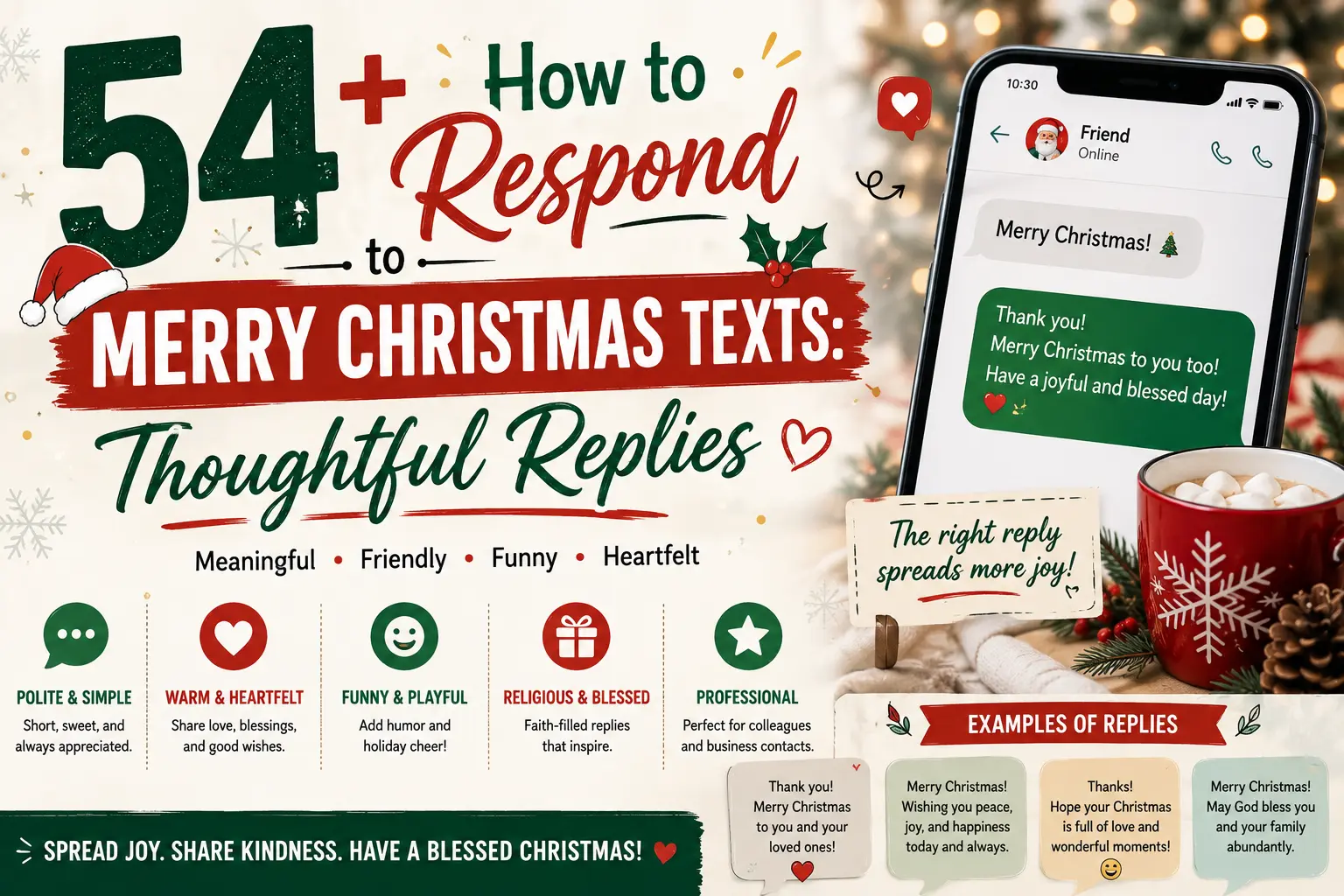
A “Merry Christmas” text can arrive from almost anyone: a close friend, family member, coworker, classmate, old friend, or someone you have not spoken to in months. You probably know how to say it back, but sometimes a simple “Merry Christmas to you too” feels a little too predictable.
The good news is that you have plenty of options.
Your reply can be warm and heartfelt, short and casual, funny and playful, or polished enough for a professional contact. The right words can make a seasonal greeting feel more personal and genuine. After all, Christmas messages are not only about the holiday itself. They are also a chance to show appreciation and reconnect with people.
In this guide, you will find more than 54 ways to respond to Merry Christmas texts, along with examples and tips for choosing the right reply.
What Does “How to Respond to Merry Christmas Texts” Mean?
“How to respond to Merry Christmas texts” refers to the different ways you can reply when someone sends you a Christmas greeting.
The most common response is:
“Merry Christmas to you too!”
It is simple, polite, and works in almost any situation.
However, your response can say much more. For example, you could reply with “Wishing you a beautiful Christmas too” to sound warm. You could say “Thanks! Hope your Christmas is full of good food and good company” for a friendly touch. With a close friend, something like “Merry Christmas, you festive legend” can make the conversation more playful.
The emotional tone usually depends on your relationship with the sender. A family member may appreciate something heartfelt, while a coworker may prefer a professional holiday greeting.
When to Use These Christmas Replies
The best Christmas response depends on the person who sent the message and the setting.
With Friends
You can keep your response relaxed and personal.
Example:
“Thanks! Merry Christmas to you too. Hope you’re having an amazing day.”
With Family
A warmer and more heartfelt message usually feels appropriate.
Example:
“Merry Christmas! Wishing you and the whole family a beautiful day filled with love and happiness.”
With a Crush or Someone You Like
You can make the message slightly warmer if your relationship already has that tone.
Example:
“Merry Christmas to you too. Hope your day is as lovely as you are.”
With Coworkers
Keep the message friendly but professional.
Example:
“Thank you! Merry Christmas to you and your family. Wishing you a wonderful holiday.”
With a Teacher or Professional Contact
A respectful response works best.
Example:
“Thank you for the kind wishes. Merry Christmas to you as well. I hope you have a wonderful holiday.”
In Group Chats
Short, cheerful replies are usually enough.
Example:
“Merry Christmas, everyone! Hope you’re all having a great one.”
Is It Polite or Professional?
Saying “Merry Christmas to you too” is polite and perfectly suitable for most casual situations. However, professional communication may require a little more care.
With coworkers, clients, managers, teachers, or business contacts, avoid overly personal jokes unless you already have a relaxed relationship.
For example:
Professional:
“Thank you for the Christmas wishes. Wishing you a wonderful holiday season as well.”
Casual:
“Merry Christmas! Hope you’re eating way too much good food.”
Playful:
“Merry Christmas! Hope Santa treated you well.”
The main rule is simple: match your reply to the relationship. A warm message is usually appropriate, but the level of humor and familiarity should depend on how well you know the person.
Warm and Heartfelt Replies
1. “Merry Christmas to you too!”
Meaning: You are returning the Christmas greeting.
Tone: Warm, friendly, universal.
“Merry Christmas to you too! Hope you have a beautiful day.”
Why use it: This is the safest response when you want something simple and natural.
Personalization: Add a short wish about their day to make the message feel more personal.
2. “Thank you! Wishing you a wonderful Christmas too.”
Meaning: You appreciate their greeting and return the good wishes.
Tone: Polite, warm, thoughtful.
“Thank you! Wishing you a wonderful Christmas filled with happiness.”
Why use it: It works well with friends, relatives, teachers, and professional contacts.
3. “Wishing you a beautiful Christmas as well.”
Meaning: You hope they enjoy a peaceful and happy Christmas.
Tone: Warm, elegant, sincere.
“Wishing you a beautiful Christmas as well. Enjoy every moment.”
Why use it: Choose this when you want your reply to sound thoughtful without becoming too formal.
4. “Hope your Christmas is filled with happiness and love.”
Meaning: You are sending heartfelt holiday wishes.
Tone: Caring, sincere.
“Thank you for the lovely message. Hope your Christmas is filled with happiness and love.”
Why use it: This works especially well for family members and close friends.
5. “Merry Christmas! I hope you have the most wonderful day.”
Meaning: You are wishing them a joyful holiday.
Tone: Cheerful, warm.
“Merry Christmas! I hope you have the most wonderful day with your family.”
Why use it: A good choice when you want to sound enthusiastic without overdoing it.
6. “Thank you for thinking of me. Merry Christmas!”
Meaning: You appreciate the effort behind their message.
Tone: Grateful, personal.
“Thank you for thinking of me. Merry Christmas to you and your family!”
Why use it: It adds a more personal touch than simply returning the greeting.
7. “Merry Christmas! Sending you lots of warm wishes.”
Meaning: You are sending positive and caring holiday thoughts.
Tone: Warm, affectionate.
“Merry Christmas! Sending you lots of warm wishes for the holiday.”
Why use it: Great for relatives, friends, and people you genuinely care about.
8. “I hope this Christmas brings you plenty of happiness.”
Meaning: You are wishing them a joyful holiday.
Tone: Thoughtful, sincere.
“Merry Christmas! I hope this Christmas brings you plenty of happiness and peaceful moments.”
Why use it: This sounds more personal than a standard holiday greeting.
9. “Wishing you and your family a very Merry Christmas.”
Meaning: You are extending your wishes to the whole family.
Tone: Respectful, warm.
“Thank you! Wishing you and your family a very Merry Christmas too.”
Why use it: Particularly useful when replying to relatives, elders, or professional contacts.
10. “May your Christmas be peaceful, joyful, and memorable.”
Meaning: You are wishing them a meaningful holiday.
Tone: Thoughtful, elegant.
“Merry Christmas! May your Christmas be peaceful, joyful, and memorable.”
Why use it: Choose this when you want a polished and sincere response.
Friendly and Casual Replies
11. “Merry Christmas! Hope you’re having a great one.”
Meaning: You hope they are enjoying the holiday.
Tone: Casual, friendly.
“Merry Christmas! Hope you’re having a great one with the family.”
Why use it: This sounds natural in everyday texting.
12. “Thanks! Merry Christmas to you and yours.”
Meaning: You are wishing them and their loved ones a happy Christmas.
Tone: Friendly, warm.
“Thanks for the message! Merry Christmas to you and yours.”
Why use it: It is short while still sounding thoughtful.
13. “Merry Christmas! Hope you’re enjoying the festivities.”
Meaning: You hope they are having fun celebrating.
Tone: Friendly, cheerful.
“Merry Christmas! Hope you’re enjoying the festivities with everyone.”
Why use it: Great for friends and acquaintances.
14. “Same to you! Have an amazing Christmas.”
Meaning: You are returning their holiday wishes.
Tone: Casual, upbeat.
“Merry Christmas!”
“Same to you! Have an amazing Christmas.”
Why use it: Perfect for a quick text response.
15. “Thank you! Hope you’re having a lovely Christmas.”
Meaning: You appreciate their message and return the sentiment.
Tone: Friendly, polite.
“Thank you! Hope you’re having a lovely Christmas with your family.”
Why use it: This is a natural choice for people you know but do not speak with every day.
16. “Merry Christmas! Enjoy every second.”
Meaning: You want them to make the most of the holiday.
Tone: Cheerful, casual.
“Merry Christmas! Enjoy every second and eat something delicious for me.”
Why use it: Good for friends and informal conversations.
17. “Thanks! Hope Santa is good to you.”
Meaning: You are jokingly wishing them a fun Christmas.
Tone: Playful, casual.
“Merry Christmas!”
“Thanks! Hope Santa is good to you.”
Why use it: This works best with friends and people who enjoy light humor.
18. “Merry Christmas! Hope your day is full of good food and good company.”
Meaning: You are wishing them an enjoyable celebration.
Tone: Warm, friendly.
“Merry Christmas! Hope your day is full of good food and good company.”
Why use it: A great alternative when you want something more personal than a basic greeting.
19. “Right back at you! Merry Christmas.”
Meaning: You are returning the greeting in a relaxed way.
Tone: Casual, friendly.
“Merry Christmas!”
“Right back at you! Hope you’re having fun.”
Why use it: Perfect for quick conversations with friends.
20. “Merry Christmas! Hope you’re making some great memories.”
Meaning: You hope their holiday is meaningful and enjoyable.
Tone: Warm, casual.
“Merry Christmas! Hope you’re making some great memories with everyone.”
Why use it: This adds a little more personality to your response.
Funny and Playful Replies
21. “Merry Christmas! I hope your plate is never empty.”
Meaning: You are jokingly wishing them plenty of food.
Tone: Funny, friendly.
“Merry Christmas! I hope your plate is never empty and your dessert never runs out.”
Why use it: Perfect for friends who enjoy food-related holiday jokes.
22. “Merry Christmas! May your snacks be plentiful.”
Meaning: You are wishing them a holiday full of treats.
Tone: Playful, humorous.
“Thanks! Merry Christmas. May your snacks be plentiful.”
Why use it: A fun alternative to a traditional Christmas response.
23. “Thanks! Merry Christmas. I’ll be celebrating responsibly, by which I mean eating everything.”
Meaning: You are joking about enjoying holiday food.
Tone: Humorous, casual.
“Merry Christmas!”
“Thanks! I’ll be celebrating responsibly, by which I mean eating everything.”
Why use it: Great for close friends and relaxed group chats.
24. “Merry Christmas! Santa and I are both rooting for you.”
Meaning: You are giving the greeting a playful twist.
Tone: Funny, cheerful.
“Merry Christmas! Santa and I are both rooting for you.”
Why use it: Use this when you want something light and unexpected.
25. “Merry Christmas! Hope your presents live up to the hype.”
Meaning: You are jokingly wishing them good gifts.
Tone: Playful, casual.
“Merry Christmas! Hope your presents live up to the hype.”
Why use it: Best for friends and younger family members.
26. “Thank you! I’m officially in Christmas mode.”
Meaning: You are saying that you are fully enjoying the holiday.
Tone: Casual, cheerful.
“Merry Christmas!”
“Thank you! I’m officially in Christmas mode.”
Why use it: Great for texting friends or posting in group chats.
27. “Merry Christmas! Hope you’re surviving the family group chat.”
Meaning: You are joking about busy holiday conversations.
Tone: Funny, relatable.
“Merry Christmas! Hope you’re surviving the family group chat.”
Why use it: A fun option for someone who understands your humor.
28. “Merry Christmas! May your Wi-Fi be strong and your leftovers endless.”
Meaning: You are wishing them a comfortable and enjoyable holiday.
Tone: Funny, modern.
“Merry Christmas! May your Wi-Fi be strong and your leftovers endless.”
Why use it: This works especially well with friends and casual contacts.
29. “Christmas greetings received loud and clear.”
Meaning: You have received and appreciated their greeting.
Tone: Witty, playful.
“Merry Christmas!”
“Christmas greetings received loud and clear. Merry Christmas to you too.”
Why use it: A fun choice when you want to sound mock-serious.
30. “Merry Christmas! I hope your holiday is more peaceful than your inbox.”
Meaning: You are joking about messages and notifications.
Tone: Clever, playful.
“Merry Christmas! I hope your holiday is more peaceful than your inbox.”
Why use it: Particularly suitable for coworkers and friends who understand workplace humor.
31. “Merry Christmas! Time to pretend calories don’t count.”
Meaning: You are joking about enjoying holiday food.
Tone: Funny, casual.
“Merry Christmas! Time to enjoy the holiday treats.”
Why use it: Best for close friends and casual chats.
32. “Merry Christmas! Hope Santa didn’t expose your search history.”
Meaning: A playful joke about Santa knowing everything.
Tone: Sarcastic, humorous.
“Merry Christmas! Hope Santa didn’t expose your search history.”
Why use it: Only use this with people who enjoy that style of humor.
Sweet Replies for Someone You Like
33. “Merry Christmas to you too. I hope you have a beautiful day.”
Meaning: You are returning the greeting with extra warmth.
Tone: Sweet, warm.
“Merry Christmas to you too. I hope you have a beautiful day with the people you love.”
Why use it: It feels personal without being overly intense.
34. “Merry Christmas. I’m really glad you texted me.”
Meaning: You are showing that their message made you happy.
Tone: Warm, personal.
“Merry Christmas. I’m really glad you texted me. Hope you’re having a wonderful day.”
Why use it: This works when you genuinely appreciate hearing from the person.
35. “Merry Christmas! Hope your day is as wonderful as you are.”
Meaning: You are giving the person a warm compliment.
Tone: Sweet, affectionate.
“Merry Christmas! Hope your day is as wonderful as you are.”
Why use it: Best for someone you already have a warm connection with.
36. “Thank you. Hearing from you made my Christmas a little nicer.”
Meaning: Their message made you happy.
Tone: Sincere, affectionate.
“Merry Christmas!”
“Thank you. Hearing from you made my Christmas a little nicer.”
Why use it: Choose this when you want to show genuine appreciation.
37. “Merry Christmas! I hope we get to catch up soon.”
Meaning: You are returning the greeting and suggesting future contact.
Tone: Warm, friendly.
“Merry Christmas! Hope you’re doing well. I hope we get to catch up soon.”
Why use it: Great for old friends and people you have not seen recently.
38. “Merry Christmas! Sending you my warmest wishes.”
Meaning: You are expressing sincere holiday affection.
Tone: Sweet, thoughtful.
“Merry Christmas! Sending you my warmest wishes for a wonderful holiday.”
Why use it: Suitable when you want your message to feel especially thoughtful.
Professional and Polished Replies
39. “Thank you for your kind wishes. Merry Christmas to you as well.”
Meaning: You are politely acknowledging the greeting.
Tone: Professional, respectful.
“Thank you for your kind wishes. Merry Christmas to you as well.”
Why use it: Excellent for clients, managers, teachers, and professional contacts.
40. “Wishing you a wonderful Christmas and a relaxing holiday.”
Meaning: You are wishing them a pleasant break.
Tone: Professional, warm.
“Thank you for your message. Wishing you a wonderful Christmas and a relaxing holiday.”
Why use it: Works well in professional emails and messages.
41. “Thank you. Wishing you and your family a joyful Christmas.”
Meaning: You are returning the greeting respectfully.
Tone: Professional, courteous.
“Thank you for the kind message. Wishing you and your family a joyful Christmas.”
Why use it: A strong choice for workplace communication.
42. “Merry Christmas, and best wishes for the holiday season.”
Meaning: You are offering a broader seasonal greeting.
Tone: Formal, polished.
“Merry Christmas, and best wishes for the holiday season.”
Why use it: Suitable for clients, colleagues, and professional acquaintances.
43. “Thank you for thinking of me. I hope you have a wonderful holiday.”
Meaning: You appreciate their message and return their good wishes.
Tone: Professional, warm.
“Thank you for thinking of me. I hope you have a wonderful holiday with your family.”
Why use it: This is a good choice when you want to sound personal but still professional.
44. “Warmest Christmas wishes to you and your loved ones.”
Meaning: You are sending sincere holiday wishes.
Tone: Elegant, formal.
“Warmest Christmas wishes to you and your loved ones.”
Why use it: Works well in formal messages and holiday cards.
45. “Thank you, and I wish you a peaceful and enjoyable Christmas.”
Meaning: You are politely returning the holiday greeting.
Tone: Professional, thoughtful.
“Thank you for the kind Christmas wishes. I wish you a peaceful and enjoyable Christmas as well.”
Why use it: A polished choice for business communication.
46. “Wishing you a joyful Christmas and a wonderful holiday season.”
Meaning: You are offering a warm seasonal greeting.
Tone: Professional, friendly.
“Thank you for reaching out. Wishing you a joyful Christmas and a wonderful holiday season.”
Why use it: This works well for emails, clients, and professional contacts.
Short and Simple Replies
47. “Merry Christmas to you too!”
Meaning: You are returning the exact holiday greeting.
Tone: Friendly, universal.
“Merry Christmas!”
“Merry Christmas to you too!”
Why use it: Use this when you want to keep things simple.
48. “Same to you!”
Meaning: You are returning their good wishes.
Tone: Casual, brief.
“Merry Christmas!”
“Same to you! Enjoy the day.”
Why use it: Perfect when you want a quick response.
49. “Thanks! You too!”
Meaning: You appreciate the message and return the greeting.
Tone: Casual, friendly.
“Merry Christmas!”
“Thanks! You too!”
Why use it: Great for quick texts and casual contacts.
50. “Merry Christmas! Enjoy!”
Meaning: You hope they have a good holiday.
Tone: Simple, cheerful.
“Merry Christmas! Enjoy the celebrations.”
Why use it: A short response that still sounds positive.
51. “Thank you! Have a wonderful Christmas.”
Meaning: You appreciate their greeting and wish them well.
Tone: Friendly, polite.
“Thank you! Have a wonderful Christmas with your family.”
Why use it: Suitable for almost anyone.
52. “Merry Christmas! Take care and enjoy the holidays.”
Meaning: You are sending a warm closing message.
Tone: Friendly, thoughtful.
“Merry Christmas! Take care and enjoy the holidays.”
Why use it: Great when you do not expect a long conversation.
53. “Thanks for the lovely wishes. Merry Christmas!”
Meaning: You appreciate the effort behind their message.
Tone: Warm, polite.
“Thanks for the lovely wishes. Merry Christmas to you too!”
Why use it: This adds a personal touch to a short response.
54. “Merry Christmas! Wishing you all the best.”
Meaning: You are sending general good wishes for the holiday.
Tone: Warm, versatile.
“Merry Christmas! Wishing you all the best and a relaxing holiday.”
Why use it: Useful when you want something kind but not overly personal.
55. “Thank you! Hope your Christmas is everything you hoped for.”
Meaning: You hope they have the holiday they wanted.
Tone: Thoughtful, sincere.
“Thank you! Hope your Christmas is everything you hoped for.”
Why use it: This is a lovely option for someone you care about.
56. “Merry Christmas! Enjoy the little moments.”
Meaning: You are encouraging them to appreciate the holiday.
Tone: Warm, thoughtful.
“Merry Christmas! Enjoy the little moments and have a beautiful day.”
Why use it: A meaningful alternative when you want your reply to feel less generic.
57. “Wishing you a Christmas full of laughter and good memories.”
Meaning: You hope their holiday is happy and memorable.
Tone: Warm, cheerful.
“Merry Christmas! Wishing you a Christmas full of laughter and good memories.”
Why use it: Perfect for friends, relatives, and people you care about.
58. “Merry Christmas! Hope this season treats you kindly.”
Meaning: You are wishing them a peaceful and positive holiday.
Tone: Thoughtful, gentle.
“Merry Christmas! Hope this season treats you kindly and gives you plenty of reasons to smile.”
Why use it: This is a more distinctive option when you want to avoid a standard greeting.
How to Choose the Best Christmas Reply
Choosing a response does not have to be complicated. Start by thinking about who sent the message.
If it is a close friend, you can be funny or casual. If it is a family member, a warmer message may feel more natural. For a coworker or client, keep things polite and professional.
You should also think about the length of their message. A simple “Merry Christmas!” does not require a long paragraph. However, if someone sends you a thoughtful holiday message, returning the effort can make your response feel more genuine.
Most importantly, let your personality show. A natural response will always sound better than a message that feels copied or forced.
Common Mistakes to Avoid
1. Giving a Very Long Reply to a Short Text
If someone simply writes “Merry Christmas,” you probably do not need to send a long paragraph. Keep your response proportional to their message.
2. Using Humor With the Wrong Person
A joke that works with your best friend may not work with your manager or a distant relative.
When you are unsure, choose a simple and polite response.
3. Sounding Too Formal With Close Friends
“Warmest seasonal greetings to you and your family” may sound strange in a casual group chat.
Match your language to the relationship.
4. Forgetting to Personalize Your Reply
A small addition can make a big difference.
Instead of:
“Merry Christmas to you too.”
Try:
“Merry Christmas to you too! Hope you’re having a beautiful day with your family.”
5. Forcing a Flirty Tone
If the relationship is not clearly playful or romantic, keep your message friendly. A Christmas greeting is not automatically an invitation to flirt.
6. Copying the Same Reply to Everyone
Your family, friends, coworkers, and clients do not all need the same message. A small change in wording can make each response feel more genuine.
Pro Tips for Responding to Christmas Texts
Match the Energy
A short message usually deserves a short reply. A heartfelt message deserves a little more effort.
Add One Personal Detail
Mentioning their family, plans, food, travel, or holiday activities can make your response feel much more natural.
For example:
“Merry Christmas! Hope you’re having a great day with the family.”
That small detail makes the message feel less generic.
Do Not Overthink It
Christmas messages are usually meant to spread goodwill. You do not need the perfect sentence.
A sincere “Merry Christmas to you too!” is often enough.
Conclusion
Knowing how to respond to Merry Christmas texts gives you more ways to make holiday conversations feel personal. A simple “Merry Christmas to you too” works perfectly, but you can also choose something heartfelt, funny, casual, sweet, or professional.
The key is to consider the person, the relationship, and the mood before replying. Match their energy, add a personal touch when appropriate, and keep your words natural.
Whether you choose a simple greeting or a more creative response, sincerity matters most.
Discover more
Discover more
things to write on a sign out shirt