

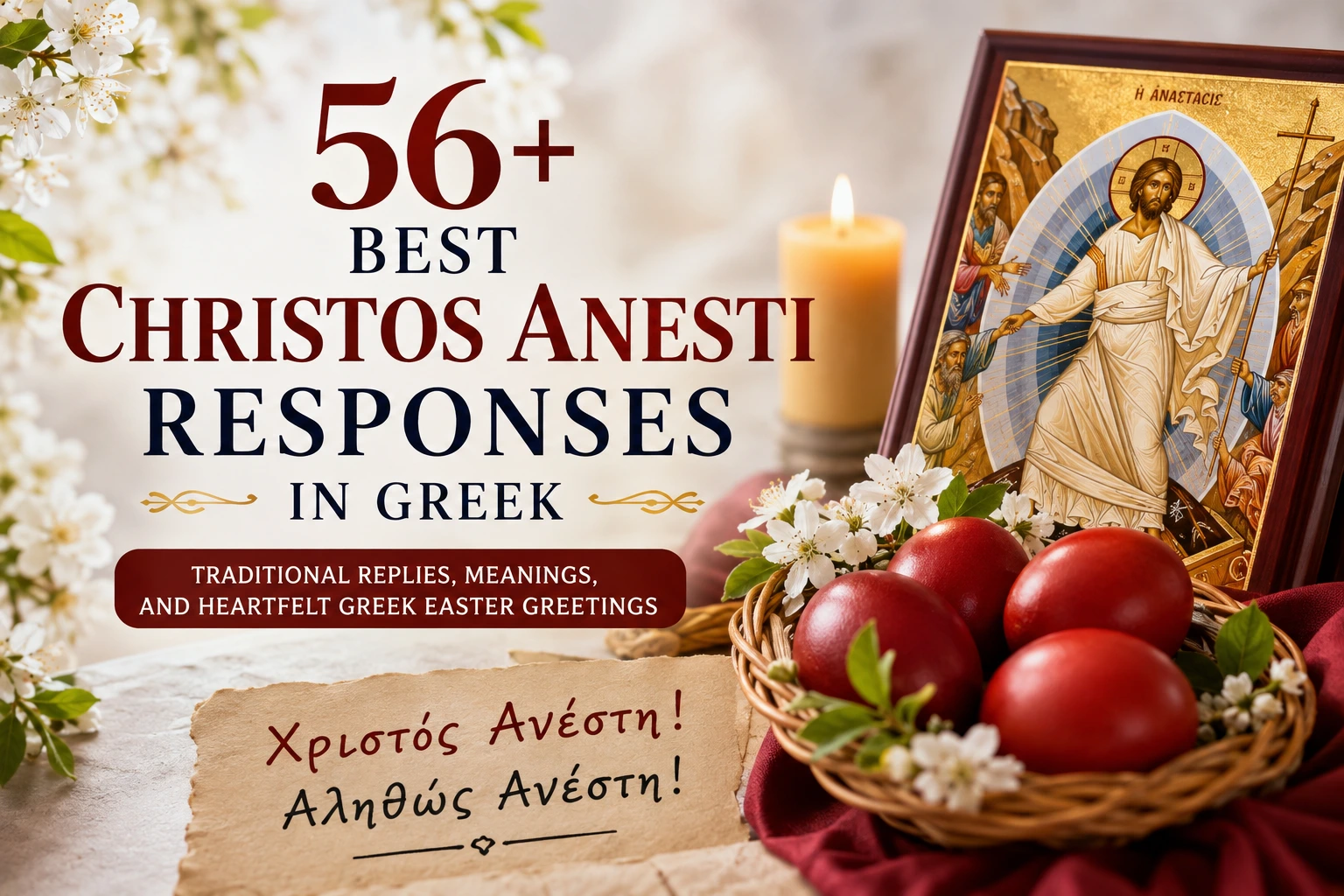
Every Easter season brings heartfelt greetings that reflect faith, joy, and tradition. Among the most meaningful is the Greek phrase “Christos Anesti”, a timeless proclamation celebrating the resurrection of Jesus Christ. Whether shared during church services, family gatherings, or Easter messages, this greeting carries deep spiritual significance and symbolizes hope, renewal, and victory over death.
While the traditional response is widely recognized, there are many respectful and heartfelt ways to reply depending on the setting and your relationship with the speaker. Learning the best Christos Anesti responses in Greek helps you communicate with greater authenticity and cultural appreciation. Whether you are attending a Greek Orthodox Easter celebration, writing a greeting card, or simply wishing someone well, these responses allow you to honor the tradition while expressing warmth and sincerity.
What Does Best Christos Anesti Responses in Greek Mean?
The phrase “Christos Anesti” (Χριστός Ανέστη) literally means “Christ is Risen.” It is the traditional Easter greeting used by Greek Orthodox Christians to celebrate the resurrection of Jesus Christ.
The customary response is “Alithos Anesti” (Αληθώς Ανέστη), meaning “Truly, He is Risen.” This exchange reflects faith, joy, and shared celebration during the Easter season.
Beyond its religious meaning, the greeting symbolizes hope, renewal, love, and the triumph of life over death. It is spoken with warmth and reverence among family, friends, church members, and even strangers during Orthodox Easter.
When to Use It
The greeting Christos Anesti and its responses are commonly used throughout the Easter season in Greek Orthodox communities.
During Easter Church Services
After the midnight Resurrection service, worshippers greet one another with the traditional exchange.
Example:
Person A: Christos Anesti.
Person B: Alithos Anesti.
Family Gatherings
Families often exchange the greeting before sharing Easter meals.
Example:
Christos Anesti! Wishing you peace and happiness this Easter.
Greeting Cards and Messages
The phrase is frequently included in Easter cards, emails, and social media posts.
Example:
Christos Anesti! May God’s blessings be with you always.
Community Celebrations
The greeting is appropriate when meeting friends, neighbors, or members of the Greek Orthodox community throughout the Easter period.
Is It Polite or Professional?
Yes. Christos Anesti and its traditional response are both respectful and appropriate in religious, cultural, and many professional settings where Orthodox Easter is observed.
In formal settings, using the traditional response Alithos Anesti demonstrates cultural awareness and respect for Greek Orthodox customs.
In casual conversations, additional warm wishes may follow the traditional response, making the exchange feel even more personal. Whether spoken in church, written in an email, or shared in a greeting card, these expressions remain timeless, respectful, and meaningful.
Traditional and Meaningful Responses
1. Αληθώς Ανέστη (Alithos Anesti)
Meaning: Truly, He is Risen.
Tone: Traditional, religious, respectful.
Example Sentence: Christos Anesti! Alithos Anesti!
This is the official and universally accepted response within the Greek Orthodox Church.
Purpose and Personalization: Use this in virtually every Easter greeting for the most authentic response.
2. Χριστός Ανέστη και Χρόνια Πολλά (Christos Anesti kai Chronia Polla)
Meaning: Christ is Risen and many happy years.
Tone: Warm and celebratory.
Example Sentence: Christos Anesti kai Chronia Polla to you and your family.
This combines the Easter greeting with wishes for health and happiness.
3. Αληθώς ο Κύριος Ανέστη (Alithos o Kyrios Anesti)
Meaning: Truly, the Lord has risen.
Tone: Formal and devotional.
Example Sentence: Alithos o Kyrios Anesti. May God bless your family.
This response emphasizes the religious significance of Easter.
4. Δόξα τω Θεώ (Doxa to Theo)
Meaning: Glory to God.
Tone: Reverent and spiritual.
Example Sentence: Christos Anesti! Doxa to Theo.
This expression is often used alongside traditional Easter greetings.
5. Ευλογημένο Πάσχα (Evlogimeno Pascha)
Meaning: Blessed Easter.
Tone: Warm and respectful.
Example Sentence: Evlogimeno Pascha to you and your loved ones.
Perfect when offering additional Easter blessings.
6. Καλή Ανάσταση (Kali Anastasi)
Meaning: Happy Resurrection.
Tone: Friendly and traditional.
Example Sentence: Kali Anastasi and may peace be with you.
Although commonly used before Easter, it is also heard around the celebration.
7. Ο Θεός να σας ευλογεί (O Theos na sas evlogei)
Meaning: May God bless you.
Tone: Religious and heartfelt.
Example Sentence: Alithos Anesti. O Theos na sas evlogei.
This adds a personal blessing after the traditional response.
8. Χαρούμενο Πάσχα (Charoumeno Pascha)
Meaning: Happy Easter.
Tone: Friendly and joyful.
Example Sentence: Charoumeno Pascha to your entire family.
Suitable for both spoken greetings and Easter cards.
9. Ειρήνη και Αγάπη (Eirini kai Agapi)
Meaning: Peace and love.
Tone: Warm and meaningful.
Example Sentence: Wishing you Eirini kai Agapi this Easter.
A beautiful expression emphasizing Christian values.
10. Να είστε πάντα καλά (Na eiste panta kala)
Meaning: May you always be well.
Tone: Caring and sincere.
Example Sentence: Alithos Anesti. Na eiste panta kala.
This is a thoughtful blessing for family and friends.
11. Ο Χριστός μαζί σας (O Christos mazi sas)
Meaning: May Christ be with you.
Tone: Spiritual and comforting.
Example Sentence: O Christos mazi sas during this blessed Easter season.
Ideal when offering encouragement and faith.
12. Υγεία και Ευτυχία (Ygeia kai Eftychia)
Meaning: Health and happiness.
Tone: Warm and optimistic.
Example Sentence: Wishing you Ygeia kai Eftychia this Easter.
Often paired with Easter greetings for loved ones.
13. Καλό Πάσχα (Kalo Pascha)
Meaning: Happy Easter.
Tone: Friendly and traditional.
Example Sentence: Kalo Pascha to you and your family.
A common seasonal greeting throughout Greece.
14. Η Χάρη Του Θεού μαζί σας (I Chari Tou Theou mazi sas)
Meaning: May God’s grace be with you.
Tone: Formal and devotional.
Example Sentence: Alithos Anesti. I Chari Tou Theou mazi sas.
Appropriate in religious conversations and greeting cards.
15. Ευλογίες σε εσάς και την οικογένειά σας (Evlogies se esas kai tin oikogeneia sas)
Meaning: Blessings to you and your family.
Tone: Warm and heartfelt.
Example Sentence: Christos Anesti! Evlogies se esas kai tin oikogeneia sas.
A wonderful response for family, relatives, and close friends.
16. Με τις ευλογίες της Ανάστασης (Me tis evlogies tis Anastasis)
Meaning: With the blessings of the Resurrection.
Tone: Spiritual and respectful.
Example Sentence: Alithos Anesti. Me tis evlogies tis Anastasis.
This response expresses gratitude for the blessings of Easter and is suitable for formal greetings.
Purpose and Personalization: Ideal for Easter cards, church messages, and conversations with older family members.
17. Είθε η Ανάσταση να σας γεμίσει χαρά (Eithe i Anastasi na sas gemisei chara)
Meaning: May the Resurrection fill you with joy.
Tone: Warm and inspirational.
Example Sentence: Eithe i Anastasi na sas gemisei chara kai elpida.
A thoughtful response that emphasizes hope and happiness.
18. Είθε ο Αναστημένος Χριστός να σας προστατεύει (Eithe o Anastimenos Christos na sas prostatevei)
Meaning: May the Risen Christ protect you.
Tone: Devotional and caring.
Example Sentence: Alithos Anesti. Eithe o Anastimenos Christos na sas prostatevei.
A meaningful blessing for friends and loved ones.
19. Κάθε ευλογία σε εσάς (Kathe evlogia se esas)
Meaning: Every blessing to you.
Tone: Formal and sincere.
Example Sentence: Kathe evlogia se esas kai stin oikogeneia sas.
A graceful addition to traditional Easter greetings.
20. Με ειρήνη και πίστη (Me eirini kai pisti)
Meaning: With peace and faith.
Tone: Gentle and spiritual.
Example Sentence: Me eirini kai pisti se olous.
Perfect for religious conversations and Easter wishes.
21. Η Ανάσταση να φέρει ελπίδα (I Anastasi na ferei elpida)
Meaning: May the Resurrection bring hope.
Tone: Encouraging and heartfelt.
Example Sentence: I Anastasi na ferei elpida kai chara sti zoi sas.
This response focuses on renewal and optimism.
22. Να έχετε ένα ευλογημένο Πάσχα (Na echete ena evlogimeno Pascha)
Meaning: Have a blessed Easter.
Tone: Polite and warm.
Example Sentence: Na echete ena evlogimeno Pascha me tin oikogeneia sas.
Suitable for both formal and casual Easter greetings.
23. Η αγάπη του Χριστού να είναι μαζί σας (I agapi tou Christou na einai mazi sas)
Meaning: May the love of Christ be with you.
Tone: Spiritual and comforting.
Example Sentence: I agapi tou Christou na einai mazi sas panta.
A beautiful blessing to accompany the traditional response.
24. Χαρά και φως σε όλους (Chara kai fos se olous)
Meaning: Joy and light to everyone.
Tone: Positive and uplifting.
Example Sentence: Chara kai fos se olous afto to Pascha.
An inspiring Easter wish that highlights hope.
25. Ο Θεός να σας χαρίζει υγεία (O Theos na sas charizei ygeia)
Meaning: May God grant you health.
Tone: Caring and respectful.
Example Sentence: O Theos na sas charizei ygeia kai eirini.
A thoughtful blessing often shared with elders.
26. Με αγάπη και ευχές (Me agapi kai efches)
Meaning: With love and best wishes.
Tone: Friendly and affectionate.
Example Sentence: Me agapi kai efches gia ena evlogimeno Pascha.
Ideal for Easter cards and personal messages.
27. Καλή φώτιση (Kali fotisi)
Meaning: Wishing you enlightenment.
Tone: Spiritual and reflective.
Example Sentence: Kali fotisi kai Kalo Pascha.
A meaningful expression focusing on spiritual growth.
28. Είθε η χαρά της Ανάστασης να σας συνοδεύει (Eithe i chara tis Anastasis na sas synodevei)
Meaning: May the joy of the Resurrection accompany you.
Tone: Warm and inspiring.
Example Sentence: Eithe i chara tis Anastasis na sas synodevei kathe mera.
A beautiful response for greeting cards.
29. Ο Θεός να σας δίνει δύναμη (O Theos na sas dinei dynami)
Meaning: May God give you strength.
Tone: Encouraging and supportive.
Example Sentence: O Theos na sas dinei dynami kai elpida.
Especially meaningful for someone facing challenges.
30. Ευλογημένη Ανάσταση (Evlogimeni Anastasi)
Meaning: Blessed Resurrection.
Tone: Traditional and respectful.
Example Sentence: Evlogimeni Anastasi se olous.
A classic Easter blessing.
31. Χαρά στις καρδιές σας (Chara stis kardies sas)
Meaning: Joy in your hearts.
Tone: Warm and cheerful.
Example Sentence: Chara stis kardies sas aftes tis agies meres.
A heartfelt Easter wish for loved ones.
32. Η ειρήνη του Κυρίου μαζί σας (I eirini tou Kyriou mazi sas)
Meaning: May the peace of the Lord be with you.
Tone: Formal and religious.
Example Sentence: I eirini tou Kyriou mazi sas panta.
Appropriate for church and formal greetings.
33. Είθε κάθε μέρα να είναι γεμάτη ευλογίες (Eithe kathe mera na einai gemati evlogies)
Meaning: May every day be filled with blessings.
Tone: Hopeful and uplifting.
Example Sentence: Eithe kathe mera na einai gemati evlogies gia esas.
A meaningful response extending beyond Easter.
34. Ο Χριστός να φωτίζει τον δρόμο σας (O Christos na fotizei ton dromo sas)
Meaning: May Christ light your path.
Tone: Inspirational and spiritual.
Example Sentence: O Christos na fotizei ton dromo sas panta.
A thoughtful blessing for life’s journey.
35. Με πίστη και αισιοδοξία (Me pisti kai aisiodoxia)
Meaning: With faith and optimism.
Tone: Encouraging and positive.
Example Sentence: Me pisti kai aisiodoxia gia ena kalitero avrio.
An excellent response emphasizing hope.
36. Εύχομαι κάθε καλό (Efchomai kathe kalo)
Meaning: I wish you every good thing.
Tone: Friendly and sincere.
Example Sentence: Efchomai kathe kalo se esas kai tin oikogeneia sas.
A versatile Easter blessing.
37. Η Ανάσταση να γεμίσει την καρδιά σας με ειρήνη (I Anastasi na gemisei tin kardia sas me eirini)
Meaning: May the Resurrection fill your heart with peace.
Tone: Gentle and heartfelt.
Example Sentence: I Anastasi na gemisei tin kardia sas me eirini kai agapi.
Perfect for meaningful Easter greetings.
38. Με φως και ελπίδα (Me fos kai elpida)
Meaning: With light and hope.
Tone: Inspirational.
Example Sentence: Me fos kai elpida se kathe neo xekinima.
A beautiful expression symbolizing renewal.
39. Είθε η αγάπη του Θεού να σας περιβάλλει (Eithe i agapi tou Theou na sas perivalei)
Meaning: May God’s love surround you.
Tone: Devotional and comforting.
Example Sentence: Eithe i agapi tou Theou na sas perivalei panta.
Ideal for religious Easter messages.
40. Να έχετε ειρηνικές και ευλογημένες ημέρες (Na echete eirinikes kai evlogimenes imeres)
Meaning: May you have peaceful and blessed days.
Tone: Formal and caring.
Example Sentence: Na echete eirinikes kai evlogimenes imeres meta to Pascha.
A respectful response suitable for family, friends, and professional acquaintances.
41. Ο Αναστημένος Χριστός να σας χαρίζει χαρά (O Anastimenos Christos na sas charizei chara)
Meaning: May the Risen Christ grant you joy.
Tone: Warm and devotional.
Example Sentence: O Anastimenos Christos na sas charizei chara kai eirini.
This heartfelt blessing is appropriate for family members, close friends, and church communities.
Purpose and Personalization: Use it to express sincere Easter blessings while emphasizing joy and faith.
42. Με την ευλογία του Κυρίου (Me tin evlogia tou Kyriou)
Meaning: With the Lord’s blessing.
Tone: Formal and respectful.
Example Sentence: Alithos Anesti. Me tin evlogia tou Kyriou panta.
This expression is often included in formal Easter greetings and religious correspondence.
43. Είθε το φως της Ανάστασης να σας οδηγεί (Eithe to fos tis Anastasis na sas odigei)
Meaning: May the light of the Resurrection guide you.
Tone: Inspirational and spiritual.
Example Sentence: Eithe to fos tis Anastasis na sas odigei se kathe sas vima.
A meaningful response that symbolizes guidance and hope.
44. Ο Θεός να ευλογεί το σπίτι σας (O Theos na evlogei to spiti sas)
Meaning: May God bless your home.
Tone: Caring and heartfelt.
Example Sentence: O Theos na evlogei to spiti sas kai tin oikogeneia sas.
An excellent Easter blessing for families.
45. Με υγεία και ευλογία (Me ygeia kai evlogia)
Meaning: With health and blessings.
Tone: Warm and encouraging.
Example Sentence: Me ygeia kai evlogia se olous afto to Pascha.
A simple yet meaningful Easter wish.
46. Ο Κύριος να σας δίνει σοφία (O Kyrios na sas dinei sofia)
Meaning: May the Lord grant you wisdom.
Tone: Spiritual and thoughtful.
Example Sentence: O Kyrios na sas dinei sofia kai dynami.
This response is especially fitting for mentors, elders, or graduates.
47. Καλή συνέχεια με τις ευλογίες του Θεού (Kali synecheia me tis evlogies tou Theou)
Meaning: Wishing you all the best with God’s blessings.
Tone: Friendly and supportive.
Example Sentence: Kali synecheia me tis evlogies tou Theou.
This phrase extends Easter wishes beyond the holiday itself.
48. Η Ανάσταση να φέρει φως στη ζωή σας (I Anastasi na ferei fos sti zoi sas)
Meaning: May the Resurrection bring light into your life.
Tone: Inspirational and uplifting.
Example Sentence: I Anastasi na ferei fos sti zoi sas kai stin oikogeneia sas.
Ideal for heartfelt Easter messages.
49. Πάντα με την ευλογία του Χριστού (Panta me tin evlogia tou Christou)
Meaning: Always with Christ’s blessing.
Tone: Devotional and warm.
Example Sentence: Panta me tin evlogia tou Christou.
A thoughtful blessing suitable for religious greetings.
50. Είθε να έχετε ειρήνη και χαρά (Eithe na echete eirini kai chara)
Meaning: May you have peace and joy.
Tone: Warm and sincere.
Example Sentence: Eithe na echete eirini kai chara se kathe mera.
A timeless expression that works well beyond Easter.
51. Καλές γιορτές με υγεία (Kales giortes me ygeia)
Meaning: Happy holidays with good health.
Tone: Friendly and cheerful.
Example Sentence: Kales giortes me ygeia kai eftychia.
This is commonly used during the Easter holiday season.
52. Με την αγάπη του Αναστημένου Χριστού (Me tin agapi tou Anastimenou Christou)
Meaning: With the love of the Risen Christ.
Tone: Reverent and heartfelt.
Example Sentence: Me tin agapi tou Anastimenou Christou na poreveste panta.
A meaningful expression for religious conversations.
53. Η πίστη να σας δίνει δύναμη (I pisti na sas dinei dynami)
Meaning: May faith give you strength.
Tone: Encouraging and inspirational.
Example Sentence: I pisti na sas dinei dynami se kathe dokimasia.
Especially appropriate when offering comfort and encouragement.
54. Είθε κάθε μέρα να είναι φωτεινή (Eithe kathe mera na einai foteini)
Meaning: May every day be bright.
Tone: Positive and optimistic.
Example Sentence: Eithe kathe mera na einai foteini kai gemati chara.
A lovely blessing emphasizing hope and positivity.
55. Ο Χριστός να σας γεμίζει ελπίδα (O Christos na sas gemizei elpida)
Meaning: May Christ fill you with hope.
Tone: Spiritual and comforting.
Example Sentence: O Christos na sas gemizei elpida kai eirini.
An uplifting Easter wish suitable for all ages.
56. Χρόνια Πολλά και Ευλογημένο Πάσχα (Chronia Polla kai Evlogimeno Pascha)
Meaning: Many happy years and a blessed Easter.
Tone: Traditional and celebratory.
Example Sentence: Chronia Polla kai Evlogimeno Pascha se esas kai stin oikogeneia sas.
One of the most popular Greek Easter greetings that combines celebration with heartfelt blessings.
57. Είθε η χάρη του Θεού να είναι πάντα μαζί σας (Eithe i chari tou Theou na einai panta mazi sas)
Meaning: May God’s grace always be with you.
Tone: Formal, spiritual, and heartfelt.
Example Sentence: Eithe i chari tou Theou na einai panta mazi sas. Alithos Anesti!
This elegant blessing is perfect for Easter cards, church messages, and formal greetings.
Conclusion
The traditional response “Alithos Anesti“ remains the most recognized and meaningful reply to “Christos Anesti,” but there are many other beautiful Greek expressions that can enrich your Easter greetings. Whether you prefer a simple traditional response or a heartfelt blessing, each phrase reflects the joy, hope, and spiritual significance of Christ’s Resurrection. By using these authentic Greek Easter responses naturally, you can show respect for Orthodox traditions while making your conversations, messages, and greeting cards feel more thoughtful and memorable.
Discover more
funny responses to what do you know