
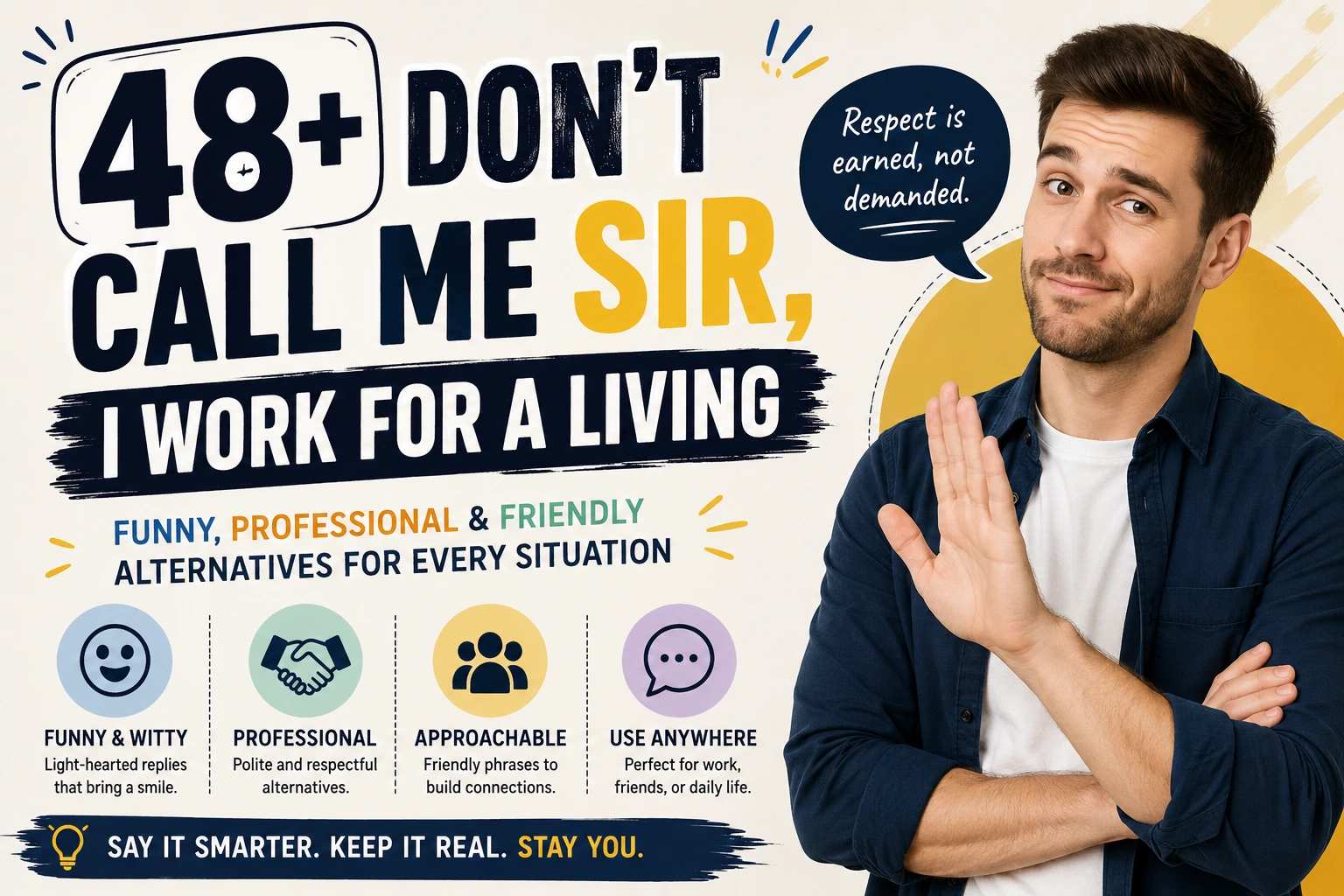
Have you ever heard someone jokingly say, “Don’t call me sir, I work for a living” after being addressed as “sir”? The phrase often catches people off guard, but it’s usually meant to lighten the mood rather than offend. It’s a witty expression that pokes fun at formal titles while suggesting the speaker prefers to be seen as approachable and down-to-earth.
Many people search for alternatives to this saying because they want to respond with humour, sound more personable, or simply avoid coming across as overly formal. Whether you’re chatting with coworkers, meeting new people, or sharing a laugh with friends, using creative alternatives can make conversations feel warmer and more memorable. In this guide, you’ll discover clever, friendly, and professional ways to express the same idea while matching the tone of different situations.
What Does “Don’t Call Me Sir, I Work for a Living” Mean?
The phrase “Don’t call me sir, I work for a living” is a humorous response to someone addressing you as “sir.” Rather than rejecting respect, it’s a light-hearted way of saying that you don’t take yourself too seriously and don’t feel the need for formal titles.
The saying has military roots. In many versions of the joke, enlisted personnel would jokingly say it because “sir” was traditionally used for commissioned officers rather than enlisted service members. Over time, the phrase spread into everyday conversation and is now often used by people who prefer a relaxed, informal atmosphere.
In most situations, it’s meant to make people smile—not to criticize someone for being polite.
When to Use It
This phrase works best in informal settings where humour is welcome.
Some common situations include:
- A customer politely calls you “sir” in a casual conversation.
- A coworker jokingly uses formal titles around the office.
- Friends tease each other about acting overly professional.
- Someone wants to break the ice with light-hearted humour.
Examples
- “Don’t call me sir—I work for a living!”
- “Please, just call me Mike. ‘Sir’ makes me feel ancient.”
- “No need for the formalities. First names work just fine.”
In professional meetings, interviews, or conversations with people you don’t know well, it’s usually better to choose a more neutral alternative.
Is It Polite or Professional?
The phrase is polite when used playfully, but it isn’t always professional.
Among friends, coworkers, or regular customers, it can help create a friendly and relaxed atmosphere. It shows humility and often gets a laugh.
However, in formal workplaces, client meetings, official emails, or conversations with senior executives, using this expression may come across as overly casual or confusing. In those settings, a simple response like “Please, call me John” is usually more appropriate.
The best approach is to read the room. If everyone is joking and keeping things informal, this phrase fits perfectly. If the setting is formal, choose a respectful alternative instead.
1. Please, Just Call Me by My First Name
Meaning: You prefer a friendly and informal way of being addressed.
Tone: Friendly, Professional
Example Sentence: “Please, just call me David. No need for formal titles.”
Explanation: This is one of the safest alternatives for both workplace and casual conversations.
Purpose & Personalization: It creates an approachable impression without sounding dismissive.
2. No Need for the Formalities
Meaning: Formal titles aren’t necessary.
Tone: Relaxed, Polite
Example Sentence: “No need for the formalities—we’re all on the same team.”
Explanation: Great for making people feel comfortable.
Purpose & Personalization: Encourages a friendly atmosphere from the beginning.
3. ‘Sir’ Makes Me Feel Old
Meaning: A humorous way to avoid formal titles.
Tone: Funny, Casual
Example Sentence: “‘Sir’ makes me feel old. Just call me Ben.”
Explanation: A classic joke that usually earns a smile.
Purpose & Personalization: Perfect for light-hearted conversations.
4. I’m Just a Regular Guy
Meaning: You’re humble and don’t see yourself as above anyone else.
Tone: Warm, Humble
Example Sentence: “I’m just a regular guy—no need to call me sir.”
Explanation: Shows humility while keeping the conversation friendly.
Purpose & Personalization: Helps people feel more relaxed around you.
5. Titles Aren’t Really My Thing
Meaning: You don’t care much for formal titles.
Tone: Casual, Friendly
Example Sentence: “Titles aren’t really my thing. My first name works perfectly.”
Explanation: A modern, conversational alternative.
Purpose &Personalization: Best suited to creative or relaxed workplaces.
6. Let’s Keep It Casual
Meaning: You prefer an informal conversation.
Tone: Friendly
Example Sentence: “Let’s keep it casual—just call me Chris.”
Explanation: Simple and welcoming.
Purpose & Personalization: Encourages open communication.
7. I’m More Comfortable Without Titles
Meaning: Formal titles make you uncomfortable.
Tone: Respectful
Example Sentence: “I’m more comfortable without titles. Please call me Alex.”
Explanation: A polite way to express your preference.
Purpose & Personalization: Works well in professional environments.
8. First Names Are Perfect
Meaning: Using first names is enough.
Tone: Professional, Friendly
Example Sentence: “First names are perfect around here.”
Explanation: Keeps the interaction warm and approachable.
Purpose & Personalization: Ideal for offices with relaxed cultures.
9. I Promise I Don’t Bite
Meaning: You’re approachable and easy to talk to.
Tone: Humorous
Example Sentence: “I promise I don’t bite—just call me Ethan.”
Explanation: Adds humour while putting others at ease.
Purpose & Personalization: Great for breaking the ice.
10. You Can Skip the ‘Sir’
Meaning: Formal titles aren’t necessary.
Tone: Casual, Polite
Example Sentence: “You can skip the ‘sir.’ My name works just fine.”
Explanation: Direct without sounding rude.
Purpose & Personalization: Works in almost every informal conversation.
11. We’re All Equals Here
Meaning: Everyone deserves the same respect regardless of title.
Tone: Respectful, Inclusive
Example Sentence: “We’re all equals here, so first names are fine.”
Explanation: Promotes teamwork and mutual respect.
Purpose & Personalization: Excellent in collaborative workplaces.
12. No Pedestal Needed
Meaning: You don’t want special treatment.
Tone: Humble, Light-hearted
Example Sentence: “No pedestal needed—I’m happy with my first name.”
Explanation: A creative alternative that reflects humility.
Purpose & Personalization: Best used with people who appreciate playful language.
13. I’m Just Doing My Job
Meaning: You don’t see yourself as more important than others.
Tone: Humble
Example Sentence: “I’m just doing my job, so no need for ‘sir.'”
Explanation: Highlights modesty.
Purpose & Personalization: Especially suitable in customer service roles.
14. Call Me Whatever’s Easiest
Meaning: You’re flexible about how people address you.
Tone: Easy-going
Example Sentence: “Call me whatever’s easiest—just keep it friendly.”
Explanation: Shows openness and approachability.
Purpose & Personalization: Great for casual introductions.
15. I’d Rather Be Known by My Name
Meaning: Personal connection matters more than titles.
Tone: Warm, Professional
Example Sentence: “I’d rather be known by my name than my title.”
Explanation: Encourages authentic communication.
Purpose & Personalization: Suitable for both business and personal settings.
16. Save ‘Sir’ for Someone More Important
Meaning: A humorous way to downplay your status.
Tone: Funny, Self-deprecating
Example Sentence: “Save ‘sir’ for someone more important—I’m just happy to help.”
Explanation: Uses humour to make others feel comfortable.
Purpose & Personalization: Ideal when you want to sound humble without rejecting someone’s respect.
17. I’m No VIP—Just Call Me by My Name
Meaning: You don’t consider yourself above anyone else.
Tone: Humble, Friendly
Example Sentence: “I’m no VIP—just call me Daniel.”
Explanation: A modest response that keeps the conversation relaxed.
Purpose & Personalization: Ideal for casual workplace conversations and introductions.
18. No Titles Required Around Here
Meaning: Formal titles aren’t necessary.
Tone: Casual, Professional
Example Sentence: “No titles required around here—we’re all colleagues.”
Explanation: Encourages a comfortable and inclusive environment.
Purpose & Personalization: Great for modern offices with an informal culture.
19. I’m Happy Being Just Me
Meaning: You don’t need a title to define you.
Tone: Warm, Genuine
Example Sentence: “I’m happy being just me. Feel free to use my first name.”
Explanation: Reflects confidence without sounding arrogant.
Purpose & Personalization: Works well in both personal and professional settings.
20. Let’s Leave the Formal Stuff at the Door
Meaning: You prefer relaxed conversations.
Tone: Friendly, Light-hearted
Example Sentence: “Let’s leave the formal stuff at the door and enjoy the conversation.”
Explanation: Helps create an easy-going atmosphere.
Purpose & Personalization: Perfect for networking events and team gatherings.
21. My Name Works Just Fine
Meaning: Your first name is all people need to use.
Tone: Polite, Simple
Example Sentence: “My name works just fine. No need for ‘sir.'”
Explanation: A straightforward and respectful alternative.
Purpose & Personalization: Suitable for almost every informal interaction.
22. You Can Keep Things Informal
Meaning: You’re comfortable with casual communication.
Tone: Friendly
Example Sentence: “You can keep things informal. Just call me Liam.”
Explanation: Makes others feel more relaxed.
Purpose & Personalization: Excellent for meeting new teammates.
23. I’m Not Big on Formal Titles
Meaning: You don’t place much importance on titles.
Tone: Casual, Honest
Example Sentence: “I’m not big on formal titles, so feel free to use my name.”
Explanation: Clearly expresses your preference without sounding dismissive.
Purpose & Personalization: Great for creative workplaces and startups.
24. I Answer Faster to My Name Anyway
Meaning: A playful way to encourage using your first name.
Tone: Funny, Friendly
Example Sentence: “I answer faster to my name anyway.”
Explanation: Adds a touch of humour while making your preference clear.
Purpose & Personalization: A fun icebreaker during introductions.
25. I Like Keeping Things Simple
Meaning: You prefer uncomplicated communication.
Tone: Relaxed
Example Sentence: “I like keeping things simple—just call me Noah.”
Explanation: Shows you’re approachable and easy to talk to.
Purpose & Personalization: Suitable for both clients and coworkers.
26. No Need to Put Me on a Pedestal
Meaning: You don’t expect special treatment.
Tone: Humble
Example Sentence: “No need to put me on a pedestal. I’m just here to help.”
Explanation: Demonstrates modesty and teamwork.
Purpose & Personalization: Ideal for leadership roles where you want to appear approachable.
27. I’m One of the Team
Meaning: You’re part of the group, not above it.
Tone: Encouraging, Inclusive
Example Sentence: “I’m one of the team, so first names are perfect.”
Explanation: Reinforces equality among coworkers.
Purpose & Personalization: Excellent for managers and supervisors.
28. Just Another Hardworking Person
Meaning: You’re no different from everyone else.
Tone: Humble, Friendly
Example Sentence: “I’m just another hardworking person. No need for formal titles.”
Explanation: Emphasises humility and respect.
Purpose & Personalization: A thoughtful response in customer-facing roles.
29. You Make Me Sound More Important Than I Am
Meaning: A humorous response to being called “sir.”
Tone: Funny, Self-deprecating
Example Sentence: “You make me sound more important than I am.”
Explanation: Keeps the mood light while remaining polite.
Purpose & Personalization: Great for casual conversations with friends or colleagues.
30. Let’s Skip the Fancy Titles
Meaning: You’d rather have a normal conversation.
Tone: Casual
Example Sentence: “Let’s skip the fancy titles and get started.”
Explanation: Creates a relaxed and welcoming tone.
Purpose & Personalization: Perfect for workshops, meetings, and team discussions.
31. I’m Just Here to Help
Meaning: Your focus is helping others, not receiving formal recognition.
Tone: Warm, Professional
Example Sentence: “I’m just here to help. Please call me Ryan.”
Explanation: Shows kindness and humility.
Purpose & Personalization: Ideal for teachers, customer service representatives, and mentors.
32. We’re All People at the End of the Day
Meaning: Titles don’t change our shared humanity.
Tone: Thoughtful, Mature
Example Sentence: “We’re all people at the end of the day, so first names are perfectly fine.”
Explanation: A meaningful reminder that respect comes from actions, not titles.
Purpose & Personalization: Best suited to thoughtful conversations where you want to promote equality and genuine connection.
33. I’m Flattered, but My Name Is Fine
Meaning: You appreciate the respect but prefer a more personal approach.
Tone: Polite, Friendly
Example Sentence: “I’m flattered, but my name is fine. Thanks for being so respectful.”
Explanation: Shows gratitude while gently steering the conversation toward a first-name basis.
Purpose & Personalization: Ideal when speaking with new acquaintances or customers.
34. Let’s Keep It Friendly
Meaning: You’d rather have a relaxed and approachable conversation.
Tone: Warm, Casual
Example Sentence: “Let’s keep it friendly—just call me Jake.”
Explanation: Encourages an open, comfortable atmosphere.
Purpose & Personalization: Great for team environments and casual business settings.
35. No Ceremony Needed
Meaning: Formal treatment isn’t necessary.
Tone: Light-hearted, Professional
Example Sentence: “No ceremony needed. My first name works perfectly.”
Explanation: A clever way to downplay unnecessary formality.
Purpose & Personalization: Suitable for meetings, workshops, and networking events.
36. You Can Drop the Formalities
Meaning: There’s no need to use titles.
Tone: Polite, Relaxed
Example Sentence: “You can drop the formalities. We’re all here to work together.”
Explanation: Keeps the conversation comfortable while remaining respectful.
Purpose & Personalization: Perfect for collaborative workplaces.
37. I Prefer First Names
Meaning: You like conversations to feel personal rather than formal.
Tone: Professional, Friendly
Example Sentence: “I prefer first names—it makes conversations much easier.”
Explanation: Simple, clear, and widely accepted.
Purpose & Personalization: Works well in offices with modern workplace cultures.
38. No Need to Be So Formal
Meaning: You appreciate the respect but don’t require titles.
Tone: Casual
Example Sentence: “No need to be so formal. Just call me Ethan.”
Explanation: A gentle way to create a relaxed tone.
Purpose & Personalization: Best for informal conversations.
39. I Left My Fancy Title at Home
Meaning: A humorous way to reject unnecessary formality.
Tone: Funny
Example Sentence: “I left my fancy title at home today.”
Explanation: Adds humour without making the other person uncomfortable.
Purpose & Personalization: Great for breaking the ice.
40. The Name’s Enough for Me
Meaning: Your name is all the recognition you need.
Tone: Humble
Example Sentence: “The name’s enough for me. Thanks anyway.”
Explanation: A confident but modest response.
Purpose & Personalization: Suitable in both personal and workplace conversations.
41. Respect Doesn’t Need a Title
Meaning: Genuine respect comes from actions, not formal language.
Tone: Thoughtful, Mature
Example Sentence: “Respect doesn’t need a title. I appreciate your kindness.”
Explanation: A meaningful response that emphasizes mutual respect.
Purpose & Personalization: Ideal for thoughtful discussions.
42. Just Think of Me as One of the Crew
Meaning: You’re part of the team like everyone else.
Tone: Friendly, Inclusive
Example Sentence: “Just think of me as one of the crew.”
Explanation: Reinforces teamwork and equality.
Purpose & Personalization: Excellent for managers and supervisors.
43. I’m Happy Without the Extra Labels
Meaning: Titles aren’t important to you.
Tone: Relaxed
Example Sentence: “I’m happy without the extra labels. My first name is perfect.”
Explanation: Politely shifts the conversation away from formal titles.
Purpose & Personalization: Works well in creative and collaborative environments.
44. No Rank Required Here
Meaning: Everyone should feel equal.
Tone: Humorous, Friendly
Example Sentence: “No rank required here—we’re all on the same side.”
Explanation: A playful alternative inspired by the original saying.
Purpose & Personalization: Great for informal team settings.
45. I’m More Comfortable Keeping It Simple
Meaning: You prefer straightforward communication.
Tone: Professional, Calm
Example Sentence: “I’m more comfortable keeping it simple. Just call me Owen.”
Explanation: Sounds respectful without being overly formal.
Purpose & Personalization: A good choice in professional conversations.
46. I’d Rather Earn Respect Than a Title
Meaning: Your actions matter more than formal recognition.
Tone: Confident, Inspirational
Example Sentence: “I’d rather earn respect than a title.”
Explanation: Highlights character and integrity over status.
Purpose & Personalization: Particularly effective for leadership roles.
47. Let’s Focus on the Conversation, Not the Titles
Meaning: Meaningful communication matters more than formalities.
Tone: Thoughtful, Professional
Example Sentence: “Let’s focus on the conversation, not the titles.”
Explanation: Encourages genuine interaction.
Purpose & Personalization: Excellent during meetings or networking events.
48. Call Me by My Name—That’s More Than Enough
Meaning: You appreciate being addressed personally rather than formally.
Tone: Warm, Respectful
Example Sentence: “Call me by my name—that’s more than enough for me.”
Explanation: Ends the conversation on a friendly, approachable note while maintaining mutual respect.
Purpose & Personalization: One of the most versatile alternatives, suitable for casual conversations, workplaces, and everyday interactions.
Conclusion
The phrase “Don’t call me sir, I work for a living” has remained popular because it mixes humour, humility, and personality into a single memorable line. While it’s perfect for casual conversations, there are plenty of situations where a different expression feels more appropriate. Whether you want to sound professional, friendly, witty, or approachable, the right alternative can help you connect with people more naturally. By choosing words that fit the setting and your personality, you’ll create more comfortable and engaging conversations. Try these alternatives the next time someone calls you “sir,” and you’ll have the perfect response ready for any occasion.
Discover more
ways to say call me if you need anyone to talk to