
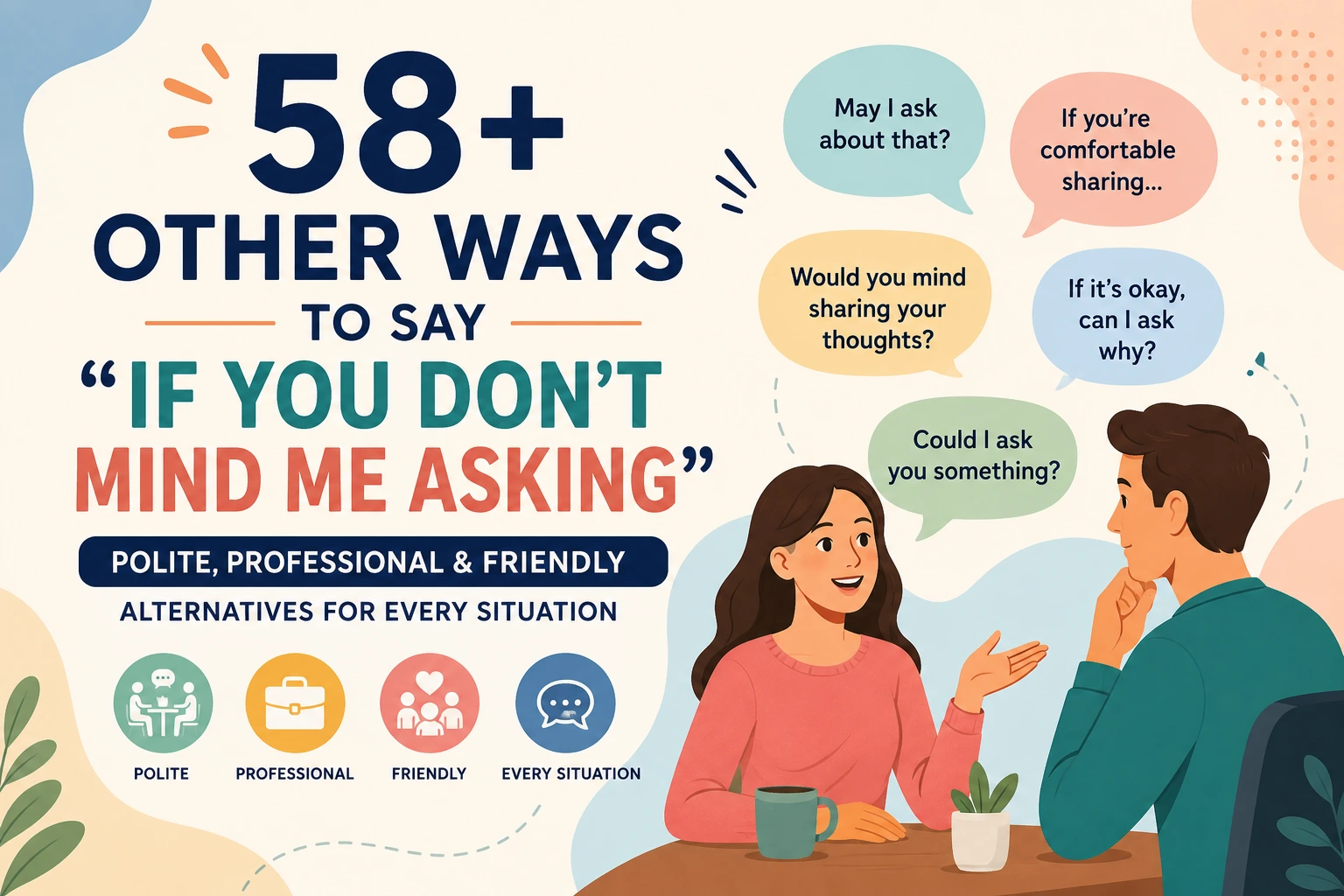
Some questions require a little extra care. Whether you’re asking about someone’s job, salary, age, plans, or personal experiences, beginning with a polite phrase can make the conversation feel more respectful and comfortable. That’s why many people use “if you don’t mind me asking” before asking something sensitive or personal.
While this expression is polite and widely accepted, using the same phrase repeatedly can sound predictable. Learning other ways to say “if you don’t mind me asking” helps your conversations feel more natural, thoughtful, and engaging. Whether you’re writing a professional email, chatting with a friend, or having a meaningful conversation, choosing the right alternative shows consideration for the other person’s feelings. In this guide, you’ll discover 58+ polite alternatives to “if you don’t mind me asking,” complete with meanings, examples, tones, and practical tips for every situation.
What Does “Other Ways to Say If You Don’t Mind Me Asking” Mean?
The phrase “if you don’t mind me asking” is a polite way to introduce a question that may be personal, sensitive, or private. It gives the other person the opportunity to decide whether they want to answer without feeling pressured.
People often use this expression before asking about topics such as careers, relationships, finances, health, or future plans. It softens the question and shows respect for the other person’s privacy.
Using alternative expressions can make your communication sound more natural, professional, or conversational while maintaining the same respectful tone.
When to Use It
These alternatives can be useful in many different situations.
In Casual Conversations
Example: “If you’re comfortable sharing, what inspired your career choice?”
In Professional Emails
Example: “May I ask what timeline you’re working with?”
During Networking Events
Example: “Would you mind sharing how you got started in this industry?”
With Friends
Example: “Can I ask you something a little personal?”
During Interviews
Example: “If it’s appropriate to ask, what challenges did your team face?”
Is It Polite or Professional?
Yes. Most alternatives to “if you don’t mind me asking” are considered both polite and professional when used appropriately.
In business settings, formal phrases such as “May I ask” or “If it’s appropriate to ask” sound respectful and polished. In casual conversations, expressions like “Can I ask you something?” or “If you’re comfortable sharing” feel friendly and approachable.
No matter which phrase you choose, your tone and timing are just as important as the words themselves. A genuine and respectful approach always makes personal questions easier to ask.
Formal and Professional Alternatives
1. May I Ask
Meaning: A polite way to introduce a question.
Tone: Formal and respectful.
Example Sentence: “May I ask how long you’ve been with the company?”
Explanation: One of the most professional alternatives.
Purpose: Ideal for meetings, interviews, and business emails.
2. If It’s Appropriate to Ask
Meaning: Acknowledging the question may be personal.
Tone: Professional.
Example Sentence: “If it’s appropriate to ask, what inspired your decision?”
Explanation: Shows respect for personal boundaries.
Purpose: Excellent for workplace conversations.
3. Would You Mind Sharing
Meaning: Politely inviting someone to answer.
Tone: Friendly and professional.
Example Sentence: “Would you mind sharing how you approached the project?”
Explanation: Sounds warm without being intrusive.
Purpose: Great for networking.
4. If You’re Comfortable Sharing
Meaning: Giving someone the freedom not to answer.
Tone: Considerate.
Example Sentence: “If you’re comfortable sharing, what made you choose this career?”
Explanation: Makes the other person feel respected.
Purpose: Perfect for sensitive conversations.
5. May I Inquire
Meaning: A formal way to ask a question.
Tone: Professional.
Example Sentence: “May I inquire about your availability next week?”
Explanation: Common in formal communication.
Purpose: Best for business emails and official discussions.
6. Would It Be Alright If I Asked
Meaning: Asking permission before asking a question.
Tone: Polite.
Example Sentence: “Would it be alright if I asked about your experience?”
Explanation: Shows courtesy before discussing personal matters.
Purpose: Suitable for almost any setting.
7. Can I Ask You Something Personal
Meaning: Preparing someone for a sensitive question.
Tone: Respectful.
Example Sentence: “Can I ask you something personal? Feel free not to answer.”
Explanation: Clearly signals the topic.
Purpose: Great for friends and trusted colleagues.
8. If You Don’t Mind Sharing
Meaning: Inviting someone to answer voluntarily.
Tone: Warm.
Example Sentence: “If you don’t mind sharing, how did you hear about this opportunity?”
Explanation: Keeps the conversation comfortable.
Purpose: Ideal for casual and professional settings.
9. Would You Be Willing to Share
Meaning: Respectfully requesting information.
Tone: Professional.
Example Sentence: “Would you be willing to share your thoughts on the proposal?”
Explanation: Sounds collaborative and polite.
Purpose: Excellent for teamwork discussions.
10. May I Politely Ask
Meaning: Adding extra courtesy before a question.
Tone: Formal.
Example Sentence: “May I politely ask why you chose this approach?”
Explanation: Emphasizes respect.
Purpose: Best for professional environments.
Friendly and Conversational Alternatives
11. Can I Ask You Something
Meaning: A simple way to begin a question.
Tone: Casual and friendly.
Example Sentence: “Can I ask you something? I’ve always been curious.”
Explanation: Natural and conversational.
Purpose: Perfect for everyday discussions.
12. I’ve Been Wondering
Meaning: Introducing a question naturally.
Tone: Curious.
Example Sentence: “I’ve been wondering how you learned to speak three languages.”
Explanation: Makes curiosity sound genuine.
Purpose: Great for relaxed conversations.
13. Out of Curiosity
Meaning: Explaining why you’re asking.
Tone: Friendly.
Example Sentence: “Out of curiosity, what made you move here?”
Explanation: Keeps the question lighthearted.
Purpose: Ideal for casual chats.
14. I’m Curious
Meaning: Expressing genuine interest.
Tone: Casual.
Example Sentence: “I’m curious. What inspired you to start your own business?”
Explanation: Honest and straightforward.
Purpose: Works in almost any informal conversation.
15. Can I Be Nosey for a Second
Meaning: Playfully admitting you’re asking something personal.
Tone: Humorous.
Example Sentence: “Can I be nosey for a second? How did you two meet?”
Explanation: Adds humor while acknowledging the question.
Purpose: Best with close friends.
16. If You Feel Like Sharing
Meaning: Letting someone choose whether to answer.
Tone: Gentle.
Example Sentence: “If you feel like sharing, I’d love to hear your story.”
Explanation: Removes pressure from the conversation.
Purpose: Perfect for emotional topics.
17. Can I Ask a Quick Question
Meaning: Politely introducing a brief question.
Tone: Casual.
Example Sentence: “Can I ask a quick question about your new job?”
Explanation: Makes the request feel easy to answer.
Purpose: Great for everyday conversations.
18. I Hope You Don’t Mind Me Asking
Meaning: A close variation of the original phrase.
Tone: Polite.
Example Sentence: “I hope you don’t mind me asking, but how long have you lived here?”
Explanation: Familiar, respectful, and easy to use.
Purpose: Suitable for almost every situation.
19. Would It Be Okay to Ask
Meaning: Asking permission before continuing.
Tone: Respectful.
Example Sentence: “Would it be okay to ask how you handled that situation?”
Explanation: Gives the other person control over the conversation.
Purpose: Great for sensitive discussions.
20. Would You Mind If I Asked
Meaning: Politely requesting permission to ask.
Tone: Friendly and respectful.
Example Sentence: “Would you mind if I asked where you studied?”
Explanation: A timeless alternative that works in both personal and professional settings.
Purpose: Ideal when discussing private or unfamiliar topics.
Respectful and Thoughtful Alternatives
21. If You Don’t Mind Sharing a Little More
Meaning: Politely asking someone to elaborate.
Tone: Respectful.
Example Sentence: “If you don’t mind sharing a little more, how did you overcome that challenge?”
Explanation: Encourages a more detailed response without sounding demanding.
Purpose: Great for meaningful conversations.
22. May I Ask You About That
Meaning: Politely referring to something previously mentioned.
Tone: Professional.
Example Sentence: “May I ask you about that project you mentioned?”
Explanation: Sounds courteous and direct.
Purpose: Perfect for workplace discussions.
23. I’d Love to Know
Meaning: Showing genuine interest.
Tone: Warm.
Example Sentence: “I’d love to know what inspired you to become a teacher.”
Explanation: Creates a friendly and inviting tone.
Purpose: Ideal for casual conversations.
24. Can You Tell Me More About That
Meaning: Asking for additional details.
Tone: Curious.
Example Sentence: “Can you tell me more about how you started your business?”
Explanation: Encourages open discussion.
Purpose: Great for networking and interviews.
25. Would You Care to Share
Meaning: Politely inviting someone to explain.
Tone: Formal.
Example Sentence: “Would you care to share what influenced your decision?”
Explanation: Sounds refined and respectful.
Purpose: Suitable for professional settings.
26. If You’re Open to Talking About It
Meaning: Respecting personal boundaries.
Tone: Compassionate.
Example Sentence: “If you’re open to talking about it, what happened?”
Explanation: Gives the other person complete control.
Purpose: Best for sensitive conversations.
27. Could I Ask About That
Meaning: Requesting permission to ask.
Tone: Polite.
Example Sentence: “Could I ask about that opportunity you mentioned?”
Explanation: Short and respectful.
Purpose: Excellent for work and social settings.
28. If It’s Not Too Personal
Meaning: Acknowledging the topic may be private.
Tone: Considerate.
Example Sentence: “If it’s not too personal, what made you change careers?”
Explanation: Shows awareness of boundaries.
Purpose: Great for personal topics.
29. Would You Feel Comfortable Sharing
Meaning: Letting the other person decide.
Tone: Gentle.
Example Sentence: “Would you feel comfortable sharing how you handled the situation?”
Explanation: Makes people feel respected.
Purpose: Ideal for emotional discussions.
30. If You’d Rather Not Answer, That’s Completely Fine
Meaning: Removing pressure from the conversation.
Tone: Thoughtful.
Example Sentence: “If you’d rather not answer, that’s completely fine, but may I ask what inspired your move?”
Explanation: One of the most considerate alternatives.
Purpose: Excellent for sensitive questions.
Polite and Natural Alternatives
31. Can I Ask Why
Meaning: Politely asking for a reason.
Tone: Friendly.
Example Sentence: “Can I ask why you chose that university?”
Explanation: Simple and conversational.
Purpose: Works in everyday discussions.
32. Would It Be Too Personal to Ask
Meaning: Recognizing a question may cross personal boundaries.
Tone: Respectful.
Example Sentence: “Would it be too personal to ask about your experience?”
Explanation: Shows emotional intelligence.
Purpose: Great for delicate topics.
33. May I Ask What Happened
Meaning: Gently asking for an explanation.
Tone: Caring.
Example Sentence: “May I ask what happened after the meeting?”
Explanation: Sounds compassionate rather than intrusive.
Purpose: Perfect for supportive conversations.
34. If You Feel Comfortable Answering
Meaning: Giving the other person complete freedom.
Tone: Warm.
Example Sentence: “If you feel comfortable answering, how are things going?”
Explanation: Encourages openness without pressure.
Purpose: Ideal for personal discussions.
35. Can I Pick Your Brain
Meaning: Asking someone to share knowledge or experience.
Tone: Casual.
Example Sentence: “Can I pick your brain about your marketing strategy?”
Explanation: Common in business and networking.
Purpose: Best for seeking advice.
36. Could You Tell Me
Meaning: A polite request for information.
Tone: Professional.
Example Sentence: “Could you tell me how you solved that problem?”
Explanation: Simple yet respectful.
Purpose: Suitable for all settings.
37. I’m Interested to Know
Meaning: Showing genuine curiosity.
Tone: Friendly.
Example Sentence: “I’m interested to know what motivated your decision.”
Explanation: Sounds sincere and engaging.
Purpose: Great for conversations and interviews.
38. Would It Be Alright to Ask
Meaning: Asking permission before continuing.
Tone: Respectful.
Example Sentence: “Would it be alright to ask how long you’ve worked here?”
Explanation: Keeps the conversation polite.
Purpose: Appropriate for both formal and casual situations.
39. Can I Ask Without Being Rude
Meaning: Acknowledging that the topic may be sensitive.
Tone: Honest.
Example Sentence: “Can I ask without being rude, how did you learn that skill?”
Explanation: Shows humility before asking.
Purpose: Best with people you know reasonably well.
40. Forgive My Curiosity
Meaning: Apologizing politely before asking.
Tone: Elegant and respectful.
Example Sentence: “Forgive my curiosity, but how did you become interested in photography?”
Explanation: A refined alternative that sounds thoughtful.
Purpose: Excellent for formal conversations and networking.
Casual and Friendly Alternatives
41. Hope You Don’t Mind My Asking
Meaning: A gentle way to introduce a personal question.
Tone: Friendly.
Example Sentence: “Hope you don’t mind my asking, but how did you meet your business partner?”
Explanation: Keeps the conversation relaxed while showing respect.
Purpose: Great for casual conversations.
42. I Don’t Mean to Be Nosy
Meaning: Acknowledging that the question may be personal.
Tone: Honest.
Example Sentence: “I don’t mean to be nosy, but where did you find that opportunity?”
Explanation: Shows you’re aware of personal boundaries.
Purpose: Best for friends and acquaintances.
43. Can I Ask Something That’s Been on My Mind
Meaning: Introducing a question you’ve been thinking about.
Tone: Thoughtful.
Example Sentence: “Can I ask something that’s been on my mind lately?”
Explanation: Makes your curiosity feel genuine.
Purpose: Ideal for meaningful conversations.
44. I’d Be Interested to Hear
Meaning: Politely inviting someone to share.
Tone: Professional.
Example Sentence: “I’d be interested to hear how you handled that challenge.”
Explanation: Encourages discussion without pressure.
Purpose: Great for networking and business settings.
45. Would You Mind Explaining
Meaning: Politely asking for clarification.
Tone: Respectful.
Example Sentence: “Would you mind explaining how you approached the project?”
Explanation: Useful when requesting more information.
Purpose: Perfect for workplace conversations.
46. May I Ask for Your Perspective
Meaning: Asking for someone’s opinion respectfully.
Tone: Professional.
Example Sentence: “May I ask for your perspective on this issue?”
Explanation: Shows that you value their thoughts.
Purpose: Ideal for meetings and discussions.
47. Could You Share Your Experience
Meaning: Inviting someone to talk about their personal experience.
Tone: Warm.
Example Sentence: “Could you share your experience working abroad?”
Explanation: Encourages open conversation.
Purpose: Excellent for interviews and networking.
48. If You Wouldn’t Mind Telling Me
Meaning: Politely requesting information.
Tone: Formal.
Example Sentence: “If you wouldn’t mind telling me, how did you learn this skill?”
Explanation: Sounds courteous and professional.
Purpose: Suitable for emails and conversations.
49. I’m Curious to Hear Your Thoughts
Meaning: Asking for someone’s opinion.
Tone: Friendly.
Example Sentence: “I’m curious to hear your thoughts on the new proposal.”
Explanation: Keeps the discussion engaging.
Purpose: Great for collaborative conversations.
50. Could I Get Your Insight
Meaning: Asking someone to share their knowledge.
Tone: Professional.
Example Sentence: “Could I get your insight on this project?”
Explanation: Shows respect for their expertise.
Purpose: Excellent for mentors and colleagues.
51. Can You Help Me Understand
Meaning: Asking for clarification politely.
Tone: Respectful.
Example Sentence: “Can you help me understand why you made that decision?”
Explanation: Focuses on learning rather than judging.
Purpose: Useful in both work and personal discussions.
52. I’d Appreciate Your Thoughts
Meaning: Inviting someone’s opinion.
Tone: Professional.
Example Sentence: “I’d appreciate your thoughts on this matter.”
Explanation: Makes people feel valued.
Purpose: Ideal for business communication.
53. Would You Be Comfortable Answering
Meaning: Giving someone complete freedom to decline.
Tone: Compassionate.
Example Sentence: “Would you be comfortable answering a personal question?”
Explanation: Respects personal boundaries.
Purpose: Best for sensitive topics.
54. May I Ask a Personal Question
Meaning: Clearly introducing a personal topic.
Tone: Respectful.
Example Sentence: “May I ask a personal question? Feel free not to answer.”
Explanation: Honest and considerate.
Purpose: Suitable for trusted relationships.
55. Can I Ask for a Little Advice
Meaning: Requesting guidance politely.
Tone: Friendly.
Example Sentence: “Can I ask for a little advice about my career?”
Explanation: Makes the conversation collaborative.
Purpose: Perfect for mentors and experienced friends.
56. I’d Love Your Honest Opinion
Meaning: Asking someone to share their genuine thoughts.
Tone: Warm.
Example Sentence: “I’d love your honest opinion on this decision.”
Explanation: Encourages sincere feedback.
Purpose: Great for close relationships and colleagues.
57. Can I Ask You About Your Experience
Meaning: Politely inviting someone to share.
Tone: Curious.
Example Sentence: “Can I ask you about your experience studying abroad?”
Explanation: Shows genuine interest in learning.
Purpose: Excellent for networking and educational discussions.
58. If You Feel Comfortable Talking About It
Meaning: Respectfully allowing the other person to choose.
Tone: Kind and considerate.
Example Sentence: “If you feel comfortable talking about it, I’d love to hear your story.”
Explanation: One of the most thoughtful alternatives because it puts the other person’s comfort first.
Purpose: Perfect for emotional, personal, or sensitive conversations.
Conclusion
Using other ways to say “if you don’t mind me asking” helps you communicate with greater confidence, empathy, and professionalism. Whether you’re asking a colleague for insight, a friend about a personal experience, or someone new about their background, the right phrase can make your question feel more respectful and natural. By choosing alternatives that fit the situation, you’ll encourage open conversations while showing genuine consideration for the other person’s comfort. Try incorporating these expressions into your everyday communication to make your questions feel thoughtful, polished, and sincere.
Discover more
how to respond to i care about you